
The Light of Civilization

Traditionally, Chinese scholars, men of letters, artists would give an inspiring name to their residences, hermitages, libraries and studios. Sometimes they did not actually possess residences, hermitages, libraries or studios—not even a roof over their heads—but the existence or non-existence of a material support for a name never appeared to them a very relevant issue. And I wonder if one of the deepest seductions of Chinese culture is not related to this conjuring power with which it vests the Written Word. I am not dealing here with esoteric abstractions, but with a living reality. Let me give you just one modest example, which hit me long ago, when I was an ignorant young student.

In Singapore, I often patronized a small movie theatre which showed old films of Peking operas. The theatre itself was a flimsy open-air structure planted in a paddock by the side of the road (at that time, Singapore still had a countryside): a wooden fence enclosed two dozen rows of seats—long planks resting on trestles. In the rainy season, towards the end of the afternoon, there was always a short heavy downpour, and when the show started, just after dark, the planks often had not yet had time to dry; thus, at the box-office, with our ticket, you received a thick old newspaper to cushion your posterior against the humidity. Everything in the theatre was shoddy and ramshackle—everything except the signpost with the theatre’s name hanging above the entrance: two characters written in a huge and generous calligraphy, Wen Guang—which could be translated as “Light of Civilization” or “Light of the Written-Word” (it is the same thing). However, later on in the show, sitting under the starry sky and watching on screen Ma Liangliang give his sublime interpretation of the part of the wisest minister of the Three Kingdoms (third century AD), you realized that—after all—this “Light of Civilization” was no hollow boast.—Simon Leys, Introduction to The Hall of Uselessness: Collected Essays
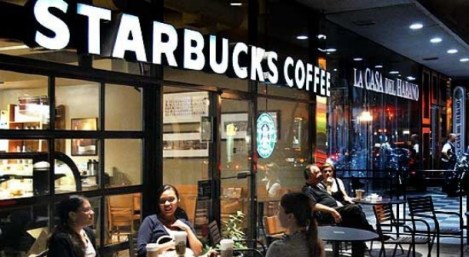
TSF, or Starbucks Nation

The Most Emblematic Beverage Stop for the Thirty-Something Generation

The Most Emblematic Beverage Stop for the Thirty-Something Generation

It’s finally beginning to happen: The next generation is beginning to make its mark on restaurants and supermarkets/ Today, at Albertson’s Supermarket, I saw a large display of cold beverages featuring Red Bull and Starbucks drinks at $3-4 a pop. I noted to Martine that I pay about $8-10 for a pound of loose Indian black tea that will last me for upwards of eight months, for both cold and hot beverages.

Before going to Albertson’s, we had lunch at Truxton’s American Bistro. Perhaps a more appropriate name would be TSF: “Thirty-Something Food.” The new foodies love to mess around with the menu and its ingredients. Their iced tea was flavored with some chemical extract meant to imitate passion fruit—whatever that tastes like! But you better believe it was called organic, as if that made it taste like tea, which it does not. In fact, it obliterates the taste of the tea, such that I wonder why they bother adding any tea at all. The pizza had fresh basil, but I guess the chef thought it needed salt, a lot more salt. I felt that they were trying just a little too hard to appear unique.

It takes many years of experience to learn how to cook, especially when it comes to herbs and spices. We’ve all seen little kids at self-service soda machines: they try to mix Coke with Seven-Up with Root Beer with Mr. Pibb, with maybe a dash of raspberry iced tea for good measure. The end result of this type of experimentation is usually deplorable. I’m not saying that young chefs are quite in the same category, but sometimes it seems that way.

As the generations change, it is inevitable that the type of foods on offer will change as well. There will be a lot of dishes I will never try because the ingredients fight with one another more than complement one another. On the other hand, there are some successes, such as California Pizza Kitchen. Their chopped salads are superb, and some of their pizzas are excellent (especially the Sicilian). Martine refuses to go there because the menu contains too many of what she considers “experimental” combinations.

I suppose that the ultimate thirty-something places are Starbucks and Jamba Juice and their imitators, neither of which I patronize. I don’t drink coffee; and juice is verboten for all diabetes sufferers (juices concentrate the sugars and carbs and throw out the fiber).