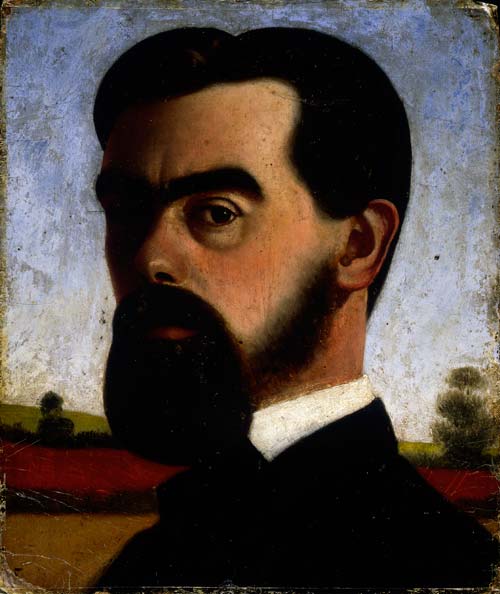
I see they packed the volume of Shakespeare that he had near him when he died in a little tin box and buried it with him. If they had to bury it they should have either not packed it at all, or, at the least, in a box of silver-gilt. But his friends should have taken it out of the bed when they saw the end was near. It was not necessary to emphasize the fact that the ruling passion for posing was strong with him in death. If I am reading, say, Ally Sloper’s Half Holiday up to my last conscious hours, I trust my friends will take it out and put it in the waste-paper basket when they see I have no further use for it. If, however, they insist on burying it with me, say in an an old sardine-box, let them do it at their own risk, and may God remember it against them in that day.—Samuel Butler, Notebooks
Home » 2014 (Page 30)
Yearly Archives: 2014
The Great Drought of 2014
The California drought of 2014—the worst recorded in the State’s history—was brought home quite suddenly to Martine and me when we visited the Los Angeles Arboretum today. Baldwin Lake, which in normal years looks so beautiful (see photo below) is now a giant mudhole. Typically, the lake is fed from runoff from current rainfall, of which, for iall intents and purposes, there has been none this year.
Migrating ducks and geese still made it a stopover, and Martine was ready for them with some day-old bread. But the fish in the lake looked as if they were gasping for breath. It was heartbreaking.
We still had a good time at the Arboretum. The Canada Geese were actually not too proud to accept Martine’s bread, The mallards and squirrels also came up to her for handouts.
I am hoping that our drought will eventually come to an end. I would hate to think that Los Angeles would become like Chile’s awful Atacama Desert, where there is almost no measurable rain over an entire century.
A Cultural Treasure
Today, Martine and I did something a little different. The Taiwan Academy had a film, presentation, and performance by the star of the Taiwanese Opera, Liao Chiung-Chih. Most of the presentation was in the Taiwanese dialect, but it didn’t matter, because I was enthralled from start to finish. Ms. Liao was phenomenal: I have never seen anyone with her extraordinary control of voice and movement. After a short film, she demonstrated several vocal singing styles, followed by a library of hand, foot, and torso gestures—and this at the age of approximately eighty.
While we did not understand a word of the language, we appreciated an artistry that goes far beyond anything that performers in the West are called upon to demonstrate. Ms. Liao kept me on the edge of my seat for two hours. There was a translator with a microphone, but still many sentences got lost. It almost didn’t matter, however, because the actress’s talent was so apparent that it almost obviated the need for translation.
At the end, of her presentation, Two performers from the Taiwan Opera, Chang Meng-I (below right) and Hwang Yea-Rong (below left), acted a sequence from one of the most famous operas in the genre, The Butterfly Lover. Based on a folktale some 1,600 years old, the opera can be traced to the Jin Dynasty. It has become the Chinese equivalent of Romeo and Juliet, with their star-crossed lovers, Liang Shanbo and Zhu Yingtai.
Originally, I thought I was going to have to work on taxes today, but I got a last-minute reprieve. So we took the bus to the main branch of the Los Angeles Library downtown, where the performance was held in the Mark Taper Auditorium. Sponsoring the event was the Taiwan Academy, which has opened a branch in Los Angeles.
Below is a photo of Liao Chiung-Chih made up as a character in the Taiwan Opera:
A Frugal Chariot
Here is one of Emily Dickinson’s simpler poems—but no less powerful for all that. It is called “A Book”:
There is no frigate like a book
To take us lands away,
Nor any coursers like a page
Of prancing poetry.
This traverse may the poorest take
Without oppress of toll;
How frugal is the chariot
That bears a human soul!
At a time when poetry is being pushed aside by the young in favor of video games and other more spurious entertainments, it is good to see a simple statement of why it should not be so.
There are few things one can read that can so work the mind and enliven the spirit as a powerful poem, such as those of Emily Dickinson. Usually, they are complex arrangements of relatively few words. Fortunately, there is a reward for making the effort, a reward in the form of greater understanding.
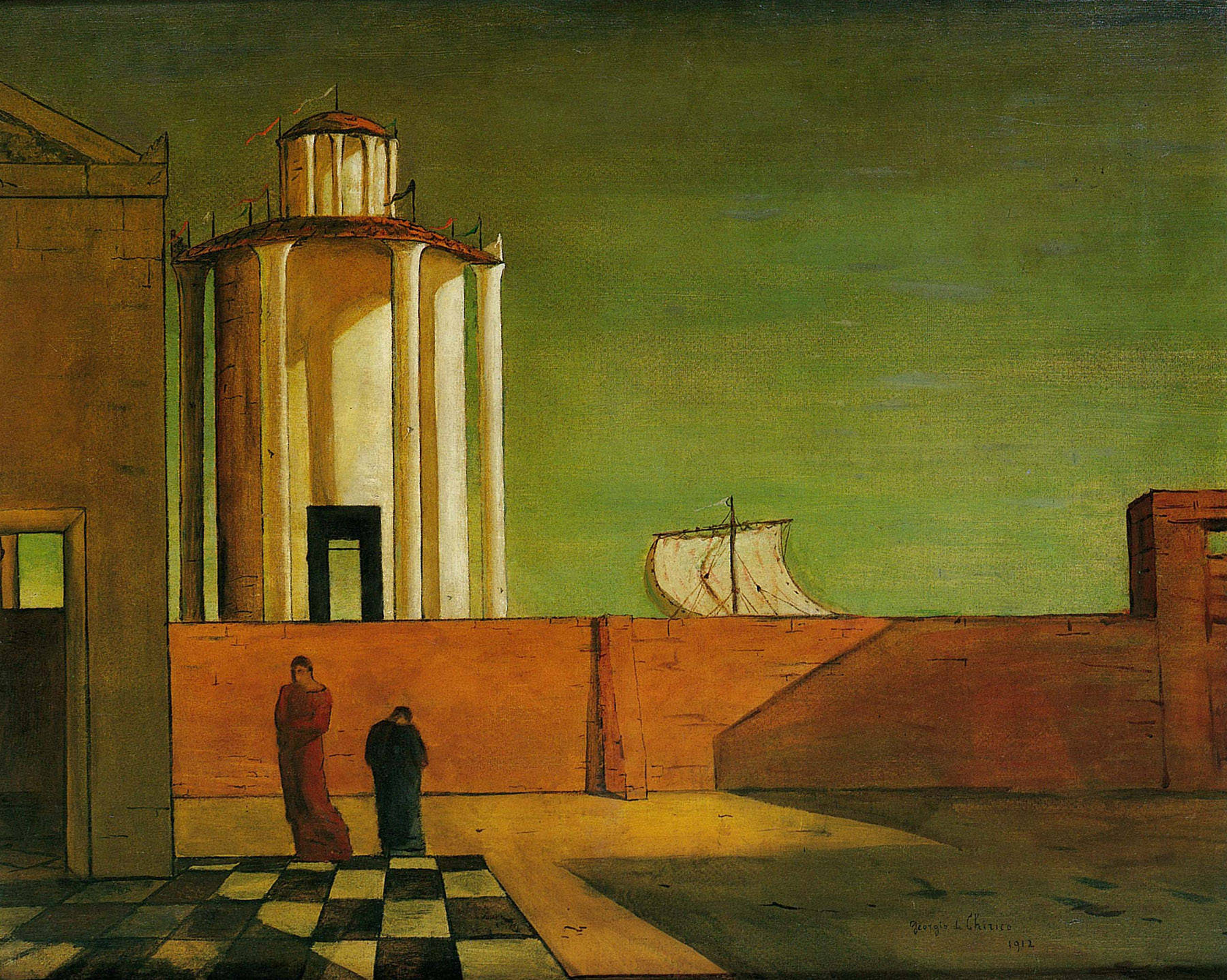
“The Enigma of Arrival”
I remember the first time I landed at the Manuel Crescencio Rejón Aeropuerto in Mérida, Yucatán, in November 1975. It was my first real trip out of the country (I don’t include Niagara Falls and Tijuana as being quite outside the U.S.), and it was a real eye-opener. It was night, and the vibe was tropical. In the cab to the Hotel Mérida, I passed a huge Coca Cola bottling plant before we took the turn to the right toward Calle 60. So many businesses were open to the street, and families were seated at card tables with beers and sodas. The local men were all dressed in white; and the women wore colorfully embroidered huipiles.
What was different between this and all my previous travels was that I was alone in a strange land and feeling an unusual sense of the remoteness of all my previous experience to what I was experiencing in the moment. I felt like the two huddled figures in Giorgio de Chirico’s painting, “The Enigma of Arrival” (shown above)—except that the streets of Mérida were crowded. I didn’t get much sleep that night, much of which was spent leaning out of my sixth floor window onto Calle 60. All night long, figures walked up and down the street, occasionally stopping in mid-stride to stare right at me. (How did they do that?)
The next morning, I had breakfast at the Restaurant Express, which was right across the street from a 17th century Franciscan church and the old Gran Hotel, which used to be the only one in town around the turn of the century. Eventually, I grew used to the crowds, the food, the warm, humid, floral air. I loved Yucatán and went back there four or five times.
In 1987, V. S. Naipaul wrote a novel entitled The Enigma of Arrival, which discussed the strangeness of his life (he was born in Trinidad) in the English countryside.
I have grown to love the actual enigma of arrival in a different country. I am more alive to everything around me. It is a good feeling.
Against Speed Reading
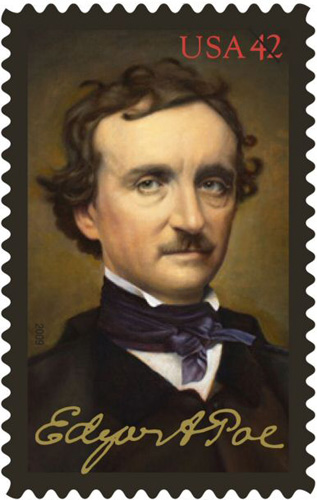
I have seen many computations respecting the greatest amount of erudition attainable by an individual in his life-time; but these computations are falsely based, and fall infinitely beneath the truth. It is true that, in general, we retain, we remember to available purpose, scarcely one-hundredth part of what we read; yet there are minds which not only retain all receipts, but keep them at compound interest forever. Again:—were every man supposed to read out, he could read, of course, very little, even in half a century; for, in such case, each individual word must be dwelt upon in some degree. But, in reading to ourselves, at the ordinary rate of what is called “light reading,” we scarcely touch one word in ten. And, even physically considered, knowledge breeds knowledge, as gold gold; for he who reads really much, finds his capacity to read increase in geometrical ratio. The helluo librorum [“glutton of books”] will but glance at the page which detains the ordinary reader some minutes; and the difference in the absolute reading (its uses considered), will be in favor of the helluo, who will have winnowed the matter of which the tyro mumbled both the seeds and the chaff. A deep-rooted and strictly continuous habit of reading will, with certain classes of intellect, result in an instinctive and seemingly magnetic appreciation of a thing written; and now the student reads by pages just as other men by words. Long years to come, with a careful analysis of the mental process, may even render this species of appreciation a common thing. It may be taught in the schools of our descendants of the tenth or twentieth generation. It may become the method of the mob of the eleventh or twenty-first. And should these matters come to pass—as they will—there will be in them no more legitimate cause for wonder than there is, to-day, in the marvel that, syllable by syllable, men comprehend what, letter by letter, I now trace upon this page.—Edgar Allan Poe, Marginalia
Disaster Days?
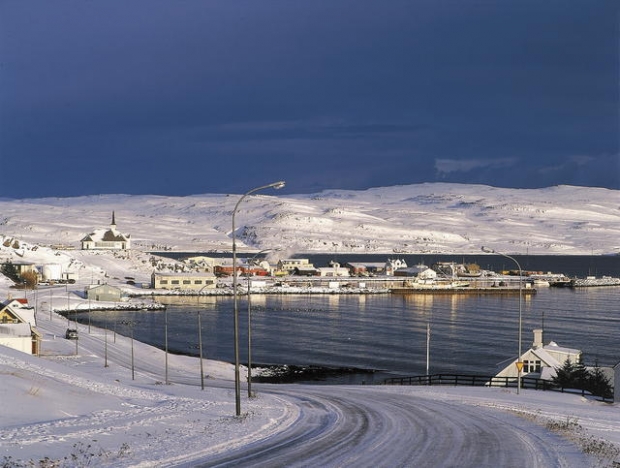
Hólmavík in the Strandir region of Iceland’s West Fjords is a strange place. Its main claim to fame is the presence of the Icelandic Museum of Sorcery and Witchcraft. Now it seems there is a second reason to feel apprehensive about a visit to Hólmavík, especially this time of year when many of the roads are closed.
The reason? In a word, Hörmungardagar, or “Disaster Days.” According to Páll Stefánsson of The Iceland Review:
On Friday’s program, among other activities, is a course in self-pity, a complaint service and an ugly dance performance.
On Saturday, head to the library to find bad books and later listen to the worst Eurovision songs [this could the most dreadful event of all] and the worst poem competition, where very bad coffee will be served. In the local church, sad (and bad) songs will be performed.
On Sunday, an anger management game will be held and a program about what has happened in the region.
The festival is directed by Ester Ösp Valdimarsdóttir, the so-called [huh?] spare time manager of the Strandir region.
I would like to have stayed in Hólmavík for a day or two, but I just couldn’t book a room; so I didn’t want to risk getting stuck there. I did change buses there, however. Toward the end of my trip, I had an all-day bus ride from Isafjorður to Borgarnes, during which I changed buses in Hólmavík in the local supermarket parking lot. The long bus ride from Isafjorður was uncomfortable because the bus was full of backpackers and all their gear, so there was barely room for my feet. Fortunately, the second leg of the trip on on a large and comfy Stræto bus.
I’m sure that if you can find your way to Hólmavík this weekend—fat chance, that!—you’ll find that, after all, you don’t have all that much about which to complain.
By the way, if you’d like to see a sampling of truly dreadful Eurovision songs, click here. And please don’t hold me responsible! You will find that there are musical acts that are far worse than anything even Lawrence Welk could have imagined.
Sochi Soap Opera
Several of my friends and co-workers have asked whether I am following the Sochi Winter Olympics. I usually shake my head and say that I can’t take the typical U.S. sports reporting, with its emphasis on heartwarming stories of athletes who give their all for their late Uncle Poochie, who was caught in a threshing machine, only to come in seventeenth on the moguls. The vast majority of the media coverage is of American athletes. What I would like to see is a greater emphasis on other countries—without any sob stories or even biographies.
The young men and women who compete in the Olympics are too young to have a real biography. They have an incredible amount of dedication, but this is not limited to Americans. What about Slovenians, Icelanders, and others whose name the U.S. announcers can’t pronounce? They worked just as hard to get there and deserve a nod from us, even if we massacre their names.
Also, I am a little dismayed at the negative coverage about Russia. Having used Russian toilets in Hungary and Czechoslovakia back in the 1970s, I know that Russian workmanship can be a little dicey at times. Even if Vladimir Putin is an ass, he deserves better than a load of sneering press stories. Listen, guys, the Cold War is over. We won. Now let’s all try to get along together.
Potrzebie and Axolotl
There we were on Saturday evening at my friend Bill Korn’s hacienda in the mountain fastness of Altadena. All of a sudden, Bill threw a word at me that unlocked my childhood in all its tawdriness. The word? It was potrzebie. Is there such a thing? Apparently, but not in our language:

Apparently, it’s a word in Polish, as we see below:

If you were ever a computer programmer, you know who Donald E. Knuth is. He is the author of the multi-volume The Art of Computer Programming. In the early 1970s, I dutifully purchased the first three volumes in the series: Fundamental Algorithms, Seminumerical Algorithms, and Sorting and Searching. I don’t recall reading much of it because it was intense, full of mathematical thingies of great penetration and impenetrability. So I eventually sold them.
Aside from writing books I couldn’t wrap my head around, Knuth also defined a potrzebie as being the thickness in millimeters of Mad Magazine’s Issue #26. For those of you who need to know, that amounts to 2.263348517438173216473 millimeters, as shown in the following illustration from Mad:

But potrzebie came to mean ever so much more than that, because the editors of Mad fell in love with the word, as did Geoffrey Chaucer:
Whon thot Aprille swithin potrzebie,
The burgid prillie gives one heebie-jeebie.
It joined such terms as axolotl (the critter illustrated at top of article), veeblefetzer, furshlugginer (a word I occasionally use to this day), and hoohah. As it happens, I am now way too sophisticated to read Mad, but half a century ago, it was my meat and drink. It was also my introduction to Yiddish, although I didn’t know it at the time.
I had forgotten these words over the years, but now they are like the zahir of Jorge Luis Borges in the story of the same name. The zahir was a coin which, if one ever saw it, one could think of nothing else.
So, all I could say now is hoo-hah!

Some Kewpie Dolls for You
I had always heard of kewpie dolls before, but today was the first time I saw some of them. Apparently, they were originally a comic strip character invented by Rose O’Neill back in 1909. Their popularity took a number of forms, and they were popular and well-known through the 1940s. I always associated them with game prizes given at carnivals.
If you look closely, you will see my hands wrapped around my Canon PowerShot A1400 reflected in a mirror behind the dolls. Martine and I had paid another visit to the Grier Musser Museum, where there was an exhibit of antiques relating to Valentine’s Day, Chinese New Year, and Black History Month.
Afterwards, we had a nice conversation with Ray and Susan Tejada, who own the museum and live on the premises. Visitors to their special Sunday tours are treated to cookies and punch, which Martine loves.


You must be logged in to post a comment.