The Deepest Canyon?

Colca Canyon in the State of Arequipa

Colca Canyon in the State of Arequipa

Even before my plane ever landed in Peru, I knew that there was a lot more to see than Machu Picchu. In fact, some of the sights were probably more interesting than Machu Picchu—and a whole lot easier to get to.

It could very well be that the most interesting place I visited on my travels was Colca Canyon in the State of Arequipa. It is, together with nearby Cotohuasi Canyon, the deepest on earth—at points more than twice as deep as our Grand Canyon (though certainly not in the above photo).  It was interesting not only from a cultural point of view, but for the range of activities available, the quality of services, and the outstanding scenery.

Two native groups dwell in the area, often interspersed: the Collaguas and the Cabanas. From the time one approaches the altiplano at Patapampa (altitude 15,000 feet or 4,600 meters), one encounters them selling their handicrafts by the side of the road. One could buy quality alpaca sweaters, scarves, and other handmade objects for a few dollars. Around the canyon are a number of villages, including Chivay (the largest), Coporaque, and Maca.

Along the south bank of the canyon west of Chivay is the famous Cruz del Condor, where one can see condors riding on the thermals in groups of two or three. (Look for a separate post on this later in the week.) The scene above is on the way to Cruz del Condor. Visible on the other side of the canyon are agricultural terraces designed by the Incas. The Collaguas and Cabanas maintain them faithfully. This picture was taken at 12,000 feet altitude or 3,650 meters.

I actually took a guided tour to Colca with Giardino Tours of Arequipa. I don’t usually do this sort of thing, but I had no cause to regret it. Our tour guide, Luis, was funny and intelligent, and I deliberately arranged not to participate in some of the strenuous uphill hikes (at high altitude) that were part of the program. (As I would frequently say, my intention was not to be buried at Colca Canyon). One useful feature of the tour was that we were dropped off in Puno, eliminating the need for a separate bus.

 

I Only Have Eyes for You

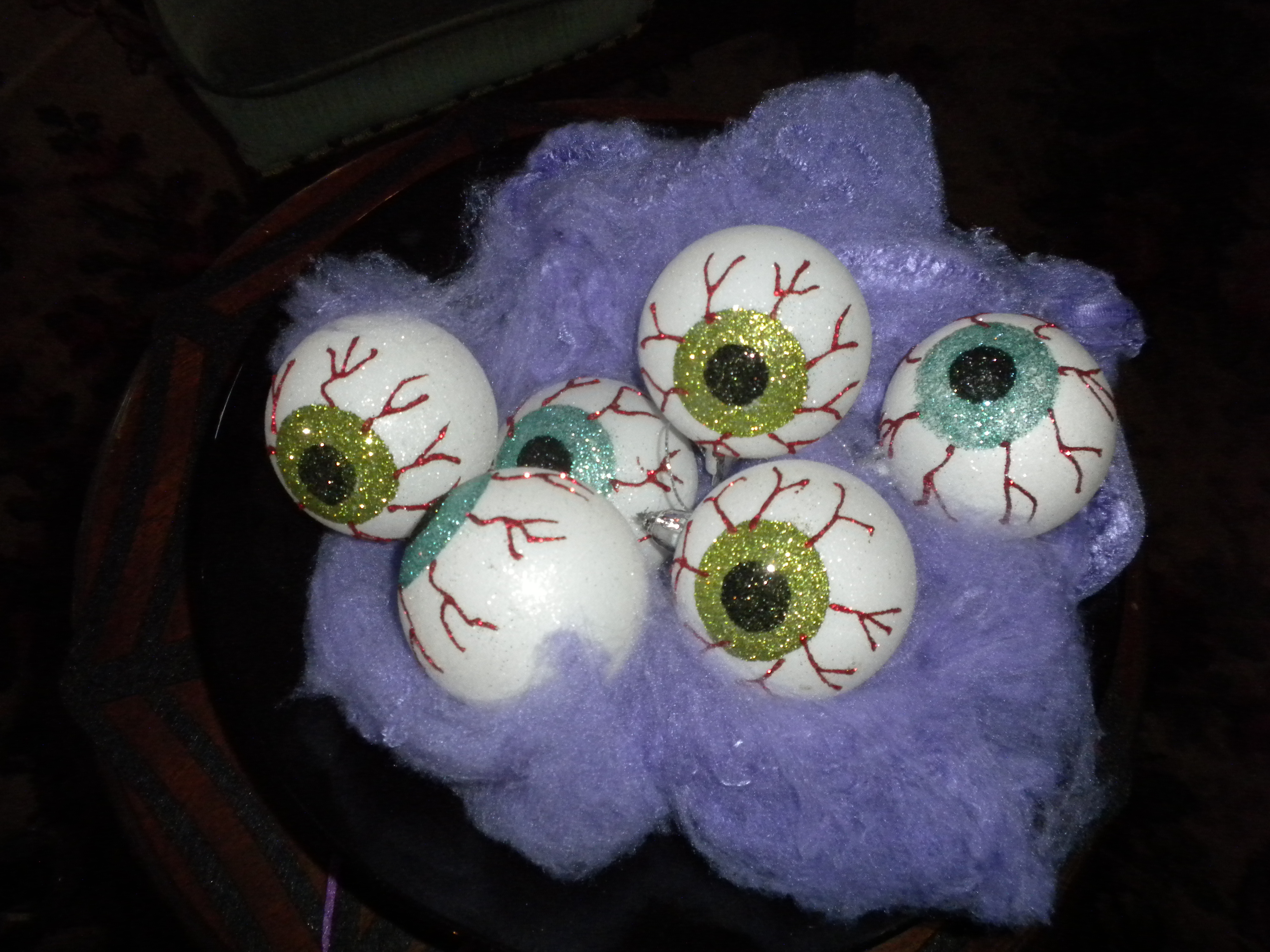
A Nice Plate of Eyeballs Pour Vous

A Nice Plate of Eyeballs Pour Vous

Yesterday’s visit to the Grier Musser Museum near downtown L.A. put Martine and me into the holiday spirit. We discovered the museum and its fabulous collection of holiday-related antiques and displays as a result of watching Huell Howser’s shows on KCET. In all, he did two shows on the museum, so we decided it was a place we should get to know better. Although the museum has displays all year round, curator Susan Tejada puts together a special show around Halloween, Christmas, and Valentines Day—with the best show being around Halloween.

Martine particularly enjoys talking with Ray and Susan Tejada over a snack of punch and cookies afterwards, one of the advantages of attending the museum’s holiday Sunday exhibits.

Heads Up!

Heads Up!

If you want to visit the Grier Musser Museum, you have to make an appointment by calling (213) 413-1814. It is located at 403 South Bonnie Brae Street in the Pico-Union Area, which is near some excellent dining such as Langer’s Delicatessen-Restaurant with its great hand-cut pastrami, Papa Christo’s Greek Restaurant and Market, and a host of world class Korean restaurants.

Somehow, the Grier Musser always puts Martine and me in a holiday mood.


K-Rails and Steel Plates

Prepare for a Bumpy Ride

Prepare for a Bumpy Ride

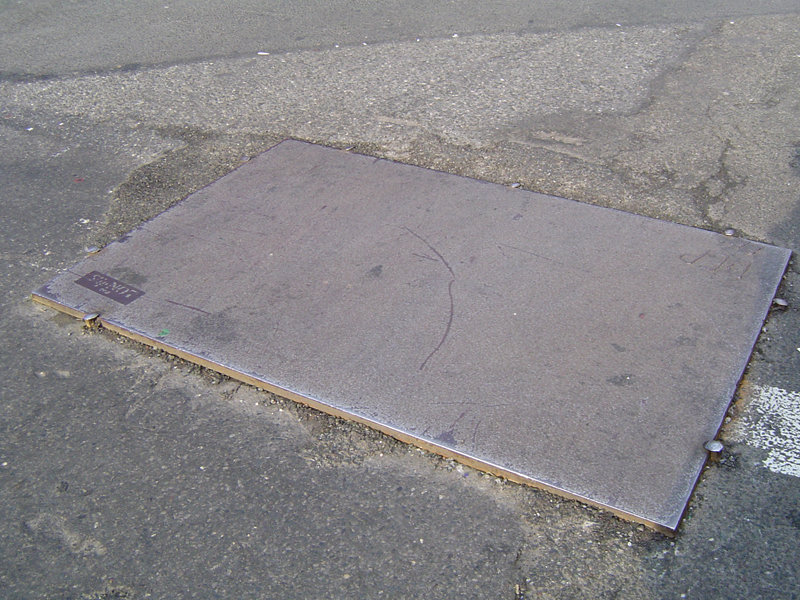
One of the problems with California’s apocalyptic drought of 2014 is that virtually every street is under construction—without fear of rain.Today, Martine and I visited the Grier-Musser Museum near downtown. On the way home, we must have run over two hundred steel plates on Wilshire Boulevard, Beverly Drive, Fairfax Boulevard, and Santa Monica Boulevard. These were accompanied by perhaps a mile or two of K-Rails (known in the East as Jersey Barriers).

K-Rails a.k.a. Jersey Barriers a.k.a. Concrete Barriers

K-Rails a.k.a. Jersey Barriers a.k.a. Concrete Barriers

Now that California is beginning to recover from the Great Recession of 2008, driving the streets of Los Angeles is like going back to the early days of motor cars, with the roads being in a constant state of disrepair.

Strange Joy

Be Afraid! Be Very Afraid!

Be Afraid! Be Very Afraid!

Every October, in honor of Halloween, I love to read classic horror stories. This last week, I read Hugh Lamb’s Dover collection of rare finds entitled A Bottomless Grave and Other Victorian Tales of Terror. Last year at this time, I read We Have Always Lived in the Castle, but this year I ventured on Shirley Jackson’s other famous novel, The Haunting of Hill House, which is equally spellbinding. (What I do not bother to read are the Stephen King and Dean Koontz type of novels that go in strictly for crude shocks.)

Usually, haunted house novels like to go in for crude effects. In contrast Jackson’s The Haunting of Hill House is delicately nuanced. Does this haunted house really do any damage with all its noise and strange writing on the walls and apparent destruction of one lady’s wardrobe? Actually, it does only one thing: It recognizes in Eleanor Vance, a spinster who is one of the party investigating the house, a kindred spirit. And it wants her. Badly.

Shirley Jackson (1916-1965)

Shirley Jackson (1916-1965)

The real terror is not external, it resides within the human breast. Eleanor had spent her adult life as a nursemaid to her mother, who has died before the action of the story begins. She has, as the saying goes, no life of her own. The one line that keeps running through her mind during the course of the book is, “Journeys end in lovers meeting.”

For Shirley Jackson to see into the tortured heart of Eleanor Vance—and through all the flummery of haunted houses and planchettes—makes her one of the great writers of horror fiction. And this after Eleanor’s initial response to the house, which is one of horror and loathing. At the risk of giving the whole shooting match away, I will continue the quote that ends the last paragraph:

Journeys end in lovers meeting; I have spent an all but sleepless night, I have told lies and made a fool of myself, and the very air tastes like wine. I have been frightened half out of my foolish wits, but I have somehow earned this joy; I have been waiting for it for so long.

This book deserves on the same shelf with that other great psychological story of haunting, Henry James’s The Turn of the Screw.

Old Cypresses

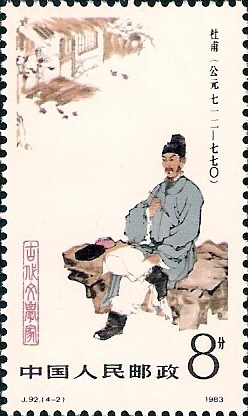
Stamp Commemorating the Chinese Poet Tu Fu

1983 Stamp Commemorating the Chinese Poet Tu Fu

It’s been a long time since I posted a blog about poetry. Today’s poem goes back over thirteen hundred years, from A.D. 766 to be exact. China’s Tang dynasty gave us two of the greatest poets who ever lived, Li Po and Tu Fu. The following is from the latter. It is called “Ballad of the Ancient Cypresses.”

Before Kongming’s shrine stands an ancient cypress,
Its branches are like green bronze, its roots just like stone.
The frosted bark, slippery with rain, is forty spans around,
Its blackness blends into the sky two thousand feet above.
Master and servant have each already reached their time’s end,
The tree, however, still remains, receiving men’s devotion.
Clouds come and bring the air of Wuxia gorge’s vastness,
The moon comes out, along with the cold of snowy mountain whiteness.

I think back to the winding road, east of Brocade Pavilion,
Where the military master and his lord of old share a hidden temple.
Towering that trunk, those branches, on the ancient plain,
Hidden paintings, red and black, doors and windows empty.
Spreading wide, coiling down, though it holds the earth,
In the dim and distant heights are many violent winds.
That which gives it its support must be heaven’s strength,
The reason for its uprightness, the creator’s skill.

If a great hall should teeter, wanting rafters and beams,
Ten thousand oxen would turn their heads towards its mountain’s weight.
Its potential unrevealed, the world’s already amazed,
Nothing would stop it being felled, but what man could handle it?
Its bitter heart cannot avoid the entry of the ants,
Its fragrant leaves have always given shelter to the phoenix.
Ambitious scholars, reclusive hermits—neither needs to sigh;
Always it’s the greatest timber that’s hardest to put to use.

Kongming (Zhuge Liang) was the chief minister of Liu Bei, one of the imperial claimants in the Three Kingdoms period. The poem shifts between the tree at the shrine to Kongming near Wuxia gorge (one of the Three Gorges); another tree at the shrine to Kongming and Liu Bei in Chengdu; and the allegorical equation of timber and talent – 材 and 才 (cái) – etymologically the same word. The Brocade Pavilion was built by Tu Fu near his house in Chengdu.

Ancient Chinese Cypress

Ancient Chinese Cypress

In talking about old trees, the poet is also talking about old age. I love the line “Its bitter heart cannot avoid the entry of the ants.”


Riding the News Cycle Without a Helmet

Follow the News Cycles If You Must ... But Don’t Get All Tangled Up in Them

Follow the News Cycles If You Must … But Don’t Get All Tangled Up in Them

In yesterday’s post (“Terrorism Made Easy”), I suggested that the news orgies indulged in my the media—especially cable news—make it extraordinarily easy for terrorists to get us all in a dither with a minimum amount of effort.Today, I plan to go one step further: Stay away from the news as much as possible. It’ll only mess you up.

Now there were times when the news affected my travel plans: I would not go to Guatemala during the dictatorship of Efraín Ríos Montt in the 1980s, I would not visit Peru during the Sendero Luminoso insurgency of the 1980s and early 1990s, and I would not go to El Salvador today because of the Mara Salvatrucha criminal gang. Oh, and there’s some parts of Mexico I would shy away from because of the narcotraficantes (namely the states of Tamaulipas, Veracruz, Sonora, Monterrey, and Michoacán).

That said, I lose track of Middle East skulduggery because there is so much of it that I confuse the incidents one with the other. Nor is it important to know the number of car bombs in Baghdad, the casualties at Kobani, the Hamas-Israel pissing match, the piracy and banditry of Somalia, the endless repercussions of Benghazi, or even the weirdness of North Korea’s non-interaction with the world. Because I read the paper, I have a rough idea of what is happening. The details are just a tad excessive.

I work with a really nice bookkeeper who listens to the news and all the pundits on her long drive to work. All the badness, of which there is an endless amount, has the effect of making her depressed. I suggest that she listen to nice music instead, either the classics at KUSC or new wave at KTWV.

Remember one thing about the news: They are trying to make you hooked on all this global negativity so you keep coming back for more, and maybe even buy all the crapola the sponsors want to unload on you. Skip a few news cycles. Maybe read the paper instead, or a weekly news magazine (if there still is one), or even the Internet. When things get too bad, I’d rather put on some J. S. Bach or Wolfgang Amadeus Mozart.

As my old hero Ghoulardi (about whom I will write more in the next week or so) said, “Cool it with the Boom-Booms!”


Terrorism Made Easy

What Would I Do If I Were a Terrorist?

What Would I Do If I Were a Terrorist?

What if I were one of the black hats for ISIS, ISIL, or whatever they’re calling themselves this week, I would have the world gelid with fear at relatively little cost to myself. Let’s face it, the “Dark Side” is a powerful draw for disaffected young people around the world. One can get an almost endless supply of young Arabs, Americans, Europeans, and Canadians who would be willing to blow themselves up—and take any number of innocent victims with them.

Given the way the news media around the world operate, any single incident is multiplied as if with endless mirrors for weeks at a time. Look at Benghazi: It’s still going strong for over two years. Then there’s the occasional beheading of an American or a European, interspersed with car bombs at Shia shrines. It doesn’t take much to have Faux News and their imitators spinning their heads in unison with a warning siren at max volume. One dire incident shades into another, and with relatively little effort, the whole thing looks like its continuous dripping evil spreading all over the world.

Great Symbolism! Really Evil!

Great Symbolism! Really Evil!

I’m not telling the terrorists what they don’t already know. The reach of our media stretches around the globe, so the bad guys know exactly how frightened, ill-informed, and chickenshit we are. I would not be surprised if the world spends ten trillion dollars in the next couple of months trying to eliminate ISIS or some other terrorist group de jour. In the process we are actually arming them.

Isn’t that what judo is all about—using your opponents’ strength against them? Hijacking their weapons while deciding on the next terrorist incident to occupy the news media, their anchors, pundits, and wingnut entertainers.

I must say: It’s really quite elegant.


… And Then He Spit in My Face!

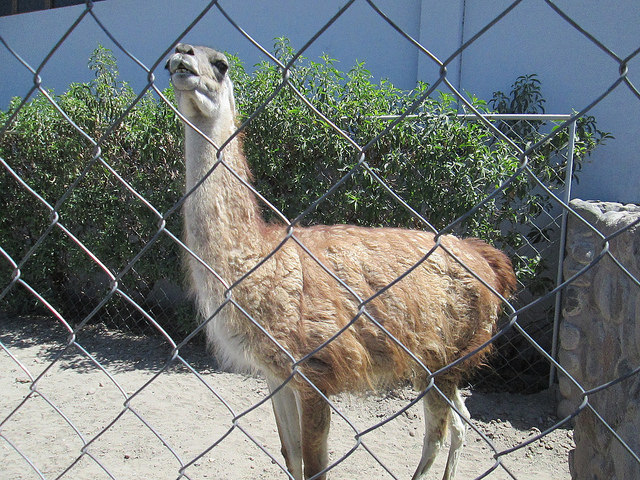
A Caged Guanaco with Exquisite Aim

A Caged Guanaco with Exquisite Aim

We all know that camels spit at people, but did you know that American “camelids” can also do it? There are four species of American camelids in South America: guanacos (Lama guanicoe), llamas (Lama glama), alpacas (Vicugna pacos), and vicuñas (Vicugna vicugna).

In any case, there I was, visiting the store and little zoo at Incalpaca on the outskirts of Arequipa. It was there I saw this guanaco depicted above who was just in the process of accumulating saliva, which he forthwith spit right into my eye. The Peruvians who were traveling with me all broke into laughter, which I could not help joining in. After all, I was wearing glasses; so all I had to do was wipe them clean.

The guilty guanaco, having done his foul deed, stood proud and tall. This one yanqui forgave him. At the end of the day, I moved on; but he was still in his cage. (At least, he didn’t have to worry about being hunted down and eaten, as his kind are frequently in Argentina and Chile.)

Kittikat Haven

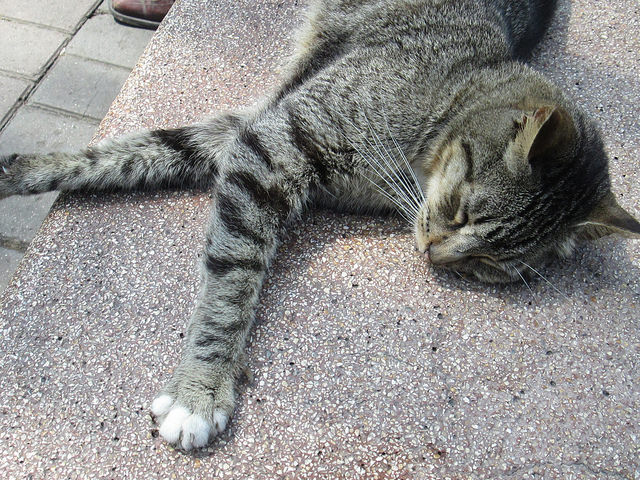
The Contented Cats of Lima’s Parque Kennedy

The Contented Cats of Lima’s Parque Kennedy

If there is a magnet to which foreign tourists are drawn in Lima, I would have to say it is Parque Kennedy in Miraflores. The triangular park is surrounded by tourist shops and restaurants, including the notorious Calle de los Pizzas. It is also full of contented cats, who were originally introduced to rid the park of rodents. But, as usually happens, the cats multiplied and became a tourist attraction in their own right. Now the city makes sure they are spayed, has an adoption program for them, and makes sure they are fed and not bothered.

Parque Kennedy reminds me of the Jardín Botánico Carlos Thays in Buenos Aires. Curiously that park is also triangular in shape; and there, too, the cats are much loved and well cared for. (I begin to detect a pattern here.)

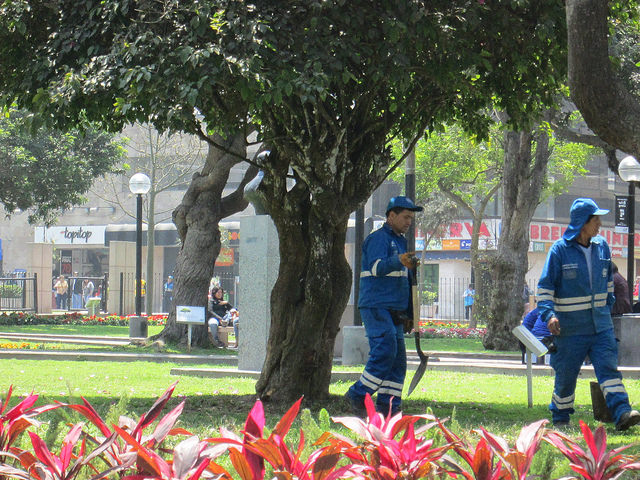
Uniformed Gardeners and Sanitation Workers in Parque Kennedy

Uniformed Gardeners and Sanitation Workers in Parque Kennedy

In parks and other public places around Peru, one finds uniformed gardeners and sanitation workers (shown above) keeping the place clean and beautiful. I believe they also feed the cats and make sure they have water to drink.Throughout Peru, the public places were like oases that drew people who wanted to rest, read a newspaper, or get their shoes shined. The day I left for Arequipa, I spent several hours there petting the cats and relaxing before having a great lunch at La Lucha Sangucheria across the street.


The Republic of Fear

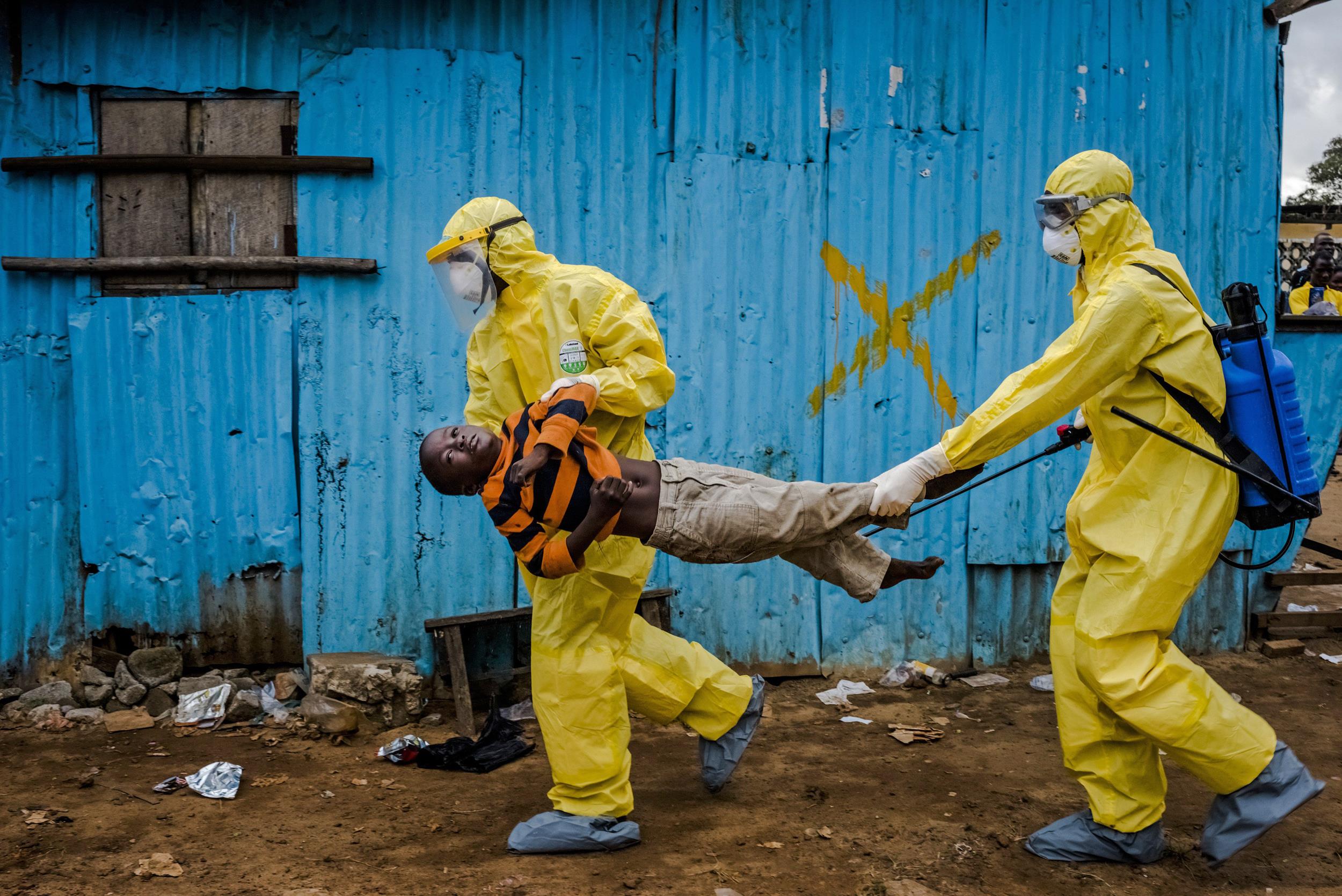
So You Really Think You’re Going to Catch Ebola?

So You Really Think You’re Going to Catch Ebola? I Wouldn’t Bet on It!

The news is all about fear. Fear sells. People keep coming back for more because their fear builds until it warps their decision-making process. The various news channels cannot sell soap unless they put you in a fearful state of mind. One of the reasons I do not watch the news on television—ever—is that I have no wish to be manipulated.

I am going to ask myself several questions just to give you my take on several issues in the news:

  1. Am I afraid of contracting ebola? Not at all. The only thing I might do if I have to fly somewhere while this outbreak lasts is to wear gloves and a surgical face mask during the duration of the flight.
  2. Do I think that ISIS (or ISIL or whatever) will try something in our country? Probably. We are trying to bomb them to pieces and that probably doesn’t sit too well with them, so I expect they’ll try something along the lines of our own domestic terrorists with bombs or other devices. Am I afraid of them? Not particularly. I think they’re enjoying a brief ascendancy in Syria and Iraq before even the Sunnis try to shut them down.
  3. Are My Children Going to Be Shot Dead by Crazed Gunmen? As I don’t have any children, the fear is somewhat remote for me. But are your children going to be shot dead by crazed gunmen? That is a distinct possibility, as we are doing nothing to keep guns out of the hands of homicidal idiots.
  4. Are Weird Storms Going to Level Our Cities and Towns? Oh, you can bet on it. Curiously, most of these storms occur in areas where people disbelieve that we can affect climate change. “Nice, nice, very nice, so many people in the same device.” (Read Kurt Vonnegut’s Cat’s Cradle to understand the quote.)

At least once a year, I quote the Bene Gesserit litany from Frank Herbert‘s Dune on the subject of fear:

I must not fear. Fear is the mind-killer. Fear is the little-death that brings total obliteration. I will face my fear. I will permit it to pass over me and through me. And when it has gone past I will turn the inner eye to see its path. Where the fear has gone there will be nothing. Only I will remain.

So before you switch on Faux News, you might want to think twice. Don’t believe what various pundits and experts try to tell you. Occasionally they tell the truth, but only on the sixth Friday of every month. Even the newspaper can discombobulate you. Be skeptical. Be very skeptical. People make lots of money by trying to lie to you. Don’t let them get away with it.

Practice living fearlessly. I went to Peru on my lonesome and spent three weeks traveling among people who did not speak the same language as me or think the way I think. It’s good practice, actually.