Serendipity: A Dog, a Cat, and a Mouse

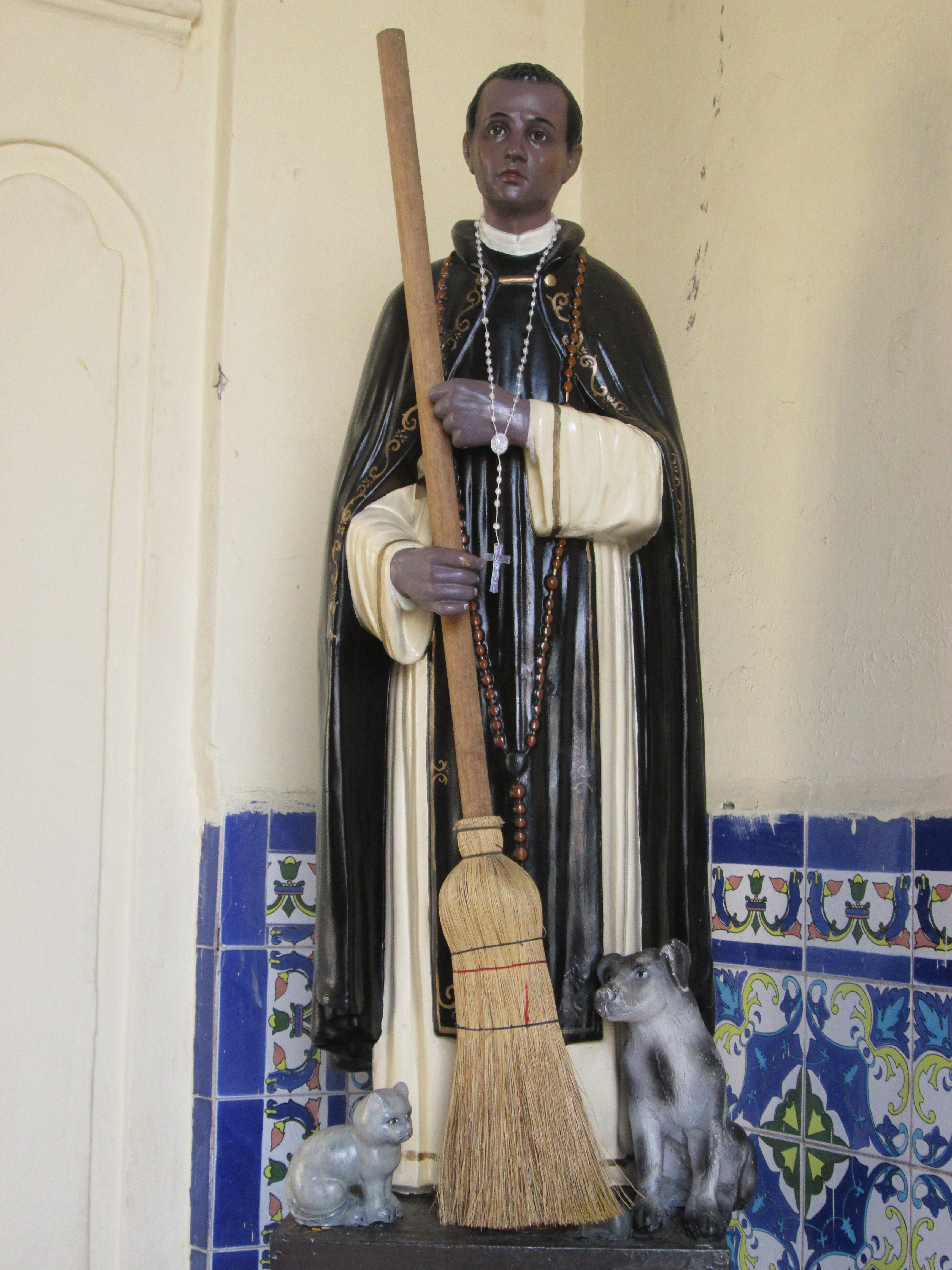
St. Martin de Porres

St. Martin de Porres

He is usually depicted in the garb of a Dominican lay brother, holding a broom, and with a dog, a cat, and a mouse at his feet. St. Martin de Porres is one of my favorite saints. My memories of him go back to grade school, years before Pope John XXIII canonized him in 1962.

The following is taken from Ricardo Palma’s Peruvian Traditions and tells the story of his three pets:

And from the same dish
ate a dog, a cat and a mouse.

With this couplet we come to the end of an account of the virtues and miracles attributed to Friar Martín de Porres. It was actually a broadside that was circulated in Lima about the year 1840 for the purpose of celebrating in our cultured and very religious capital city the solemn activities related to the beatification of this miracle worker.

This holy man, Friar Martín, was born on December 9, 1579, the natural son of the Spaniard Don Juan de Porres, Knight of Alcántara, and of a Panamanian slave. When he was still very young little Martín was taken to Guayaquil, where in a school in which the teacher made good use of the whip, he learned to read and write. Two or three years later his father and Martín returned to Lima and the boy was placed as an apprentice, learning the trade of barber and bloodletter in a barbershop on Malambo Street.

Martín wasn’t very adept with the razor and the lancet and this kind of work didn’t appeal to him so he opted for another career—that of sainthood, for in those days the career of a saint was just as legitimate a profession as any other. He took the habit of a lay brother at the age of twenty-one in the Monastery of San Domingo and remained there until he died in the odor of sanctity on November 3, 1639.

While he lived, and even after death, our countryman Martín de Porres performed miracles on a wholesale scale. He performed miracles as easily as others compose verses. One of his biographers (I don’t remember if it is Father Manrique or Doctor Valdés) says that the Prior of the Dominicans had to prohibit his continuing to perform miracles or milagrear (forgive me the use of the word). And to prove how deeply rooted in Martín the spirit of obedience was, on one occasion while he was passing a mason working on some scaffolding the worker fell a distance of some twenty-five to thirty feet. But while he was still in mid-air Martín stopped his fall—and there was the man suspended above the ground. The good Friar shouted, “Wait a moment, brother,” and the mason remained in the air until Martín returned with permission from his superior to complete the miracle.

That’s a doozy of a little miracle, don’t you agree? Well, if you think that one is great, wait until you read the next one.

The Prior sent the extraordinary lay brother on an errand to purchase a loaf of sugar for the infirmary. Perhaps he didn’t give Martín sufficient money to buy the white refined type so he returned with a loaf of brown sugar.

“Where are your eyes, Brother Martín,” said the Father Superior. “Can’t you see that it is so dark that it’s more like unrefined sugar?”

“Don’t get upset, Reverend Father,” answered Martín slowly. “All we have to do is wash this loaf of sugar right away and everything will be fine.”

Without allowing the Prior to argue the point the Friar submerged the loaf of sugar in the water in the baptismal font, and when he pulled it out it was white and dry.

Hey! Don’t make me laugh! I have a split lip!

Believe it or make fun of it. But let it be known that I don’t put a dagger at anyone’s breast forcing him to believe. Freedom must be free, as a newspaperman of my country once said. And here I note that because I had intended to speak of mice under Martín’s jurisdiction, I went off on a tangent and forgot what I was doing. That’s enough for the prologue; let’s get right down to business and see what happened to the mice.

* * *

Friar Martín de Porres had a special predilection for mice, unwelcome guests who came for the first time, it appears, with the Conquest, because until the year 1552 no mention of them was made. They arrived from Spain in a boat carrying codfish that had been sent to Peru by a certain Don Gutierre, Bishop of Palencia. Our Indians gave them the name hucuchas, which means creatures that came from the sea.

During the time that Martín was serving as a barber a mouse was still considered a curiosity, for the mouse population had just begun to multiply. Perhaps it was during that period that he began to concern himself with the welfare of the little animals, seeing in them the handiwork of God; that is to say he could see a relationship between himself and these small beings. As a poet put it:

The same time that God took to create me
He also took to create a mouse,
or perhaps two, at the most.

When our lay brother served as a male nurse in the Monastery the mice overran everything and made a nuisance of themselves in the cells, the kitchen and the refectory. Cats, which made their presence known in 1537, were scarce in the city. It is a documented fact that the first cats were brought by Montenegro, a Spanish soldier who sold one in Cuzco for 600 pesos to Don Diego de Almagro, the Elder.

The friars were at their wits’ end with the invasion of the little rodents and invented various kinds of traps to catch them, but with little success. Martín put a mouse trap in the infirmary and one rascal of a mouse who was inexperienced, attracted by the odor of some cheese, found himself trapped. The lay brother freed him from the trap, and then placing him in the palm of his hand said to him, “On your way, little brother, and tell your companions not to bother the friars in their cells. From now on all of you stay in the garden and I promise to take food to you every day.”

The ambassador complied with his mission and from that moment the mob of mice abandoned the cloister and took up residence in the garden. Of course Martín visited them every morning carrying them a basket of leftovers and other food and they would come to meet him as if they had been summoned by a bell.

In the cell Martín kept a cat and a dog. Through his efforts he had succeeded in having them live together in fraternal harmony, to such an extent that they both ate from the same dish.

One afternoon he was watching them eat in holy peace when suddenly the dog growled and the cat arched its back. What had happened was that a mouse had dared to stick its nose outside of its hole, attracted by the smell of the food in the dish. When Martín saw the mouse he said to the dog and cat, “Be calm, creatures of God. Be calm.” He then went over to the hole in the wall and said, “Come on out, brother mouse, have no fear. It appears that you are hungry; join in with the others. They won’t hurt you.” And speaking to the dog and cat he added, “Come on, children, always make room for a guest; God provides enough for the three of you.”

And the mouse, without being invited, accepted the invitation, and from that day on it ate in love in the company of the cat and dog.

And…, and…, and… A little bird without a tail? What nonsense!
Volcano Land

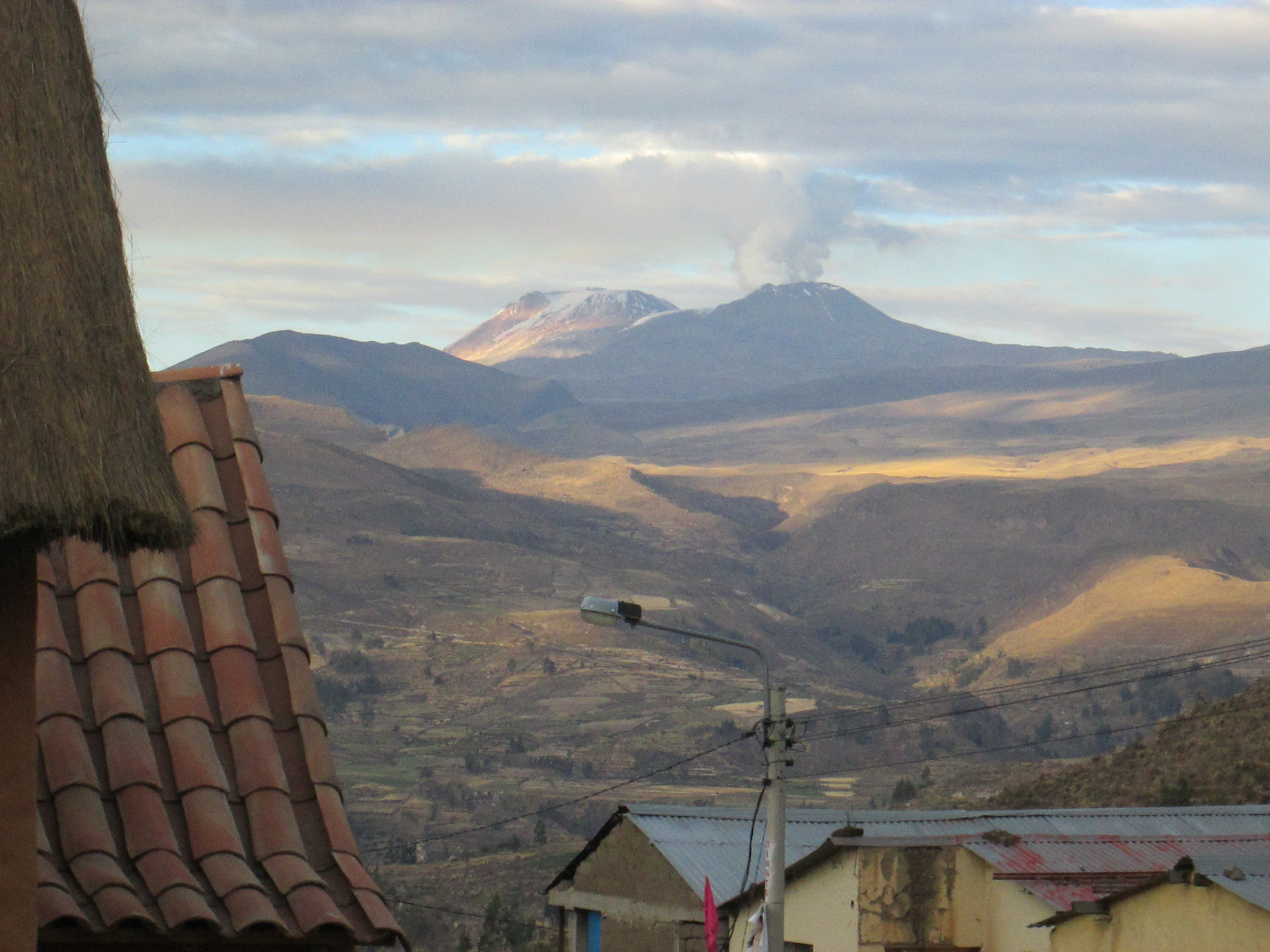
Mount Sabancaya Erupting

Mount Sabancaya Erupting—Seen from Coporaque

The State of Arequipa is full of active volcanoes. Two of them in particular—Sabancaya and Ubinas—have been in eruption for weeks, if not months.

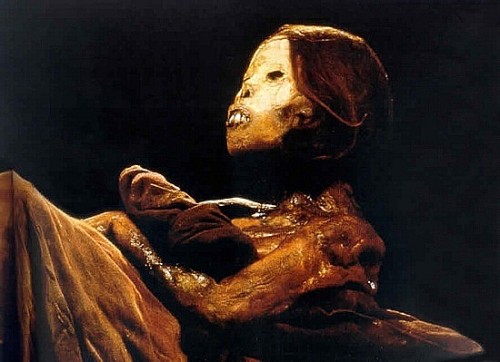
In fact, before the Spanish ever made it to Peru, an eruption of Sabancaya triggered the sacrifice of an Inca maiden (named by archaeologists as Juanita) on neighboring Nevada Ampato to satisfy the angry earth gods. A 12-year-old girl of good family, “Juanita” was marched up Ampato with an escort of priests, given some chicha to drink to calm her nerves, and clubbed to death. It was only in 1995 that Johan Reinhard discovered her remains and brought her body down to Arequipa, where it is on display in the city’s Museo Santuarios Andinos, where I saw it.

The Remains of the Inca Maiden Called “Juanita”

The Remains of the Inca Maiden Called “Juanita”

When I stayed in Arequipa, I awoke every morning to see the city ringed by the volcanoes Chachani, El Misti, and Pikchu-Pikchu. Going north to Colca Canyon, I saw perhaps a score of other volcanic peaks. This is a volatile section of the Pacific Ring of Fire, where the Nazca Plate is slipping under the South American Plate and making the Andes rise and providing pathways for the fires under the earth to rise to the top on occasion.


Don’t Let Machu Beat You!

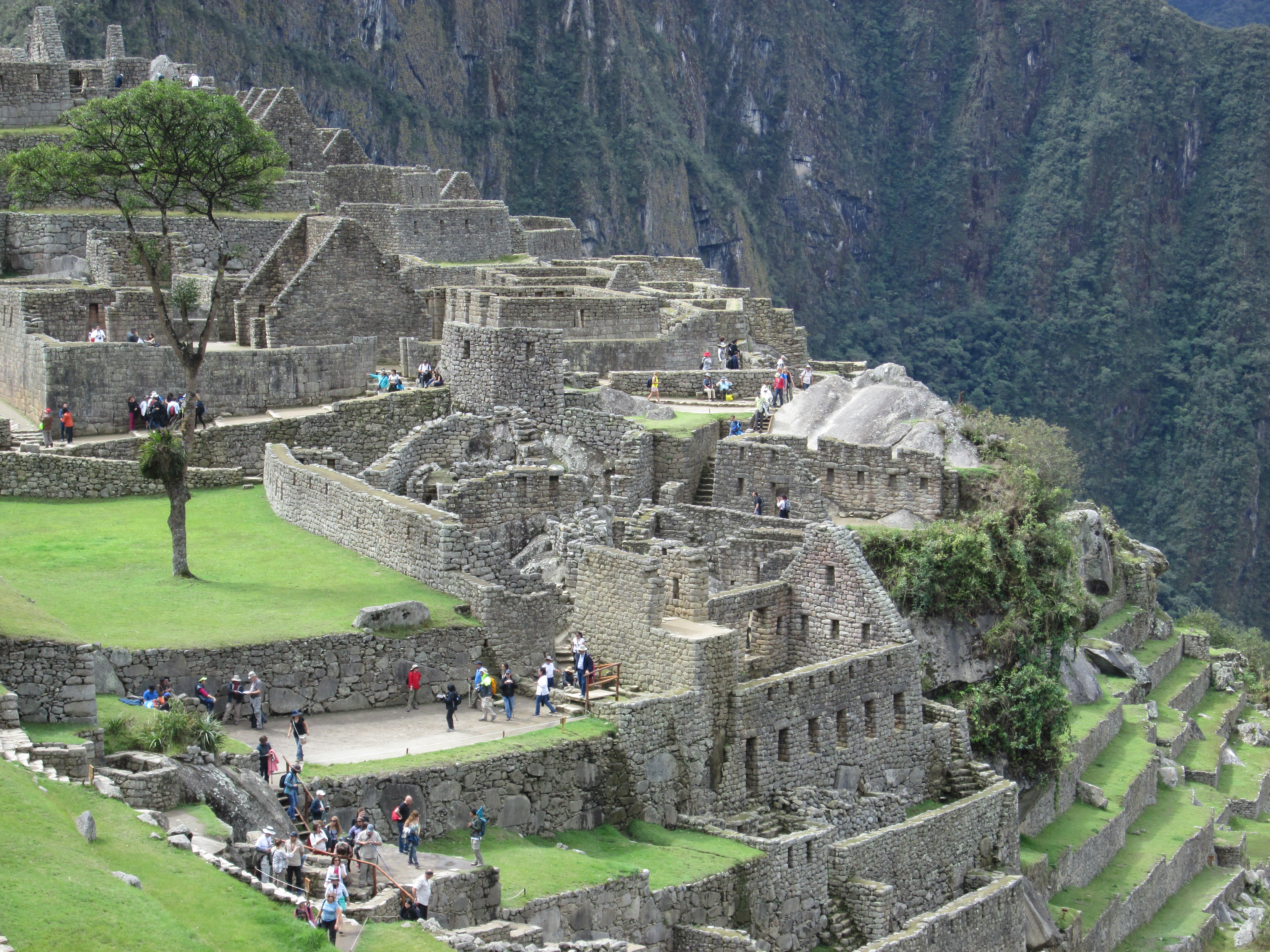
At the Ruins of Machu Picchu

At the Ruins of Machu Picchu

Yes, the ruins at Machu Picchu are probably the premier tourist attraction in all of South America, followed by Iguazu Falls between Argentina and Brazil.

There were only two problems with my visit there on September 25:

  1. It was raining
  2. I could only see apart of the ruins because I was terrible of the irregular stone steps (without guard rails) that connected the different levels, of which there were many. Also, because of the rain, they were slippery.

See the picture below for a view of some of the steps.

Irregular Stone Steps at Machu Picchu

Irregular Stone Steps at Machu Picchu

I could see myself taking a step the wrong way and tumbling down a couple thousand feet into the Valley of the Urubamba. So excuse me if I was petrified for much of the three hours I spent at the ruins.

In a way, I anticipated the possibility that Machu Picchu was not going to be the be-all and end-all of my trip: There was so much else going on, not only with regard to the ancient Incas, but to the numerous indigenous cultures (Quechua, Aymara, and Collagua, among others) and the spectacular churches—about which more anon. I made the reservation for the ruins in June, not knowing what the weather would be like.

Did I like Machu Picchu? For sure! It was in a phenomenal setting, with spectacular views along two ranges of the Andes. Was it the highlight of my vacation? By no means. In the weeks to come, you will understand why.


Support Your Local Chifa

My Local Chinese Restaurant in Miraflores

My Local Chinese Restaurant, the Chifa Jin in Miraflores

I got back from Peru on Tuesday night—as usual in the middle of a blistering heat wave. Finally, I have enough energy to take up with my blog again, even though it’s hot enough to melt prestressed concrete outside.

Although Peruvian food is, by and large, excellent, I was surprised to see so many Chinese restaurants all over the country. In Peru, they are called chifas. Why are there so many of them? As I wrote in my blog entitled The Guano Economy, many Chinese are descended from the coolies brought over from mainland China in the 1800s to mine bird droppings from the islands off the coast of Peru.

It’s a far cry from guano to won ton soup and fried rice (called chaufa in Peru), and there are interesting differences for what passes for Chinese fare in the United States, but the quality runs from the acceptable to the delicious. The best I had was my fun with pork at the Wa Lok restaurant in Miraflores on Angamos Oeste. I liked Peruvian won ton soup better than American, because although the won tons are not wrapped around any meat, there are usually big pieces of pork and chicken along with the lasagna-like noodles.

I ate Chinese in Lima, Puno, and Machu Picchu Pueblo. In every case, the food was inexpensive and well prepared. It was nice to have a familiar backup to the usually omnipresent Peruvian cuisine.


Beating Soroche

I made it to Puno several days ago for what was to be the high point of my trip. Of course, I am referring to the altitude of 12,500 feet. Tomorrow I venture out on Lake Titicaca to see the Uros Islands (floating agglomerations of reeds anchored to the lake on which people live) and Isla Taquile. Since today was rainy, I expect the water to be rough, so I purchased some dramamine at the local InkaPharma just to be on the safe side.

If you have been following my posts about Peru, you know that I was fearing the ill effects of soroche, acute mountain sickness. Although I am still occasionally short of breath and have to wake up two or three times during the night, these are considered normal reactions. I took a two-pronged approach:

  1. I had my doctor prescribe Diamox (generic: acetazolamide). I take one tablet a day, and that does tend to account for several of my night trips to the bathroom.
  2. I take coca leaves in two forms, both of tea and, when the symptons worsen, I chew the leves directly. It helps to have a high carb diet to go with this.

It’s nice to be able to plan for this sort of thing. In the lobby of Puno’s Casa Andina Classico Tikinari Hotel, I get a big kick out of the whey-faced travelers staggering in with their giant rolling suitcases only to hear they will be picked up at 7 am tomorrow for several tours for which they are totally unprepared and likely to beg off from because their head aches, they are dizzy and nauseous, and in general remorseful for ever having signed up for their trip.

On Saturday, I board the Andean Explorer, a famous train that crosses the altiplano from Puno to Cuzco. That’s where you’ll hear from me next.

Under Three Volcanoes

I have made it to Arequipa, which is surrounded by three volcanoes, El Misti, Chachani, and Pichu Pichu. We are at approximately six or seven thousand feet. During the days, the weather is sunny and warm with cool evenings.

Yesterday I visited one of the greatest tourist sites I can remember: the gigantic Convento de Santa Catalina. It is so large as to be almost a city within itself. Here several hundred Dominican nuns lived and died, never leaving the convent grounds. A locuturio was provided to communicate with members of their families, consisting of a series of benches in front of grills. For most of the nuns, they had to have a chaperon to make sure that nothing inappropriate was being communicated (this did not, however, apply to senior nuns).

The grounds had several cloisters and “apartments” for the nuns and their servants, consisting of a spartan bedroom with pryer alcove, servant’s quarters, and a kitchen.

In Arequipa, it was expected that the eldest daughter would marry, and that the second (and subsequent?) daughters become nuns. Consequently, many of the nuns were from good families. Indigent nuns, of which there were several, themselves became servants to other nuns.

Tomorrow I hit high altitude for the first time. I will cross the Pass at Patapampa (15,000 feet) and sleep in Coporaque by Cañon de Colca (10,000 feet). The day after, I travel by bus to Puno (12,500 feet). I have already begin taking Diamox—and I have been mainlining mate de coca to allow my system to tolerate the onset of soroche.

On Foot in Lima

I finally made it to Lima, where I am staying at the Antigua Miraflores Hotel. Because no one sleeps well on a long flight—regardless of what they may claim—I am a bit groggy. All the more so as I have just made the acquaintance of the Peruvian national drink, the Pisco Sour, a brandy and egg white cocktail that is as smooth as a baby’s bum.

Today was dedicated to cleaning up loose ends. I got lost several times, and I covered approximately ten miles on foot, but I did manage to

  • Locate the South American Explorers, which had moved a mile from its old 135 Piura adress.
  • Obtain my train ticket for the Andean Explorer route between Puno and Cusco
  • Buy some prescription meds over the counter that my pharmacy muffed back in Los Angeles

Tomorrow, I visit the Museo Larco and the National Museum of Anthropology, which should pretty much take up the whole day.


On to Peru

I’m Flying to Lima Tonight

I’m Flying to Lima Tonight

The time has finally come: Tonight I board a LAN Chile jetliner to fly me nonstop to Lima. I should be at Jorge Chavez International Airport at 10:55 tomorrow morning Peru time, which is the same as U.S. Central time. (Countries so near to the equator don’t need to have Daylight Savings Time, as the times for sunrise and sunset do not change as much as they do in the temperate and polar zones.)

L.A. is doing its best to push me out of town. We have more Mexican monsoon weather with high temperatures and high humidity. Curiously, although I will be only a few degrees south of the Equator, the icy Humboldt Current keeps coastal Peru cool and cloudy for eight months of the year, from March through November. I can’t wait to see what type of tropical hell I will be returning to in L.A. on September 30. Once a couple years ago, Martine and I landed from a Canadian vacation to a temperature of 113 degrees Fahrenheit (45 degrees Celsius).

Chances are I will be posting little or nothing over the next three weeks, or if I do, there won’t be accompanying photos until October.

To keep in touch with Martine, I have a fully charged Mobal international cellphone that will charge me $1.95/minute for calls to the U.S. I could get cheaper rates by other means, but I don’t want to be buying cellphones and special memory cards in a country where I do not speak the lingo well enough to be make good decisions. Mobal picks the local telephone company for me—the one with the most bars in the city I’m in—probably Movistar [sic] or Clarin in Peru.

Have a good September!


The Truth Is Fragmented

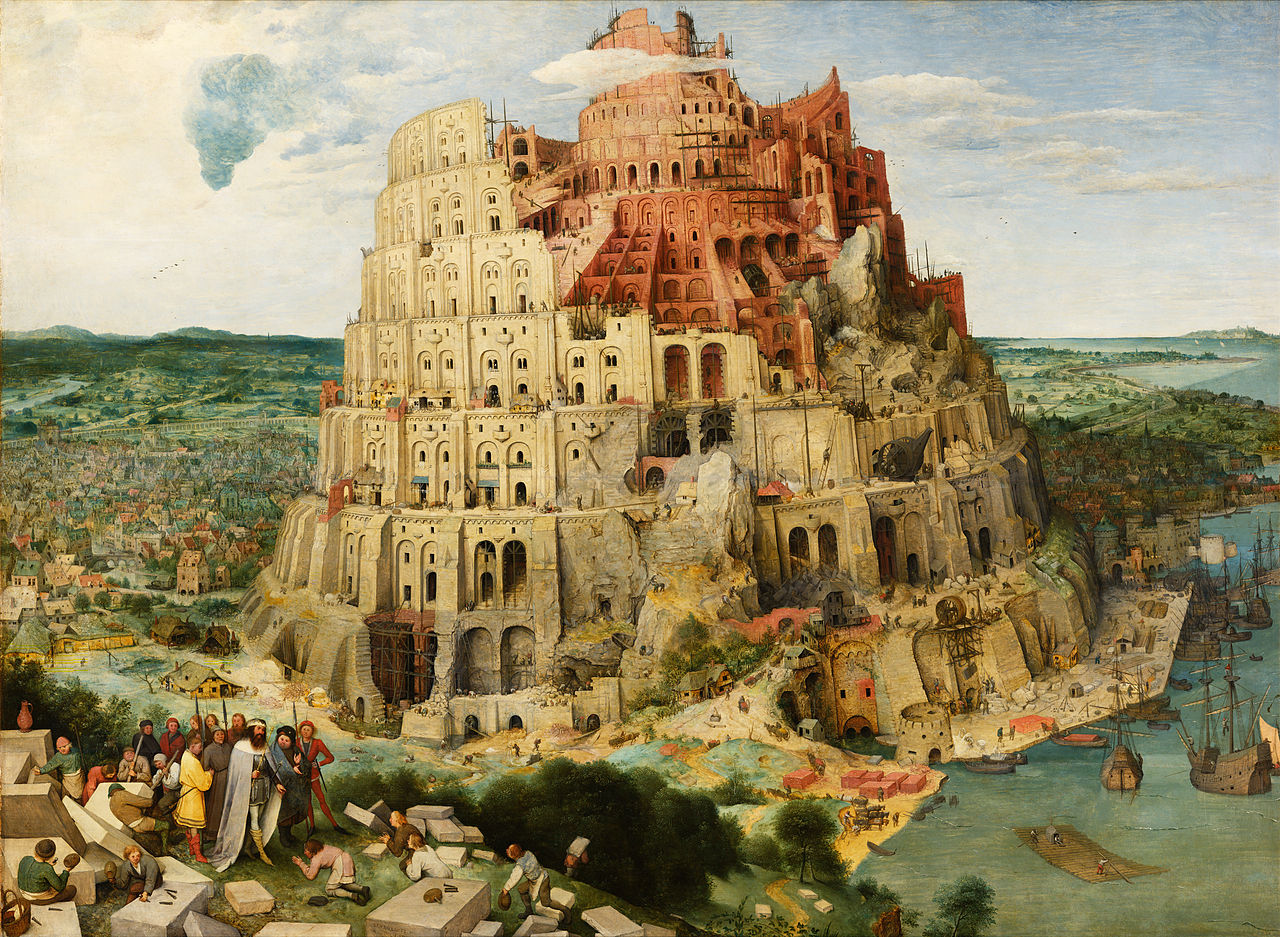
Peter Breughel the Elder’s “The Tower of Babel”

Peter Breughel the Elder’s “The Tower of Babel”

I love the story from Genesis of the Tower of Babel. Here it is from Verses 1-9 of Chapter 11 in the King James Bible:

And the whole earth was of one language, and of one speech.

And it came to pass, as they journeyed from the east, that they found a plain in the land of Shi’nar; and they dwelt there. And they said to one another, Go to, let us make brick, and burn them thoroughly. And they had brick for stone, and slime had they for mortar.

And they said, Go to, let us build us a city and a tower, whose top may reach unto heaven; and let us make us a name, lest we be scattered abroad upon the face of the whole earth.

And the Lord came down to see the city and the tower, which the children of men builded. And the Lord said, Behold, the people is one, and they all have one language: and this they begin to do: and now nothing will be restrained from them, which they have imagined to do.

Go to, let us go down, and there confound their language, that they may not understand one another’s speech. So the Lord scattered them abroad from thence upon the face of all the earth: and they left off to build the city.

Therefore is the name of it be called Babel; because the Lord did there confound the language of all the earth: and from thence did the Lord scatter them abroad upon the face of all the earth.

It is my opinion that language was not the only thing that was confounded at that point: So was religion. Across the face of the earth, there are at least as many religions as there are languages, or even dialects.

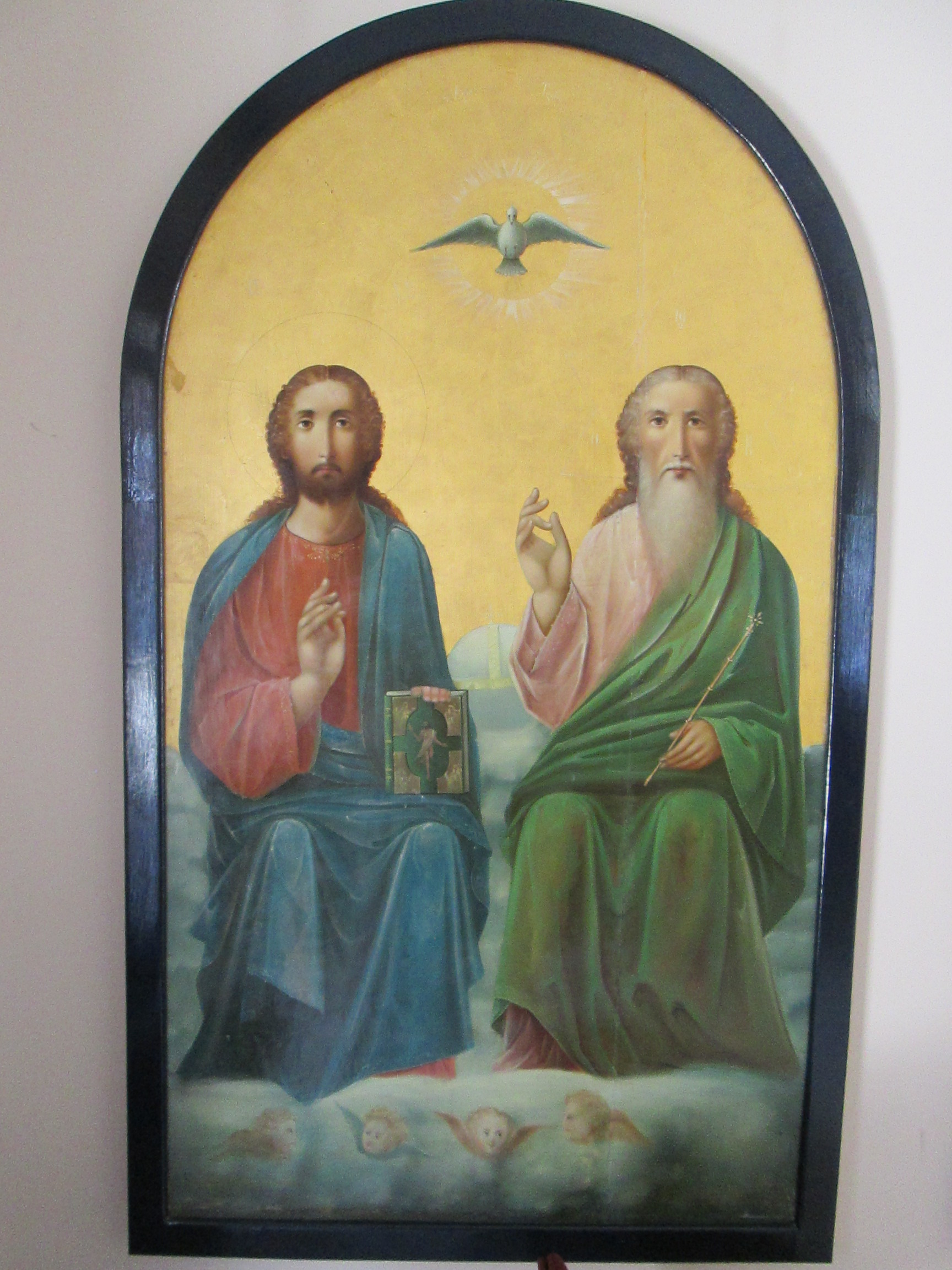
Today Martine and I went to the L.A. Greek Festival at Santa Sophia Cathedral near downtown. Once again we were stunned by the beauty of Saint Sophia, with éclat of all the glittering gold in the icons and decorations. I am curiously drawn toward Eastern Orthodoxy. But then I am also drawn to Roman Catholicism, in which I was raised; Buddhism; Hinduism. Probably to all major religions except the youngest, Islam, which seems to be entering a self-destructive death cult phase.

Depiction of the Trinity in St. Constantine’s Chapel at Saint Sophia

Depiction of the Trinity in St. Constantine’s Chapel at Saint Sophia

I not only believe in God, but in a sense I believe in all of them. I do not currently attend church, but I am thinking of attending services at Saint Sophia when I return from Peru. And while I am in Peru, I will visit scores of Catholic churches built by the Spanish. Also, on the flip side, I will visit the Museum of the Inquisition in Lima.

When the languages of man were all “confounded,” so also was the truth. It was fragmented into thousands of discrete pieces, some of which are beautiful, others of which are damaged, losing whatever truth was originally there.

I believe that, in this life, man must find fragments of the truth and hold on to them, irrespective of their origin. Truth and beauty abound, but also horrors unimaginable. Putting the right pieces together, very like a mosaic, is what life is all about.


Chabuca Granda

Songstress Chabuca Granda (1920-1983)

Peruvian Songstress Chabuca Granda (1920-1983)

When I go to another country, I like to have some idea of their most beloved music. Why? Because it tells me a lot about the culture. For Argentina, I listened to the tango songs of the immortal Carlos Gardel, who died in a plane crash in Colombia some eighty years ago. For Iceland, I love listening to Ólafur Arnalds. For Peru, I picked Chabuca Granda, famous for her song “La flor de la canela,”

Born Maria Isabel Granda Larco on September 3, 1920, Chabuca has a number of her songs available on YouTube:

Granda is known for the nostalgic Afro-Peruvian rhythms in her work. It is not that well known that Peru has a fairly substantial black population, especially in the south, from which Chabuca hailed.

To honor her, the Peruvians have set up a large entertainment space called the Alameda Chabuca Granda along the Rimac River and directly behind the Government Palace. She also has a park dedicated to her in the Barranca neighborhood in which she lived.