Kit Smart and His Cat

Christopher Smart (1722-1771)

Christopher Smart (1722-1771)

Christopher Smart is one of the minor joys of 18th century English poetry. Unfortunately, he had a little mental difficulty which led to him being locked away in an asylum, mostly for his religious mania: He was known for kneeling down in the middle of a busy thoroughfare and launching into prayers.  His friend Dr. Johnson had some affection for the man and his work:

I did not think he ought to be shut up. His infirmities were not noxious to society. He insisted on people praying with him; and I’d as lief pray with Kit Smart as any one else. Another charge was, that he did not love clean linen; and I have no passion for it.

Included here is a selection from his long poem “Jubilate Agno,” which he wrote while an inmate of St. Luke’s Hospital for Lunatics. Consider it a gift to those of you who are cat lovers.

For I will consider my Cat Jeoffry.
For he is the servant of the Living God duly and daily serving him.
For at the first glance of the glory of God in the East he worships in his way.
For this is done by wreathing his body seven times round with elegant quickness.
For then he leaps up to catch the musk, which is the blessing of God upon his prayer.
For he rolls upon prank to work it in.
For having done duty and received blessing he begins to consider himself.
For this he performs in ten degrees.
For first he looks upon his forepaws to see if they are clean.
For secondly he kicks up behind to clear away there.
For thirdly he works it upon stretch with the forepaws extended.
For fourthly he sharpens his paws by wood.
For fifthly he washes himself.
For sixthly he rolls upon wash.
For seventhly he fleas himself, that he may not be interrupted upon the beat.
For eighthly he rubs himself against a post.
For ninthly he looks up for his instructions.
For tenthly he goes in quest of food.
For having consider’d God and himself he will consider his neighbour.
For if he meets another cat he will kiss her in kindness.
For when he takes his prey he plays with it to give it a chance.
For one mouse in seven escapes by his dallying.
For when his day’s work is done his business more properly begins.
For he keeps the Lord’s watch in the night against the adversary.
For he counteracts the powers of darkness by his electrical skin and glaring eyes.
For he counteracts the Devil, who is death, by brisking about the life.
For in his morning orisons he loves the sun and the sun loves him.
For he is of the tribe of Tiger.
For the Cherub Cat is a term of the Angel Tiger.
For he has the subtlety and hissing of a serpent, which in goodness he suppresses.
For he will not do destruction, if he is well-fed, neither will he spit without provocation.
For he purrs in thankfulness, when God tells him he’s a good Cat.
For he is an instrument for the children to learn benevolence upon.
For every house is incomplete without him and a blessing is lacking in the spirit.
For the Lord commanded Moses concerning the cats at the departure of the Children of Israel from Egypt.
For every family had one cat at least in the bag.
For the English Cats are the best in Europe.
For he is the cleanest in the use of his forepaws of any quadruped.
For the dexterity of his defence is an instance of the love of God to him exceedingly.
For he is the quickest to his mark of any creature.
For he is tenacious of his point.
For he is a mixture of gravity and waggery.
For he knows that God is his Saviour.
For there is nothing sweeter than his peace when at rest.
For there is nothing brisker than his life when in motion.
For he is of the Lord’s poor and so indeed is he called by benevolence perpetually—Poor Jeoffry! poor Jeoffry! the rat has bit thy throat.
For I bless the name of the Lord Jesus that Jeoffry is better.
For the divine spirit comes about his body to sustain it in complete cat.
For his tongue is exceeding pure so that it has in purity what it wants in music.
For he is docile and can learn certain things.
For he can set up with gravity which is patience upon approbation.
For he can fetch and carry, which is patience in employment.
For he can jump over a stick which is patience upon proof positive.
For he can spraggle upon waggle at the word of command.
For he can jump from an eminence into his master’s bosom.
For he can catch the cork and toss it again.
For he is hated by the hypocrite and miser.
For the former is afraid of detection.
For the latter refuses the charge.
For he camels his back to bear the first notion of business.
For he is good to think on, if a man would express himself neatly.
For he made a great figure in Egypt for his signal services.
For he killed the Ichneumon-rat very pernicious by land.
For his ears are so acute that they sting again.
For from this proceeds the passing quickness of his attention.
For by stroking of him I have found out electricity.
For I perceived God’s light about him both wax and fire.
For the Electrical fire is the spiritual substance, which God sends from heaven to sustain the bodies both of man and beast.
For God has blessed him in the variety of his movements.
For, tho he cannot fly, he is an excellent clamberer.
For his motions upon the face of the earth are more than any other quadruped.
For he can tread to all the measures upon the music.
For he can swim for life.
For he can creep.

When Terrorists Control the News Cycle

It’s All a Matter of Timing

It’s All a Matter of Timing

I first discovered this during the Iraq war starting around 8-10 years ago. The forerunner of ISIS, Abu Musab al-Zarqawi’s al-Qaida in Iraq, never had to go all out against their American enemies: One attack every few days would keep the news cycle forever buzzing. By the time the story was ready to go to an inner page, there would be a new improvised explosive device (IED) that caused American casualties, and the fearmongering would start up again at full volume.

The bombing in Jakarta was, I really believe, such an incident. Of the seven deaths, five were up the suicide bombers themselves, so the butcher’s bill was negligible. Or it could be as little as the guy in France who attacked a police station with a meat cleaver, only to be met by a hail of bullets from the flics.

Key to this strategy is (1) maintaining a high level of fear (and ISIS knows that Americans are a bunch of scaredy cats) and (2) repeat every couple of days, preferably in a new part of the world. Next time, maybe Iceland or Paraguay or Bermuda. Make people think the ISIS baddies are everywhere and all-powerful. That serves as a potent recruiting aid to bring in new fighters and their molls, especially since there are so many millions of young suburbanites around the world who have little or no moral compass.

I think the best way to combat this strategy is to steer clear of the news: Don’t let it control your life. And feel free to sneer.

The Return of Januarius

Janus: God of New Beginnings

Janus: God of New Beginnings

Just as there are drinking games, there can also be reading games. Such is my annual Januarius tradition, which I’ve been doing for more than fifteen years now. I merely wedded the name of Janus, the two-faced god of new beginnings, withthe month of January: During that month, I only read books by authors whom I have never before read.

So far this month, I have completed:

  • Helgi Olafsson’s Bobby Fischer Comes Home: The Final Years in Iceland, a Saga of Friendship and Lost Illusions
  • Zachary Karabell’s Peace Be Upon You: A Story of Muslim, Christian, and Jewish Coexistence
  • Leonid Tsypkin’s Summer in Baden-Baden
  • Stan Jones’s Shaman Pass
  • Pierre Boulle’s The Face of a Hero

… and the month is not yet half over. I am looking forward to reading works by Sjón (the Icelandic novelist), Yashar Kemal, and Thomas Flanagan—among others.

So far, Leonid Tsypkin is my favorite of the five, with the author’s insight into the life of Fyodor Dostoyevsky and his wife Anna Grigori’evna, though all were pretty good.


Concussion Junction

Are Two NFL Teams Coming to Los Angeles Next Year?

Are Two NFL Teams Coming to Los Angeles Next Year?

Los Angeles has not had an NFL team residents since 1994, when both the Rams and the Raiders picked up their footballs and took them elsewhere. Now it looks like the Rams are coming back in 2016—along with the Chargers. Am I happy about this? Not exactly. I don’t watch American football (though I like to see an occasional World Cup soccer game).

Both teams would play in a new stadium to be built in Inglewood, on the site of the old Hollywood Park Race Track. Until then, they’ll have to play in the old Coliseum (built for the 1932 Olympics), or maybe in some rinky-dink high school stadium.

Oh, well, whatever!

“The Lake Isle of Innisfree”

The Lake Isle of Innisfree

The Lake Isle of Innisfree

As I lurch into another tax season (hopefully my last), images of peace have a stronger hold on me, and virtually nothing is as peaceful as the scene described in William Butler Yeats’s poem “The Lake Isle of Innisfree”:

I WILL arise and go now, and go to Innisfree,
And a small cabin build there, of clay and wattles made:
Nine bean-rows will I have there, a hive for the honeybee,
And live alone in the bee-loud glade.
And I shall have some peace there, for peace comes dropping slow,
Dropping from the veils of the morning to where the cricket sings;
There midnight’s all a glimmer, and noon a purple glow,
And evening full of the linnet’s wings.
I will arise and go now, for always night and day
I hear lake water lapping with low sounds by the shore;
While I stand on the roadway, or on the pavements grey,
I hear it in the deep heart’s core.

Neither Rare Nor Well Done

Perhaps the Most Inventive Funnyman in Television

Perhaps the Most Inventive Funnyman in Television

Because it was a drizzly day (courtesy of El Niño), Martine and I spent the afternoon at the Paley Center for Media in Beverly Hills. While Martine was bringing up episodes of “Superman” with George Reeves, Captain Kangaroo, and “My Little Margie,” I was watching a number of episodes of “The Ernie Kovacs Show.”

What Georges Méliès was to the cinema, Ernie Kovacs was to the medium of television: He was brilliantly inventive and something of a magician. All the other comedians on early TV came up from vaudevillian comedy skits, Kovacs started with the new medium itself. He was not only the starring actor: He was also the director and, if the show had one, the main writer.

Music was a recurring unifying theme to the strange collection of cutaways which might include:

  • A cute young woman taking a bubble bath, with strange things happening in the tub
  • The Nairobi Trio, three apes playing music and annoying one another
  • The furniture in an office acting as instruments, from the filing cabinet to the typewriter to the telephone switchboard to the water cooler
  • Artistic variations on a cowboy gun duel

One recurring piece of music used was “Mack the Knife” sung in German, but he has also used the 1812 Overture (during which we cut to Kovacs breaking a stalk of celery at key junctures), and “The Tennessee Waltz” sung in Polish—or was it Slovenian?—while he unsuccessfully lowers a chained escape artist into the river who never manages to re-emerge.

For the three hours that I watched the shows, I was in seventh heaven. Kovacs is a fellow Hungarian (though he, like me, was born in the U.S.), and he occasionally inserts some phrases in Magyar.

On the way home, I drove by the intersection of Santa Monica Boulevard and Beverly Glen where Kovacs died in an auto accident on my seventeenth birthday in 1962.

The one quote that he is remembered for is typical Ernie: “Television: A medium. So called because it’s neither rare nor well done.” Well, when Ernie Kovacs was on the job, it was well done.

Serendipity: Who’s Afraid Like Virginia Woolf?

British Author Virginia Woolf

British Author Virginia Woolf

The following is the beginning of a book review by Linda Colley of Jenny Uglow’s In These Times: Living in Britain Through Napoleon’s Wars, 1793-1815. The review is entitled “Facing Napoleon’s Own EU” and can be found in the November 5, 2015 issue of The New York Review of Books.

Throughout 1940, Virginia Woolf struggled with the terrors and mysteries of war. Neither of the Woolfs knew that their names were on the “black list” of Britons set to be arrested—and presumably killed—in the event of a successful Nazi invasion, but since [husband] Leonard was Jewish, the couple prepared for the worst. They hoarded gasoline in their garage so as to be able to kill themselves by inhaling carbon monoxide, and took the further precaution of of acquiring a deadly dose of morphine from a friend. But none of this protected them from hearing Hitler’s voice over the radio, or the noise of German bombers flying over their London house at night, rattling its windowpanes.

“Here they are again,” wrote Virginia in a famous essay published five months before her suicide. “It is a queer experience lying in the dark and listening to the zoom of a hornet which may at any moment sting you to death.” Earlier, she had written about how different all this was from British experience of the Napoleonic Wars. Both Jane Austen and Walter Scott lived through these conflicts, she noted, yet neither had mentioned it in their novels. This, she thought, demonstrated “that their model, their vision of human life, was not disturbed or agitated or changed by war. Nor were they themselves…. War were then remote:; wars were carried on by soldiers and sailors, not by private people.”

Unfortunately, Woolf was particularly prey to depression. Her house in London was destroyed by bombing, and her most recent book (a biography of her friend Roger Fry) was not well received. On March 28, 1941, she loaded her pockets with heavy stones and walked into the River Ouse, drowning herself. Her body was not found until weeks later. In her last note to her husband, she wrote:

Dearest, I feel certain that I am going mad again. I feel we can’t go through another of those terrible times. And I shan’t recover this time. I begin to hear voices, and I can’t concentrate. So I am doing what seems the best thing to do. You have given me the greatest possible happiness. You have been in every way all that anyone could be. I don’t think two people could have been happier till this terrible disease came. I can’t fight any longer. I know that I am spoiling your life, that without me you could work. And you will I know. You see I can’t even write this properly. I can’t read. What I want to say is I owe all the happiness of my life to you. You have been entirely patient with me and incredibly good. I want to say that—everybody knows it. If anybody could have saved me it would have been you. Everything has gone from me but the certainty of your goodness. I can’t go on spoiling your life any longer. I don’t think two people could have been happier than we have been.

So when you hear about ISIS and Donald Trump’s latest outrage, remember that it is still possible to survive, and even prevail. I look at Virginia Woolf’s face and cannot help falling in love with it.


What, No Hajj?

Saudi Arabia Has Halted All Flights To/From Iran

Saudi Arabia Has Halted All Flights To/From Iran

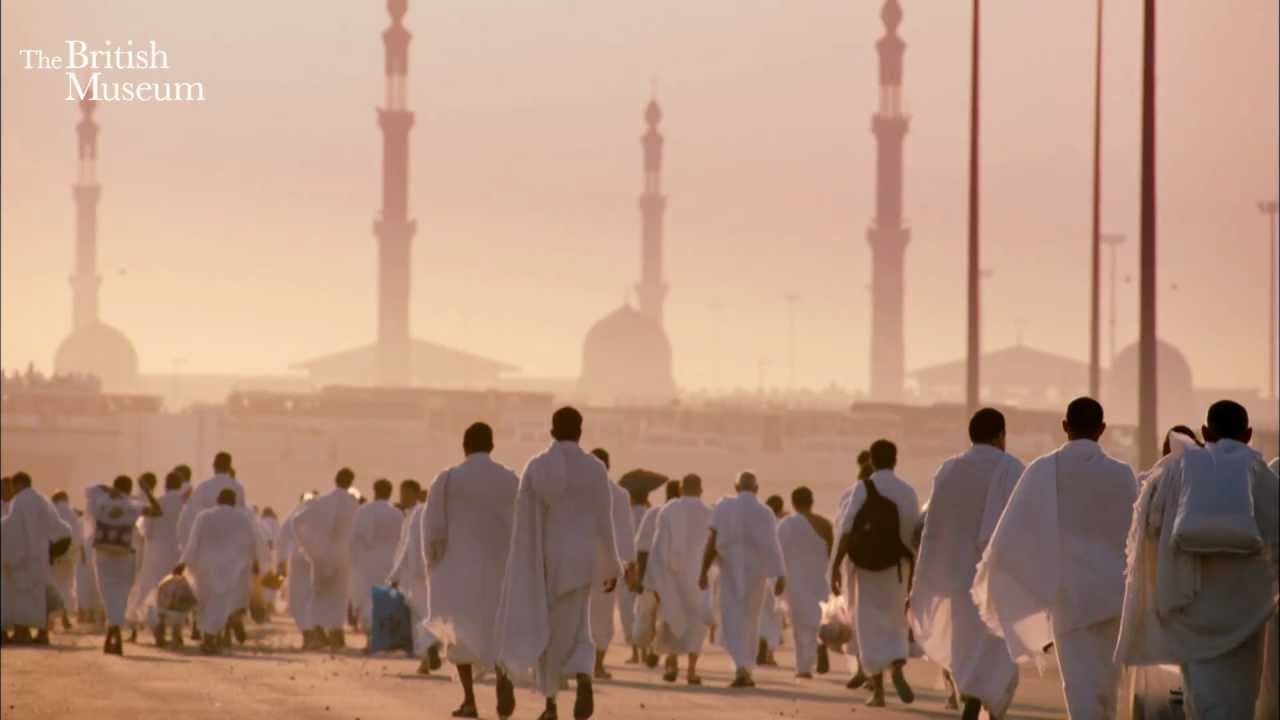
It is a mandatory religious duty for all Muslims, at least once in their life, to make a pilgrimage to Mecca. Now that Saudi Arabia and Iran are on the outs, the Saudis have forbidden all flights linking their two countries. This alone has the potential of leading to further nastiness. Admittedly, Iranian pilgrims can still go by boat (and risk being robbed by Somali pirates) or by land (and risk being robbed by bandits).

I cannot help but think that the real reason for all this nastiness is the conflict in Yemen between Shi’a rebels (called the Houthis) and the Saudis and their allies. In the end, the Saudis may think now is the time to rid themselves of the Shi’a menace once and for all.

Now what is this Sunni/Shi’a split all about? According to the BBC:

In early Islamic history, the Shia were a movement – literally “Shiat Ali” or the “Party of Ali”. They claimed that Ali was the rightful successor to the Prophet Muhammad as leader (imam) of the Muslim community following his death in 632.

Ali was assassinated in 661 after a five-year caliphate that was marred by civil war. His sons, Hassan and Hussein, were denied what they thought was their legitimate right of accession to the caliphate.

Hassan is believed to have been poisoned in 680 by Muawiyah, the first caliph of the Sunni Umayyad dynasty, while Hussein was killed on the battlefield by the Umayyads in 681. These events gave rise to the Shia concept of martyrdom and the rituals of grieving.

There are three main branches of Shia Islam today—the Zaidis, Ismailis and Ithna Asharis (Twelvers or Imamis). The Ithna Asharis are the largest group and believe that Muhammad’s religious leadership, spiritual authority and divine guidance were passed on to 12 of his descendants, beginning with Ali, Hassan and Hussein.

The 12th Imam, Muhammad al-Mahdi, is said to have disappeared from a cave below a mosque in 878. Ithna Asharis believe the so-called “awaited imam” did not die and will return at the end of time to restore justice on earth.

In other words, the roots of the conflict go all the way back 1,400 years and show no signs of slackening.

It’s a sobering thought that we, who cannot even pronounce the name “Muawiyah,” may be affected in some way by this stramash.

The Intimate Enemy

Sunni Anti-Shi’a Propaganda

Sunni Anti-Shi’a Propaganda

In a 1997 lecture entitled “The Origin of Satan in Christian Tradition,” Religious Historian Elaine Pagels writes about how the character of Satan morphed over the centuries from a messenger of God’s to His enemy:

So there are many stories about Satan’s origin; but what struck me about them is this. Diverse as they are, whichever version you choose, they all agree on one thing: that this greatest and most dangerous enemy did not originate (as we might have expected) as an outsider, an alien, or stranger. Satan is no distant enemy: on the contrary, he is an “intimate enemy”—one’s closest relative, older brother, or trusted colleague—the kind of person on whose goodwill and loyalty the well-being of family and society depends, but one who turns unexpectedly hostile, jealous, and dangerous.

So it is not the total outsider whom we hate, but the heretic—one whose belief is close to ours except on some details which to some will seem trivial. Such were the Arians and Nestorians in the early days of the Christian Church. And such are the Sunni and Shi’a over the last 1,400 years.

With the execution of a prominent Shi’a cleric (Sheikh Nimr al-Nimr), Saudi Arabia has earned the undying hatred of Iran. For many centuries, there has been a small Shi’a minority in the Eastern portion of the Arabian peninsula, and the executed sheikh was their religious leader. Shown below is a map illustrating the distribution of the two sects in the Middle East:

Percent Shi’a in the Middle East and North Africa

Percent Shi’a in the Middle East and North Africa

This comes at a bad time for Saudi Arabia, as the sharp decline in the price of oil is about to have dire consequences in the ability of the kingdom to provide benefits for its favored citizens. The price of gas has jumped 50%, water and electricity are going up, and the country’s safety net is in danger.

So what should we do? I think this is a good time to put our hands firmly in our pockets and start whistling until we see who wins, King Kong or the Dinosaur.

Living in the Desert

By the Thousand Palms Oasis

By the Thousand Palms Oasis

When my brother first told me he was thinking of moving to he Coachella Valley, Martine and I both thought it wasn’t a good idea. Martine had lived for a couple of years in Twenty Nine Palms, where she worked at the Naval Hospital at the Marine Combat Center there. She hated the desert. As for me, I do not like living in a hot climate.

Of course, if anyone could make it work, it’s Dan. After all, his previous home in Paso Robles was almost as hot as Palm Desert. When he wanted to call down, he and Lori would drive to the beach along the Central Coast, which was frequently 20-30 degrees Fahrenheit cooler. Living in Palm Desert, he is surrounded by mountains. He is already working on a log home at Idyllwild in the foothills, where the elevation of 5,413 feet (1,650 meters) affords some protection from the summer blast on the floor of the Coachella Valley.

I love visiting the desert, especially in the cooler months. Dan is not far from Joshua Tree National Park and Anza-Borrego State Park, which are two favorite destinations of mine.