“This Must Be Thursday”

The Richard Riordan Central Library in Downtown Los Angeles

The entire quote is from Douglas Adams, author of The Hitchhiker’s Guide to the Galaxy: “This must be Thursday. I never could get the hang of Thursdays.” And that’s the way I felt when I was working full time in an accounting office. I never did get along very well with my boss (nobody could), so when he cut me back to two days a week, I saw that as an opportunity. I said, “Okay, I’ll work on Tuesdays and Fridays.” Those were days when our late tax manager worked, so my boss couldn’t use me as a highly unqualified tax manager, which he was not above doing.

One Thursday in June 2016, I took the Expo Line downtown and hung out at the Central Library on Fifth Street. Just by chance, I noticed that there was a regular Mindful Meditation session conducted by the UCLA Mindful Awareness Research Center (MARC), and I attended.  And I’ve been attending ever since. I read for a couple of hours in the Literature and Fiction Department on the top floor, and usually check out a couple of books. Then I go to Meeting Room A on the ground floor where the sessions are held.

In more ways than one, the Central Library has become a part of my life. I feel energized by these meditation sessions. Afterwards, I go for lunch either to the Grand Central Market on Hill Street, Little Tokyo, Chinatown, or Olvera Street. Then I take the Big Blue Bus R10 freeway flier back home.

So now I can say I get the hang of Thursdays. It’s one of my favorite days of the week. That leaves Mondays and Wednesdays for doctors’ appointments and miscellaneous explorations of this gigantic city of which I am becoming more of a part as time passes.

 

A Fort from the Apache Wars

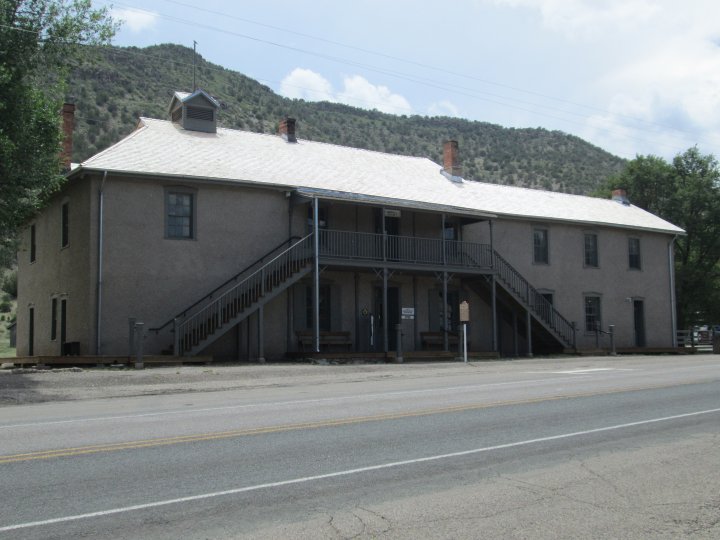
Porch at Fort Stanton, New Mexico

Not far from Lincoln, New Mexico, which saw the Lincoln County War in which Billy the Kid was involved, lies a U.S. Cavalry fort from the days of the Apache Wars. In fact, it also played a role in the Lincoln County War—on the side of the Dolan/Murphy cabal. Most U.S. Cavalry forts in the Old West were constructed of adobe and so were eroded to nothingness by the rains. Fort Stanton, on the other hand, was built of stone and faced with whitewashed stucco, and so has come down to us more or less intact.

In fact, after the Indian Wars, the fort was used for various other purposes, such as a tuberculosis hospital and a prison camp for Nazi POWs. It is now in the New Mexico State Park system and has a museum and a number of outbuildings which are open to visitors.

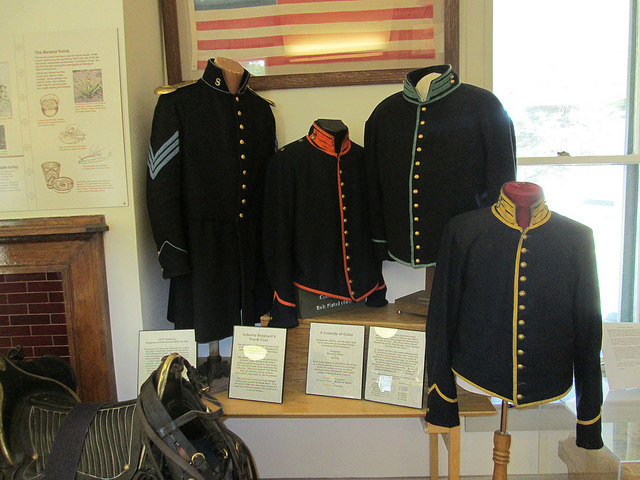
Cavalry Tunics in the Fort Stanton Museum

Martine and I saw Fort Stanton the same day we visited the town of Lincoln, which is only about a quarter of an hour away. The museum and outbuildings can be visited in about two hours is one is thorough, and an hour if one just wants a quick look at the museum. It’s an unusually pleasant place, with the Rio Bonito running through the grounds, and a helpful docent managing the welcome desk.

“A Pile of Dead Leaves”

Raymond Queneau (1903-1976)

Raymond Queneau has been known to me for some time: I read We Always Treat Women Too Well (1947) twice. But now that I have finished The Last Days: A Novel (1936), I think I have discovered a major talent.

The Last Days is the story of what one might call a social cohort, a group of people of varying ages who know each other to varying degrees. Interestingly, there are only two women in the cohort, Suze and Fabie, and they enter in only insofar as they have relationships with the males. Some of the males are students who are trying to study for a diploma in philosophy from the École Normale Supérieure; one is an aging teacher of history; another is a con man; and there are other various hangers-on. The one truly superior figure is the waiter Albert, who has everything all figured out, as described by his co-worker, Louis:

He didn’t only know how to see the future. He was also a philosopher. A real one. He used to say to me: “You see, the customers, they’re like a pile of dead leaves.”

I asked him why. He answered. “Leaves, when they’re on the tree, if you didn’t know that autumn existed you might think they’d stay there forever. That’s like our customers. They come back every day as regular as clockwork: you think they’ll go on doing so forever. But then one day the wind blows as carries the leaves off to the gutters and the street sweepers make little piles of them on the edge of the pavements to await the dust-cart. Me too, every year I make my little pile when the autumn arrives, my little pile of dead souls.”

Albert’s one goal in life is to win back the money that his father lost at the races: No more, just enough to live a comfortable life in retirement, and not a sou more. And he actually manages to do this, returning to work at the café the next day.

The others, such as the student from Le Havre, Vincent Turquedenne, manage to lose their virginity, hang out with their friends, and even get their diploma. The history teacher—feeling he spent his whole life teaching geography while he himself never traveled—dies and has a magnificent funeral. The con man figures he would be immortal if he never laid down, because that’s what kills one, but then gets sick and is put to death and, of course, dies.

There is a simple beauty to this story that makes me want to read more of Queneau’s work. Fortunately, a lot of it is available.


Leaving the Heat Far Behind

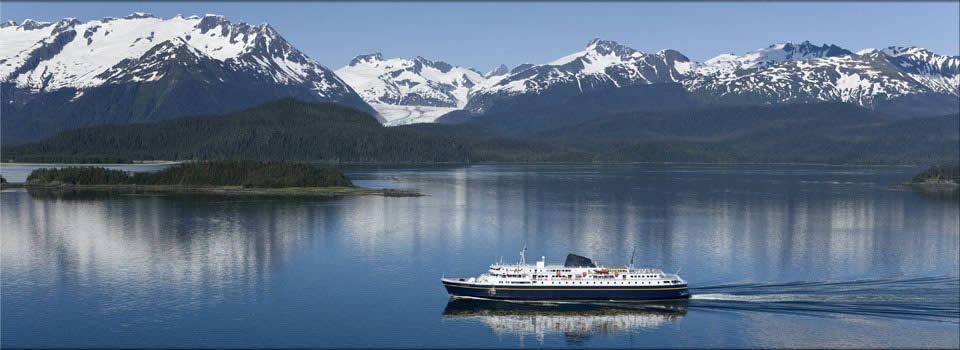
One of the Seagoing Ferries of the Alaska Marine Highway

We’re barely into July, and I’ve already had it with this summer! It started with triple-digit daily temperatures in New Mexico and continued with a Mexican Monsoon heat wave in Southern California. I am looking to take a vacation along Alaska’s Inside Passage using a combination of a flight and a series of short trips on the Alaska Marine Highway. I would not consider taking a regular cruise line for the following reasons:

  • I don’t want to eat myself into an early grave.
  • I don’t want to be sociable with other passengers: I would rather grimace at them than play in their reindeer games.
  • I don’t want to pay a ridiculous single-traveler penalty—because I would be going alone, me and my Kindle loaded with 1,500 books.

The places I would like to visit include Ketchikan, Sitka, Juneau, the Mendenhall Glacier, Skagway, and nearby parts of the Yukon. Ideally, I would go after the first frost has killed off most of the mosquito population. I understand there is a narrow gauge railroad that connects Skagway with Carcross in the Yukon, and I would not be averse to visiting Whitehorse.

My question is: Can I manage to afford two vacations in one year? Perhaps, if I’m lucky. But I have a strong desire to leave summer far, far behind me.


Alienation Effect

Rod Serling with Playhouse 90 Logo

Today was a strange day. It was beastly hot and humid, with a Mexican Monsoon effect. Having no air conditioning in our apartment—and living in an area that regularly gets hit by power blackouts—Martine and I decided to go to the Paley Center for Media in Beverly Hills.  The lobby was crowded with young tourist couples seeing the displays about American Horror Story, a series on FX with which I was previously unacquainted. These guys (and their women) were heavily tattooed, wore their baseball hats backwards, did not know to flush toilets, and led with their smart phones taking pictures of everything in sight.

I suddenly felt old. Here I was with a large group of young people that made me feel alienated. And here I was going to see a couple of Playhouse 90 episodes from 1959. I might has well have been talking in Armenian to a group of prairie dogs. Did I feel bad about that? In a way I did, though I would not have considered going far to seek common ground with them: The gulf between me and them yawned as big as the Grand Canyon.

But I felt delighted with the Playhouse 90 episodes I saw, shot in consecutive weeks. The first was “The Town That Turned to Dust,” written and introduced by Rod Serling and directed by John Frankenheimer. The story was about a lynching in a small Texas border town called Dempseyville of a Mexican youth who was accused by William Shatner, as the local dry goods merchant, of beating up his wife Fay Spain and robbing the store. The sheriff who is powerless to prevent the lynching is Rod Steiger, in a powerful role, with James Gregory as a visiting newspaperman.

The other was a dramatization of “The Great Gatsby” starring Robert Ryan as Gatsby and Jeanne Crain as Daisy May Buchanan. Rod Taylor was excellent as Nick Carraway. Rod Serling introduced the episode, which was directed by Franklin Schaffner.

Although I do not watch much (if any) current television, I have a great deal of love and respect for the early days of the medium. Back at the beginning, they not only knew how to produce superlative entertainment, but used people who knew how to act, not just nod their heads meaningfully.

Flateyri Will Get You Nowhere

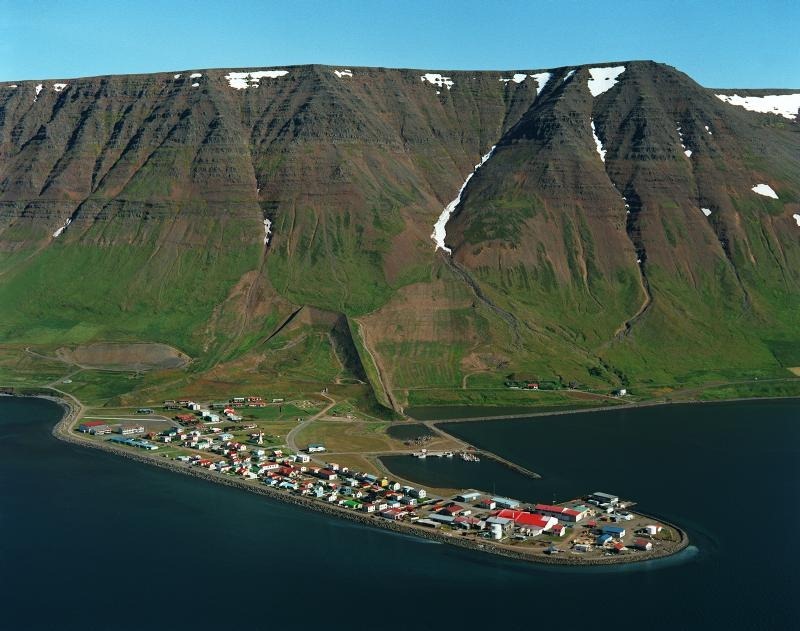
The Town of Flateyri in Iceland’s Westfjords

One of the most picturesque parts of Iceland is its northwest, usually called the Westfjords. Here the mountains come close to the coast, and distances between towns are magnified by roads that laboriously travel around the shores of the long fjords that characterize the region. One town I went through in 2013 was Flateyri on the shores of Önundarfjördur, scene of a disastrous avalanche in October 1995. The town had a small population to begin with; and, after twenty people died in the avalanche, many of the survivors pulled up stakes and moved to other parts of Iceland which were not as susceptible to avalanches.

There is still an active fish processing industry in Flateyri, so guest workers from Poland and the Philippines were invited to take up the slack. This caused some problems, as the town fractured on cultural fault lines, with the native Icelanders not mixing well with the Poles and Filipinos, and the latter not making much of an effort to mix with the natives. You can read about this in a 2006 article from the Reykjavík Grapevine. I imagine that, over the last eleven years, the situation as changed for the better. For one thing, there is now a tunnel connecting Önundarfjördur with Isafjördur, the largest town in the Westfjords, taking hours off the trip by highway. I took this tunnel, called the Bolungarvíkurgöng, and it is quite an achievement—17,717 feet in length,

To protect against future avalanches, the Icelanders built a retaining wall (visible in the above photo, shaped like an upside-down “v”). The local restaurant, Vagninn, has re-opened; and a cultural center has been built.

Small towns in Iceland have had a difficult time surviving, especially when there are no large local projects such as aluminum smelters to act as an employment draw. Meanwhile Reykjavík continues to grow at the expense of rural Iceland. One possibility is that global warming will benefit rural Iceland, with more cash crops being grown outside of greenhouses.

Near Is Far and Far Is Near

Patrick Hughes and One of His Reverspectives

I have always loved optical illusions. There is one British painter named Patrick Hughes whose entire work concentrates on what he calls Reverspectives. These are paintings that when viewed by still photography are flat, but are not originally created so. (See the above illustration, and then the one below.) I suggest you take a look at the artist’s own website or this Futility Closet posting.

A Still Photograph View of a Similar Painting

It never fails to amuse me how something so simple as perspective could be put on its end and played with. Take a look at his work and let me know what you think.

Where Are Our Courageous Reporters?

Norman Mailer (1923-2007)

The late 1960s were a bad time for the United States. We were in a fiercely unpopular war in Viet Nam. I had gotten radicalized and joined the Resistance, which not only protested the war but attempted to interfere with the draft induction process. I returned by draft card to the Selective Service System in Cleveland and told them politely what they could do with it. Running for president that year was Richard Nixon for the Republicans, with Democratic candidates to be chosen later in Chicago.

Reporting on that convention was Norman Mailer, who within a short time became like a god to me. (So he went off the rails a bit later: He was human after all.) Mailer had come out with a number of nonfiction books that I read and re-read religiously. They included:

  • Advertisements for Myself (1959)
  • The Presidential Papers (1963)
  • Cannibals and Christians (1966)
  • Armies of the Night (1968)
  • Miami and the Siege of Chicago (1968)

I just finished re-reading Miami and the Siege of Chicago, which made me shake my head sadly that there was no such quality reportage during the ongoing train wreck that is Trumpf. Mailer died ten years ago, and the only other candidate—Hunter S. Thompson—blew out his brains two years earlier. There are thousands of voices raised against Trumpf, but they seem tinny in comparison to what Mailer and Thompson were capable of.

Take this prophetic quote from Mailer’s description of Nixon’s convention win in Miami:

Of course, Republicans might yet prove frightening, and were much, if not three-quarters, to blame for every ill in sight, they did not deserve the Presidency, never, and yet if democracy was the free and fair play of human forces then perhaps the Wasp must now hold the game in his direction for a time. The Left was not ready, the Left was years away from a vision sufficiently complex to give life to the land, the Left had not yet learned to talk across the rugged individualism of the more Rugged in America, the Left was still too full of kicks and pot and the freakings of sodium amytol and orgy, the howl of electronics and LSD. The Left could also find room to grow up. If the Left had to live through a species of political exile for four or eight or twelve good years [try 50!], it might even be right. They might be forced to study what was alive in the conservative dream. For certain the world could not be saved by technology or government or genetics, and much of the Left had that still to learn.

Perhaps the biggest lesson they had to learn was unity. The Left is known today as a circular firing squad, wounding itself repeatedly over minor issues and leaving the major ones to the Right.

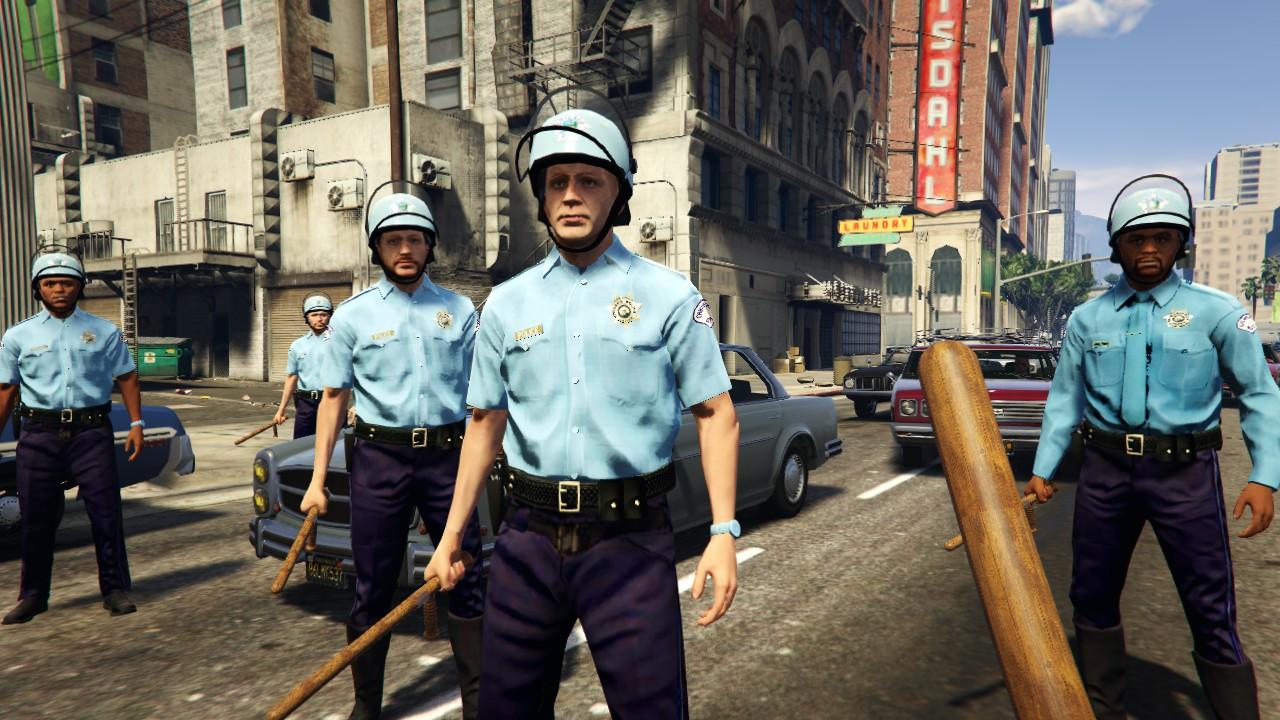
Chicago Riot Police 1968

The conservatives of 1968 were nothing compared to the Alt-Right, the Ku Klux Lan, and the other fascist forces brought into prominence by Trumpf’s 2016 victory. I will write what I can, when I can, but I am far from being either a Mailer or a Thompson.

And in this, our time of maximum danger, the media have failed America by bowing instead to the wishes of their corporate overlords.


Billy the Kid and the Lincoln County War

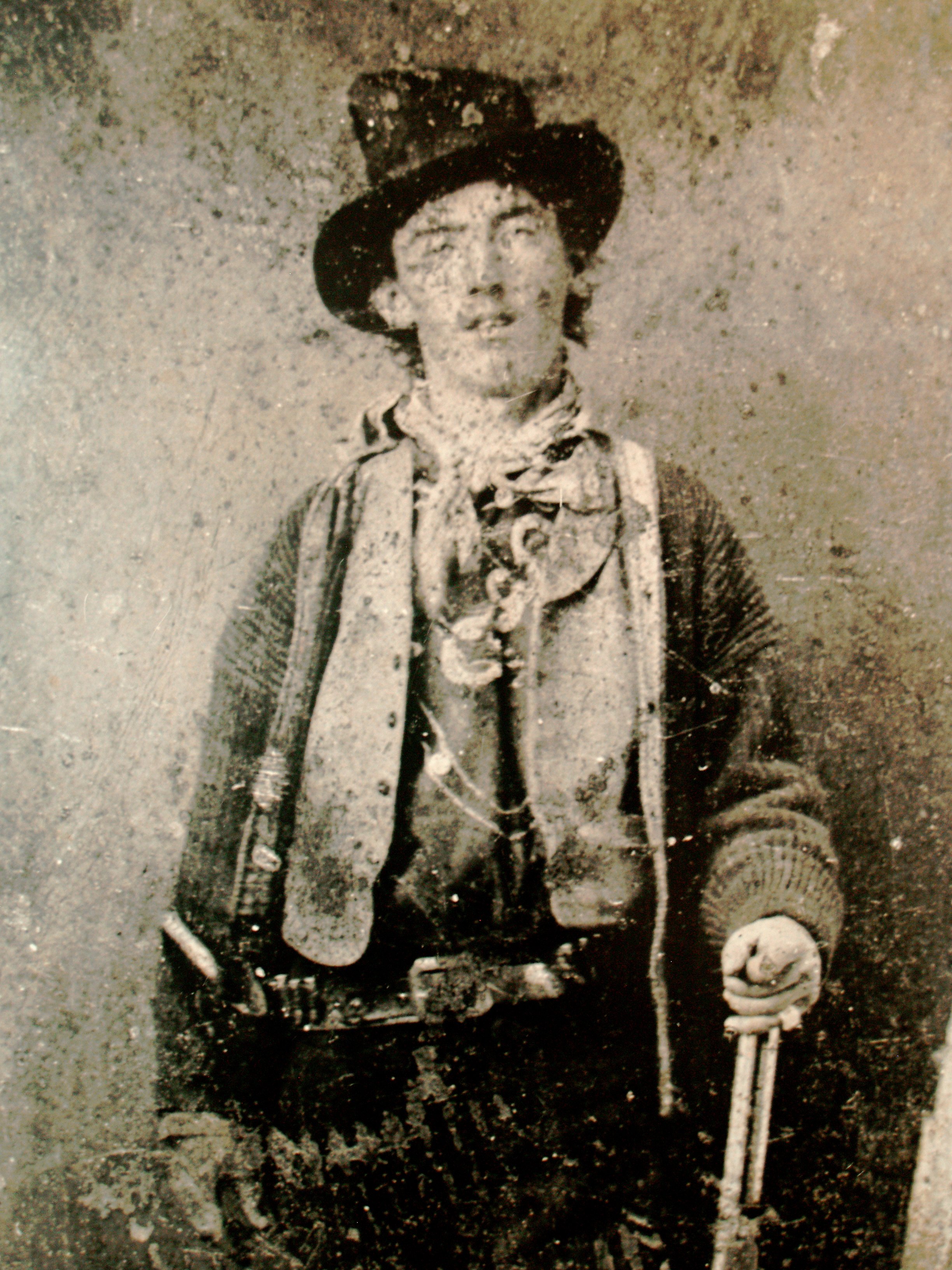
Billy the Kid

The town of Lincoln, New Mexico, looks very much today the way it did in 1876 when the Lincoln County War flared up. On one hand were Dolan and Murphy, who ran a store on the main drag, when another store operated by Tunstall and McSween opened up down the street. One of the key figures in the conflict between the two sides was a young man who has come to be known as Billy the Kid. He was known to be handy with a gun and was blamed for several murders.

He tried to exonerate himself, but the governor of the territory at the time, General Lew Wallace (author of Ben-Hur), weaseled out of his promise to support him. Billy was holed up in the courthouse which had been the Dolan store and held for trial.

The Lincoln Courthouse, Formerly the Dolan Store

Billy managed to get a gun and shoot the two deputies who were guarding him, J. W. Bell and Bob Ollinger. He managed to escape from Lincoln, but was finally gunned down in Fort Sumner by Sheriff Pat Garrett. (We didn’t make it to Fort Sumner, but I’m saving it for a future trip.)

Below is a bullet hole supposedly from Billy’s gun while he was trying to escape from the Lincoln Courthouse.

A Bullet Hole from Billy’s Gun?

Martine and I enjoyed Lincoln. The whole town is more or less devoted to the legend of Billy the Kid and the Lincoln County War.

Kilroy Was Here

El Morro National Monument in Ramah, NM

One place I have visited several times in my travels through New Mexico is El Morro National Monument, known for bearing “graffiti” from the Anasazi, the Spanish Conquistadores with Oñate and Coronado, and American scouting parties of the 1850s. There they all are, along the east bluff of the butte. And if that’s not enough, you could climb to the top (only a couple hundred feet) to see the ruins of Atsinna, the ruins of a well defended Anasazi pueblo with long views in every direction.

The day we went, there was an interesting ranger presentation on the United States Camel Corps, which came into existence at the behest of Secretary of War Jefferson Davis in 1853. Many of the names signed on the wall of El Morro was from members of this short-lived army unit. Eventually, the idea was abandoned; and many of the camels were sold into zoos, and some even ended up at Fort Tejon on the Grapevine between Los Angeles and Bakersfield.

Anasazi Petroglyphs at El Morro

El Morro is just one of the many attractions along New Mexico Highway 53, which runs through the Zuñi Reservation, near Ramah’s Wild Spirit Wolf Sanctuary, El Morro, and El Malpais National Monument ending up at Grants and I-40. If you are traveling between Gallup and Grants, it is far better to go out of your way and spend some time along this fascinating route.