A Long Flight to … Where?

This may sound strange to you, but I am surviving the rigors of self-quarantine because I am good at lying to myself.

The Coronavirus Quarantine Is Sort of Like Jet Lag

I have on occasion taken some longish flights to Europe and South America. The ones to Europe are particularly problematical because I arrive early in the morning after a night that has lasted for only a few hours. I know that if I drop into bed upon check-in at my hotel, I will awake while it is still light; and I won’t be able to go to sleep until the next morning.

So what do I do?

  • First of all, I pretend to myself during the flight that I am somehow outside of time, and that during the flight, time has no meaning.
  • Most important, I set my watch to the time zone of my destination. Nobody else I know does this: They insist on holding on to the time zone of their city of origin.
  • When I arrive, I stay awake until it is a reasonable bedtime in my destination.

When I went to Iceland, for example, I arrived in June—when the sun doesn’t set until the wee hours of the morning. I ate extra meals, went on a walking tour of Reykjavík, and finally collapsed in bed while the sun was still up around midnight. I woke up refreshed at an acceptable time the next morning.

So what does all this have to do with the coronavirus? Fortunately, Martine and I are retired, so I could pretend that this whole period of the outbreak is like a long flight to nowhere.

A Nook of My Library Circa 2002

I have in my apartment several thousand books as well as hundreds of films on DVD. With my subscription to Spectrum Cable, I have access to hundreds of films for no additional cost using their On Demand service. Plus: As a member of Amazon Prime, I have access to thousands of other films.

So on my “flight” to nowhere during this seemingly endless quarantine, I am reading 12-18 books a month as well as seeing 25 or more feature films a month. (And in between reading and film viewing, I do all the cooking and go out for walks.)

I realize I would be in a radically different situation if I had to worry about a job, but fortunately I don’t. I have to worry that that madman in the White House may decide to cancel Social Security or destroy the value of the American dollar, but other than that I am not dependent on the workplace—though I am affected when restaurants are shuttered, museums and libraries closed, and so on.

There is an 1884 novel by a French writer named Joris-Karl Huysmans called Against Nature (in French À Rebours) about a dilettante names Jean des Esseintes who, instead of actually going on a vacation, does an armchair traveler “staycation” and is happy about it. The epigraph to the novel is a quote from the 14th century Flemish mystic Jan van Ruysbroeck:

“I must rejoice beyond the bounds of time…though the world may shudder at my joy, and in its coarseness know not what I mean.”

Magical Architecture: Mesa Verde

It’s Like a Miniature City Cut Inside a Cliff

As a kid, I got a lot of my inspirations from Carl Barks’s Uncle Scrooge Comics. One episode that particularly got me going was entitled “The Seven Cities of Gold,” about a city of cliff dwellings made of gold that the Spanish conquistadores had somehow overlooked. It was called Cibola.

After the city was accidentally destroyed by Huey, Dewey, and Louie, I vowed to find it—and I did. It was at Mesa Verde National Park near Cortez, Colorado. Here are a few images from the comic:

Uncle Scrooge Finds the Seven Cities of Cibola

If you ever get a chance to visit Mesa Verde, be sure to visit the Cliff Palace ruins. You can actually climb down to see them with a ranger (that is, when the coronavirus infestation finally dies down). Martine and I saw them some years ago, though Martine was troubled with altitude sickness. The elevation there is between 7,000 and 8,500 feet (2133 to 2591 meters).

Anasazi Ruins at Cliff Palace, Mesa Verde National Park

Life must have been difficult for the Cliff Palace dwellers, as they had to haul water in using ladders. The ruins were deserted around the same time that many other Anasazi ruins, such as Chaco Canyon, were abandoned.

What happened to the inhabitants? As I wrote earlier regarding Chaco, I am sure their descendants are the Pueblo Indians of Arizona and New Mexico.

Karma Is a B*tch

Both Trump and Melania Have Come Down with Coronavirus

The new has gotten around that both the President and his First Lady have contracted the Covid-19 virus. Although my contempt for Trump remains at high levels, I do not wish this type of evil upon him or his family—well, maybe for Don Junior.

I see our President as a man wracked by fear and uncertainty, but afraid of acknowledging that, as a human being, he can take sick and die. In his book, that would be considered “losing.” Hey, we are all losers one way or the other. The real measure of a person is how he or she rebounds from it.

Just today I was reading a fifty-year-old Japanese sci-fi novel by Kobo Abe entitled Inter Ice Age 4. In it, I found this wise quote: “I do not know how many props support the world, but three of them at least are obtuseness, ignorance, and stupidity.” How true!

I realize that the President’s illness throws all kinds of monkey wrenches into the upcoming election, particularly if his illness becomes threatening. If, as a result of this, Americans begin taking the coronavirus threat more seriously, it will save lives.

One thing for sure, the dialogue about the virus can be expected the change suddenly and markedly.

Magical Architecture: Santa Catalina (Arequipa)

A Warren of Narrow Pedestrian Walkways

Surprisingly, the most magical places I visited in Peru were not the world-famous Inca ruins at Machu Picchu or other places, but rather the Spanish churches and convents. After all, the Inca had no writing, so while their ruins showed an incredible knowledge of masonry that could withstand severe earthquakes, there was little that aroused my imagination.

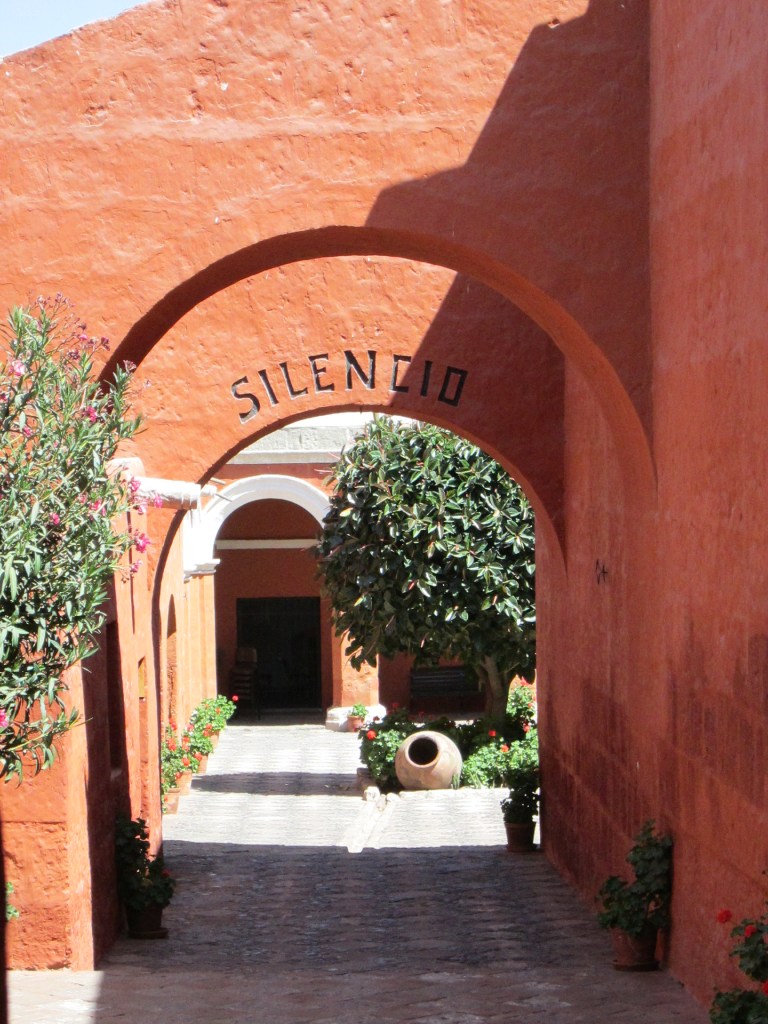
A place that did, however, was the giant convent of Santa Catalina in Arequipa. It occupied something like a whole square mile that was walled off from the city that surrounded it and had a warren of narrow pedestrian walkways.

It Was, After All, a Convent

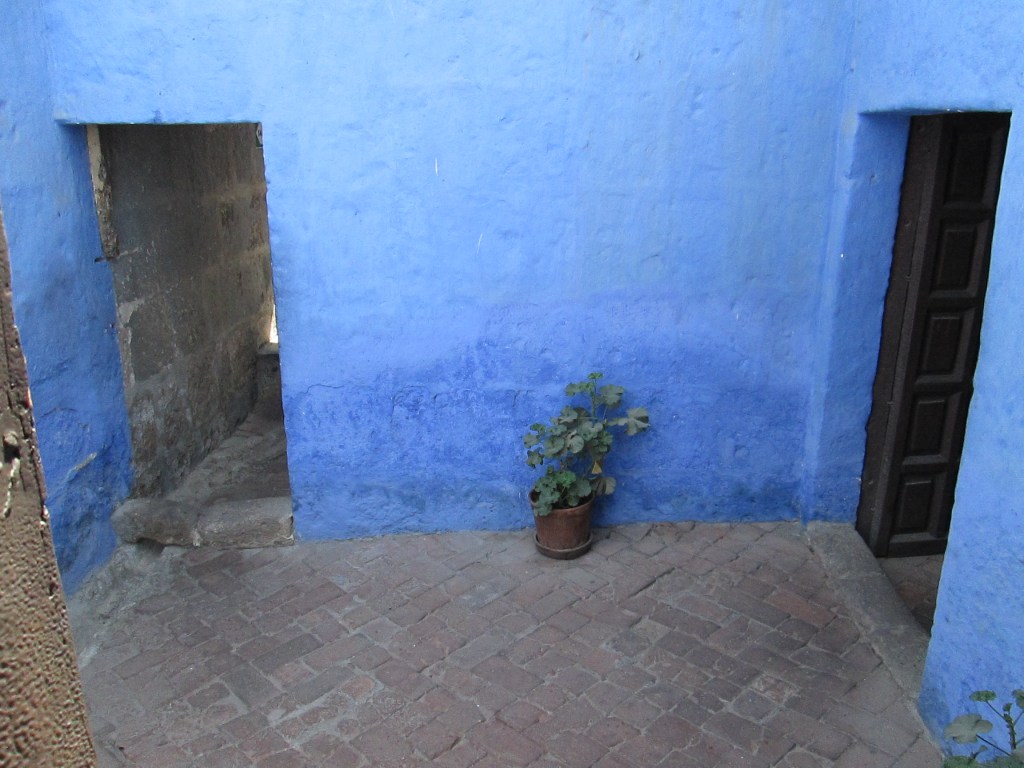
I spent an entire day, from morning to late afternoon, wandering around the grounds of Santa Catalina, with its monastic cells, courtyards, kitchens, chapels, and even a strange room where the faces of nuns who had died were painted on canvases and displayed.

At Times, It Was Almost Like Modern Art

As Christianity begins its slow fade in the Western World, I begin to look upon religious monuments of the past as being every bit as interesting as that of ancient civilizations. In Peru, I loved visiting the old churches, convents, and museums of ecclesiastic art. I must have attended a dozen masses, just because they took place while I visited.

The Walls Were All Either Blue or Dark Orange

I took dozens of photos which I could have shown here, because Santa Catalina mesmerized me. If you should happen to go to Peru, you will probably wind up in Cusco and Machu Picchu, but for your health, it is better to go first to a place where you will not be so afflicted by the dread soroche (altitude sickness). Arequipa, at 7,660 feet (2,335 meters) is a good place to prepare yourself.

And not just because of Santa Catalina!