Serendipity: Marley’s Ghost

Tiny Tim with Scrooge in Dickens’s A Christmas Carol

In honor of Christmas, I will excerpt a brief scene from Charles Dickens’s A Christmas Carol, representing the first moment when Ebenezer Scrooge realizes that something is not quite right. He sees, instead of the usual door knocker, the face of his dead partner Jacob Marley. (I know I was a little hard on Dickens in a post I wrote last week, but I think that this particular story is not only one of his best: It has influenced the way that Christmas is celebrated across the West.)

Now, it is a fact, that there was nothing at all particular about the knocker on the door, except that it was very large. It is also a fact, that Scrooge had seen it, night and morning, during his whole residence in that place; also that Scrooge had as little of what is called fancy about him as any man in the city of London, even including—which is a bold word—the corporation, aldermen, and livery. Let it also be borne in mind that Scrooge had not bestowed one thought on Marley, since his last mention of his seven years’ dead partner that afternoon. And then let any man explain to me, if he can, how it happened that Scrooge, having his key in the lock of the door, saw in the knocker, without its undergoing any intermediate process of change—not a knocker, but Marley’s face.

The Door Knocker Transposed into Marley’s Face

Marley’s face. It was not in impenetrable shadow as the other objects in the yard were, but had a dismal light about it, like a bad lobster in a dark cellar. It was not angry or ferocious, but looked at Scrooge as Marley used to look: with ghostly spectacles turned up on its ghostly forehead. The hair was curiously stirred, as if by breath or hot air; and, though the eyes were wide open, they were perfectly motionless. That, and its livid colour, made it horrible; but its horror seemed to be in spite of the face and beyond its control, rather than a part of its own expression.

As Scrooge looked fixedly at this phenomenon, it was a knocker again.

To say that he was not startled, or that his blood was not conscious of a terrible sensation to which it had been a stranger from infancy, would be untrue. But he put his hand upon the key he had relinquished, turned it sturdily, walked in, and lighted his candle.

He did pause, with a moment’s irresolution, before he shut the door; and he did look cautiously behind it first, as if he half expected to be terrified with the sight of Marley’s pigtail sticking out into the hall. But there was nothing on the back of the door, except the screws and nuts that held the knocker on, so he said “Pooh, pooh!” and closed it with a bang.


Aleupkigna

Baldwin Lake at the Los Angeles Arboretum in 2017

One of the most paradisaical places in Southern California is the Los Angeles Arboretum, and most specifically—particularly in years when the artesian wells in the area are flowing—Baldwin Lake and “Baldwin’s Belvedere,” the Queen Anne-style cottage and its grounds on the shore of the lake.

Where the Arboretum now sits used to be called Aleupkigna by the Gabrielino Indians who occupied the site. Then, in 1875, Elias Jackson “Lucky” Baldwin purchased the land and turned it into his estate.

Lucky Baldwin’s “Belvedere,” a Queen Anne Cottage on the Shore of the Lake

As soon as the coronavirus quarantine begins to fade away, Martine and I would like to spend a leisurely day there feeding the geese and ducks (which we’re not supposed to do, but you tell Martine that).

The Gabrielino Indians who lived here are pretty much scattered to the four winds, except they gather together at times to remember what they lost. The tribe has no reservation and is not recognized by some government authorities. One of their main sites is within walking distance of me: Kuruvungna Springs, also called Gabrielino Springs, is on the grounds of University High School at Barrington and Goshen in West Los Angeles. Every year, they have a low-key powwow at the Springs around Columbus Day.

Favorite Films: Winter Light (1963)

The Middle Film of Ingmar Bergman’s Trilogy on the Silence of God

The film is almost impossibly bleak. At the very beginning, a parishioner comes to the Lutheran pastor played by Gunnar Björnstrand and confesses that he is depressed because the Red Chinese have the atomic bomb, and they have no respect for human life. Because of the stresses of his own life, Björnstrand admits his own depression (he is a widower who has recently lost his beloved wife) and winds up sending him away even more depressed. Within minutes, we discover that he has committed suicide next to a roaring river by sending a rifle shell at his head.

It gets even worse. Björnstrand is being pursued by the local schoolteacher, played by Ingrid Thulin (in above photo). But the pastor remains stubbornly alone as, coming down with a cold, he must conduct a service at nearby Frostnäs. He goes there, with Thulin in tow, only to find that none of the parishioners have shown up. He gives the service anyhow, beginning with the words “Holy Holy Holy, Lord God Almighty; Heaven and Earth are full of Thy glory.”

Swedish Film Director Ingmar Bergman (1918-2007)

Bergman’s trilogy includes Through a Glass Darkly (1961), Winter Light and The Silence (both 1963). These are, in no sense of the word, cheery films, as they deal primarily with God’s silence or even absence in the light of an increasingly disjointed world.

So why would anyone want to see such depressing films? For the same reason that they would see a performance of King Lear or read Dostoyevsky’s The Brothers Karamazov. It doesn’t take long before one realizes that there is no laugh track in our lives. I keep thinking about what the Philosopher Karl Jaspers wrote regarding the study of Kierkegaard and Nietzsche:

We live, so to speak, in a seething cauldron of possibilities, continually threatened by confusion, but always ready in spite of everything to rise up again. In philosophizing, we must always be ready, out of the present questioning, to elicit those ideas which bring forth what is real to us: that is, our humanity.

Although I do not consider myself to be an atheist, I do believe that no one can accurately describe God or God’s relationship to mankind. The Christians have this book which is several thousand years old and written by a number of authors. Some religions, such as Buddhism and Taoism, do not even have a God in the Christian sense of the word.

So when a great artist like Ingmar Bergman is honest about his own doubt, I am refreshed by his honesty. The problem, to me, is not how to worship God, but how to make one’s way in this bewildering world without benefit of Providence or God’s love.

I used to be a devout Catholic. Then, in September 1966, I survived major brain surgery and moved to Los Angeles to begin graduate school in film history and criticism at UCLA. For a brief while, I felt grateful to God for my survival; then, I thought: Why did He try to destroy me with twelve years of excruciating pain? The only masses I have attended since then have been funerals and nostalgic visits to beautiful old South American churches.

Dostoyevsky Explains Trump’s Base

Proud Boys at Play

I have read Fyodor Dostoyevsky’s Notes from the Underground several times over the last fifty years. At the same time, nothing has puzzled me so much in the last five years as the rise of Donald Trump and the persistence of the scraggly individuals that are referred to as his “base.” (An appropriate term, especially when used adjectivally.)

This time, on re-reading, something clicked. Dostoyevsky’s narrator was the archetypal Trumpite:

Merciful Heavens! but what do I care for the laws of nature and arithmetic, when, for some reason I dislike those laws and the fact that twice two makes four? Of course I cannot break through the wall by battering my head against it if I really have not the strength to knock it down, but I am not going to be reconciled to it simply because it is a stone wall and I have not the strength.

The Underground Man is a spiteful creature who enjoys sticking his tongue out. And who better to nominate as your enemy than the Coastal Elites, the “Libtards,” who have the nerve to ignore or flout you.

You will ask why did I worry myself with such antics: answer, because it was very dull to sit with one’s hands folded, and so one began cutting capers. That is really it. Observe yourselves more carefully, gentlemen, then you will understand that it is so. I invented adventures for myself and made up a life, so as at least to live in some way. How many times it has happened to me–well, for instance, to take offence simply on purpose, for nothing; and one knows oneself, of course, that one is offended at nothing; that one is putting it on, but yet one brings oneself at last to the point of being really offended

He talks of others erecting a kind of Crystal Palace based on mathematical certainties, such as two plus two making four.

[M[an everywhere and at all times, whoever he may be, has preferred to act as he chose and not in the least as his reason and advantage dictated. And one may choose what is contrary to one’s own interests, and sometimes one POSITIVELY OUGHT (that is my idea). One’s own free unfettered choice, one’s own caprice, however wild it may be, one’s own fancy worked up at times to frenzy–is that very “most advantageous advantage” which we have overlooked, which comes under no classification and against which all systems and theories are continually being shattered to atoms. And how do these wiseacres know that man wants a normal, a virtuous choice? What has made them conceive that man must want a rationally advantageous choice? What man wants is simply INDEPENDENT choice, whatever that independence may cost and wherever it may lead. And choice, of course, the devil only knows what choice.

Here it all is. Sit down and read Part I of Notes from the Underground, and you will begin to understand why sick, poor, ignorant people will fight the Affordable Care Act, Social Security, and college education. They had best be careful, because they can easily fall off the edge of the Flat Earth of their ideology and into the void.

A Little Fable

Daunt Books in London

Following is a short short story from Wilkie Collins (1824-1889), while I am still in the clouds after reading his novel No Name. It is called “A Little Fable”:

The other day, two good friends – a lawyer and a mathematician – happened to meet in a remote part of London, in front of a cheap book-shop. The stall outside the shop presented a row of novels, offered at half price.

Having exchanged the customary expressions of pleasure and surprise, and having made the necessary enquiries on the subject of wives and children, the two gentleman relapsed into a momentary silence. Perceiving in his friend signs of mental pre-occupation, the lawyer asked what he was thinking of. The mathematician answered, “I was looking back along the procession of small circumstances, which has led me from the starting-point of my own door to this unexpected meeting in the street.”

Hearing this, it occurred to the lawyer to look back, on his side. He also discovered that a procession of small circumstances had carried him, by devious ways, to the morsel of pavement on which he then stood. “Well,” he said, “and what do you make of it?”

“I have led a serious life,” the mathematician announced, “for forty years.”

“So have I,” the lawyer said.

“And I have just discovered,” the other continued, “that a man in the midst of reality is also, in this strange life of ours, a man in the midst of romance.”

The lawyer pondered a little on that reply. “And what does your discovery amount to?” he asked.

“Only to this. I have been to school; I have been to college; I am sixty years old – and my education is not complete. Good morning.”

They parted. As soon as the lawyer’s back was turned, the mathematician retraced his steps to the book-shop – and bought a novel.

The lawyer looked round at that moment. A strong impression was produced on him. He walked back to his friend. “When you have done with that book,” he said, lend it to me.”

“You Have To Give It Up”

Hungarian Poet Kukorelly Endre

To begin with, Hungarian is like Chinese in that the last name comes first. So what would be Endre Kukorelly in English is Kukorelly Endre in the Magyar tongue. I found this poem in the Hungarian Literature Online website—very sobering thoughts considering the season:

You Have To Give It Up

Soon you have to give it up. The body
and the heart and things, and the soul, too.
The soul flies up. Up, where. Soon you have
to give it up. The body leaves you.
Aches, falls, loosens. Aches, burns, burns
comes to an end, bone, the body flows away. How
easy it is. It leaves you.
You leave it, easier than you leave the street, a
bench, a glove, the sight of
pouring rain, the sobbing of it. The flowing rain.
Finally, the pain leaves, steps away. It won’t be worse.
It’s not worse, that’s it. Or it’s not cruel.
It rather might be sad—what isn’t?
The fallen fruit. Fragment.
For example, the sound doesn’t emerge. It sits far in
the back. Sat in the back. It sat in the back of a bus.
Sat back. To grieve. Or to run down. Thinking
it will run you down easier. Or
why. Why.
Soon you
have to give that up too.

The translation is by Michael Castro and Gabor G. Gyukics (or, in Hungarian, Gyukics Gabor).

Of Two Minds About Christmas

Christmas Display at L.A.’s Grier-Musser Museum

It is very easy to regard Christmas as both a time of happiness and a major pain in the ass—all at one and the same time. Below are some excerpts from the letters of Victorian novelist Wilkie Collins (1824-1889):

  • “This awful Christmas time! I am using up my cheque-book – and am in daily expectation of fresh demands on it.” to Charles Ward, December 1860-62 (I 286).
  • “at this festive season when the Plague of Plum pudding extends its ravages from end to end of the land, and lays the national digestion prostrate at the feet of Christmas…I had planned to give up eating and drinking until the return of Spring …”  to Miss Frith, 27 December 1870 (II 226).
  • “…are the filthy ‘Christmas festivities’ still an insurmountable obstacle to any proceeding that is not directly connected with the filling of fat bellies, and the exchange of vapid good wishes?” to William Tindell, 29 December 1874 (III 60; B&C II 387).
  • “…there are all sorts of impediments – literary and personal – which keep me in England at the most hateful of all English seasons (to me), the season of Cant and Christmas…But for Christmas-time, I should have read it long ago. I have returned to heaps of unanswered letters, bills, payments to pensioners, stupid and hideous Christmas cards, visits to pay – and every other social nuisance that gets in the way of a rational enjoyment of life…There is no news. Everybody is eating and drinking and exchanging conventional compliments of the season. You are well out of it” to Nina Lehmann, 28 December 1877 (III 180; B&C II 409-410).
  • “I suppose the dreadful Christmas literature is absorbing Mr Kelly’s printers.” to A P Watt 5 November 1883 (III 434).
  • “There is every temptation to die. We have not seen the sun for three weeks, in London – the plague of Christmas Cards is on the increase…Oh, what a miserable world to live in!” to Sebastian Schlesinger, 29 December 1883 (III 452; B&C II 463-465).
  • “Your kind and liberal letter reaches me , at the season devoted to prodigious eating and drinking, universal congratulating and holiday-making, and voluminous appearance of tradesmen’s Christmas bills. ‘Business’ is at a standstill, this year, until Monday next” to Perry Mason & Co, 26 December 1884 (IV 74). 
  • “But there is surely a chance of a change for the better, after the horrors of Christmas are over” To Emily Wynne, 19th December 1885 (IV 139).
  • “The horrid Christmas Day is over -. Let me forget it – and heartily wish you a happy New Year.” to A P Watt, 28 December 1885 (IV 140).
  • “It is a relief to hear that you have got over Christmas Day, and that you have energy enough to confront (I don’t say to eat) that dreadful composition called plum pudding.” to Emily Wynne, 28 December 1885 (IV 141).
  • “I have just discovered a letter of mine dated the 1st of this month – and thanking you for your kind new year’s gifts – huddled away, God knows how, among a mass of Christmas and New years’ cards in my ‘Answered Letters’ basket.” to A P Watt, 5 January 1887 (IV 222).

Despite these feelings Wilkie did keep Christmas. On 18 December 1854 he invited his friend Edward Pigott to his home in Hanover Terrace.

“Don’t talk about having no home to go to – you know you are at home here. Come and eat your Christmas dinner with us – you will find your knife, fork, plate and chair all ready for you. Time six o’clock…Mind you come on Christmas Day.” (I 110; B&C I 129).

I owe the above selections to the Wilkie at Christmas website, which also contains much useful information about this author, whose work I like more the more I read him.

Xhosa Nostra

Trevor Noah with His Favorite Punching Bag

Of late, I have been watching Trevor Noah’s The Daily Social Distancing Show at 11 pm on Comedy Central. When he first took over from Jon Stewart as the host of The Daily Show, I had my doubts about him; but in the intervening years he has become an engaging presence on the air in his own right.

I even read Noah’s book Born a Crime: Stories from a South African Childhood. I don’t read many biographies, but Trevor’s was interesting. He was born in Johannesburg, South Africa of a Swiss father and a Xhosa mother. As the child of a mixed union, Trevor Noah was by his very existence in violation of South African law under Apartheid. It was interesting to see how he managed he become an entertainer and a small businessman against all odds.

Trevor Noah’s Autobiography

The book is worth reading and throws a lot of light on a welcome personality in these hard times. My only problem with his show is the terrible feng shui: There seems to be an edge of a bookshelf that is on the point of bopping him on the right side of his head. Perhaps he shouldn’t stand in the corner of his home set.

During the coronavirus outbreak and the presidency of the soon to be ex-Trumpster, one of the things that has kept me going is humor. Trevor Noah’s humor is cool and collected. Under the guise of pure entertainment, he manages to get in some very astute political satire and conducts some excellent interviews with various celebrities, such as soccer star Megan Rapinoe and newscaster Rachel Maddow. Like Jon Stewart, he cuts to his own cadre of guest commentators, who run the gamut from good to great.

What the Dickens?!

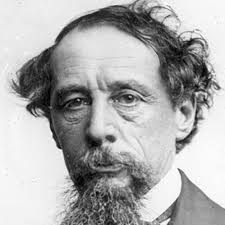
Charles Dickens (1812-1870)

It was bound to happen sooner or later. After many decades regarding him as a great writer, I seem to have suddenly fallen out of love with Charles Dickens. It happened while re-reading David Copperfield, one of my hitherto favorites of his. All of a sudden, early in the book, I just didn’t feel like continuing after Mrs Copperfield married the cruel Edward Murdstone.

Shortly thereafter, I started reading Wilkie Collins’s No Name, which I found enthralling. Where Dickens puts together a series of humorous or tragic character sketches, Collins has a rogue hero named Captain Horatio Wragge who is a mixed scoundrel, but one who seems to have a good heart. And his tall, slightly retarded wife Matilda is a compassionate portrait of a disabled woman of the 19th century.

I will try reading Dickens again—probably either The Pickwick Papers or Bleak House; but I feel that somehow I have thrown in my lot with his competition. Wilkie Collins and Anthony Trollope are, to my mind, better writers of fiction. Though perhaps not quite so deft with memorable character sketches.

Wilkie Collins (1824-1889)

Interestingly, Wilkie Collins and Charles Dickens were not only close friends, but partners who co-wrote some works and who had a marked influence on each other. It was Dickens who won all the fame, but Collins who singlehandedly invented the detective novel (The Moonstone) and who retained in his work much of the edginess which has become more popular today.

In his major novels, Collins seems to distrust marriage, seeing it almost as an existential stepping off into the void. He himself was never married, though he had a lifelong relationship with Caroline Graves and her daughter from a previous marriage.

If you are interested in learning more about Collins, there is an excellent website dedicated to his life and work.

Just Before the Quarantine

Martine Sitting in a Corvette at the Automobile Driving Museum

I was looking at the last photographs I took before the coronavirus quarantine slammed the door on our whole way of life. It was on February 7 that I returned from Mexico, having heard from the news on Al Jazeera about the strange flu in Wuhan, China.

Between February 7 and March 15, when the quarantine was fully in place, Martine and I visited the Andrés Pico Adobe in the San Fernando Valley, Heritage Park in Santa Fe Springs, Descanso Gardens in La Cañada-Flintridge, the Automobile Driving Museum in El Segundo (see photo above), and finally, just as the iron virus curtain was descending, a folk dance concert at the Magyar Ház given by the Karpatók Hungarian Folk Dance Ensemble. That last event was on March 15. I knew we were taking a chance by attending what could easily have become a “super spreader” event, but fortunately didn’t. It was, like all their events, top notch.

The Oak Forest at Descanso Gardens

The quarantine has taken a particular toll on Martine. Although I am a flaming Libtard, Martine listens to right-wing talk radio and complains incessantly about having to wear a mask. She does so whenever she enters a public building, but refuses to wear them on her daily walks to nowhere. She has been hurt by our inability to go anywhere because restaurants, parks, and museums are closed, and it becomes difficult to find a public bathroom that is still open.

Sometimes, I think many of the restrictions regarding Covid-19 are imposed because there are so many scofflaws who think that wearing a mask at all is an imposition on what they feel are their rights (pronounced “rats” with a Southern drawl). Such as the right to scream “Fire!” in a crowded theater or take a loaded AR-15 to Sunday School. In the end, we all suffer because of a hardcore cadre of jerks with which our country is so amply provided.