A Trump Prezidenchul Library?

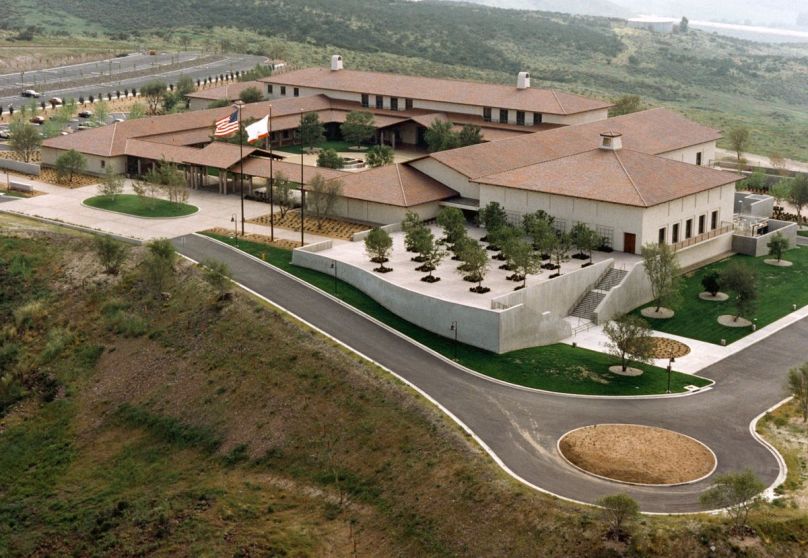
The Massive Reagan Presidential Library in Simi Valley, CA

No, there isn’t currently a Trump Presidential Library, nor are there any plans under way to build one. There is an interesting story on the subject in the December 30, 2020 issue of the Palm Beach Post. Some interesting points are raised:

“Everything about the Trump presidency has been unconventional,” said historian Robert Watson at Lynn University. “To the point where I’ve been joking with some friends that of mine that we are going to have to rewrite all the textbooks because he has violated everything we said, what every textbook said, was a truism of the office.”

And consider, too, that as of December 30, there was no march on Washington by violent tattooed Yahoos in a failed attempt to wreak vengeance on Congress.

And if there were such a presidential library, what would be in it? What kind of attention to document preservation was there by the drooling sycophants who held office during his administration? Would there be a whole wall of Tweets (call it the Covfefe Collection), and maybe copies of all the presidential proclamations which were promulgated but never put into action?

Martine and I have visited three presidential libraries: the Richard Nixon and Ronald Reagan libraries in Southern California and the John F. Kennedy library in Boston. All made an honest attempt to portray the conditions that prevailed during their respective administrations. What kind of honesty could we expect in a Trump library? Maybe an exhibit on QAnon and the Proud Boys? Perhaps videos of Trump saying “You’re fired!” from his TV reality show?

Perhaps the end result of such a collection would ultimately be only horror and dismay.
How Do I Ignore an Insurrection?

Oh, Are They Still Fighting That War?

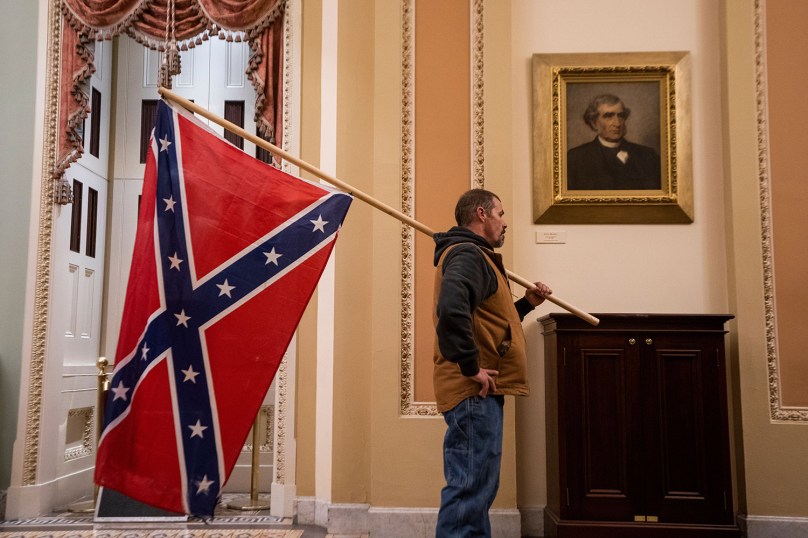
You know that, when the Confederate Battle Flag comes out of the mothballs, that nothing good is going to happen. I wonder what Robert E. Lee or Stonewall Jackson would think of the tattooed monkeys and other deplorables that descended on the nation’s capital yesterday.

I know that I promised not to write political posts any more, but I would like to say a few words about the events of January 6 and why it was such a miserable failure.

Adolph Hitler was nobody’s idea of a capable leader, but he had one quality that the Trumpster lacked. He had more or less capable chiefs at his side that he stood with for the whole duration of his rule. I include Joseph Göbbels, Hermann Göring, Heinrich Himmler, Albert Speer, and Martin Bormann. Of course, Ernst Röhm of the SA didn’t last out the war, nor did Rudolf Hess—but for the most part, the Führer didn’t change his subordinates as often as he changed his underwear.

Hitler Did Know How to Hang On to “Good” People

Trump, on the other hand, couldn’t abide anyone for more than a few weeks. Then he would part company with them and make noises about never really knowing them that well. When he said that about Steve Bannon or his ex-attorney Michael Cohen, he thought it made him look good. Actually, it showed that he was an ingrate who couldn’t interact well with his subordinates. (Or that he didn’t choose them well to begin with.)

In a way, that’s good. If one has a malignant narcissist leading your country, you don’t want him to be all that effective. At least the Capitol Building is still standing, more or less.

Music and Me

An Alto Saxophone: How It Consumed Ten Years of My Life

It is possible to love music and at the same time be a total incompetent when it came to performing it. It all started with voice after I joined the choir at Saint Henry School. I did not know, but soon found out that I sounded like a crow when singing the great Latin hymns of the Catholic liturgy. At least, it kept me from becoming an altar boy and having to wake up at 5:00 am to help officiate at the 6:00 am Mass, and memorize a ton of Latin in the process.

Both of my parents wished that their parents had let them play musical instruments. So they asked me what I would like to play. I quickly answered that I wanted a trombone. Mom and Dad took me to a music store at Prospect and Ontario in downtown Cleveland. The salesman agreed with my them that I did not have the right teeth for either a trombone or a trumpet, but that an alto saxophone was “very nice.”

Well, “very nice” translated into a whole new set of responsibilities, such as joining the band in high school and practicing for 30-60 minutes every day. All four years in high school, I played the sax in concerts and marched in formation during halftime at Chanel High’s games football games. It’s kind of hard to march in formations when there are only twenty or so members of the band, but we were game.

The only problem was that I didn’t much like playing the sax. There is something mucky about what happens to your saliva as it accumulates on the underside of a reed. Plus, I was pre-asthmatic, which probably should have disqualified me from any wind instruments. My parents, however, were determined to recover their $100+ dollar investment in the instrument by forcing me to play against my will.

Although I took my sax to college and even joined the Dartmouth College band, I saw that I was in with a group that was so much advanced over me in musical ability that I was only too happy to retire the sax and forego any further practice after only a couple of sessions. (Yay!)

Masque of the Red Death

Death Is Stalking the Land in Roger Corman’s Masque of the Red Death

I cannot help but feel that Covid-19 is inching ever closer. The son of one of my friends probably has it; and all the holiday socializing that has been going on is leading to a crisis in Los Angeles. Yesterday’s Los Angeles Times had a headline in which paramedics can refuse to pick up a patient if he or she appears to be near death in their judgment. Emergency rooms and intensive care units are packed to overflowing such that local hospitals are casting about for hallways, chapels, and other rooms in which to deposit patients. And hospital morgues are overflowing with the dead.

Tomorrow, I was planning to ride the train downtown to return some library books. With the coronavirus news becoming worse day by day, I will wait two or three weeks until the maskless fools who have been socializing during the Christmas and New Years holidays come down with the virus and isolate themselves.

Because of their behavior during this outbreak, I am becoming reluctant to associate with young people in any capacity. I have numerous preexisting conditions that make me a prime target for the Red Death. Thankfully, all the young people in my family live out of town.

Instead of going downtown, I’ll take a walk to Bay City Imports in Santa Monica to get ingredients for a Calabrian Chile Pasta dish that looks interesting. As long as this outbreak lasts, I will be intent on working on my cooking skills. I know I’ll never catch up to my brother in this regard, so I’ll just have to reconcile myself with accepting second place in a family of two.

Knocking the Knobel

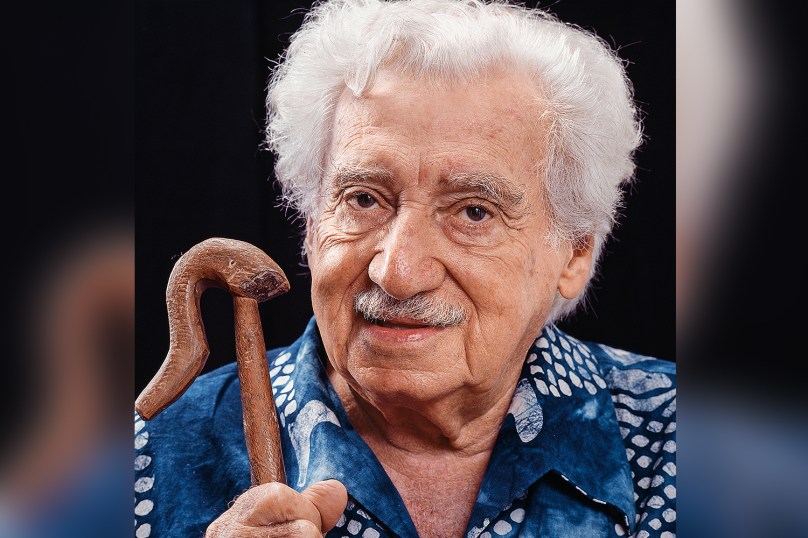
Brazilian Novelist Jorge Amado (1912-2001)

The following is a repeat of a post I wrote five years ago, in January 2016. I have since read Meek Heritage by Finnish writer Frans Eemil Sillanpää and consider that he deserved his prize.

I don’t have too much good to say about the Swedish Academy, which decides who will receive the Nobel Prize for Literature. If you look at the list of its recipients, it would not take too much effort to produce a list of as great as or even greater literary figures who have not received the laureate. Let me take a stab at it:

  • Kobo Abe (Japan), Woman in the Dunes
  • Chinua Achebe (Nigeria), Things Fall Apart
  • Ryunosuke Akutagawa (Japan), Rashomon
  • Jorge Amado (Brazil), Gabriela: Clove and Cinnamon
  • W. H. Auden (UK), Poetry
  • Georges Bernanos (France), Mouchette
  • Jorge Luis Borges (Argentina), Ficciones
  • Joseph Conrad (UK/Poland), Nostromo
  • Richard Flanagan (Australia), The Narrow Road to the Deep North
  • Graham Greene (UK), The Heart of the Matter
  • Vassili Grossman (Russia), Life and Fate
  • Henry James (US/UK), The Ambassadors
  • James Joyce (Ireland), Ulysses
  • Yashar Kemal (Turkey), Memed, My Hawk
  • Gyula Krúdy (Hungary), The Red Post Coach
  • Stanislaw Lem (Poland), Solaris
  • Osip Mandelstam (Russia), Poetry
  • Vladimir Nabokov (US/Russia), Lolita
  • Fernando Pessoa (Portugal), The Book of Disquiet
  • Marcel Proust (France), In Search of Lost Time
  • Arkady and Boris Strugatsky (Russia), Roadside Picnic
  • Italo Svevo (Slovenia), Confessions of Zeno
  • Leo Tolstoy (Russia), Novels and Stories
  • Mark Twain (US), Novels and Stories
  • Evelyn Waugh (UK), Brideshead Revisited
  • Virginia Woolf (UK), Mrs Dalloway

As you can see, I have not overloaded the list with the names of American authors, in the interests of being fair. If I wanted to, I can add names like Philip Roth, Ursula K. Le Guin, Joyce Carol Oates, Philip K. Dick, Cormac McCarthy, James Baldwin, Ralph Ellison, and a few others.

These can replace such figures as the following, whose reputations have not kept up with the times: Bjornsterne Bjornson, José Echegaray, Giosue Carducci, Rudolf Christoph Eucken, Paul von Heyse, Verner von Heidenstam, Karl Adolph Gjellerup, Henrik Pontopiddan, Carl Spitteler, Jacinto Benavente, Grazia Deledda, Erik Axel Karlfeldt, Pearl S. Buck, Frans Eemil Sillanpaa [SIC], Johannes Vilhelm Jensen, Earl Russell, and a few dozen others—mostly Scandinavian nonentities which at one time were highly thought of by a couple dozen mouldy Swedish academics. (Please forgive me for being lax about the diacritical marks in the above names.)

A Streetcar Named Canal

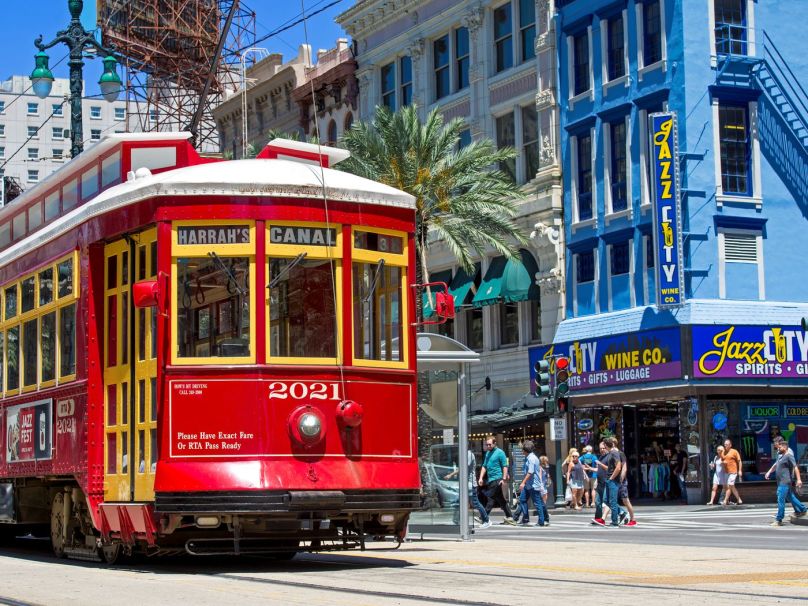
The Canal Street Streetcar Line in New Orleans

Although most of the South doesn’t interest me very much, I would love to visit New Orleans during the two or three weeks of the year when the weather isn’t too oppressive. And I would be delighted to skip the crowds of Mardi Gras.

New Orleans started out under the French flag from 1718 to 1763, then under Spain from 1763 to 1802. It returned to France briefly in 1802 until First Consul Napoleon Bonaparte decided to sell it to the fledgling United States of America in 1803 for $15 million, along with a whole lot of other land totaling 828,000 square miles. The only other flag that flew over the Big Easy were the “Stars and Bars” of the Confederate States of America (1861-1862).

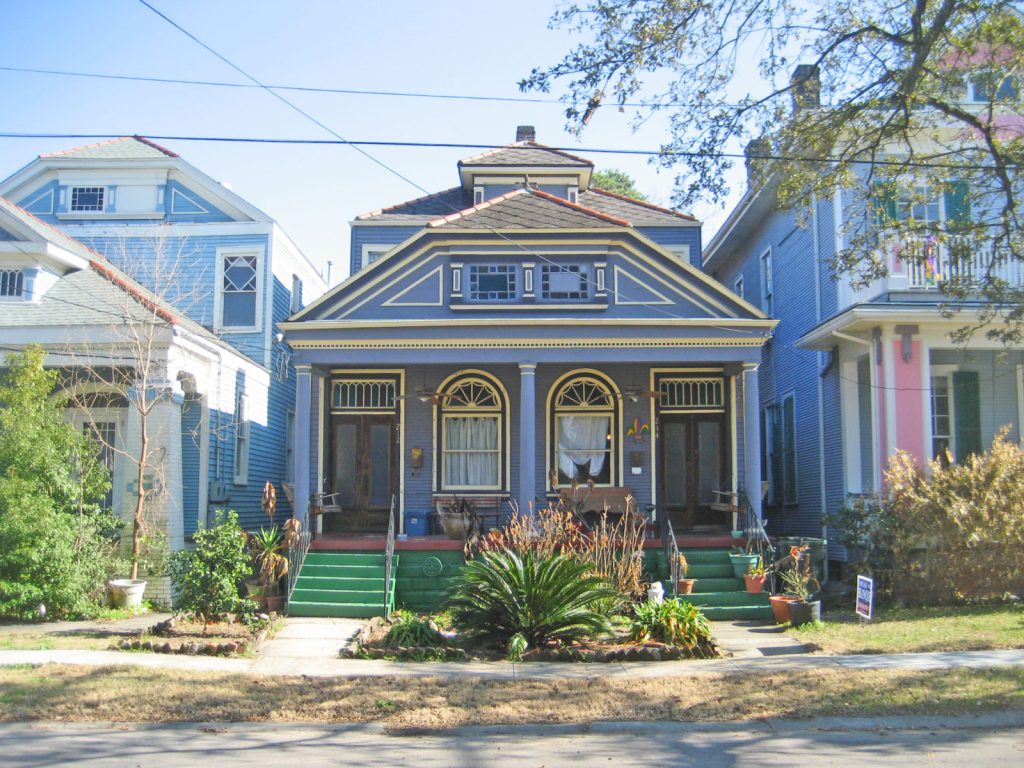
Camelback House in New Orleans

What interests me about the city is its rich cultural (and culinary) history. (How many cities in our country have their own cuisine?)

Close to the city are the Cajun parishes of Louisiana, with their own transplanted French Canadian culture. Martine and I have visited the Maritime Provinces of Canada, from where the Cajuns (Acadians) hailed after they were deported following the French and Indian War. In preparation for some future visit to Louisiana, I have been reading the Dave Robicheaux novels of James Lee Burke. And I am currently in the middle of George Washington Cable’s The Grandissimes.

Until the coronavirus quarantine becomes a thing of the past, I won’t be doing much traveling—though I might go to Puerto Vallarta in Mexico to celebrate my brother’s 70th birthday in April. (That, too, is contingent on the virus.)

Wild Nights

Emily Dickinson (1830-1886)

There is probably no woman in the history of our country’s literature who is worthy to touch the hem of Emily Dickinson’s garb. In our obsession with the “Great American Novel,” we have quite forgotten that we have no other real claimants to the title of “Great American Poetess.” And by “Poetess,” I do not mean to belittle her excellence. She stands side by side with Walt Whitman, Robert Frost, Edgar Allan Poe, and Ezra Pound—and not so much as a half step behind any of them. She is, in sum, a national treasure.

Here is one of her short, savage poems which will leave you gasping:

Wild Nights—Wild Nights
Wild nights - Wild nights!
 Were I with thee
 Wild nights should be
 Our luxury!

 Futile - the winds -
 To a Heart in port -
 Done with the Compass -
 Done with the Chart!

 Rowing in Eden -
 Ah - the Sea!
 Might I but moor - tonight -
 In thee!

City of Bones

The Palace (Left) and the Temple of the Inscriptions at Palenque

One of the most beautiful Maya archeological sites is Palenque in the State of Chiapas. It sits at the edge of the jungle and just before the foothills of the Sierra Madre. My brother Dan and I spent several days there in December 1979. I would give anything to go again.

The name Palenque means “Palisade,” which was given by the Spanish, who saw the ruins as a fortress. By the time the Spanish conquered Mexico, the site had been uninhabited for over eight hundred years. It was around AD 800 that many of the major Maya ceremonial centers were abandoned due to various factors. These included drought, changes in religion and form of government, and other reasons.

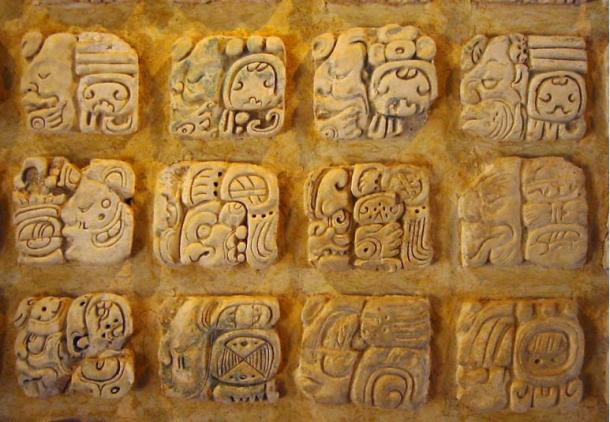
Maya Glyphs from Palenque

According to Maya glyphs that have been recently interpreted by scholars, the Maya name for Palenque is actually translated as “City of Bones.” As the great Mexican archeologist Alberto Ruz Lhuillier discovered, the Temple of the Inscriptions was the tomb of a powerful ruler named Kʼinich Janaab Pakal. In 1979, Dan and I were able not only to climb the pyramid, but snake our way through the tunnel that contained the site of Pakal’s burial chamber.

The ruins could only be described as beautiful. Only Uxmal in Yucatán could be described as its equal for siting and architecture.

Ruins in the Mist at Palenque

I was surprised that my brother seemed to enjoy Palenque as much as I did. It turns out that the region where the ruins are located is a famous coffee-growing region. So Dan, who is a major coffeeholic, found himself drinking endless cups of the stuff.

We were in town around the Christmas season, where we had the opportunity of seeing the posadas whenever we had dinner in the nearby town of Palenque. At one point, we were having dinner when a shoeshine boy came in and began circulating among the diners. When he approached Dan, my brother quietly slipped off his sandals and proffered a large foot clothed in a fuzzy red wool sock. The whole restaurant erupted in laughter.