Waiting for the Train: A Dream

Combination Bus/Self-Propelled Railroad Car in Alausi, Ecuador

Last night I had a vivid but inconclusive dream, which I would like to summarize here. I was waiting in a suburban area for a train to pick me up. There were two tracks, for trains going in either direction. I was uncertain that the train to Sacramento would stop for me, as I was not sure where I was standing was a station. I was thinking that I should have caught the train in downtown Los Angeles, where it originated.

So, with several other people who were in the same situation, I walked southward through a railroad tunnel to what I hoped was a legitimate station. I noticed that, inside the tunnel, the two tracks had merged into one, and that there were only a few widely scattered indentations in the wall of the tunnel to avoid being crushed by any oncoming trains. I noticed that the walls of the tunnel were covered by what looked like tall pieces of perfectly straight bamboo.

Fortunately, no trains came while we were in the tunnel. On emerging, I noticed an area of large broken stones, like an abandoned quarry in which many others were waiting for trains. I was told this was the station for Newhall. (Actually, in real life, Newhall has a rather nice and very proper station.)

Suddenly, several adults were marshaling high school students, who were looped around with a large chain to keep them together. With equal suddenness, a number of self-propelled railroad cars painted yellow/orange and shaped like school buses showed up to take them to their destinations.

I continued to wait, but was cheered when tickets were being collected and shoved through slots cut into a large rock; and there were signs that my train was approaching.

Did the train stop for me? Did I board it? I’ll never know, because I woke up noticing that I had forgotten to set the alarm to wake me at 7:30 AM.

Geldingadalir

The Volcanic Eruption at Geldingadalir, Iceland

When one takes an international flight to Iceland, one usually lands at Keflavík Airport on the Reykjanes Peninsula. From there, it is a From there it is 30 miles (50 km) to Reykjavík. Those 30 miles contain some of the most desolate volcanic badlands that I have ever seen. It is south of that road, on the way to Grindavík that a fissure in the earth started belching out lava on March 19, 2021. It is still going strong, and it looks like it will destroy the road to Grindavík, forcing the locals to take a more roundabout route to the capital.

The area of the eruption is part of the Krýsuvík-Trölladyngja volcanic system on the Reykjanes Peninsula, a scene of active rifting between two major tectonic plates: the Eurasian and North American. The boundary between these two plates cuts north/south right through the west of Iceland. This is the first eruption on the Peninsula in over 800 years. You can read about the eruption at Hit Iceland and Wikipedia.

The Desolate Reykjanes Peninsula Terrain Seen from the Airport Bus to Reykjavík

I took the above picture from my bus to Reykjavík in June 2013. It amazed me on both my trips to Iceland that the road to the capital was so desolate, so uninhabited, for so many miles. At places, one could see geyser activity marked with little steam clouds. I can only speculate that the Icelanders knew this place was going to blow at some point, so they decided to stay away in droves.

Now, of course, tourists are flocking to the scene of the eruption, but they are warned that things can get ugly fast. In 1783, there was a major eruption along a 27 km fissure called Laki, killing some 9,000 Icelanders with the lava and poison gases associated with the event. You can read about it on the Scientific American website.

No one knows how long the eruption at Geldingadalir will continue, and how much the Peninsula will change as the result of the massive amounts of lava being pumped out.

Automotive Heraldry

There Is Something Classy About the Logos of British Sports Cars

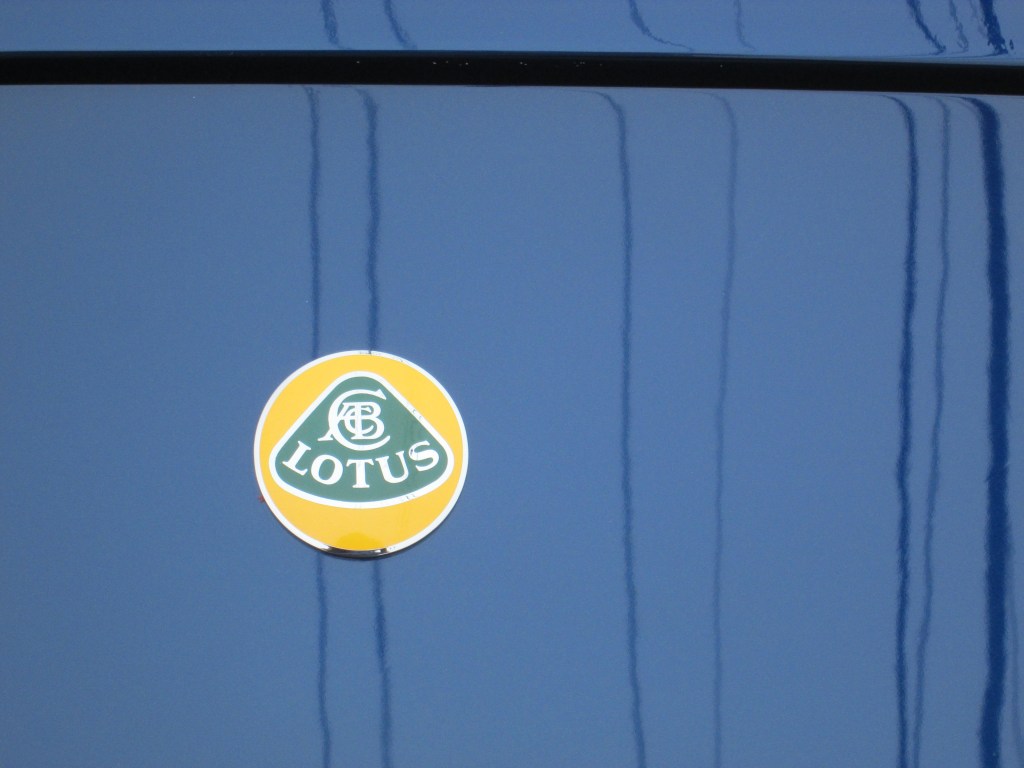
As Martine and I attended a British car show at the Automobile Driving Museum in El Segundo, I became acutely conscious of the snazzy sports car logos—far more sophisticated than most American and Japanese equivalents. Here are just a few of the hood ornaments I snapped at the show. They reminded me of the medieval art of heraldry.

You Can See My Reflection on the Hood

I Had Never Even Heard of This Make

I Don’t Quite Understand the Letters Above the Name “Lotus”

I feel almost Chestertonian in my seeing this heraldic connection, but I really think it is not all that far fetched.

Watch Your Toes

I Say This Because I Can’t Dance … At All!

When I was born, for some reason I was lacking the gene for moving in time with the music. I discovered this failing when I took Hungarian folk dance lessons—in costume—when I was six years old. My partner was my cousin Peggy, who must have thought me an awful drip. I think I left my boot prints all over her pretty dancing shoes.

I never even went to our high school’s senior prom. (I have no idea who I would have invited.) Strangely, I got an invitation to another school’s prom, the one that our family friend’s daughter, Norma Gosner, was attending. Actually, I did all right, because everyone was dancing the twist back then. As you know, the twist is pretty much a no-contact dance in which the two participants merely gyrate in place. Or so it seemed to me.

Once, when I was in my thirties, I even went to a square dancing class in Santa Monica. It was a disaster, never to be repeated.

Except once, when I attended a wedding party held in my brother’s barn in Hackensack, Minnesota. My brother tells me I danced well, but I’ll never know because of all the Jack Daniels and Moonshine I had swilled preparatory to the event. I have no memory of that night.

So I suggest that if you want me to dance with you, you had better get me liquored up first.

Svetlana: Circles of Hell

A Great Writer Who Manages to Look Like an Average Person

I have now reach three books by Svetlana Alexievich and regarded all of them as superb:

  • Secondhand Time: The Last of the Soviets (2014), about the lives of average Russians after the fall of Communism
  • Voices from Chernobyl: The Oral History of a Nuclear Disaster (1997)
  • Zinky Boys: Soviet Voices from the Afghanistan War (1991)

Reading each of those books was a profound experience. Very rarely do I ever re-read works of nonfiction, but I can conceive of myself re-reading all three of these books. Why? Because all of them struck me as being definitive, while all three of them represented multiple points of view. In her own words:

I’ve been searching for a literary method that would allow the closest possible approximation to real life. Reality has always attracted me like a magnet, it tortured and hypnotized me, I wanted to capture it on paper. So I immediately appropriated this genre of actual human voices and confessions, witness evidences and documents. This is how I hear and see the world – as a chorus of individual voices and a collage of everyday details. This is how my eye and ear function. In this way all my mental and emotional potential is realized to the full. In this way I can be simultaneously a writer, reporter, sociologist, psychologist and preacher.

There is something about Russian history that elicits both admiration and dismay:

If you look back at the whole of our history, both Soviet and post-Soviet, it is a huge common grave and a blood bath – an eternal dialogue of the executioners and the victims. The accursed Russian questions: what is to be done and who is to blame. The revolution, the gulags, the Second World War, the Soviet-Afghan war hidden from the people, the downfall of the great empire, the downfall of the giant socialist land, the land-utopia, and now a challenge of cosmic dimensions – Chernobyl. This is a challenge for all the living things on earth. Such is our history. And this is the theme of my books, this is my path, my circles of hell, from man to man.

I look forward to visiting more of these circles of hell in Svetlana Alexievich’s company. There are two more of her books available in English that I have not read: one about the role of women in the Great Patriotic War of 1941-1945, and another on the role of children in the same conflict.

Her work has been translated into 45 languages and published in 47 countries.

The Missionary and the Space Alien

My Guess: Even This Space Alien Is Too Humanoid

In science fiction films, there tends to be two views on encounters with space aliens. One is the romantic view, as exemplified by Close Encounters of the Third Kind, E.T., and Cocoon. In these films, the space aliens are benevolent and almost humanoid. Then there is the realistic vision of War of the Worlds. In this film, we don’t even get a good look at the aliens because they come out shooting from the get-go.

What with all the recent press about UFOs espied by military planes (see picture below), the subject has come up: What is the first encounter going to be like? I don’t think we are likely to encounter humanoids or anything even resembling them. They are probably not even likely to breathe our atmosphere.

I have this picture in my mind of a Christian missionary attempting to convert space aliens to his religion. How is that conversation likely to go? Will the space aliens crucify the missionary because that’s what they think he wants? How would the Christian religion look to a completely alien mind associated with a non-biped without the usual eyes, ears, nose, hands, and feet? I would think space aliens would laugh at what we would consider to be organized religion.

It would certainly sober up many Evangelicals in particular. But then, they are used to not believing in the evidence of their senses, given their political preference.

The image from video provided by the Department of Defense labelled Gimbal, from 2015, an unexplained object is seen at center as it is tracked as it soars high along the clouds, traveling against the wind. “There’s a whole fleet of them,” one naval aviator tells another, though only one indistinct object is shown. “It’s rotating.” The U.S. government has been taking a hard look at unidentified flying objects, under orders from Congress, and a report summarizing what officials know is expected to come out in June 2021. (Department of Defense via AP)

The interesting question is this: How would one go about reconciling the beliefs of space aliens with those of Earthlings, of whatever religious background? Oh to be a fly on the wall of that “conversation”!

The Great Yes and the Great No

This posting originated on Blog.Com on August 16, 2009.

Today, as I was walking along the beach in Venice, I started thinking about sand castles. Then I saw this gem of a poem by Constantine P. Cavafy (1863-1933). If you have ever read Lawrence Durrell’s Alexandria Quartet, you will remember Cavafy as the “poet of the city” who is not named but whose spirit pervades Alexandria, the city where he was born and lived much of his life. In his own words:

I am from Constantinople by descent, but I was born in Alexandria—at a house on Seriph Street; I left very young, and spent much of my childhood in England. Subsequently I visited this country as an adult, but for a short period of time. I have also lived in France. During my adolescence I lived over two years in Constantinople. It has been many years since I last visited Greece. My last employment was as a clerk at a government office under the Ministry of Public Works of Egypt. I know English, French, and a little Italian.

Here is one of my favorite poems of his:

Che fece …. il gran rifiuto


To certain people there comes a day
when they must say the great Yes or the great No.
He who has the Yes ready within him
immediately reveals himself, and saying it he goes

against his honor and his own conviction.
He who refuses does not repent. Should he be asked again,
he would say no again. And yet that no—
the right no—crushes him for the rest of his life.

Rejoining Society

The Vaccine: E-Ticket to Normality?

Having been vaccinated for Covid-19, I have, in effect, rejoined society. I am now visiting my friends who have likewise been vaccinated. Not coming with me, however, is Martine, who refuses to be vaccinated.

Martine is no anti-vaxxer who believes that nano-sized microchips are injected into the body with each shot. She is simply afraid of most medications, whether in pill or injectable form. Her doctor wants her to take Vitamin D3 supplements, but she gets an adverse reaction if she goes beyond a minimal dose.

I have long suspected that the Covid-19 Vaccination Record Card is going to be a useful piece of paper, whether for travel or work. Despite the efforts by Republican governors to outlaw mandating the card for this purpose, I think they will fail. Until I got the vaccine, even my own doctor did not want to see me: I had several “visits” in the form of telephone calls.

It is my hope that eventually Martine will get vaccinated. Martine’s family comes from Normandy in France. She therefore has what the French call a tête de Normande, in effect a head like granite block—impervious to argument. Perhaps she will eventually see the light, but she won’t take action based solely on my urging.

“We Died for the Revolution”

Female Russian Honor Guard, 2018 Victory Day Parade

I have been slowly making my way through Svetlana Alexievich’s Secondhand Time: The Last of the Soviets, in which she interviews everyday Russians about how their lives have changed since the fall of Communism. Alexievich did something it is not even possible to do in America today: She interviewed people of all political stripes, including even those who sided with the Nazis during the Great Patriotic War of 1941-1945. Imagine a book in the U.S. that interviewed not only liberal Democrats, but qAnon and Oath Keeper supporters who showed up in Washington on January 6. I don’t think such a book can be written.

The following passage is from an embittered supporter of Communism:

In my day, people didn’t ask those kind of questions. We didn’t have questions like that! We … imagined a just life without rich or poor. We died for the Revolution, and we died idealists. Wholly uninterested in money … My friends are long gone, I’m all alone. None of the people I used to talk to are around anymore. At night, I talk to the dead … And you? You don’t understand our feelings or our words: “grain confiscation campaign,” “food-groups,” “disenfranchisee,” “committee of the poor,” … “repeater,” … “defeatist.” It’s Sanskrit to you! Hieroglyphics! Old age means, first and foremost, loneliness. The last old man I knew—he lived in the adjacent courtyard—died five years ago, or maybe it’s been even longer … seven years ago … I’m surrounded by strangers. People come from the museum, the archive, the encyclopedia ,,, I’m like a reference book, a living library! But I have no one to talk to … Who would I like to talk to? Lazar Kaganovich [one of Stalin’s henchmen] would be good … There aren’t many of us who are still around, and even fewer who aren’t completely senile. He’s even older than me, he’s already ninety. I read in the papers … [He laughs.] In the newspaper, it said that the old men in his courtyard refuse to play dominoes with him. Or cards. They drive him away: “Fiend!” And he weeps from the hurt. Ages ago, he was a steel-hearted People’s Commissar. He’d sign the execution lists, he sent tens of thousands of people to their deaths. Spent thirty years by Stalin’s side. But in his old age, he doesn’t even have anyone to play dominoes with … [After this, he speaks very quietly. I can’t tell what he’s saying. I only catch a few words.] It’s scary … Living too long is scary.

Marketing Metastasis

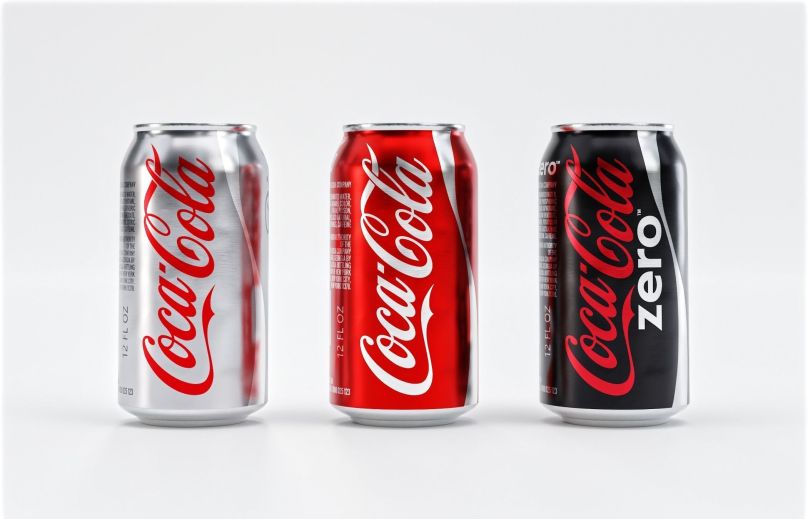
It All Started with Coca Cola

In 1985, the Coca Cola Company came out with New Coke, which never really took off. To recover from their gaffe, they decided to keep the old formula as Coca Cola Classic. In the process, they discovered that taking over more shelf space with other products bearing the Coke logo was a win-win for the Corporation. So now today you can buy Coke with exclusive new chicken liver flavor, with crushed pretzels, with overtones of sulfuric acid, and with extra corn syrup.

At the same time, all the other old brands have similarly metastasized. Ritz Crackers. Doritos. Ocean Spray. Reese’s. Cheez-It. Cheetos. Triscuit. The list goes on and on. Note, however, that the brands involved in multiplying themselves are products with a long shelf life. You can’t achieve the same success with celery, parsley, Gravenstein apples, or dragon fruit.

When I had to buy some Ocean Spray cranberry juice a couple of weeks ago (it’s good if you have a urinary tract infection), I had a hard time find just plain original cranberry juice. Needless to say, I was not swayed by the new Clam*Berry flavor or the one with sauerkraut flavoring added.

I suppose the idea is to make smaller brands scared by the multiplicity of variations—though what happens when you run out of all the popular variants?

Even Trader Joe’s has gotten into the act, with a kind of dill pickle flavored popcorn. It really wasn’t very good.

At some point, a lot of these *NEW* flavors will be duds. Then maybe we won’t be presented with so many weird options.