A Streetcar Named Canal

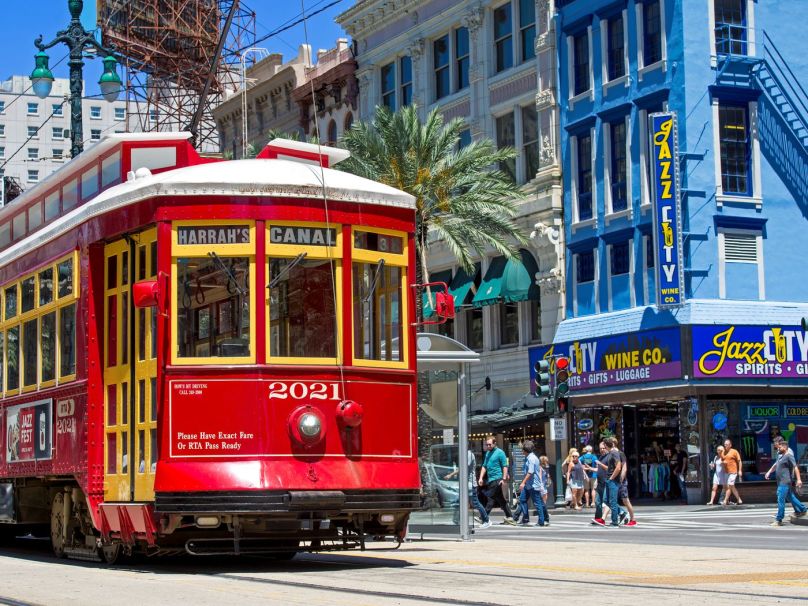
The Canal Street Streetcar Line in New Orleans

Although most of the South doesn’t interest me very much, I would love to visit New Orleans during the two or three weeks of the year when the weather isn’t too oppressive. And I would be delighted to skip the crowds of Mardi Gras.

New Orleans started out under the French flag from 1718 to 1763, then under Spain from 1763 to 1802. It returned to France briefly in 1802 until First Consul Napoleon Bonaparte decided to sell it to the fledgling United States of America in 1803 for $15 million, along with a whole lot of other land totaling 828,000 square miles. The only other flag that flew over the Big Easy were the “Stars and Bars” of the Confederate States of America (1861-1862).
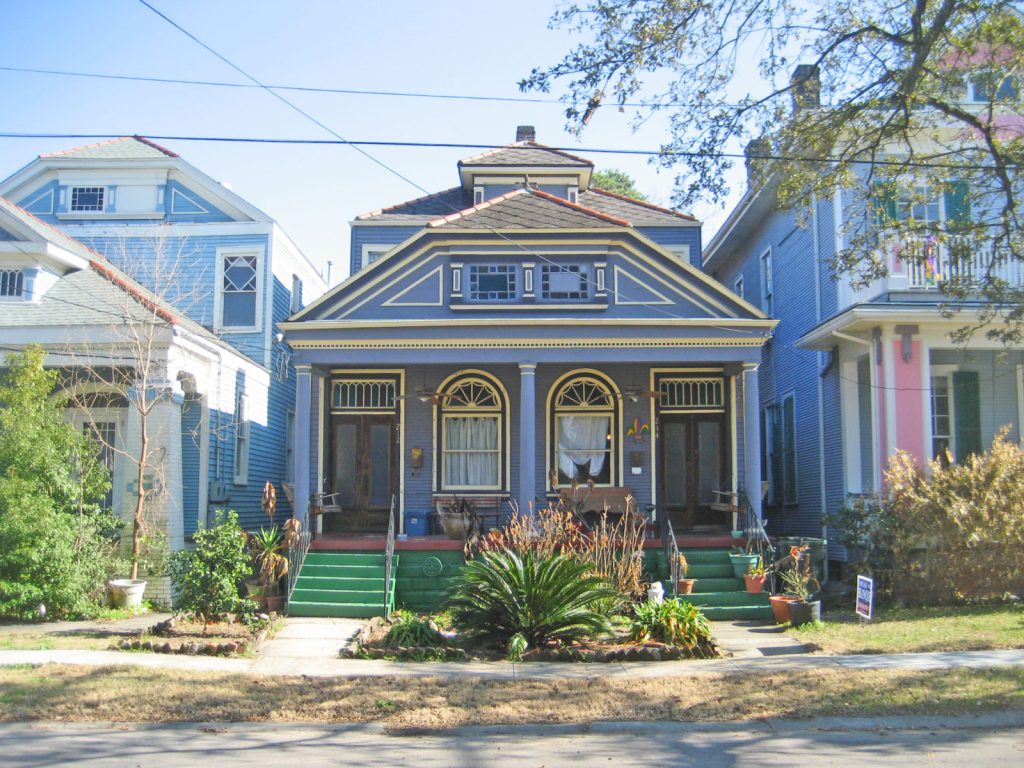
Camelback House in New Orleans

What interests me about the city is its rich cultural (and culinary) history. (How many cities in our country have their own cuisine?)

Close to the city are the Cajun parishes of Louisiana, with their own transplanted French Canadian culture. Martine and I have visited the Maritime Provinces of Canada, from where the Cajuns (Acadians) hailed after they were deported following the French and Indian War. In preparation for some future visit to Louisiana, I have been reading the Dave Robicheaux novels of James Lee Burke. And I am currently in the middle of George Washington Cable’s The Grandissimes.

Until the coronavirus quarantine becomes a thing of the past, I won’t be doing much traveling—though I might go to Puerto Vallarta in Mexico to celebrate my brother’s 70th birthday in April. (That, too, is contingent on the virus.)
Wild Nights

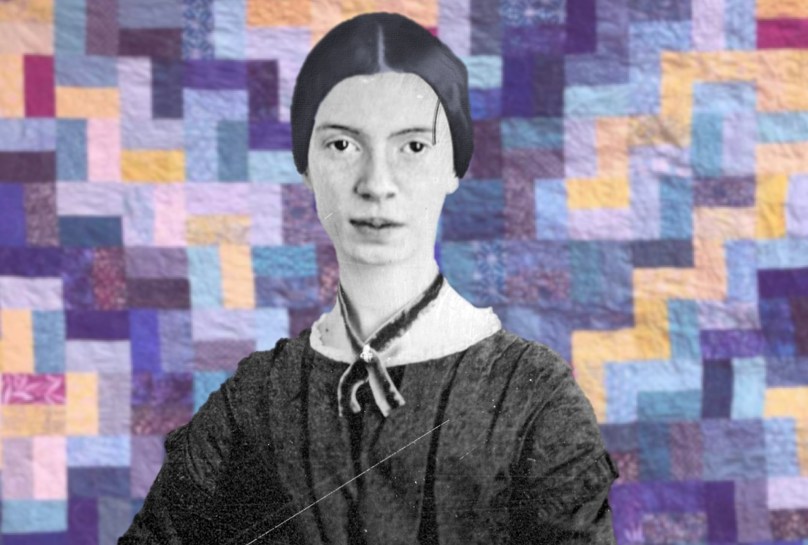
Emily Dickinson (1830-1886)

There is probably no woman in the history of our country’s literature who is worthy to touch the hem of Emily Dickinson’s garb. In our obsession with the “Great American Novel,” we have quite forgotten that we have no other real claimants to the title of “Great American Poetess.” And by “Poetess,” I do not mean to belittle her excellence. She stands side by side with Walt Whitman, Robert Frost, Edgar Allan Poe, and Ezra Pound—and not so much as a half step behind any of them. She is, in sum, a national treasure.

Here is one of her short, savage poems which will leave you gasping:

Wild Nights—Wild Nights
Wild nights - Wild nights!
 Were I with thee
 Wild nights should be
 Our luxury!

 Futile - the winds -
 To a Heart in port -
 Done with the Compass -
 Done with the Chart!

 Rowing in Eden -
 Ah - the Sea!
 Might I but moor - tonight -
 In thee!

City of Bones

The Palace (Left) and the Temple of the Inscriptions at Palenque

One of the most beautiful Maya archeological sites is Palenque in the State of Chiapas. It sits at the edge of the jungle and just before the foothills of the Sierra Madre. My brother Dan and I spent several days there in December 1979. I would give anything to go again.

The name Palenque means “Palisade,” which was given by the Spanish, who saw the ruins as a fortress. By the time the Spanish conquered Mexico, the site had been uninhabited for over eight hundred years. It was around AD 800 that many of the major Maya ceremonial centers were abandoned due to various factors. These included drought, changes in religion and form of government, and other reasons.

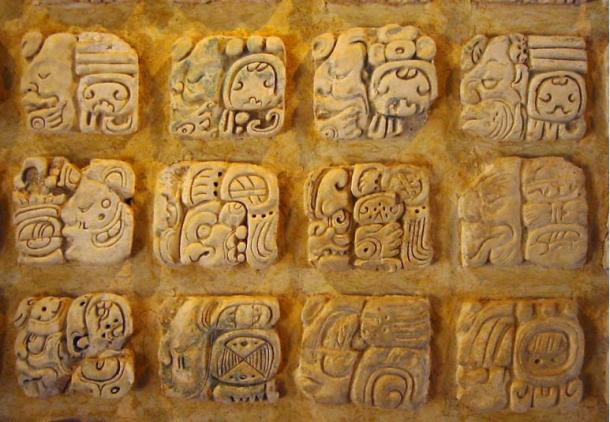
Maya Glyphs from Palenque

According to Maya glyphs that have been recently interpreted by scholars, the Maya name for Palenque is actually translated as “City of Bones.” As the great Mexican archeologist Alberto Ruz Lhuillier discovered, the Temple of the Inscriptions was the tomb of a powerful ruler named Kʼinich Janaab Pakal. In 1979, Dan and I were able not only to climb the pyramid, but snake our way through the tunnel that contained the site of Pakal’s burial chamber.

The ruins could only be described as beautiful. Only Uxmal in Yucatán could be described as its equal for siting and architecture.

Ruins in the Mist at Palenque

I was surprised that my brother seemed to enjoy Palenque as much as I did. It turns out that the region where the ruins are located is a famous coffee-growing region. So Dan, who is a major coffeeholic, found himself drinking endless cups of the stuff.

We were in town around the Christmas season, where we had the opportunity of seeing the posadas whenever we had dinner in the nearby town of Palenque. At one point, we were having dinner when a shoeshine boy came in and began circulating among the diners. When he approached Dan, my brother quietly slipped off his sandals and proffered a large foot clothed in a fuzzy red wool sock. The whole restaurant erupted in laughter.