The Bishop Orders His Tomb at St. Praxed’s Church

Robert Browning (1812-1889)

This is one of my favorite poems by Robert Browning. It tells the tale of a dying ecclesiastic who, before he dies, learns that he is not highly regarded.

The Bishop Orders His Tomb at St. Praxed’s Church
Rome, 15—

VANITY, saith the preacher, vanity!	
Draw round my bed: is Anselm keeping back?	
Nephews—sons mine … ah God, I know not! Well—	
She, men would have to be your mother once,	
Old Gandolf envied me, so fair she was!	        
What ’s done is done, and she is dead beside,	
Dead long ago, and I am Bishop since,	
And as she died so must we die ourselves,	
And thence ye may perceive the world ’s a dream.	
Life, how and what is it? As here I lie	
In this state-chamber, dying by degrees,	
Hours and long hours in the dead night, I ask	
“Do I live, am I dead?” Peace, peace seems all.	
Saint Praxed’s ever was the church for peace;	
And so, about this tomb of mine. I fought	      
With tooth and nail to save my niche, ye know:	
—Old Gandolf cozened me, despite my care;	
Shrewd was that snatch from out the corner South	
He graced his carrion with, God curse the same!	
Yet still my niche is not so cramped but thence	       
One sees the pulpit on the epistle-side,	
And somewhat of the choir, those silent seats,	
And up into the aery dome where live	
The angels, and a sunbeam ’s sure to lurk:	
And I shall fill my slab of basalt there,	      
And ’neath my tabernacle take my rest,	
With those nine columns round me, two and two,	
The odd one at my feet where Anselm stands:	
Peach-blossom marble all, the rare, the ripe	
As fresh-poured red wine of a mighty pulse.	      
—Old Gandolf with his paltry onion-stone,	
Put me where I may look at him! True peach,	
Rosy and flawless: how I earned the prize!	
Draw close: that conflagration of my church	
—What then? So much was saved if aught were missed!	        
My sons, ye would not be my death! Go dig	
The white-grape vineyard where the oil-press stood,	
Drop water gently till the surface sink,	
And if ye find … Ah God, I know not, I!…	
Bedded in store of rotten figleaves soft,	       
And corded up in a tight olive-frail,	
Some lump, ah God, of lapis lazuli.	
Big as a Jew’s head cut off at the nape,	
Blue as a vein o’er the Madonna’s breast …	
Sons, all have I bequeathed you, villas, all,	        
That brave Frascati villa with its bath,	
So, let the blue lump poise between my knees,	
Like God the Father’s globe on both his hands	
Ye worship in the Jesu Church so gay,	
For Gandolf shall not choose but see and burst!	        
Swift as a weaver’s shuttle fleet our years:	
Man goeth to the grave, and where is he?	
Did I say basalt for my slab, sons? Black—	
’Twas ever antique-black I meant! How else	
Shall ye contrast my frieze to come beneath?	      
The bas-relief in bronze ye promised me,	
Those Pans and Nymphs ye wot of, and perchance	
Some tripod, thyrsus, with a vase or so,	
The Saviour at his sermon on the mount,	
Saint Praxed in a glory, and one Pan	       
Ready to twitch the Nymph’s last garment off,	
And Moses with the tables … but I know	
Ye mark me not! What do they whisper thee,	
Child of my bowels, Anselm? Ah, ye hope	
To revel down my villas while I gasp	      
Bricked o’er with beggar’s mouldy travertine	
Which Gandolf from his tomb-top chuckles at!	
Nay, boys, ye love me—all of jasper, then!	
’Tis jasper ye stand pledged to, lest I grieve	
My bath must needs be left behind, alas!	        
One block, pure green as a pistachio-nut,	
There ’s plenty jasper somewhere in the world—	
And have I not Saint Praxed’s ear to pray	
Horses for ye, and brown Greek manuscripts,	
And mistresses with great smooth marbly limbs?	        
—That ’s if ye carve my epitaph aright,	
Choice Latin, picked phrase, Tully’s every word,	
No gaudy ware like Gandolf’s second line—	
Tully, my masters? Ulpian serves his need!	
And then how I shall lie through centuries,	        
And hear the blessed mutter of the mass,	
And see God made and eaten all day long,	
And feel the steady candle-flame, and taste	
Good strong thick stupefying incense-smoke!	
For as I lie here, hours of the dead night,	       
Dying in state and by such slow degrees,	
I fold my arms as if they clasped a crook,	
And stretch my feet forth straight as stone can point,	
And let the bedclothes, for a mortcloth, drop	
Into great laps and folds of sculptor’s work:	       
And as yon tapers dwindle, and strange thoughts	
Grow, with a certain humming in my ears,	
About the life before I lived this life,	
And this life too, popes, cardinals, and priests,	
Saint Praxed at his sermon on the mount,	       
Your tall pale mother with her talking eyes,	
And new-found agate urns as fresh as day,	
And marble’s language, Latin pure, discreet,	
—Aha, ELUCESCEBAT quoth our friend?	
No Tully, said I, Ulpian at the best!	       
Evil and brief hath been my pilgrimage.	
All lapis, all, sons! Else I give the Pope	
My villas! Will ye ever eat my heart?	
Ever your eyes were as a lizard’s quick,	
They glitter like your mother’s for my soul,	        
Or ye would heighten my impoverished frieze,	
Piece out its starved design, and fill my vase	
With grapes, and add a vizor and a Term,	
And to the tripod ye would tie a lynx	
That in his struggle throws the thyrsus down,	        
To comfort me on my entablature	
Whereon I am to lie till I must ask	
“Do I live, am I dead?” There, leave me, there!	
For ye have stabbed me with ingratitude	
To death: ye wish it—God, ye wish it! Stone—	       
Gritstone, a-crumble! Clammy squares which sweat	
As if the corpse they keep were oozing through—	
And no more lapis to delight the world!	
Well go! I bless ye. Fewer tapers there,	
But in a row: and, going, turn your backs	        
—Ay, like departing altar-ministrants,	
And leave me in my church, the church for peace,	
That I may watch at leisure if he leers—	
Old Gandolf, at me, from his onion-stone,	
As still he envied me, so fair she was!
A History of Epidemics

The Covid-19 Epidemic Was Just One of Many Outbreaks

We’ve all heard about the Bubonic Plague in Medieval Europe, and even more recently in Daniel Defoe’s London (see A Journal of the Plague Year). Probably the worst were the combined plagues brought to the New World by the Spanish and the Portuguese. The native Meso-American population was to drop by more than 80% due to the combined ravages of smallpox, measles, and malaria (the latter was brought in with black slaves from Africa).

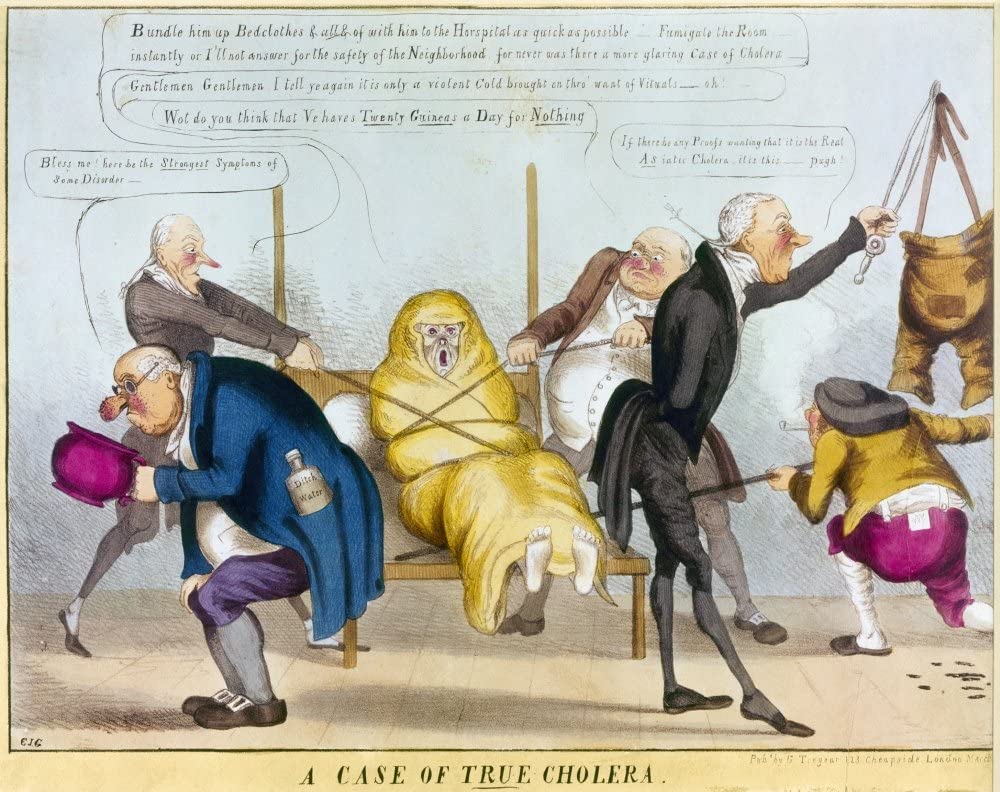
In more recent times, the British Isles have been ravaged by cholera. In his The Victorians, historian A. N. Wilson writes: “After 1832, there were to be three major cholera epidemics in Britain: 1848-9, 1853-4 and 1866. The first of these killed 53,000 in England and Wales, 8,000 in Scotland; the next killed 26,000—but 10,000 in London.”

More recently, the Spanish Influenza epidemic of 1918-1919 infected approximately one-third of the world’s population and killed 50 million worldwide.

It is fortunate that vaccinations to fight Covid-19 have been developed. The pity of it is that many of the poorer nations do not have the vaccine, and many of the richer nations are populated by ignorant doofuses who refuse to be vaccinated.

Uh! I’ve Been Shot!

Two Vaccinations in Two Days!

Yesterday, I got the Fluzone High-Dose Seasonal Influenza Vaccine at my local Walgreen’s. I would also have gotten the Covid-19 booster shot the same day, but I had to make an appointment on the Internet because their system was down. So today I returned and got a jab in my other arm.

I have a difficult time understanding anti-vaxxers with their silly reasons for not getting their shots. It is a strange time in history when people would rather be dead or kill their friends, neighbors, and acquaintances rather than submit to a simple shot. Perhaps, at bottom they’re cowards about a little pain. And in both cases for me, there was very little pain, and it was short-lived.

Artemisia

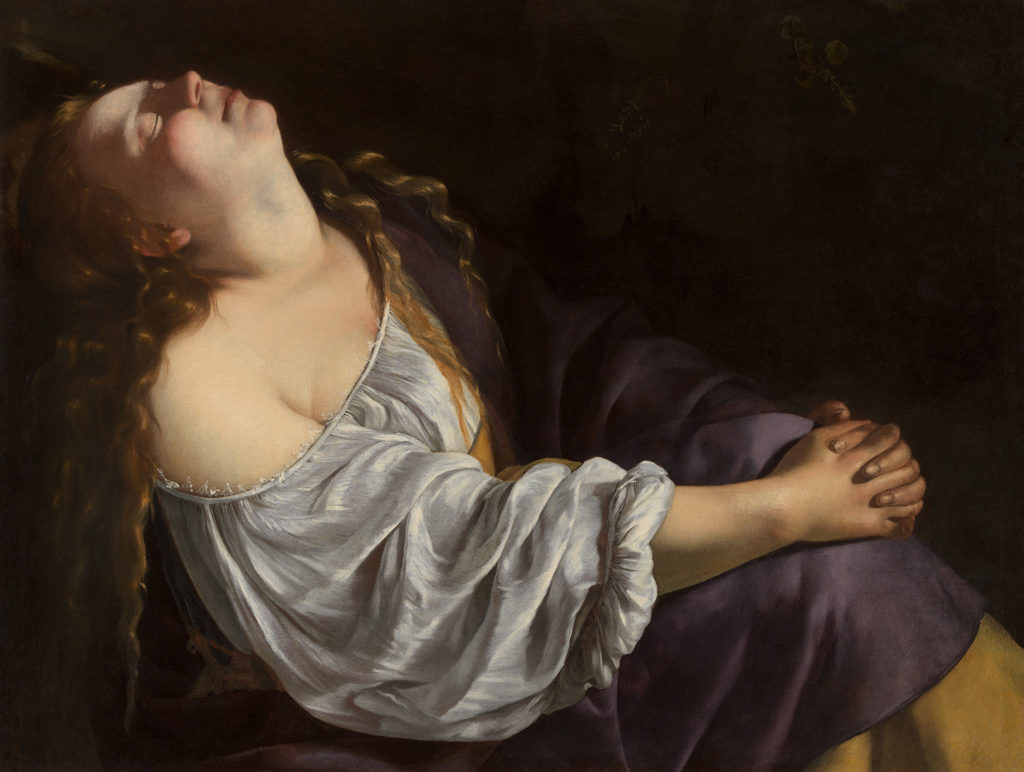
Artemisia Gentileschi’s Maria Magdalen in Ecstasy

One of the great Italian Baroque painters just happened to be a woman: Artemisia Gentileschi (1593-1656). The daughter of another painter, her father Orazio, Artemisia concentrated on painting women subjects, frequently using herself as the model. She was raped by another painter of her father’s generation and was hurriedly married off to protect her.

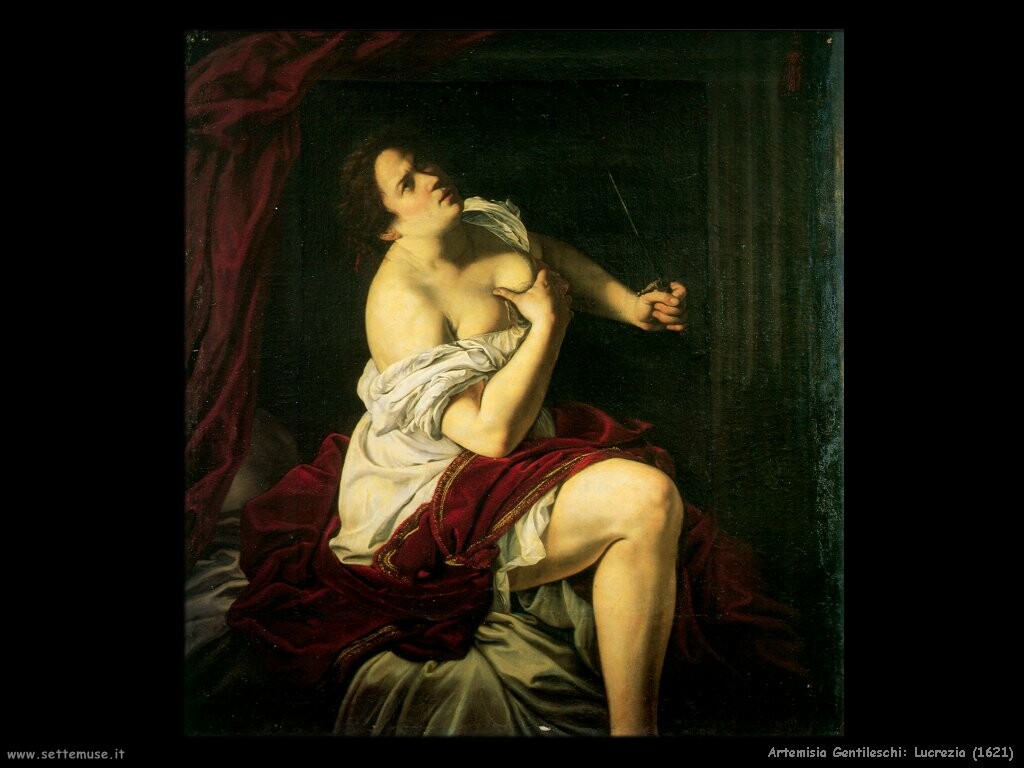
Her paintings have frequently compared to Caravaggio in their sense of immediacy and their lushness. Julian Bell describes her painting Lucretia in The New York Review of Books:

Lucrezia (1621)

The half-stripped woman picked out against the dark in Artemisia Gentileschi’s Lucretia is viewed from above, yet as I stand before this yard-high canvas, she seems to bear down on me. Light, here, is weight: the gleam on shoulder, knee, breasts, arm, and neck presses on my eye and there is no distance from the presented flesh. I have to do with this stout woman as if I were wrestling or embracing her. For whether you interlock with someone in anger or desire, that person will always possess a separate life, will, mind, and narrative, and so it is here. Lucretia tugs not at me but at the dark above, at God. Her prayer, stab-sharp, convulses not only her temples and the hand that clutches a dagger, but the whole rough thrash of limbs, gown, and sheets that fills this single-minded canvas.

Interestingly, the ancient Roman subject of the painting, Lucretia, was—according to Livy—raped by one of her husband’s kin and committed suicide to assuage her violated honor.

Small wonder that Artemisia is regarded as some kind of proto-feminist! But if you disregard for a moment her subject matter, she is also a great painter. She is more than a feminist: she is a profoundly great artist.

Booster

I’ll Be Getting the Covid-19 Booster Shot Soon

Speaking as a Libtard Sheeple (and proud of it!), I’ll be getting the Pfizer booster shot as soon as I can. It was March 15 when I got my second shot, so it has been six months plus a week or two. I figured it was best to move quickly before the Moderna and Johnson & Johnson boosters get approved and before all the school kids start lining up.

I’ll just call around to see who has the booster and make an appointment.

The Man of 1,000 Faces

Lon Chaney Sr. with Make-Up Kit

He is known as the man of a thousand faces, but that’s not what I remember Lon Chaney Sr. for. He made himself up to look different in every film, from The Hunchback of Notre Dame (1923) to The Phantom of the Opera (1925) to The Unholy Three (1930 Sound Version). However much he changed his looks, the one thing that did not change was the intensity of his feeling, of his ardor.

I just finished viewing Tod Browning’s Where East Is East (1929) in which once again it is his performance that makes the picture. His love for his daughter (played by Lupe Velez) and his hatred of the sluttish mother who deserted them both (played by Estelle Taylor) is always convincing and heartfelt. Chaney was in scores of feature films from 1915 to his last film (and only sound film) in 1930.

Perhaps Lon Chaney Jr. is more familiar to younger film goers for his role as The Wolf Man (1941) and his other horror pics for Universal and 20th Century Fox. The son didn’t begin acting until he father had died, and although he was occasionally good, he could not hold a candle to his old man.

Ignition

Help! My Car Key Is Stuck in the Ignition!

It was not a problem I ever encountered before. As I pulled into the parking lot of a Sprouts Market, I set the transmission to Park and attempted to retrieve my car keys. It was no go. They were stuck in the ignition. I checked that I was indeed in Park. I was. But the key was stuck. After about twenty minutes of fiddling, I was able to pull the key out and do my shopping.

But what was next? If the same problem occurred when I got home, I couldn’t leave my keys in the car with the door unlocked. It would have been an invitation to theft, and to inviting a smelly bum to spend the night in my car, turning it into a mobile dumpster..

So I went straight from the market to my Subaru dealer and reported the problem. I waited for a couple of hours, but it would take longer to fix the problem. So I took the bus home and cooked dinner for me and Martine. It was only then that I got the call from the mechanic that all was well. I will pick up the car tomorrow morning after breakfast.

I would have waited at the dealership longer, but I had a choice of seating by an over-curious dog (I do not like to play with strangers’ dogs) or a software executive who had two laptops and was constantly on the cell phone with Harvey at work. Yechhhhh!

East Los

Mural on East Cesar E. Chavez Avenue

Drive East across the bridge over the concrete-walled Los Angeles River and you will find yourself in a reasonable simulacrum of a Mexican city. Boyle Heights used to be the city’s Jewish neighborhood, and there is the massive Breed Street Shul still remaining. If you have a hankering for some tacos muy sabrosos, you are in the right place.

East Cesar E. Chavez Avenue is the heart of “East Los,” short for East Los Angeles. Of course, over time, the Mexican population has scattered all over the county, but there are still some special places around the Avenue. Like La Parrilla, at Chavez and Detroit, probably my favorite Mexican restaurant in Southern California. Like the Anthony Quinn Library (I’ll bet you didn’t know that Quinn was Mexican). Like ELAC, East Los Angeles College, with some 35,000 students.

We tend to treat American Hispanics as if they were a cohesive voting bloc. The 2020 election gave the lie to the Democrat assumption that Hispanic voters were all for Biden. Not so. Their votes were all over the place. I learned that when I fell for a Chilean cutie named Valentina Palacios back in the 1970s, only to find that she was a supporter of tyrannical dictator Augusto Pinochet Ugarte.

And what is a Hispanic anyway? They could include Mexicans, Cubans, Spanish, South Americans, Central Americans, Puerto Ricans, and even some Filipinos. I remember being in an anti-Viet Nam war demonstration back in the 1960s and being attacked by rightist anti-Castro Cuban immigrants. We have to get used to seeing the Hispanic population as a broad spectrum.

And whatever we do, me must stop using terms like LatinX, which leaves a stench in the nostrils of most Hispanics.

“A Bird Came Down the Walk”

Bird With Captive Worm

Here is another delightful poem from Emily Dickinson (1830-1886), Queen of American Poets. It is called:

A Bird Came Down the Walk


A Bird, came down the Walk - 
He did not know I saw -
He bit an Angle Worm in halves
And ate the fellow, raw, 
 
And then, he drank a Dew
From a convenient Grass -
And then hopped sidewise to the Wall
To let a Beetle pass -
 
He glanced with rapid eyes,
That hurried all abroad -
They looked like frightened Beads, I thought,
He stirred his Velvet Head. - 
 
Like one in danger, Cautious,
I offered him a Crumb,
And he unrolled his feathers, 
And rowed him softer Home -
 
Than Oars divide the Ocean,
Too silver for a seam,
Or Butterflies, off Banks of Noon,
Leap, plashless as they swim. 

When I Used To Smoke

My Days as a Smoker Were Short-Lived, but Pungent

When I first came to Southern California at the tail end of 1966, I thought I needed an image makeover. Here I was, a graduate student in the Film Department at UCLA, but after my brain surgery, I still looked like a high-school student, and a freshman at that!

The obvious solution was to take up smoking. Now I didn’t like cigarettes, so I decided to concentrate on pipes and cigars. And I didn’t go in for the sweet-smelling tobaccos. I wanted something that would give people an impression of me.

Unfortunately, the impression I made was of someone who was not afraid of creating a stench. I remember walking into a seminar taught by a professor I didn’t like and populated with students I also didn’t like. For that, I went in for a Bering Imperial cigar, which came in an aluminum tube to hold in the acrid smell. I played with the cigar for a few minutes, then lit the fuse. I was not popular in that class, but I aced it nonetheless.

Death in an Aluminum Tube

Another favorite at that time were Wolf Brothers’ rum-soaked cigars. ’Nuff said.

I also smoked a pipe, but I went in for Balkan Sobranie pipe tobacco. It wasn’t cheap, but it make a clear olfactory impression.

My smoking habit lasted for only a few months. The fact of the matter was that I didn’t enjoy it any more than did the people who were on the receiving end of my abortive experiment. Fortunately, I was able to stop smoking before I became addicted to my hand-held instruments of aggression.