Urban vs Rural

Do You Want Rural America to Set Your Priorities?

Looking at the coverage for the 2022 Midterm Elections, I find myself appalled by the decisions made by voters in Rural America. Although I am pleasantly surprised by the many failures of Republican candidates (as opposed to what pundits had predicted), I wonder by rural voters vote the way they do.

When the Founding Fathers decided on what sort of government the former British colonies would have, they saw the new nation as a union of states. That led, among other things, to the infamous Electoral College which gave the edge in Presidential elections to rural states. The very fact that all states, irrespective of population, have two senators meant that the least populous state, Wyoming, with 580,000 residents, had as much clout in the senate as California, with 39.24 million residents.

The way the Electoral College works is that, for each state, one adds the number of U.S. senators (two per state0 to the number of members of the House of Representatives. That means that Wyoming has 3 electoral votes, whereas California has 53. That doesn’t look so bad at first, until you realize that California has roughly 78 times as many people as Wyoming, not 19 times as many. That distortion is caused by the addition of Wyoming’s two senators.

I don’t get a good feeling about the voters who live in rural America. They’re not all sturdy independent farmers: More likely, they’re living from hand to mouth and are bitterly opposed to us city folks. I also get the feeling that theirs is primarily an “F—k You“ vote.

We have to be aware of the fact that rural voters can get into an awful snit and sink the Ship of State for no good reason.

Among the Dead

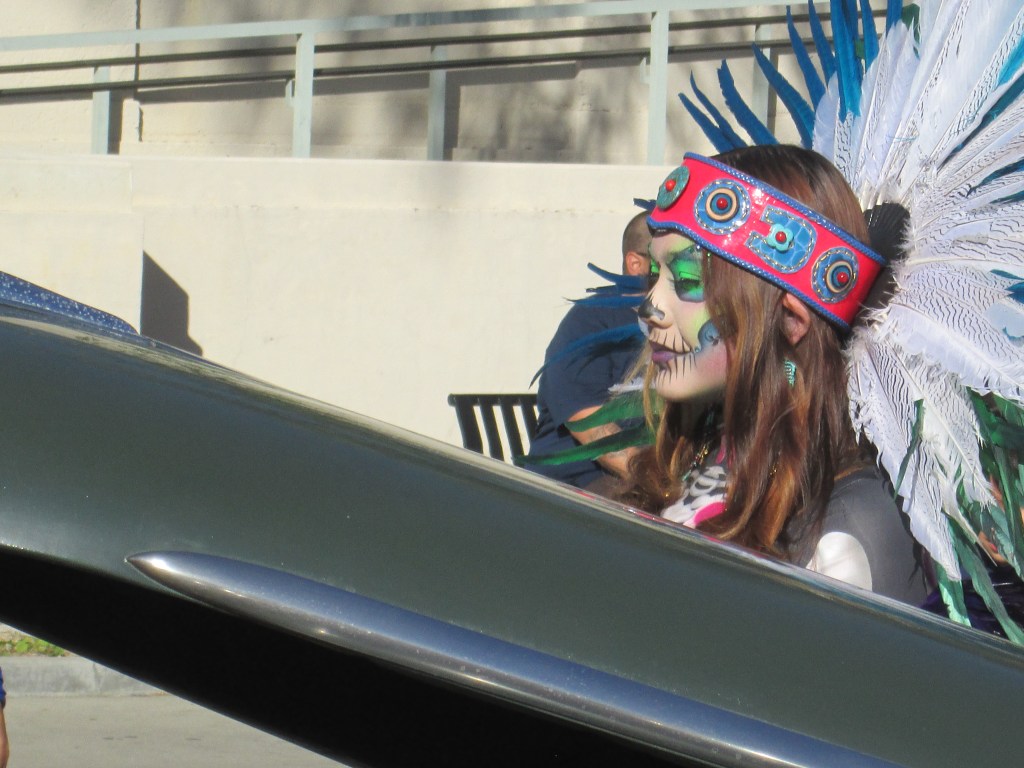
Day of the Dead Participants

This is kind of a coda to yesterday’s post entitled “Dia de los Muertos.” Many of the attendees at the Day of the Dead Festival in Canoga park wore nifty costumes and frequently had very professional face painting jobs. There was a booth at the festival where most of the work was probably done.

As much as Martine felt intimidated by the size of the crowd, I wound up enjoying the artistry of the costumes and makeup, and the obvious sincerity of the ofrendas (the little altars to a family’s dead).

A Gathering of Skeletons

I will probably have to go by myself, but I wouldn’t mind traveling to other Day of the Dead observances next year. As much as I like Halloween, I also admire the Mexicans’ celebratory confrontation of their own future demise.

Dia de los Muertos

Although the Mexican Day of the Dead actually occurred on November 2, All Souls Day in the Catholic liturgy, the neighborhood of Canoga Park decided to hold their festival today. Martine and I were to meet a friend at the festival, but there was the usual problem with cell phones: It was too loud to here the telephone ring.

That was the first thing that set Martine off. Second was the size of the crowd. Neither of us positively like crowds, but her dislike of them approaches the realm of phobia. Thirdly, she abhors skeletons and costumes that suggest death. Finally, there were a lot of classical cars on display; but they were all tricked out as Mexican low-riders.

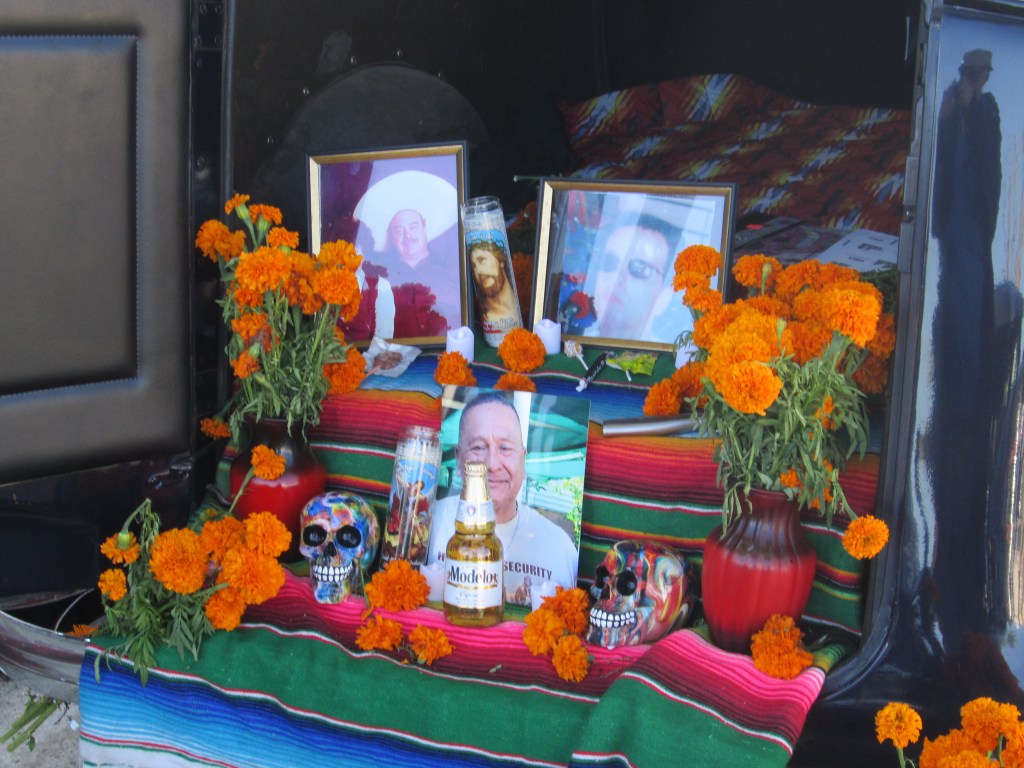
Only the first two things set me off, but I was interested in the costumes people wore and the cars. Many of the cars had ofrendas, little memorials to loved ones who have passed on.

An Ofrenda Occupying the Trunk of a Low-Rider

Where Martine did not particularly like Mexican customs, I, on the other hand, have many years of traveling in the Republic and admiring from afar these same customs. I remember one bus ride I had back in the 1980s on the Dia de los Muertos between Mazatlán and Durango. The bus was filled with Mexican families on their way to have a picnic at the cemetery by the grave of their loved ones. I thought it was a splendid custom, and I helped out by holding a baby for a few miles while the young mother who sat next to me was otherwise occupied.

In the end, I knew I had to make it up to Martine. I could have made a scene and called her too thin-skinned, but instead I bought her her first cotton candy in sixty years. Then, on the way home, we stopped at Bea’s Bakery in Reseda for some of their first class pastries.So, in the end, she had some good things to remember.

Family Life in America

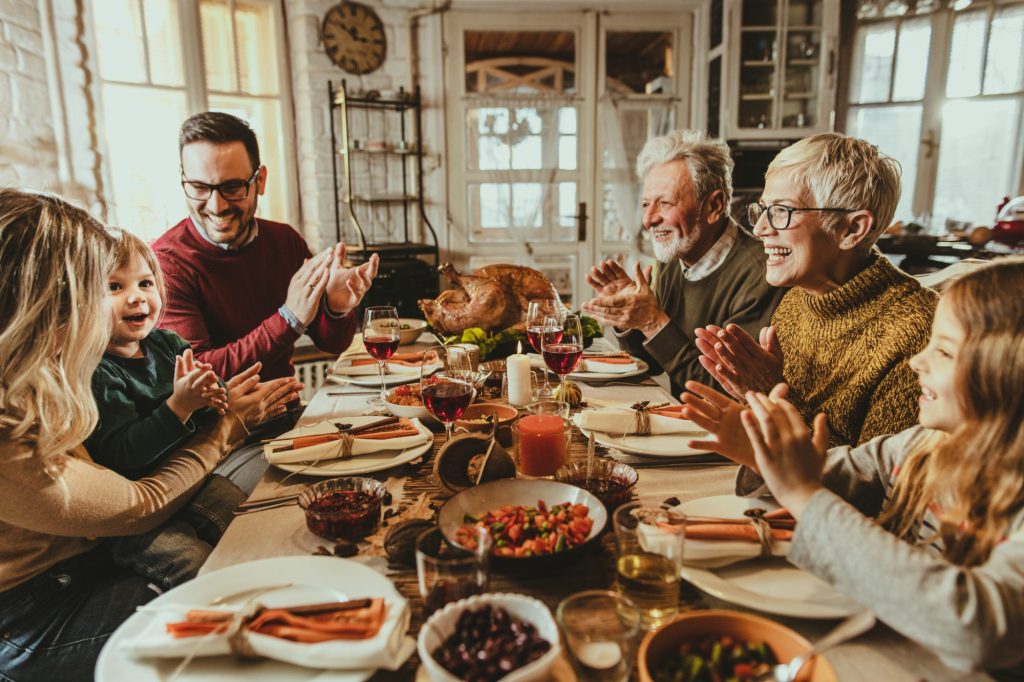
What’s wrong with this picture? Well, first of all, it’s a big family dinner with all the trimmings in which all the participants are openly delighted with one another. And they’re actually listening to one another. Where’s the strange uncle wearing the red MAGA hat? Where are the scowling teenagers? On the plus side, there isn’t any food on the plates yet, though there’s a big turkey at the far end of the table waiting to be carved. So perhaps there’s still time for the expression of discontent.

Martine and I both agreed that we liked Halloween better than Thanksgiving or Christmas. There was no need for any pretense of a closely-knit family. One just pretends to be someone else and pigs out on candy. Americans don’t do family well. We talk about it a lot, but most families at best have the appearance of an armed truce.

Read J. D. Vance’s Hillbilly Elegy or Tara Westover’s Educated to get an accurate picture of family life in America. Oh, I’m not saying that the disaffection is universal, just that it’s dismayingly prevalent.

It wasn’t that way for my own family: but, being Hungarians, we did not care that much for American holiday traditions. Except my brother and I really got into the Halloween sugar rush. We never had turkey for dinner in Cleveland, as both my father and I did not like it very much, and I still don’t. We usually had Christmas dinner with my aunt and uncle in Novelty, Ohio, but it was usually as much Hungarian as it was American. Come to think of it, back then we enjoyed the holidays without feeling in any way obliged to grin and bear it.

We now usually go out for Thanksgiving with friends. But over the last several years, Martine and I celebrate Christmas with home-cooked beef stew served with a Hungarian red wine, preferably Egri Bikavér (Bull’s Blood of Eger).

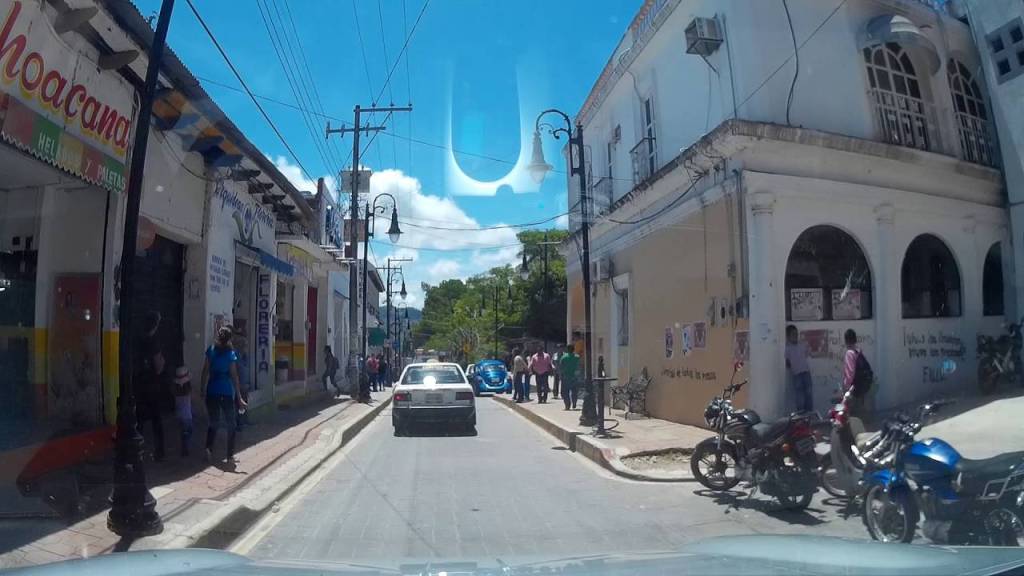
Ocosingo

The year was 1979. My brother and I were taking an Autransportes Lacandonia bus from Palenque to San Cristóbal de las Casas. Today, the trip can be done in five hours. Back then, we boarded the reconverted North American school bus at 5:00 AM and got into San Cristóbal eleven hours later.

Enroute, we saw another Lacandonia bus that was run off the road into a ditch. It was surrounded by the passengers who were milling around. Luckily none of them seemed to be hurt. Then, about an hour or so later, as we neared Ocosingo, we were pulled over by the Mexican Army, who searched our luggage for weapons. We were not far from the Guatemalan border, and many Mexicans and even some foreigners were involved in gun-running to the rural Maya combatants across the border.

When we pulled into Ocosingo, a young boy boarded the bus selling something that was wrapped in straw. The boy didn’t understand my Spanish, and I didn’t understand his Tzotzil or Tzeltal Maya, but it didn’t cost much. Apparently, Ocosingo is famous for its queso amarillo (yellow cheese), which actually was pretty good—especially on a bus ride that seemed to take forever.

I wouldn’t mind returning to Ocosingo some day, having some more queso amarillo and visiting the Maya ruins at nearby Toniná. This relatively small Maya site bested the much larger Palenque in battle and got to sacrifice the royal family to their gods.

Every place I have ever visited in Mexico has left an indelible mark on my memory. Faced with a map of the country, I can follow my itinerary from city to city. These included places like Los Mochis, the Barranca del Cobre (Copper Canyon), Mazatlan, Durango, Zacatecas, Guanajuato, San Miguel de Allende, Querétaro, Mexico City, Patzcuaro, Uruapan, Guadalajara, Puerto Vallarta, Puebla, Cholula, Xalapa, Veracruz, Papantla, Oaxaca, and points south too numerous to mention.

“Ineffable”

I have just finished reading Joan Didion’s short book on the right-wing death squad violence in El Salvador forty years ago. Back in 1964, she had voted for Barry Goldwater for President. A rancher’s daughter from Sacramento, she did not really personally encounter the disconnect between what Ronald Reagan was saying in Washington and what Roberto D’Aubuisson and his adherents were doing to the people of El Salvador.

Here Joan talks about something that shocked her about the availability of “actual information”:

Actual information was hard to come by in El Salvador, perhaps because this was not a culture in which a high value was placed on the definite…. All numbers in El Salvador tended to materialize and vanish and rematerialize in a different form, as if the numbers denoted only the “use” of numbers, an intention, a wish, a recognition that someone, somewhere, for whatever reason, needed to hear the ineffable expressed as a number. At any given time in El Salvador a great deal of what goes on is considered ineffable, and the use of numbers in this context tends to frustrate people who try to understand them literally, rather than as a proposition to be floated, “heard,” “mentioned.” There was the case of the March 28, 1982 election, about which there continued into that summer the rather scholastic argument first posed by Central American Studies, the publication of the Jesuit university in San Salvador: Had it taken an average of 2.5 minutes to cast a vote or less? Could each ballot box hold 500 ballots, or more? The numbers were eerily Salvadoran. There were said to be 1.3 million people eligible to vote on March 28, but 1.5 million people were said to have voted. These 1.5 million people were said, in turn, to represent not 115 percent of the 1.3 million eligible voters but 80 percent (or, on another float, “62-68 percent”) of the eligible voters….

Election Onslaught

As we raggedly slouch toward election day, my mailbox is filled to overflowing with negative political advertising. Indeed, there is so much of it that the local post office has 100% more mail to deliver—most of it being junk. Since November is here, the really nasty stuff is coming out: lies, accusations, exaggerations, empty promises, and enough bile to choke a wharf rat.

No wonder that Americans dread election time. So much money is being spent to influence voters, and for longer periods of time, that when we finally do submit our ballots, it is with a taste of ashes in our gorge.

I left my ballot in a drop box last week, and I received an email indicating that it was received and submitted. Martine chooses to vote in person on election day. I do not, as I abhor all forms of political posturing. I do believe if I saw someone wearing a MAGA hat on election day, I would sweep it off his/her/its head. So it’s probably not a good idea for me to vote in person, ever!

Would I ever run for office? Not in this country at this time. I fear I would succumb to the nastiness and become warped.

“Wise and Most Possible”

It was one of the most meaningful Twitter posts ever written when Maya Angelou said, “‎The desire to reach the stars is ambitious. The desire to reach hearts is wise and most possible.”

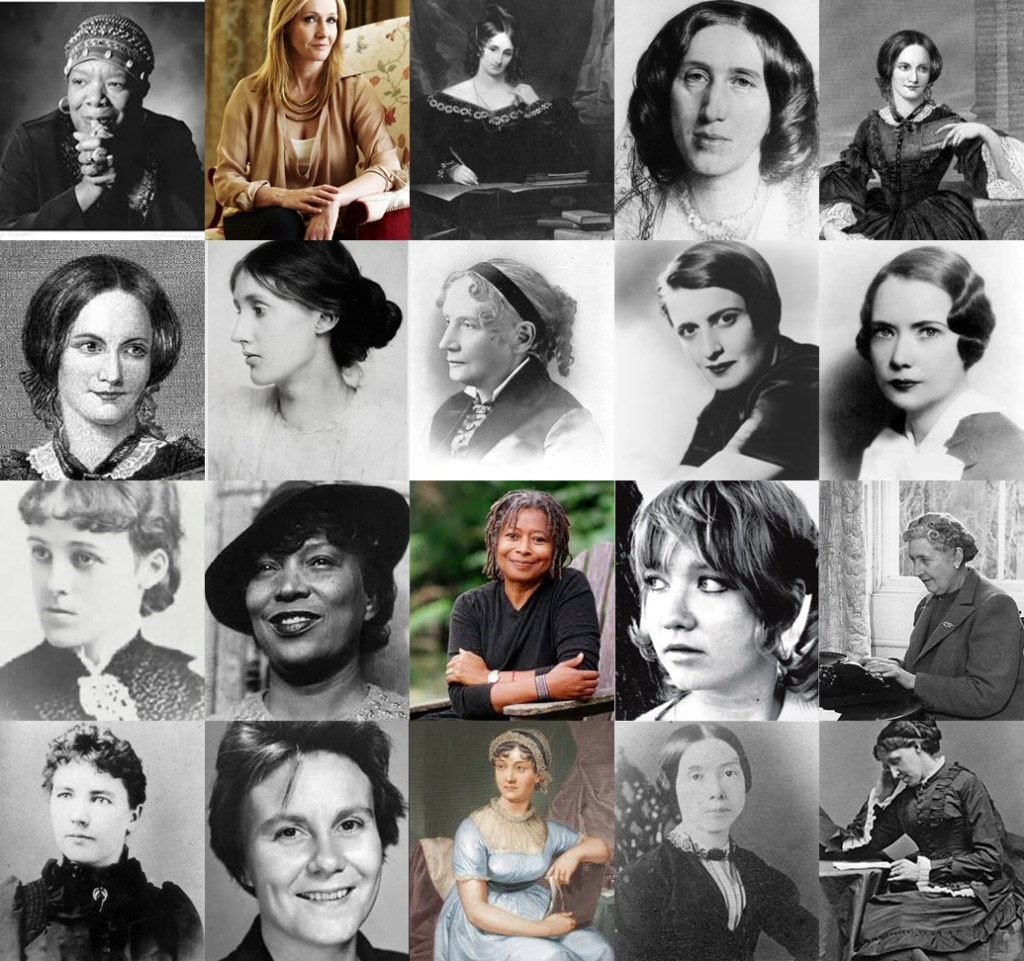
For the month of November, I will be reading only women writers, both fiction and non-fiction. Some of the authors will be new to me; some of the books will be re-reads.I began by reading a short story collection entitled Dead-End Memories by the Japanese author Banana Yoshimoto.When I finish, I will re-read Joan Didion’s Salvador.

From there, a number of possibilities present themselves, including Virginia Woolf, Edwige Danticat, Joyce Carol Oates, Wisława Szymborska, Dorothy B. Hughes, Patricia Highsmith, Freya Stark, Norah Lange, Dawn Powell, and Elizabeth Hardwick.I’ll just see where the spirit moves me. At the end of the month, I will summarize the discoveries I have made.

And there are sure to be discoveries. Already I love Banana Yoshimoto’s stories, which deal with subjects that men feel uncomfortable with. And that where the Maya Angelou quote comes into play.

Pumpkins and Skeletons

This last Saturday, Martine and I visited the Grier Musser Museum, which had just re-opened to the public after the Covid-19 lockdown. I have always particularly loved their Halloween antiques, art, and other displays, such as the above throw pillow. Martine wore her witch costume (see yesterday’s post: Decidedly a Good Witch). We both resolved to re-visit them just before Christmas, when their displays will be less horrific.

Tonight, I watched four horror films in a row, three of which were the original Universal Frankenstein releases:

  • Frankenstein (1931)
  • Bride of Frankenstein (1935)
  • The Son of Frankenstein (1939)
  • The Plague of Zombies (1966)—a Hammer horror film

I waited by the door just in case some trick-or-treaters would come. As usual none came. I don’t think any have climbed the stairs for upwards of thirty years. I thought this year would be different because my downstairs neighbors are Ukrainian refugees with two young daughters.

Now that Halloween is almost past, I realize we are in the HallowThanksMas Continuum, where three Holidays seem to come one after the other like falling dominoes.

This October, I read four horror-related books in celebration of Halloween:

  • Tales of Terror from Blackwood’s Magazine (1817-1834)
  • Ann Radcliffe’s The Romance of the Forest (1791), the first half of which is set in a spooky abandoned monastery
  • Edith Wharton’s Ghosts (1937), selected by the author
  • Peter Ackroyd’s The Casebook of Victor Frankenstein (2008), a re-telling of the original Mary Shelley story

Decidedly a Good Witch

Above is Martine dressed as a witch—but as a good witch, to be sure! On a whim, she bought a great witch’s hat and dress at a Santa Monica costume shop and has been wearing it everywhere the last few days. The comments she has been receiving during that time have been overwhelmingly positive.

Beware of making any negative comments lest she wave her magic wand at you and turn you into a batrachian (tailless amphibian of the order Anura; a frog or toad).