When I was a child at St. Henry’s Elementary School in Cleveland, Ohio, I studied in religion class how the holiday began. Apparently there was a Saint Valentine. Actually, there were three of them; the one after whom the holiday was named was called Saint Valentine of Rome. According to the Catholic Online web site: “St. Valentine is the Patron Saint of affianced couples, bee keepers, engaged couples, epilepsy, fainting, greetings, happy marriages, love, lovers, plague, travellers, and young people. He is represented in pictures with birds and roses and his feast day is celebrated on February 14.”
I find it interesting that Valentine is also the patron saint of epilepsy, fainting, and plague. This seems to go against all the lovey dovey stuff, but then that happens fairly frequently with the saints.
When I wish Martine a Happy Valentines Day tomorrow morning, I will of course refrain from bringing up all the negative stuff.
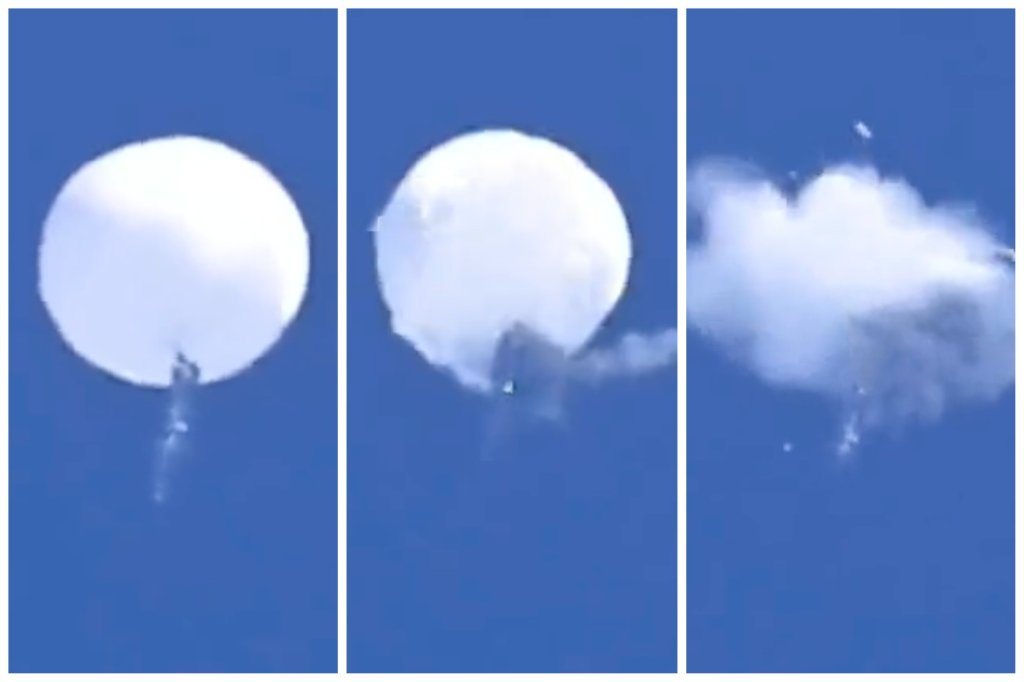
“What is success? It is a toy balloon among children armed with pins”
In the last few days, U.S. jet fighters have intercepted four balloons and popped them. Although the military has not officially admitted it, all four appear to be balloons equipped with electronics for spying. It is possible that we will never know, as what they manage to find is probably a military secret.
President Biden’s decision to bring these devices down is in sharp contrast to Trump, who let three or four such devices float over the U.S. during his régime without bringing it to anyone’s attention. Typically, he was full of anti-Chinese bluster—bluster, that did not translate into action.
We know that the Chinese have launched a number of spy satellites. Why, I wonder, did they feel it was necessary to supplement their findings with such a low-tech device as a balloon? Is it possible that their spy satellites did not produce satisfactory information? Were the Chinese balloons self-propelled? Or did they just drift any which where at the mercy of the winds? I doubt we’ll ever know.
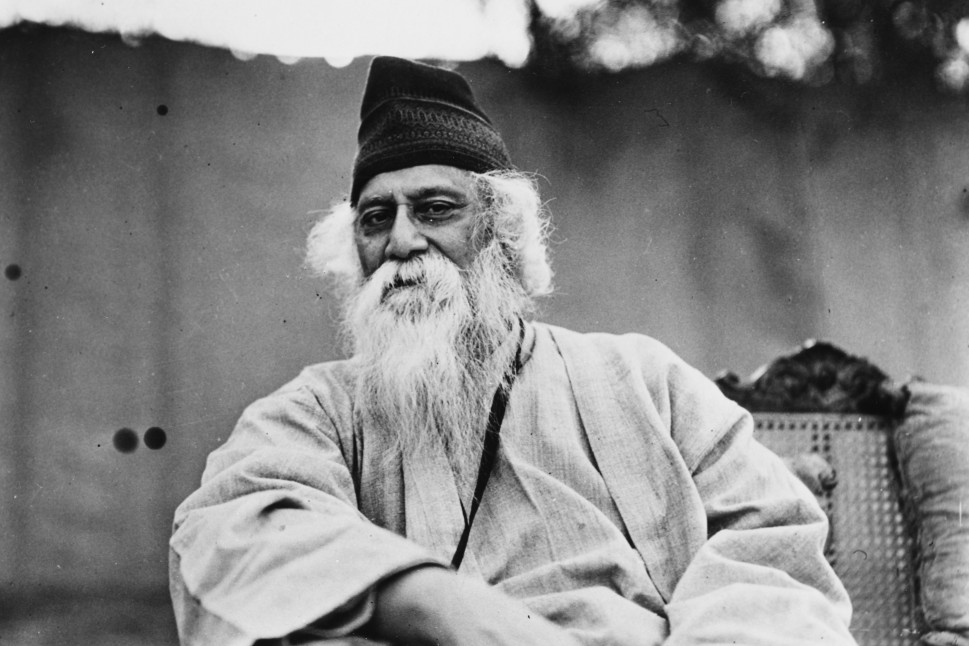
An early winner of the Nobel Prize in Literature in 1913, Rabindranath Tagore is almost forgotten today. How is that so? He was a prolific writer of poetry, prose, plays, novels, and songs. He was offered a knighthood by the British, but turned it down. He did not live to see the creation of a free India, but he led a rich and full life. Here is a short excerpt from his poetry:
The Gardener 85
Who are you, reader, reading my poems an hundred years hence?
I cannot send you one single flower from this wealth of the spring, one single streak of
     gold from yonder clouds.
Open your doors and look abroad.

From your blossoming garden gather fragrant memories of the vanished flowers of an
     hundred years before.
In the joy of your heart may you feel the living joy that sang one spring morning, sending its glad voice across an hundred years.
One of my favorite pieces of art is David Hockney’s “Pearblossom Highway, 11-18 April 1986, #2.” It is an almost perfect image of the Antelope Valley along the northern slope of the San Gabriel Mountains. I have driven that road a number of times on my way to Devil’s Punchbowl County Park, and even as far as Victorville—when I didn’t want to face traffic on the I-10 or the Pomona Freeway.
I am not always a fan of Hockney’s work, but this particular photo montage, in its own way, gives a better idea of the terrain than any single photograph would. It was originally created for Vanity Fair out of 800 photographs to support a story about the road trip that Vladimir Nabokov’s Lolita and Humbert Humbert took to Death Valley. For the story of the creation of this image, click on this website by the Los Angeles County Museum of Art.The actual site being depicted is the intersection of the Pearblossom Highway with 165th Street. The stop sign is no longer there, as a street light has replaced it. Also, the highway at this point has been widened to four lanes.
The Antelope Valley is still a desolate place, even though some half million people now live there, mostly along California Highway 14 as it wends north to join U.S. 395. The Pearblossom Highway (California 138) connects the Antelope Valley Freeway (California 14) with the I-15 at Victorville.
It’s a long and lonely haul, especially if one is behind a loaded big rig. But then, that is a good description of the L.A. experience.
It was early in the morning of February 9, 1971 at precisely 6:00 AM Pacific Standard Time. I was half-asleep when I suddenly heard the howling of several dogs in the Santa Monica neighborhood where I lived. Within seconds, I felt the bed and the whole building shaking, accompanied by a deep noise as if the earth was being fractured (which it was). I held on to the mattress for dear life, but found myself on the floor nonetheless.
That was my experience of the Sylmar Earthquake, also known as the San Fernando Earthquake. Ever since then, I have been scared of quakes. Was it a small quake? Perhaps it was the precursor of a much larger quake. The Northridge Earthquake of January 17, 1994 was like that, following in the wake of several much smaller quakes centered in Santa Monica Bay.
Now when I see pictures of the Gaziantep temblor that shook parts of Turkey and Syria, I feel as if the solidity I feel of my footsteps on the ground is a possible illusion. Without warning, the buildings around me could come crashing down, possibly with me in one of them.
This afternoon, I took a walk along the Venice Boardwalk, stopping in at Small World Books to buy the work of a recommended Swiss author. As I looked at the buildings along the Boardwalk, I almost felt the ground under my feet begin to move. I remember the Tsunami Evacuation Route signs scattered around the streets in the area and felt that terra firma within a matter of seconds could sport waves like the sea; and, if the quake was out at sea, a giant wave could inundate the low-lying blocks along the ocean before I could get to safety.
If you’ve never been in a major quake, you could laugh away the small quakes. But after 1971 and 1994, there is no laughing. I am on high alert. Will it rapidly get worse? Or is this just another little memento mori?
I have been reading a rare book of humor from the old Soviet Union. It is The Anti-Soviet Soviet Union by Vladimir Voinovich, who, for his pains, was expelled from the Soviet Writers’ Union in February 1974. Unable to make a living as a writer in Russia, he naturally fled to the West. The following excerpt from the book describes an amusing visit to the KGB (Soviet State Security) in Moscow.
During my last years in Moscow, a beginning writer would visit me from time to time when he was in town from the provinces. He’d complain of not being published and gave me his novels and stories, of which there were a great number, to see what I thought of them. He was certain that his works weren’t being published because their content was too critical. And indeed they did contain criticism of the Soviet system. But they had another major flaw as well: they lacked even the merest glimmer of talent. Sometimes he would request, and sometimes demand, that I send his manuscripts abroad and help get them published over there. I refused. Then he decided to go to the KGB and present them with an ultimatum: either they were immediately to issue orders that his works be published in the USSR or he would leave the USSR at once.
Apparently, it went something like this.
As soon as he had entered the KGB building, someone walked over to him and said: “Oh, hello there. So you’ve finally come to see us.!”
“You mean you know me?” asked the writer.
“Is there anyone who doesn’t?” said the KGB man, spreading his hands. “Have a seat. What brings you here? Do you want to tell us that you don’t like the Soviet system?”
“That’s right, I don’t,” said the writer.
“But what specifically don’t you kike about it?”
The writer replied that, in his opinion, there was no freedom in the Soviet Union, particularly artistic freedom. Human rights were violated, the standard of living was steadily declining—and he voiced other critical remarks as well. Good for about seven years in a camp.
Having listened politely, the KGB man asked: “But why are you telling me all this?”
“I wanted you to know.”
“We know. Everyone knows all that.”
“But if everyone knows, something should be done about it.”
“That’s where you’re wrong. Nothing has to be done about it!”
Surprised by that turn in the conversation, the writer fell silent.
“Have you said everything you wanted to?” asked the KGB man politely.
“Yes, everything.”
“Then why are you still sitting there?”
“I’m waiting for you to arrest me.”
“Aha, I see,” said the KGB man. “Unfortunately, there’s no way we can arrest you today. We’re too busy. If the desire doesn’t pass, come see us again, and we’ll do everything we can to oblige you.” And he showed the writer out.
The writer visited me a few more times before he disappeared. I think he finally may have achieved his goal and gotten someone to give him the full treatment for dissidence.
Beginning in the 1960s and extending through the early 1970s, I thought that the most exciting filmmaker in the world was Jean-Luc Godard. While I was a film student at UCLA, it seemed that two or three new titles came out every year. All of them enthralled me.
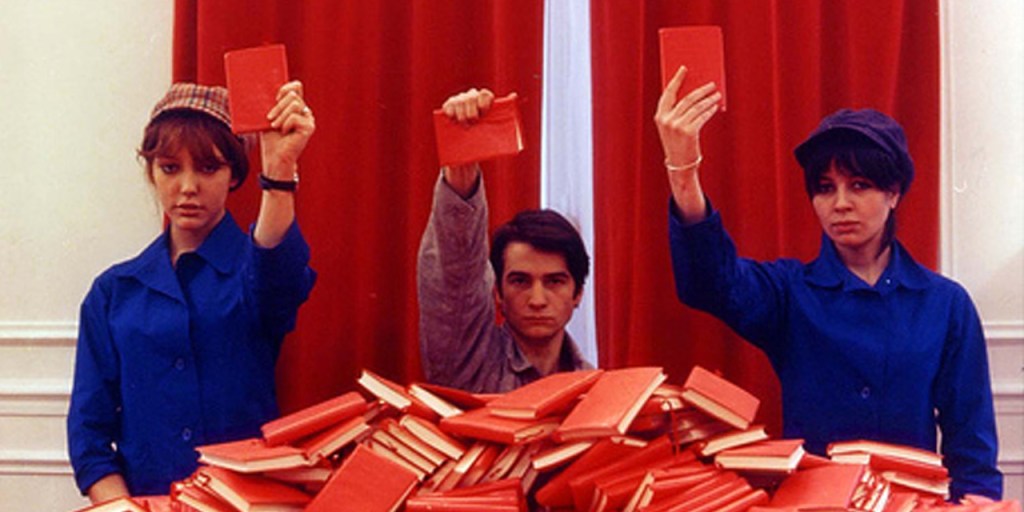
Then, something happened. When La Chinoise came out, I was sorely disappointed. Always sympathetic to revolutionaries, Godard seemed to have turned Maoist. His stars—Jean-Pierre Léaud and Anna Wiazemski—endlessly quoted from Chairman Mao’s little red book. Godard had gone doctrinaire on me. Even though I myself had flirted with the Progressive Labor Party in 1967, as a Hungarian-American I had uneasy feelings about dogmatic Communism.
La Chinoise: Way Too Dogmatic
Still, I thought that most of Godard’s films of the 1960s were exciting. At the time, all my favorite American directors were either dead or dying, and here was a young French director still in his thirties who could be relied upon to produce more masterpieces in the years to come. Alas! It was not to be. I have seen a few of his later productions, which I found not quite up to the standard Godard had set earlier in his career.
Among my favorites of his were:
À bout de souffle or Breathless (1960), one of the iconic films of the French New Wave
Vivre sa vie or My Life to Live (1962)
Le mépris or Contempt (1963), starring Brigitte Bardot
Alphaville (1965), a great combo of noir and science fiction
Pierrot le fou (1965)
Masculin féminin (1966), starring French pop star Chantal Goya
Made in USA (1966)
Weekend (1967), an apocalyptic satire of the French bourgeoisie
Many of the above films starred Godard’s wife, the lovely Anna Karina, which for me served as an added inducement to see the films.
Godard continued to make films. Between 1968 and 1972, he made political films with the Dziga Vertov Group, none of which I have seen. As late as 2022, he kept releasing films. The exhilaration of the earlier works, however, was gone. I have yet to see more than a handful of them, but I would like to at some point. Many of them are pretty obscure and hard to find.
Last year, at the age of 91, Godard found himself suffering from a series of incapacitating illnesses, such that he committed assisted suicide on September 13, which is allowed by Swiss law. It is an unfortunate end for a great artist whose work influenced my life in so many ways at a time when I was young and alienated. But then, such is life.
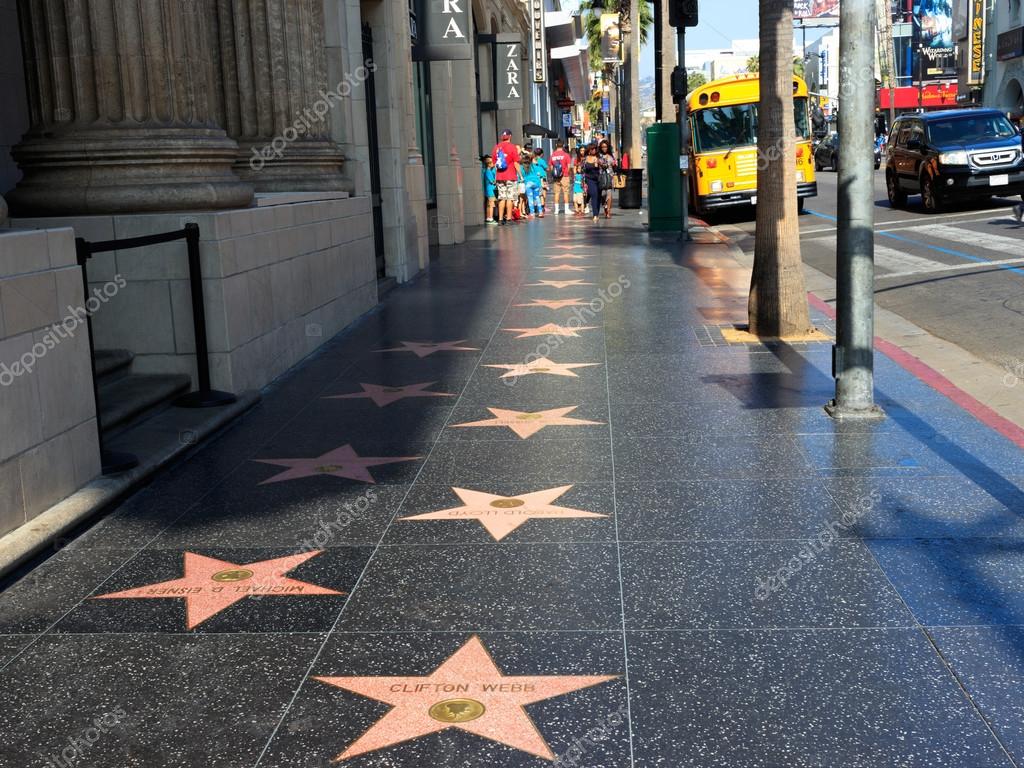
Here is a poem by Emily Dickinson on the subject of fame. It is short, but packs a punch.
Fame Is a Fickle Food
Fame is a fickle food
Upon a shifting plate
Whose table once a
Guest but not
The second time is set
Whose crumbs the crows inspect
And with ironic caw
Flap past it to the
Farmer’s corn
Men eat of it and die




 Tarnmoor
You must be logged in to post a comment.