Every time I visit the supermarket, I am amazed by the large variety of sugary drinks, both carbonated and non, and the high price of same. Every so often, I get suckered in to try one, but usually find myself disappointed.
When I travel in Latin America, my usual beverage of choice at restaurants is agua mineral con gas, which is widely available and doesn’t cost much. For some reason, in the United States the beverages are much more expensive, and not always so tasty. I’ve always wondered why this is so.
That’s why at home I usually drink either iced water or my own iced tea, which consists of what remains in my cheap Japanese metal teapot after my breakfast hot tea. Right now, it’s Darjeeling, which makes it much higher quality than the bottled iced teas on the supermarket shelves, and unsweetened to boot. (I am diabetic, so have reason to cut back on sugar at every opportunity.)
As a result, my grocery bill is light on beverages, except for Martine’s low fat milk and distilled water. On the other hand, when I see other supermarket patrons, their carts are loaded down with alcoholic beverages and sweet fizzy water. (For me, the predominant item consists of fruits and vegetables.)
It took many years to switch from the inevitable Coke or Ginger Ale to what I am drinking today. Fortunately, as a result, my blood sugar is manageable, and, I think, my health overall is better.
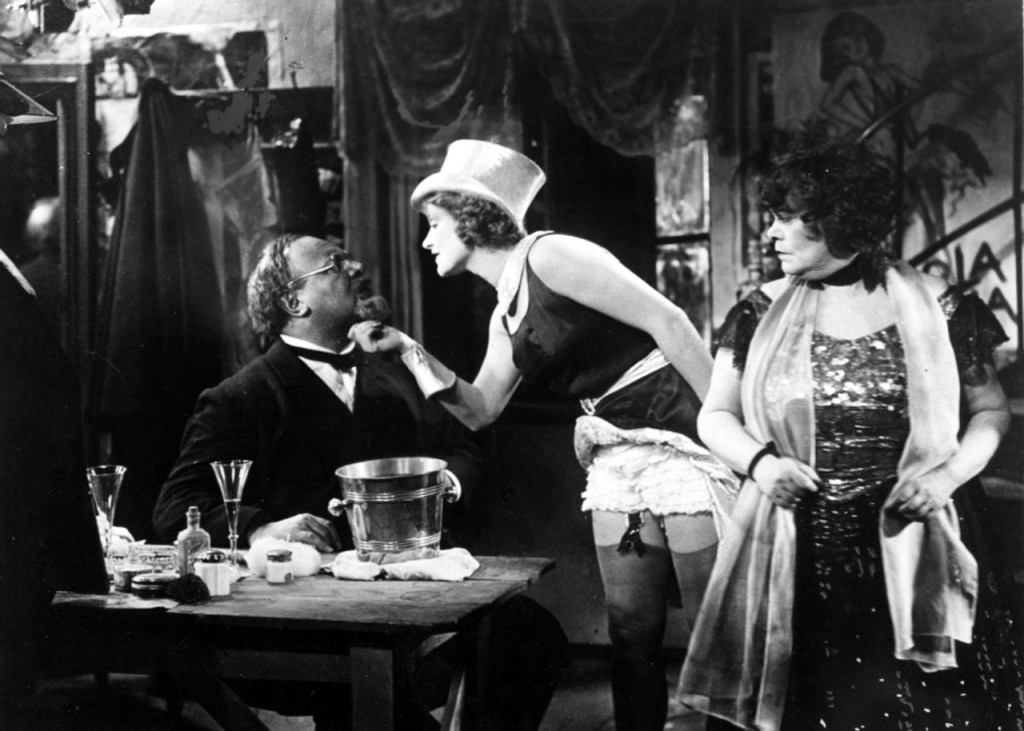
Emil Jannings (Left) and Marlene Dietrich (Center) in The Blue Angel
A cucoloris is defined by Wikipedia as “light modifier (tool, device) for casting shadows or silhouettes to produce patterned illumination…. The cucoloris is used to create a more natural look by breaking up the light from a man-made source. It can be used to simulate movement by passing shadows or light coming through a leafy canopy.”
The films of Josef Von Sternberg with Marlene Dietrich made extensive use of cucolorises. In scenes which other directors would open up, such as a troop of French Foreign Legionnaires marching through town in Morocco (1930) or a Chinese steam locomotive going down the middle of a crowded street in Shanghai Express (1932), Von Sternberg conveys a sense instead of claustrophobia and encroaching shadows.
Included in the series were:
The Blue Angel (1930), shot in Germany
Morocco (1930)
Dishonored (1932)
Shanghai Express (1932)
Blonde Venus (1932)
The Scarlet Empress (1934)
The Devil Is a Woman (1936)
Even in the later films, the same lighting technique can be found in The Shanghai Gesture (1941) and Macao (1952).
Cucoloris
It is almost as if all the films were set in Lola Lola’s dressing room in The Blue Angel. In many ways, he is the diametric opposite of John Ford, whose film scenes frequently extended to the far horizon.
The seven Sternberg/Dietrich films listed above are among my favorite films of all time. I have seen all of them multiple times and will continue to do so. When I was a student in UCLA’s Graduate School, I visited Von Sternberg at his house in Westwood (his wife taught in the art department) and knew his son Nicholas.
I own a copy of his rare autobiography, Fun in a Chinese Laundry, and read his hard-to-find 1920s novel Daughters of Vienna.
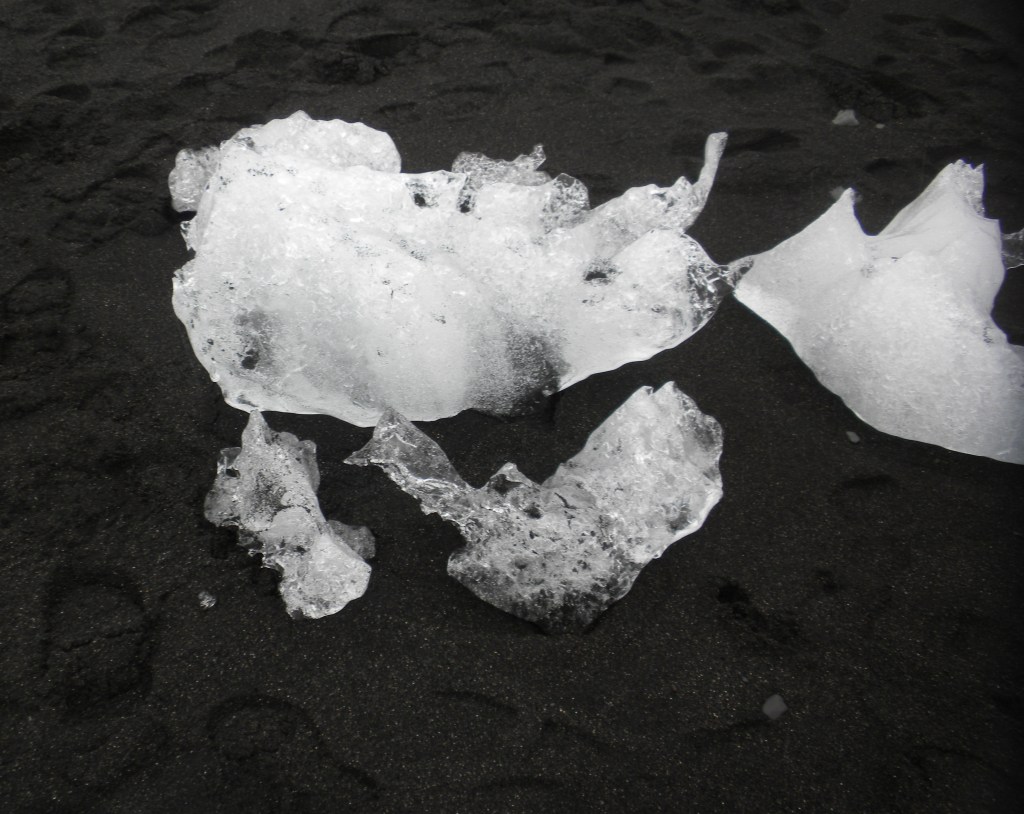
Weird Ice Floes at Jökulsárlón in Southeast Iceland
My mind keeps going over the places I’ve seen In Iceland duri9ng my two trips there in 2001 and 2013. One of the most amazing was the glacial lagoon at Jökulsárlón between Vík í Myrdal and Höfn. The lagoon was full of hundreds of ice floes that had broken off the giant glacier of Vatnajökul. Some were white, others had strange blue highlights; and some were coated with debris picked up en route to the lagoon.
The lagoon at Jökulsárlón is probably one of the top ten sights to see in Iceland. It’s too far from Reykjavík to do in a day trip (though it is offered by some tour operators). Usually, it’s a sight that only travelers who are doing the Ring Road (Route 1) around Iceland get to see. It is possible to take a boat ride around the lagoon.
Equally worth seeing is the black sand beach called Breiðamerkursandur that is just across the highway from the lagoon.
Glacial Ice on Breiðamerkursandur
As you walk along the black sand beach, you see chunks of ice from broken-up ice floes scattered along the sands like diamonds. Travelers have to be careful, because the area is known for occasional “sneaker waves” that could carry travelers off to an icy and wet death.
A great poet, a magnificent artist, a deep visionary—William Blake (1757-1827) was all of these. And one of the poems where the visionary is predominant is his “Auguries of Innocence” (ca. 1803).
Auguries of Innocence
To see a World in a Grain of Sand And a Heaven in a Wild Flower Hold Infinity in the palm of your hand And Eternity in an hour
A Robin Red breast in a Cage Puts all Heaven in a Rage A Dove house fill’d with Doves & Pigeons Shudders Hell thro’ all its regions A dog starv’d at his Masters Gate Predicts the ruin of the State A Horse misus’d upon the Road Calls to Heaven for Human blood Each outcry of the hunted Hare A fibre from the Brain does tear A Skylark wounded in the wing A Cherubim does cease to sing The Game Cock clip’d & arm’d for fight Does the Rising Sun affright Every Wolf’s & Lion’s howl Raises from Hell a Human Soul The wild deer, wandring here & there Keeps the Human Soul from Care The Lamb misus’d breeds Public Strife And yet forgives the Butchers knife The Bat that flits at close of Eve Has left the Brain that wont Believe The Owl that calls upon the Night Speaks the Unbeliever’s fright He who shall hurt the little Wren Shall never be belov’d by Men He who the Ox to wrath has mov’d Shall never be by Woman lov’d The wanton Boy that kills the Fly Shall feel the Spiders enmity He who torments the Chafer’s Sprite Weaves a Bower in endless Night The Catterpiller on the Leaf Repeats to thee thy Mother’s grief Kill not the Moth nor Butterfly For the Last Judgment draweth nigh He who shall train the Horse to War Shall never pass the Polar Bar The Beggar’s Dog & Widow’s Cat Feed them & thou wilt grow fat The Gnat that sings his Summer’s Song Poison gets from Slander’s tongue The poison of the Snake & Newt Is the sweat of Envy’s Foot The poison of the Honey Bee Is the Artist’s Jealousy The Prince’s Robes & Beggar’s Rags Are Toadstools on the Miser’s Bags A Truth that’s told with bad intent Beats all the Lies you can invent It is right it should be so Man was made for Joy & Woe And when this we rightly know Thro’ the World we safely go Joy & Woe are woven fine A Clothing for the soul divine Under every grief & pine Runs a joy with silken twine The Babe is more than swadling Bands Throughout all these Human Lands Tools were made & Born were hands Every Farmer Understands Every Tear from Every Eye Becomes a Babe in Eternity This is caught by Females bright And return’d to its own delight The Bleat the Bark Bellow & Roar Are Waves that Beat on Heaven’s Shore The Babe that weeps the Rod beneath Writes Revenge in realms of Death The Beggar’s Rags fluttering in Air Does to Rags the Heavens tear The Soldier arm’d with Sword & Gun Palsied strikes the Summer’s Sun The poor Man’s Farthing is worth more Than all the Gold on Afric’s Shore One Mite wrung from the Labrer’s hands Shall buy & sell the Miser’s Lands Or if protected from on high Does that whole Nation sell & buy He who mocks the Infant’s Faith Shall be mock’d in Age & Death He who shall teach the Child to Doubt The rotting Grave shall ne’er get out He who respects the Infant’s faith Triumphs over Hell & Death The Child’s Toys & the Old Man’s Reasons Are the Fruits of the Two seasons The Questioner who sits so sly Shall never know how to Reply He who replies to words of Doubt Doth put the Light of Knowledge out The Strongest Poison ever known Came from Caesar’s Laurel Crown Nought can Deform the Human Race Like to the Armour’s iron brace When Gold & Gems adorn the Plow To peaceful Arts shall Envy Bow A Riddle or the Crickets Cry Is to Doubt a fit Reply The Emmet’s Inch & Eagle’s Mile Make Lame Philosophy to smile He who Doubts from what he sees Will ne’er Believe do what you Please If the Sun & Moon should Doubt They’d immediately Go out To be in a Passion you Good may Do But no Good if a Passion is in you The Whore & Gambler by the State Licenc’d build that Nation’s Fate The Harlot’s cry from Street to Street Shall weave Old England’s winding Sheet The Winners Shout the Losers Curse Dance before dead England’s Hearse Every Night & every Morn Some to Misery are Born Every Morn and every Night Some are Born to sweet delight Some are Born to sweet delight, Some are Born to Endless Night We are led to Believe a Lie When we see not Thro’ the Eye Which was Born in a Night to perish in a Night When the Soul Slept in Beams of Light God Appears & God is Light To those poor Souls who dwell in Night But does a Human Form Display To those who Dwell in Realms of day
Yesterday I didn’t post because I had one of my periodic, mystery illnesses. The symptoms were weakness, diarrhea, and vomiting. This time, I did not go into the emergency ward because I knew that I would get better in a few hours, especially after taking four 10mg hydrocortisone pills.
As I no longer have a pituitary gland, that is meant to supply me with the adrenocorticotropic hormone (ACTH) my body no longer produced on its own. Apparently, when I get one of those episodes—with or without diarrhea and vomiting—it usually takes six to eight hours to return to normal.
Was it food poisoning that caused my illness? Was it low blood pressure (which was lower than usual when I measured it in the evening)? Was it high blood sugar (which was in fact running high when I measured it in the late afternoon)?
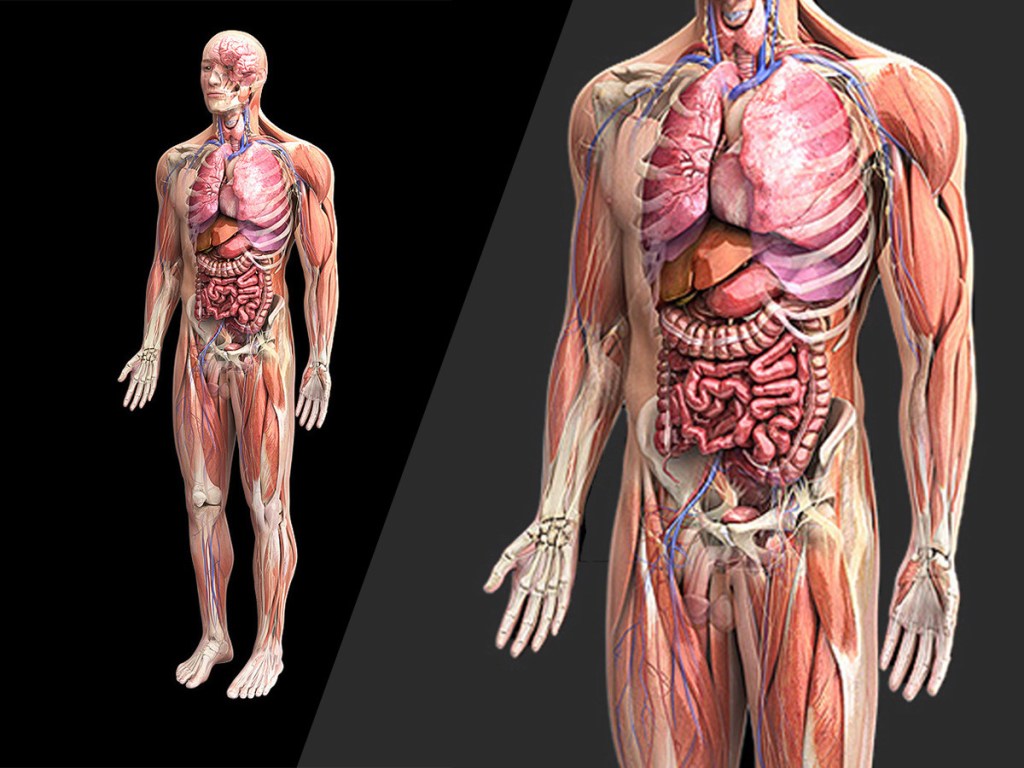
The thought suddenly came to me that we are so used to living in a digital world with its clearly demarcated boundaries that we tend to forget that we are primarily an analogue entity. My doctor thinks that what causes these incidents is an interaction involving the hormonal, circulatory, and digestive systems. Whatever the condition(s) that cause me to go out of whack, the treatment is the same: Hydrocortisone or Prednisone. Or 100mg Solu-Cortef injected into my bloodstream.
I will probably never find out what causes these bodily crises. I would be willing to bet that it may not even be determinable from an autopsy.
The health of the body is a mystery. I just have to be careful about eating, sleeping, pushing my body beyond its limits, and everything else. At the same time, I have to maintain a certain sense of humor about what is an endless conundrum.
Strange things happen when, through laziness or ignorance, one too readily accepts a slanted view of history. That’s one of the reasons I don’t like talking about the Second World War, mainly because the West’s participation was not what brought down Hitler and the German military machine.
In fact, until D-Day, the United States and England were not even confronting the Nazis where they lived, except in the form of bombing raids. On the ground, we started somewhat late in North Africa and then moved to Sicily and the Italian mainland, where we slogged our way up the boot of Italy.
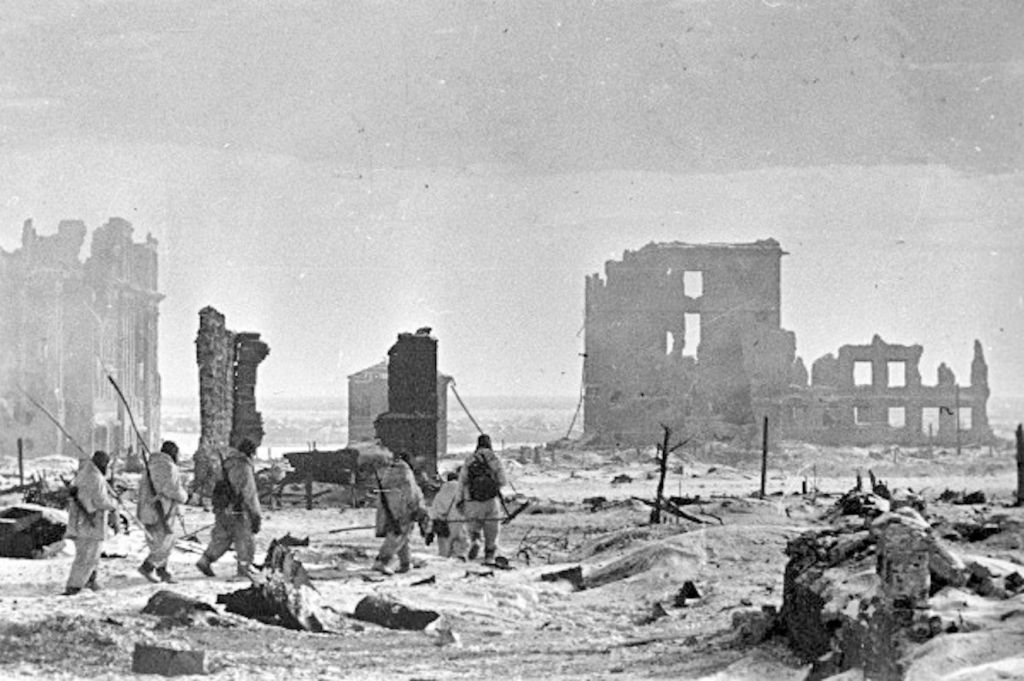
We might not want to admit it, but it was predominately the Soviet Union that put the kibosh on Hitler. For Stalin, the war was an existential horror. If his forces didn’t hold, Russia was in danger of being wiped off the map.
According to the Percy Schramm Kriegstagebuch des Oberkommandos der Wehrmacht: 1940—1945: 8 Bde. 1961, 68% of Wehrmacht deaths were on the Eastern Front, more than double of all other Army deaths in Europe, North Africa, Italy, France, Holland, Belgium, Norway, and the Balkans combined. The figures for wounded German soldiers was even more spectacular: 82% of all wounded were on the Eastern Front.
I do not denigrate the bravery and lost lives among the Americans and British; it’s just that the Soviet Union was the main theater of the war. Recognizing this, the Russians refer to the conflict as the Great Patriotic War. It was at places like Stalingrad and the Kursk-Orel Salient where the Nazis paid the ultimate price.
I have always been fond of reading collections of short stories by my favorite authors. For some writers such as Jorge Luis Borges, Anton Chekhov, and Edgar Allan Poe, that’s pretty much all there is. But for great novelists like Henry James, Mark Twain, Joseph Conrad, and William Faulkner the stories serve to fill out their work with an extra dimension of conciseness and sharpness.
Paul Theroux is for me a special case. I have been reading (and re-reading) his travel books for half a century, but it is only recently that I have turned to his fiction: both novels and stories. The following is a complete short short story from his collection Mr Bones: Twenty Stories. It is part of a microcollection of short short stories called “Long Story Short.”
A Real Break
Mother and Grace—let’s just say they weren’t best buddies. So as the elder daughter, and single, I began to look after Mother when she began to fail. And she was a wreck. Got confused in stores, left the oven on, real muddled about time. I made her stop driving, so of course I had to take the wheel. God, the hills. I wrote Grace that I was moving in with Mother. The big Polk Street house had been in Mother’s family for years; Mother was lost in it. Grace understood completely and said she was relieved. She had been in a Minnesota convent since taking her vows, though she sometimes spent extended periods in Nevada and Florida as a hospital worker, “and doing spiritual triage too,” on Indian reservations. We seldom heard from her, but Mother sent her money now and then. Because of the strictness of her religious order, she was never able to visit us in San Francisco. “And just as well,” Mother said.
It got so that Mother could only manage with my assistance. I resigned from my secretarial job, lost my retirement and my medical plan, and became Mother’s full-time caregiver. I updated Grace on Mother’s condition and mentioned the various challenges we faced. Grace wrote saying that she was praying for us, and she asked specific questions because these infirmities were to be specified in the prayers, or intercessions, as she called them.
About three years into my caregiving, Grace called. She said, “Why not take a few months off? My superior has given me special dispensation to look after Mom for a while. It’ll be a break for me. And you can have a real break. Maybe go to Europe.”
Mother wasn’t overjoyed, but she could see that I was exhausted. Grace flew in. It was an emotional reunion. I hardly recognized her—not because she had gotten older, though she had. But she was dressed so well and in such good health. She even mentioned how I looked stressed and could obviously do with some time off.
I went on one of those special British Airways fares, a See Scotland package. It was just the break I needed, or so I thought.
Long story short, when I got back to San Francisco, the Polk Street house was being repainted by people who said they were the new owners. Everything I possessed was gone. Mother was in a charity hospice. She had been left late one night at the emergency room of St Francis Hospital. There was no money in Mother’s bank account. Everything she had owned had been sold. I saw Mother’s lawyer. He found a number for Grace—the 702 area code, a cell phone. Nevada.
“I’m glad you called,” Grace said. I could hear music in the background and a man talking excitedly, a fishbowl babble, aqueous party voices. I started to cry but she interrupted me with a real hard voice. “Everything I did was legal. Mother gave me power of attorney. I never want to see you again. And you will never undo it.” Unfortunately for me, that was true.
As I wrote yesterday’s blog post about proofreading computer transcriptions of two Merriam-Webster dictionaries, I remembered that one way I entertained myself in the process was collecting weird words. Three from the 7th Collegiate Dictionary were:
rotl. A unit of weight in the Middle East ranging from one to six pounds.
crwth. A Welsh stringed instrument.
cwm. Another Welsh vowelless wonder, meaning a steep-sided hollow at the head of a valley or on a mountain side.
Soon I started going farther afield:
medioxumous. Of or relating to an intermediate group of deities.
septemfluous. Flowing in seven streams. (Gosh, that’s a useful word.)
zax. A small axe used in roofing (or playing Scrabble).
triskaidekaphobia. Fear of the number thirteen.
gardyloo. In Scots, what people shouted outside their windows before emptying their bedpans in the street.
petrichor. The smell of rain.
That’s all I remember for now, but no doubt other examples will come to mind at a later point.
I came to Southern California to become a graduate student in film at UCLA. After my first year as a student, I needed an income, as my parents weren’t able to foot the bill for me much longer. In March 1968, I visited the job counseling center on campus and applied for a job at a Santa Monica tech company called System Development Corporation, or SDC.
The job was for an interesting project. The Air Force’s Advanced Research Projects Agency (ARPA) had funded SDC’s Lexicography and Discourse project. The work done previously was to key in the complete contents of two dictionaries—the Merriam-Webster Seventh Collegiate Dictionary and the Merriam-Webster Pocket Dictionary—onto paper tape. Included were definitions, pronunciations, and etymologies. The paper tape had been converted to IBM punch cards, which were printed out. The printouts of the two dictionaries was in two piles that ran floor to ceiling of the office I was to use.
Interestingly, my predecessor in the position was murdered by a UCLA graduate student from the film department. I never was to find out who did it.
For the next couple of years, I proofread the transcriptions of both dictionaries and made corrections to the data files, which resided on a military AN/FSQ-32 computer whose parts were encased in epoxy so as to be able to survive a nuclear attack. Unfortunately, it had a single I/O channel, so that if a large number of users were logged in, as was the usual case, simple transactions took forever on the computer’s primitive time-sharing system.
If you are interested in finding out more about the project, you can see the document that described the project: Two Dictionary Transcripts and Programs for Parsing Them. Volume I. The Encoding Scheme, PARSENT and CONIX by Richard Reichert, John Olney, and James Paris (that’s me). It is still available from the Defense Technical Information Center (DTIC).
Incidentally, ARPA also created the Internet. It was originally designed to allow for uninterrupted communications between two points when certain key cities in between were destroyed by nuclear bombs.
It was hardly a city. When I was attending Dartmouth College between 1962 and 1966, there were no traffic lights at any of the intersections. There were a few thousand people, most of whom were directly or indirectly connected with the college.
When my parents drove back to Cleveland, I found myself alone for the first time in my life. Actually, it didn’t bother me as I thought it would. It was probably because my father and mother were going through a rough patch in their marriage, and I didn’t want to be back home for that. And I wasn’t really alone, because my roommate Frank Opaskar was a classmate from my high school.
In the end, we didn’t get along too well—for a strange reason. He slathered Noxzema on his face every night before going to bed, and I had the top bunk over him. Every night I drifted off to sleep in a noisome chemical fog. After two years, we parted company and I got a solo room.
Winters in Hanover were long and cold. The snow, once it fell, lasted all winter. (I wonder if it still does, what with global warming.) By the time March came along, you could see where every dog in Hanover had urinated. Spring was the worst time, because all that snow turned to slush. It was not until May that we could walk on the grass without our shoes making a sucking sound.
The town itself had a much loved grocery store called Tanzi’s and a number of restaurants. Early on, I gave up on the college dining hall and patronized only the restaurants. Farther down the street were the Dartmouth Bookstore and the Nugget Movie Theater, where I spent great gobs of time.
I remember the meatballs and spaghetti at Lou’s Restaurant, those few times he offered it as a special. And I had a lot of pizzas at Minichiello’s. I remember the Mom and Pop cooks there trying to get me to give their cute but clearly wild daughter sage advice about life, when what I really wanted was to be wild with her. Nothing came of it because, alas, I had not yet reached the age of puberty because my pituitary gland was being eaten up by a tumor which was operated on three months after I graduated.







 Tarnmoor
You must be logged in to post a comment.