
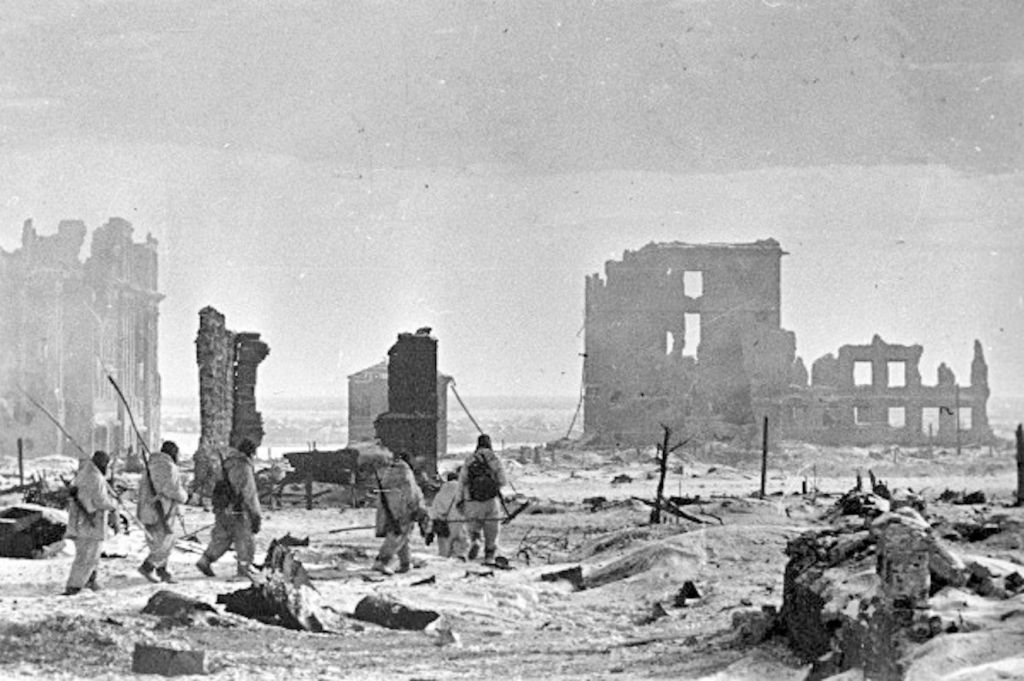
The Battle for Stalingrad (1942-1943)
Strange things happen when, through laziness or ignorance, one too readily accepts a slanted view of history. That’s one of the reasons I don’t like talking about the Second World War, mainly because the West’s participation was not what brought down Hitler and the German military machine.
In fact, until D-Day, the United States and England were not even confronting the Nazis where they lived, except in the form of bombing raids. On the ground, we started somewhat late in North Africa and then moved to Sicily and the Italian mainland, where we slogged our way up the boot of Italy.
We might not want to admit it, but it was predominately the Soviet Union that put the kibosh on Hitler. For Stalin, the war was an existential horror. If his forces didn’t hold, Russia was in danger of being wiped off the map.
According to the Percy Schramm Kriegstagebuch des Oberkommandos der Wehrmacht: 1940—1945: 8 Bde. 1961, 68% of Wehrmacht deaths were on the Eastern Front, more than double of all other Army deaths in Europe, North Africa, Italy, France, Holland, Belgium, Norway, and the Balkans combined. The figures for wounded German soldiers was even more spectacular: 82% of all wounded were on the Eastern Front.
I do not denigrate the bravery and lost lives among the Americans and British; it’s just that the Soviet Union was the main theater of the war. Recognizing this, the Russians refer to the conflict as the Great Patriotic War. It was at places like Stalingrad and the Kursk-Orel Salient where the Nazis paid the ultimate price.
 Tarnmoor
You must be logged in to post a comment.