“To Television”

Not too many people have anything good to say about television, except maybe poet Robert Pinsky in his poem “To Television.” I have long thought that his poem “Samurai Song” is one of the past poems written since WW2. Three times, he has served has poet laureate of the United States.

To Television

Not a “window on the world”
But as we call you,
A box a tube.

Terrarium of dreams and wonders.
Coffer of shades, ordained
Cotillion of phosphors
Or liquid crystal

Homey miracle, tub
Of acquiescence, vein of defiance.
Your patron in the pantheon would be Hermes

Raster dance,
Quick one, little thief, escort
Of the dying and comfort of the sick,

In a blue glow my father and little sister sat
Snuggled in one chair watching you
Their wife and mother was sick in the head
I scorned you and them as I scorned so much

Now I like you best in a hotel room,
Maybe minutes
Before I have to face an audience: behind
The doors of the armoire, box
Within a box—Tom & Jerry, or also brilliant
And reassuring, Oprah Winfrey.

Thank you, for I watched, I watched
Sid Caesar speaking French and Japanese not
Through knowledge but imagination,
His quickness, and Thank you, I watched live
Jackie Robinson stealing

Home, the image—O strung shell—enduring
Fleeter than light like those words we
Remember in: they too are winged
At the helmet and ankles.
Doing the Kangaroo Hop

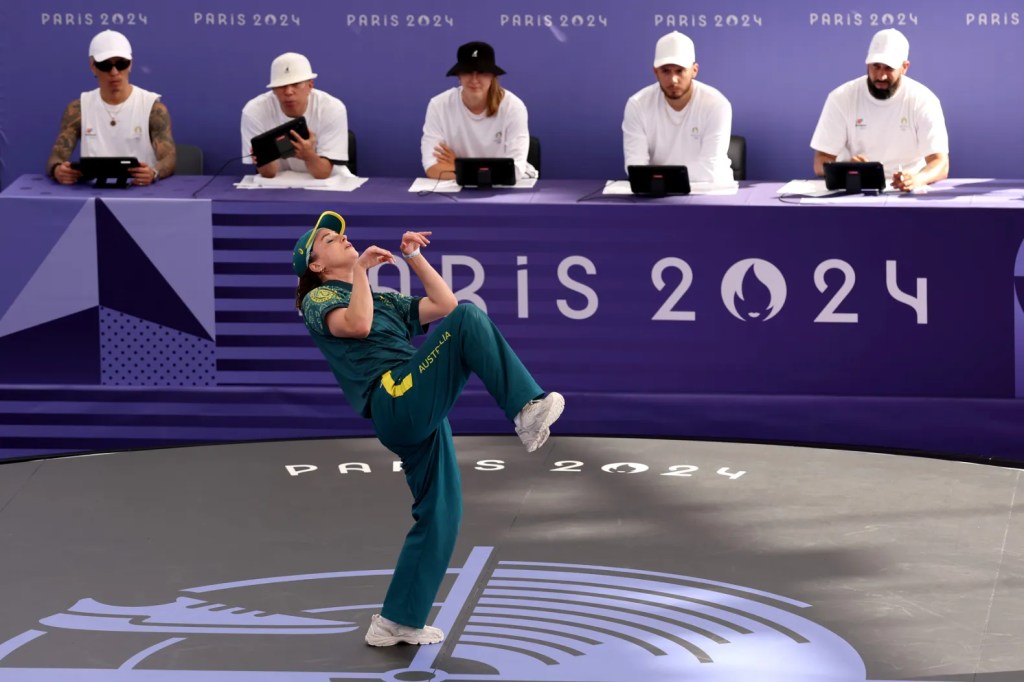
Rachael Gunn (aka Raygun) Doing Her Break Routine

Although the 2024 Paris Olympics have faded into history, there are still some controversies swirling about. Mostly, these are because of some pigheaded bureaucratic judges. I have already written about Jordan Chiles’s bronze medal in gymnastics.

Also victimized by poor judging was Rachael Gunn of Australia’s entertaining performance in breaking. Raygun, as she is better known, received zero points from the judges for her highly individualistic routine. In addition, she has become the target of hatred from more “conservative” breakers, if there can be said to be such a thing.

Has breaking suddenly become so wrapped up in tradition that anything that smacks of innovation is pilloried by judges and social media trolls?

Hey, Australia did a great job in these Olympics, winning a disproportionate number of medals considering the size of its population.

Read the BBC’s story about the controversy, and give this talented, gutsy breaker the support she deserves.

The Beach Zone

If you hate hot weather and have to live in California, near the beach is the place to be. My brother in Palm Desert is experiencing temperatures over 100° Fahrenheit (38° Celsius) on an almost daily basis. My friends Bill and Kathy in Altadena are typically getting temperatures over 90° Fahrenheit (32° Celsius). Martine and I, on the other hand, live two miles (3.2 km) from the beach and have been comfortable in temperatures not much warmer than 80° Fahrenheit (27° Celsius).

The reason for this is that we are enjoying what is referred to as the marine layer, which is what you get when relatively warm and dry air moves atop a body of cooler water. Sometimes, this layer only goes inland several hundred feet, or several miles, or even all the way to the edge of the desert.

As I drive to the beach, I enjoy looking at my Subaru’s thermometer reading dropping as I near the water. Today, fore instance, from Centinela Avenue to Chace Park in the Marina, a distance of two or three miles, the temperature dropped six degrees Fahrenheit from 83° to 77°. Plus there was a steady breeze that disappeared only a few hundred feet inland.

We live in an apartment that was built in 1945 (the year I was born) without insulation. We have fans, but no air conditioning. (We couldn’t afford it.) It is generally cheaper to live farther inland, but one cannot survive without air conditioning.

Only later in the summer and into early fall does the marine layer becomes less of a factor when the Santa Ana Winds bring the hot dry desert air to the beach communities and blows the marine layer offshore.

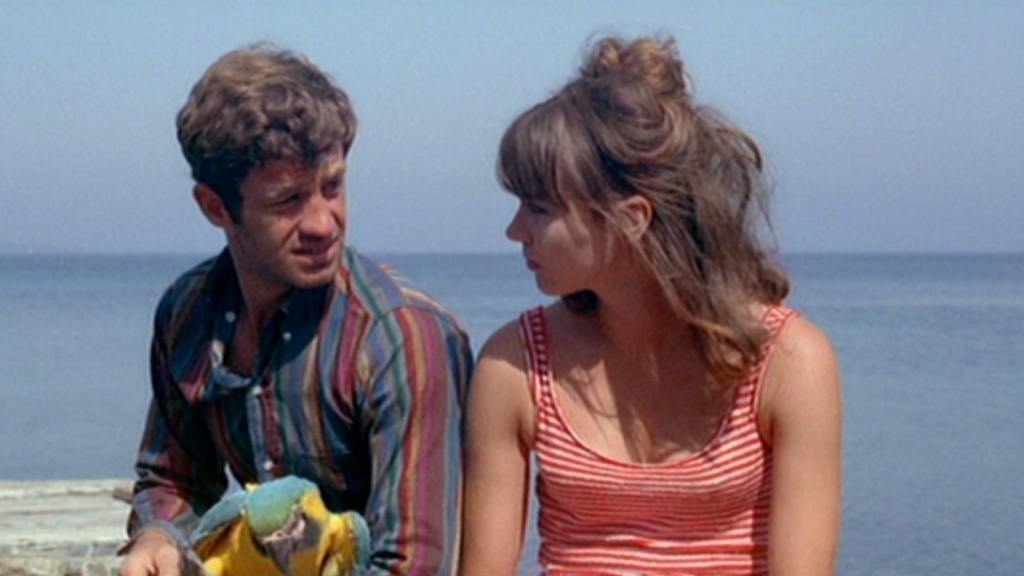
Favorite Films: Pierrot le Fou (1965)

Jean-Paul Belmondo and Anna Karina in Pierrot le Fou

In the late 1960s, as I was studying graduate film history and criticism at UCLA, I was completely enamored with the films of Jean-Luc Godard. I remember telling my late friend Norm Witty that I was glad that my favorite film director was so young and that he would be making great films for decades to come.

As it turns out, I was only half right. He did continue to make films, but something was gone once he divorced Anna Karina. That happened in 1965, shortly after he made Pierrot le Fou with his wife and Jean-Paul Belmondo.

After Pierrot, Godard came out with two or three films sans Karina, and then descended into a darker period with La Chinoise and Weekend (both 1967). After that, although he was still prolific, I have seen only two of his films. It was as if something was gone forever from his work.

What was gone was that almond-eyed beauty Anna Karina. Godard was clearly in love with her, as I would have been if I were him. Pierrot is a film about the deterioration of their relationship: Belmondo as Ferdinand is a bookworm spouting profundities at every turn, while Karina’s Marianne Renoir is instinctive, emotional, and mysterious.

I love the film because I am a bookworm, and I know full well how that puts me at a disadvantage in relationships. Another director—Orson Welles in Mr. Arkadin (1955)—has the last word about how I feel in the matter:

The Tale of the Scorpion and the Frog in Mr. Arkadin

Olympic Politics

Simone Biles and Jotdan Chiles Bowing to Rebeca Andrade

This viral photo from the recently concluded Olympics has been spoiled by the decision of some fusty Eurocrat to deprive Jordan Chiles of her bronze medal. For the complete story, check out CNN’s coverage of the story. There was a one-minute deadline for the U.S. gymnastics coach to protest the awarding of the bronze to a Romanian contestant (whose floor exercise was, in fact, quite excellent)’ and the U.S. was four seconds late (?!) in filing the protest.

Way to go, clerical trolls!

LA28: A Modest Proposal

Time to Introduce New Sports for the Next Olympics

The 2024 Paris Olympics were a smashing success. The Chinese continued their domination of track and field, while the Americans took medal after medal in platform diving. For the next Olympics in my home town of Los Angeles, it’s time to consider some new events to mix things up a bit:

SYNCHRONIZED PIZZA DOUGH TOSSING. Let’s face it: Pizza has become an international food and is due for some recognition by the Olympics.

THREE-LEGGED MARATHON RACE. I’ve always thought that Marathon runners had it too easy. I mean the only difficult thing about the 42.195 kilometer (26.219 mile) course is doing all the decimal math in your head while running.

FACEBOOK FACEPLANT. Let’s acknowledge the role of social media in our lives by having a race during which the participants must complete a series of responses to social media posts while running.

UNDERWATER GYMNASTICS. On one hand, you have greater buoyancy in the water; on the other hand, you don’t want to stretch out your routine too long.

CLIFF DIVING. For lemmings only. You dive off a cliff into a net. You can have a number of heights: 100 meters, 200 meters … the sky’s the limit.

Martine Is Back!

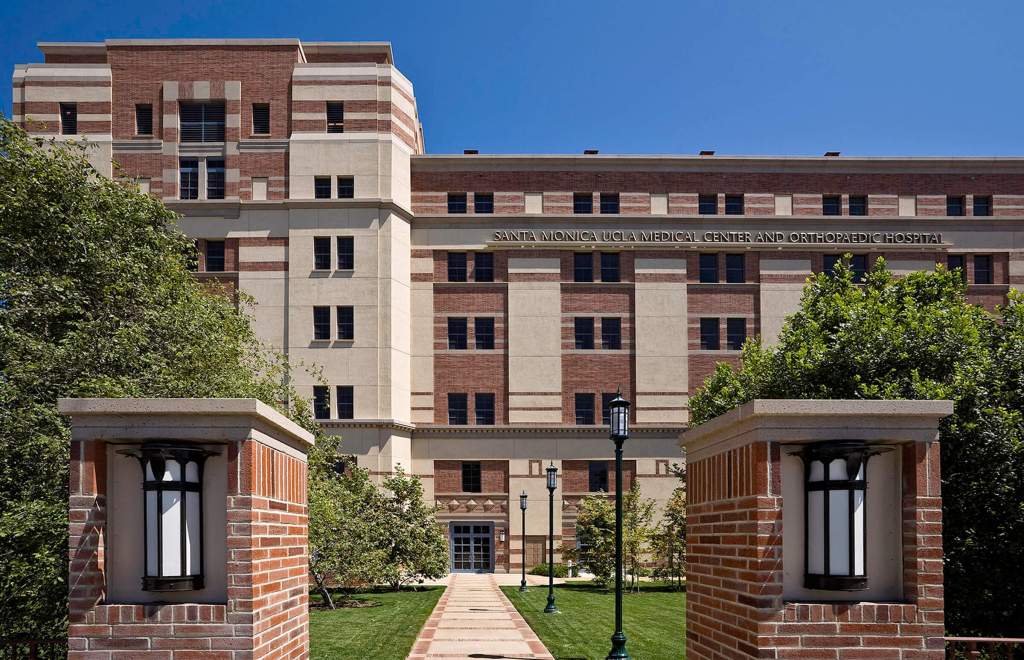
UCLA Santa Monica Medical Center

After spending some five days in a hospital room, Martine was finally discharged today. She feels good, and there is no longer an issue with low sodium levels in the blood. The medical name for this is hyponatremia. According to the Mayo Clinic website, signs and symptoms can include:

  • Nausea and vomiting
  • Headache
  • Confusion *
  • Loss of energy, drowsiness and fatigue *
  • Restlessness and irritability *
  • Muscle weakness, spasms or cramps *
  • Seizures
  • Coma

On Tuesday, Martine was suffering from four of these (marked above with asterisks). In the hospital, she was immediately put on intravenous electrolytes which, over the space of two days, restored her condition to normal. Then she was kept on for observation for a couple more days to make sure her blood levels were normal.

What caused this? Martine thought it was that she accidentally took a second dose of Pilocarpine 2% ophthalmic solution for glaucoma two hours after taking a first dose. Although one physician I talked to in the emergency room said this couldn’t be the cause, the literature accompanying the drug indicated that it was indeed possible.

Whatever the cause, I am convinced that the treatment was correct.

The human body is a strange and wonderful thing, and doctors are not infallible. We tread a narrow path over two abysses. Thankfully, Martine is okay for now.

Hiatus

Martine at the Zimmerman Automobile Driving Museum

I have not posted any blogs during the last three days because Martine was hospitalized on Tuesday. By accident she took a second dose of powerful glaucoma eye drops instead of the medication she intended on taking. The result was weakness, dehydration, and a host of other symptoms that required an ambulance trip to the UCLA Santa Monica Hospital where blood tests revealed that the sodium levels in her blood were dangerously low.

For two days, Martine was literally non compos mentis—not in her right mind. On Tuesday night, as she was waiting in a temporary patient treatment area for a hospital bed to be assigned to her, she was shaking like a leaf and was barely able to recognize me.

When I returned home, I was shattered. Was this the beginning of something critical, or possibly fatal? On Wednesday, she was slightly better as the hospital worked at raising the sodium level in her blood. But she was still not quite right in her mind: She kept attempting to get up to go to the bathroom while multiple tubes were connected to her body. She kept insisting “This is a free country!”

In the end, a licensed vocational nurse was delegated to keep her safely in bed. I visited her twice, but she forgot that I was there. Fortunately, yesterday and today saw a return to the Martine I knew and loved. Essentially, she is still in the hospital mainly for observation to make sure that her blood work stabilizes.

At home, I was too upset to read or write; so I have just watched the Paris Olympics endlessly.

It looks as if Martine will probably be discharged tomorrow. I hope so: I desperately want to return to our normal lives.

Sardonic Old Gringo

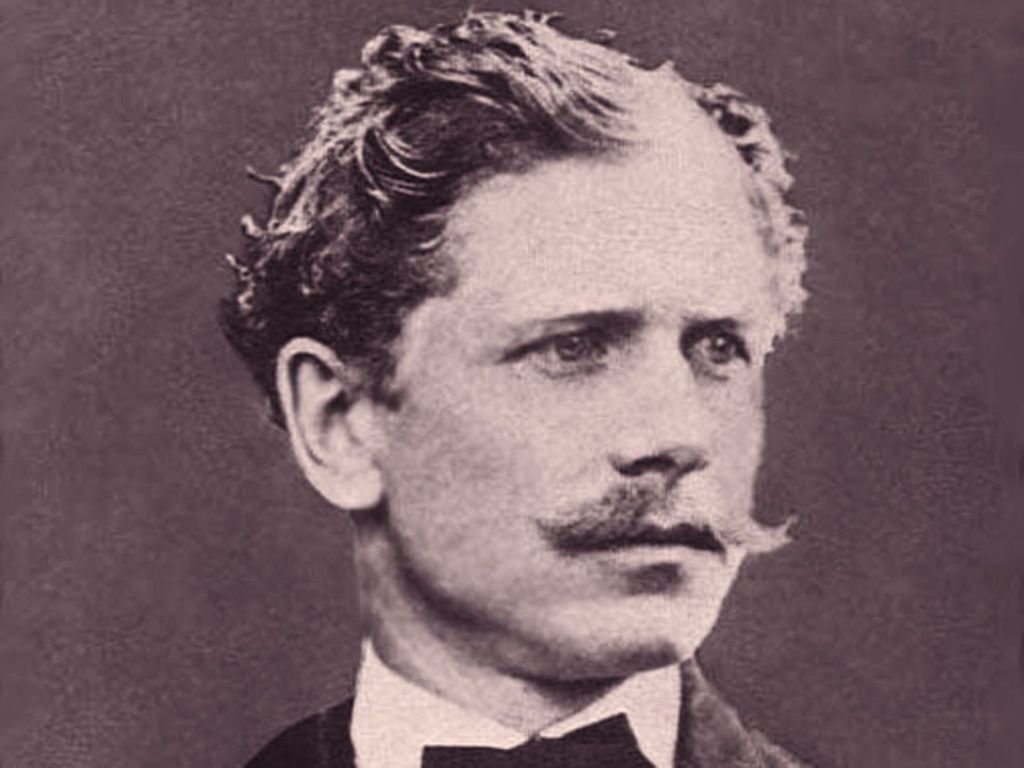
American Writer Ambrose Bierce (1842-1914)

He was one of the two greatest writers of fiction about the Civil War, the other being Stephen Crane. His short story, “An Occurrence at Owl Creek Bridge,” is one of my clearest memories from high school English. He also wrote some good horror stories, plus a book of sardonic definitions he called The Devil’s Dictionary (1906). As he wrote in the preface to that book: “[T]he author hopes to be held guiltless by those to whom the work is addressed—enlightened souls who prefder dry wines to sweet, sense to sentiment, wit to humor and clean English to slang.”

I thought I would present a few of my favorite entries from The Devil’s Dictionary that I found particularly witty.

ABORIGINES, n. Persons of little worth found cumbering the soil of a newly discovered country. They soon cease to cumber: they fertilize.

ABSURDITY, n. A statement or belief manifestly inconsistent with one’s own opinion.

ACTUALLY, adv. Perhaps; possibly.

COMFORT, n. A state of mind produced by contemplation of a neighbor’s uneasiness.

EVANGELIST, n. A bearer of good tidings, particularly (in a religious sense) such as assure us of our own salvation and the damnation of our neighbors.

FIDELITY, n. A virtue peculiar to those who are about to be betrayed.

LIGHTHOUSE, n. A tall building on the seashore in which the government maintains a lamp and the friend of a politician.

MONARCHICAL GOVERNMENT, n. Government.

PEACE, n. In international affairs, a period of cheating between two periods of fighting.

SELF-EVIDENT, adj. Evident to one’s self and to nobody else.

In 1914, Bierce is said to have crossed the border into Mexico during that country’s revolution and disappeared. In 1985, Mexican novelist Carlos Fuentes wrote an excellent book entitled The Old Gringo speculating what happened to Bierce during the fighting between Pancho Villa and the government forces of General Victoriano Huerta.

Beyond the Master Forger’s Ability

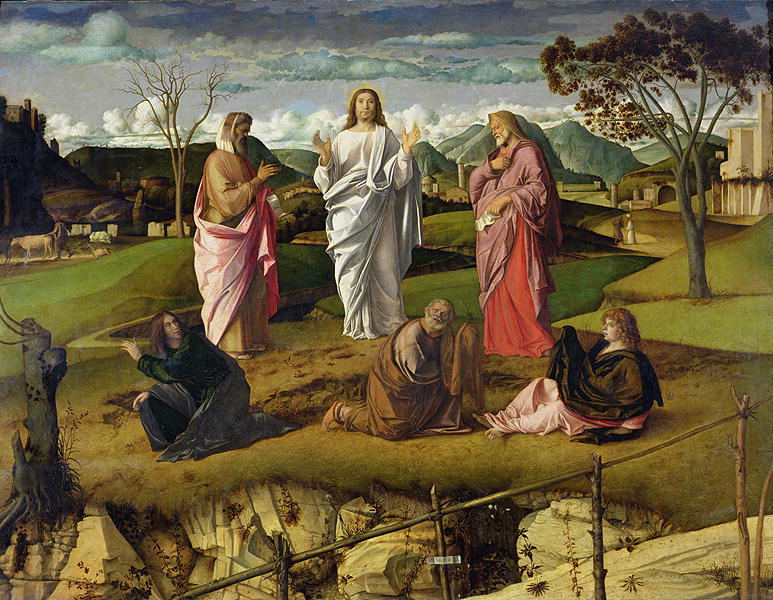
Giovanni Bellini’s “The Transfiguration” (1480)

This is a repost from ten years ago today: August 4, 2014.

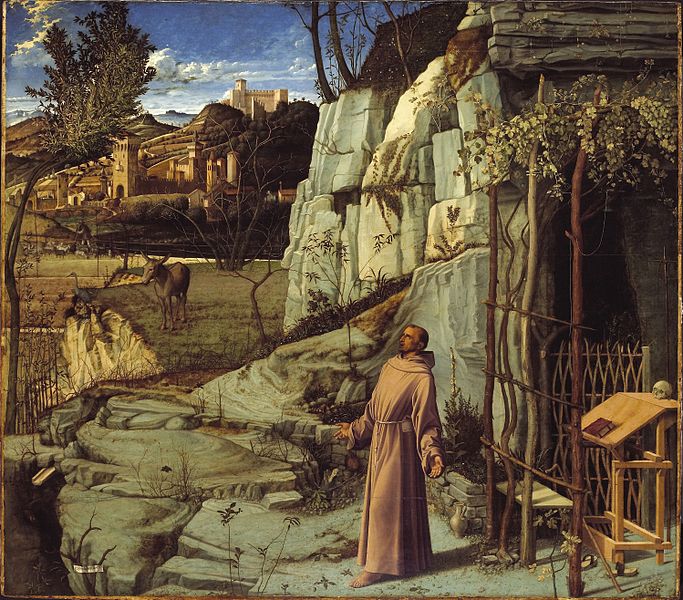
Yesterday, I was drawn to the television by a segment on “Sixty Minutes” about the noted German art forger, Wolfgang Beltracchi. When Bob Simon of CBS asked him what painters he couldn’t forge, Beltracchi, without hesitation, answered Bellini. I took him to mean Giovanni Bellini (1430-1516) and not his brother Gentile (they were both brothers-in-law of the great Andrea Mantegna). The only time I remember ever seeing or original Giovanni Bellini was at the Frick Collection in New York City, which has a superb “St. Francis in Ecstasy” also painted in 1480. I have included an image below.

There is such an incredible sense of detail in a Bellini oil that I feel as if I could pick a background segment (say 1/64th of the total) and enlarge it to full size without losing anything. And the detail would be almost as fascinating as the foreground. Look at that fence following the upward path in “The Transfiguration” (above), and note the minor variations from post to post. Look at that dead tree at the lower left, or that couple meeting in the upper right near the tree.

I can almost imagine Bellini in an ecstasy such as St. Francis in the painting below.

St. Francis in Ecstasy (1480) at the Frick Collection