The Desert Training Center

Display at the General Patton Memorial Museum

When Germany declared war on the United States right after Japan’s Peal Harbor attack, the U.S. Army set up a Desert Training Center in the Mohave Desert, centered on the Chiriaco Summit. Only the Army called it Camp Young and even built an airstrip so that top brass could fly in.

On the trip to Arizona, Martine and I spent a couple of hours at the Summit’s General Patton Memorial Museum seeing numerous exhibits on Patton’s life and the U.S.military in the Second World War, Korea, Viet Nam, and Iraq. It was nice and cool and there were a lot of things to see. We even braved the desert heat to view the tanks and other military vehicles parked outside.
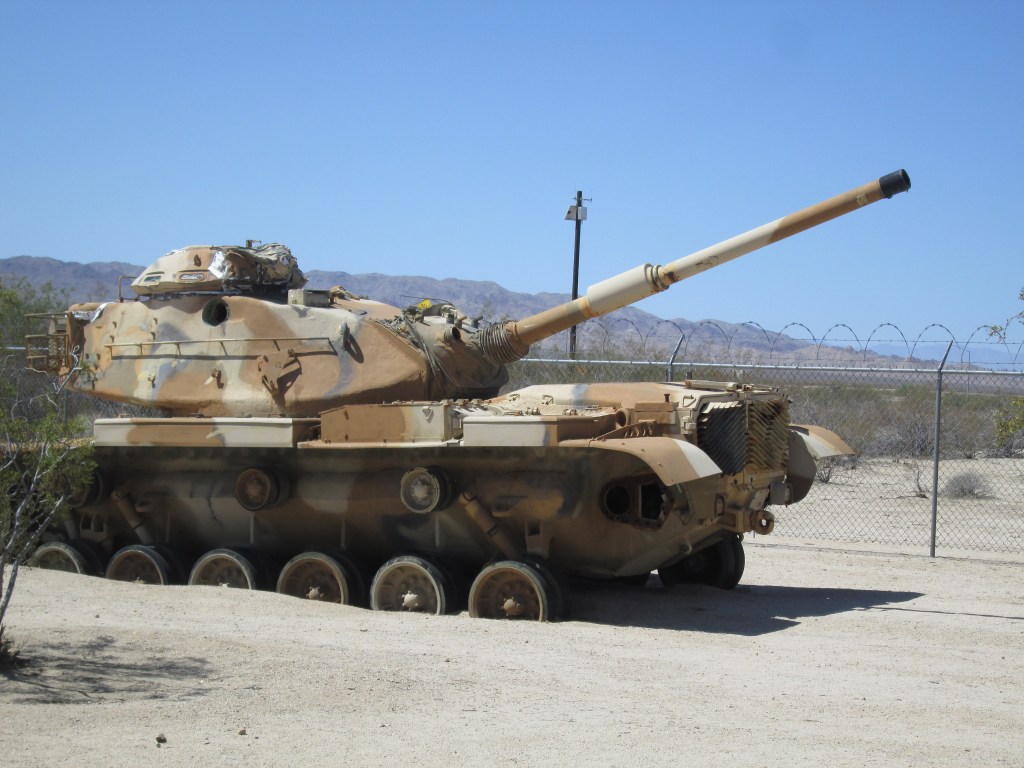
Camouflaged Tank at the General Patton Memorial Museum

Martine liked the museum so much that she talked me into stopping there on the way back from Arizona. It was all right with me, because I know that my little girl is fond of military museums, having been a civilian Army employee for many years at Fort Monmouth in New Jersey, the Sacramento Army Depot, and the Twentynine Palms Marine Combat Center.

Plus we had the opportunity of eating a yummy lunch at the Chiriaco Summit Coffee Shop and a Foster’s Freeze chocolate cone at the convenience store.

Sometimes I wonder what will happen to all the military museums scattered across the country when all the veterans who fought in WW2 have passed on. These museums are most densely distributed in areas where Veterans have made their homes after they retired from the military. These museums are a useful reminder of one of the most traumatic episodes in our country’s history.

High Point

Interior of the Chiriaco Summit Coffee Shop

In the 100 or so desolate miles (161 km) between Indio, California and the Arizona State Line, there is really only one inviting place to stop and relax along the way. The highest point enroute is the Chiriaco Summit at an altitude of 1,706 feet (520 meters), some one-third of the way to the border.

There, one can find:

  • A gas station with multiple fuel pumps
  • An inviting coffee shop with good food
  • A Foster’s Freeze concession in the convenience store
  • The General Patton Memorial Museum, at the site of World War 2’s Camp Young of the Desert Training Center

A few years back, Huell Howser did a program in which he interviewed the descendants of the founding family of Chiriaco Summit. You can view it by clicking here.

Martine liked the General Patton Memorial Museum so much that we visited it twice, once on the way to Tucson and once on the return trip. I will be writing a separate post about the museum this weekend.

The Titan II Missile Silo

The Last Remaining Titan II Missile Silo

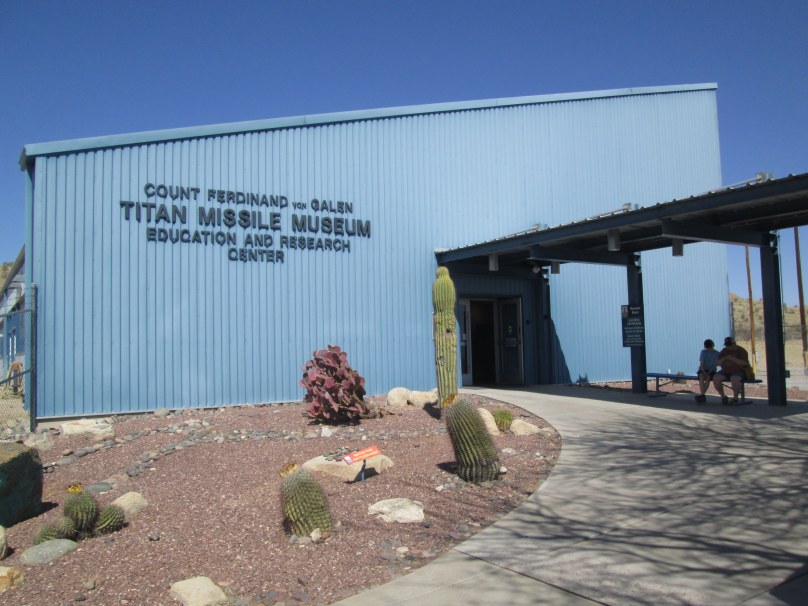
Our first destination the morning after our arrival in Tucson was the Titan Missile Museum in Green Valley, AZ. At one time, there were numerous Titan missile silos scattered across the United States; today, due to the provisions of the SALT Treaty with the Soviet Union, there is only this one silo still around. However, the missile it contains does not have a nuclear warhead: It is there only for educational purposes.

I remember vividly the dark days of the Cold War. At Saint Henry School, we practiced hiding under our school desks should the alert sound—as if that would prevent us from a swift and horrible death. And if we survived, the radiation would probably be worse than instant death.

If you have ever seen Stanley Kubrick’s Doctor Strangelove or: How I Learned to Stop Worrying and Love the Bomb (1964). you know how the possibility of an accidental launch was the topic of the day. Well, the designers of the missile silo were acutely aware of the problem and instituted elaborate procedures to make sure that never happened. The fact that the world was not vaporized is a testimony to their success.

Martine and Titan II Missile in Silo

The memory of my childhood fears of nuclear war made me feel nauseated as I descended the steps to the silo and watched a re-enactment of the procedures to launch the missile. Of course, it didn’t help that the temperature was 100° Fahrenheit (38° Celsius) and I was feeling woozy from the heat in addition to reliving my old fears.

We are not out of the woods yet. If the current occupant of the White House wakes up feeling icky, I wouldn’t be surprised if he muses about pushing the button that incinerates Denmark for refusing to sell Greenland to the United States.

That’s why I think that more people should be aware of the Titan Missile Museum and what horrors underlie some of our military technology.

Heat and Traffic

Record Heat in Arizona—During April Yet!

Martine and I seem to have bad luck when it comes to visiting the desert. Several years ago, we spent two weeks in New Mexico during which the mercury climbed to over 100° Fahrenheit (38° Celsius) on each and every day. But of course, that was June; and June in New Mexico is hot, even before the summer solstice.

But April!? The five days we spent in Arizona broke heat records for four of the days, going as high as 102° Fahrenheit (39° Celsius) on the worst of them.

The other problem we had was heavy traffic: In Arizona, we ran into two traffic jams, both on the I-10. The first was between Buckeye and Phoenix as we sought Arizona 202 to supposedly bypass the worst of the city traffic, and the second as we approached Tucson and ran into an unexplained jam south of Casa Grande. On the return trip, we spent two hours in a jam on I-10 between Palm Springs and Cabazon.

Other than these two negative notes, we had a wonderful time. The things we chose to see were eminently worth seeing, and both of us enjoyed them immensely. They were, in the order we saw them:

  • The Titan Missile Museum in Green Valley
  • The Pima Air & Space Museum in South Tucson
  • The Arizona Sonora Desert Museum west of Tucson
  • Saguaro National Park (just north of the Desert Museum)
  • Mission San Xavier del Bac on the Tohono O’odham Indian Reservation

In the days to come, I will describe these destinations as well as some general observations about the Tucson area.

Visiting the Cold War

ICBM in Arizona’s Titan Missile Museum

On Thursday morning, Martine and I are scheduled to visit the Titan Missile Museum in Green Valley, Arizona. In the process, we will attempt not to blow up Mar-a-Lago or any other den of tyrants.

All of my childhood and more than two decades of my adult life were lived in the shadow of mutually assured destruction. Fortunately, we managed to avoid it, though with the present crop of world leaders, I think we will be in the soup once again. Why is it that thinks turn to shit at least once every generation or so?

In any case, I will not be posting for approximately a week. So hasta la vista for now.

12 Desert Rats

Saguaro Cacti in the Arizona Desert

As I prepare for our road trip to Tucson this next week, I have been doing a lot of reading in preparation. It struck me that there are a lot of great books about or set in deserts. Here are an even dozen recommendations organized alphabetically by author:

  1. Abbey, Edward. Desert Solitaire: A Season in the Wilderness. A classic of the growing environmental movement and a threnody for the beauties that have been lost.
  2. Anonymous, Arabian Nights (or A Thousand and One Nights). Great stories about Sinbad, Ali Baba, and others.
  3. Austin, Mary. The Land of Little Rain. The author’s experiences in the Owens Valley along the Eastern Edge of the Sierra Nevada Mountains.
  4. Banham, Reyner. Scenes in America Deserta. Delightful essays about travels in the California deserts.
  5. Bissell, Tom. Chasing the Sea. A visit to one of the most desolate places on Earth, namely what used to be the Aral Sea in Uzbekistan.
  6. Bowden, Charles. Desierto. Essays about the desert of Southern Arizona and the State of Sonora in Mexico.
  7. Herbert, Frank. Dune. A great. sci-fi tale of a desert planet caught in the middle between warring factions in a corrupt empire.
  8. Lawrence, T. E. (“Lawrence of Arabia”). The Seven Pillars of Wisdom. A British officer convinces Arabs to revolt against their Ottoman oppressors in World War I.
  9. McCarthy, Cormac. Blood Meridian, or the Evening Redness in the West. Violence on the desert frontier among white settlers and Indians.
  10. Powell, John Wesley. The Exploration of the Colorado River and Its Canyons. The first American to navigate the length of the Colorado River.
  11. Theroux, Paul. On the Plain of Snakes. Unforgettable scenes along the border with Mexico, with chapters on the deserts of the State of Oaxaca.
  12. Thesiger, Wilfred. Arabian Sands. The author’s journeys throughout the Arabian peninsula.

As I write these, I become acutely aware that there are more titles I should include. Perhaps, as I read more, I will re-visit the subject later.

The Svinafell Troll

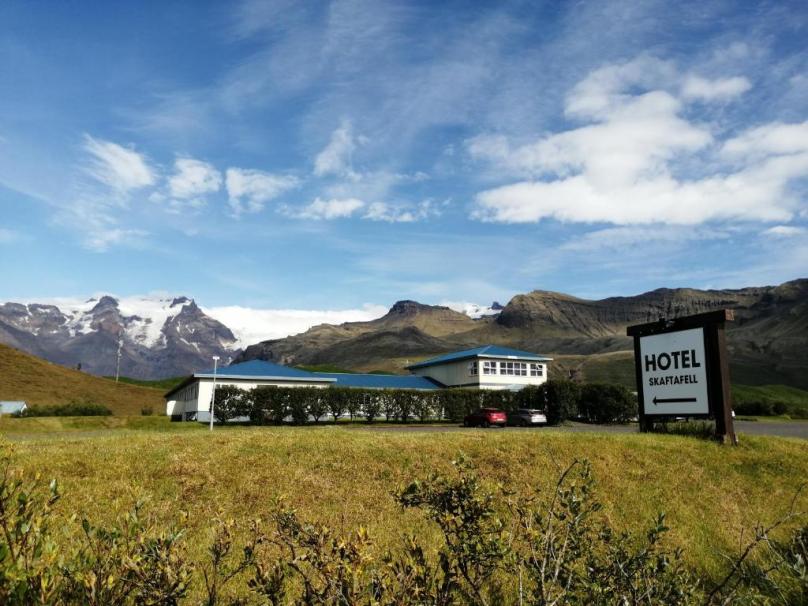
Iceland’s Skaftafell Hotel Hard by Svinafell

It was August 2001. I was spending a couple of nights at the Skaftafell Hotel in Svinafell pictured above. While I was eating dinner in the hotel’s restaurant, I was bothered by a rowdy crew of Americans who were yucking it up at a nearby table. When the leader of the crew stepped out to the restroom, the remaining members started talking about him.

Apparently, the missing partyer was none other than Charles H. Keating, Jr., described by Wikipedia as “an American sportsman, lawyer, real estate developer, banker, financier, conservative activist, and convicted felon best known for his role in the savings and loan of the late 1980s.”

When he returned to the table, he saw that I was looking somewhat disgruntled. To make up for the noise his party was making, he invited me to join them and pay for my meal. I respectfully declined, not wanting to associate myself with someone who was a real estate developer, crooked banker, and worse.

The group was traveling around Iceland in a guided minibus tour of the country.

Charles H. Keating, Jr. (1923-2014)

As a saw the white minibus drive away with its noisy contingent, I though back to the one mention of Svinafell in The Njáls Saga. According to Medievalists.Net:

One of the most prominent sexual insults is when Skarpheðin calls Flosi the bride of the troll of Svinafell, this implies that he is used sexually by the troll. This insult is a form of nið, an insult intended to imply that the object is ragr, a passive homosexual or is used in this way by a man, animal or supernatural creature.

Having followed the saga of Lincoln Savings & Loan in the press, I thought he would make a good partner for the Svinafell Troll. Since he is no longer among the living, that is quite possibly what he is doing now.