

The Lake Pit, Largest of the La Brea Tar Pits
It’s one of those redundant names: brea in Spanish means tar, so the La Brea Tar Pits are literally the Tar Tar pits. (Similarly, Torpenhow Hill in Britain means Hillhillhill Hill.)
Martine and I haven’t visited the tar pits for almost a decade, so we drove down to Hancock Park and took a good look at what the area looked like ten thousand plus years ago. Based on the skeletons that have been fished out of the pits, there were giant sloths, mammoths, lions, camels, sabertooth tigers, and many, many dire wolves.
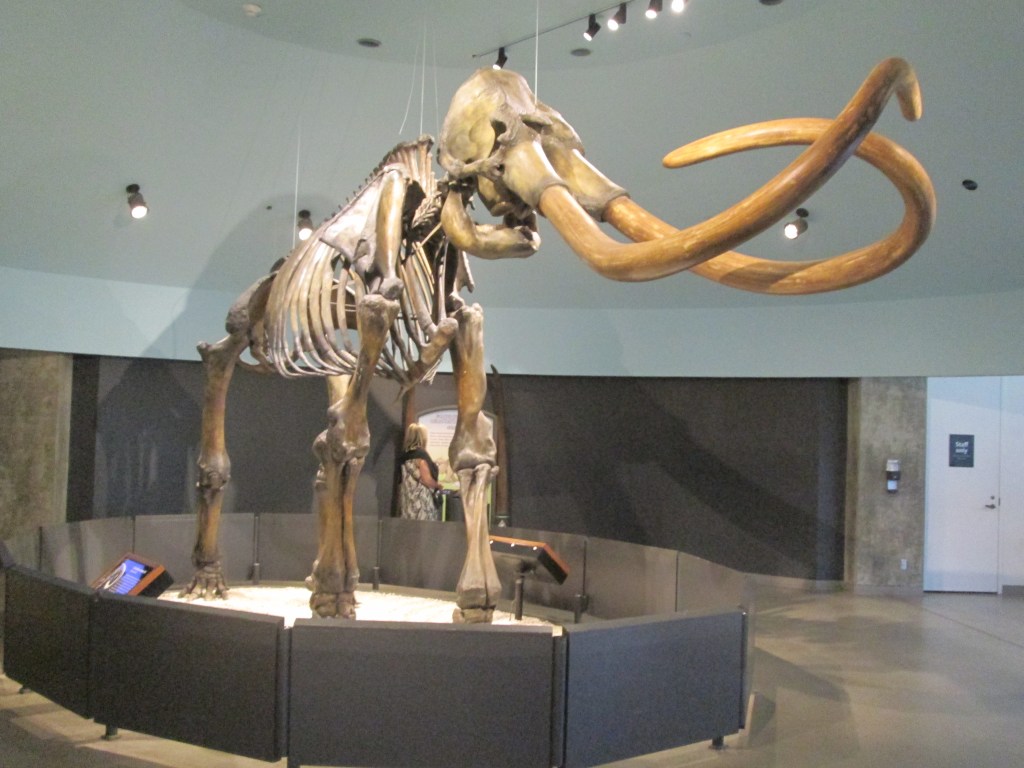
Skeleton of Columbian Mammoth
The archeological record shows that there were humans living in the area during the Ice Age. It couldn’t have been much fun for them to contend with their primitive weapons against so many gigantic mammals.
Visiting the pits, I am reminded of a famous line in Joseph Conrad’s The Heart of Darkness, when Marlowe points to the shore of the Thames and says: “And this also,” said Marlow suddenly, “has been one of the dark places of the earth.”
The La Brea Tar Pits Museum is a fascinating place to visit. In addition to all the skeletons of giant mammals who perished by drowning in the pits, there is a lab which allows you to watch volunteers cleaning bones recently pulled from the pits. (There are a number of them on the grounds.)
Martine got into the spirit of the occasion by donning a dire wolf headdress:

Martine with Wolfish Smile
 Tarnmoor
You must be logged in to post a comment.