
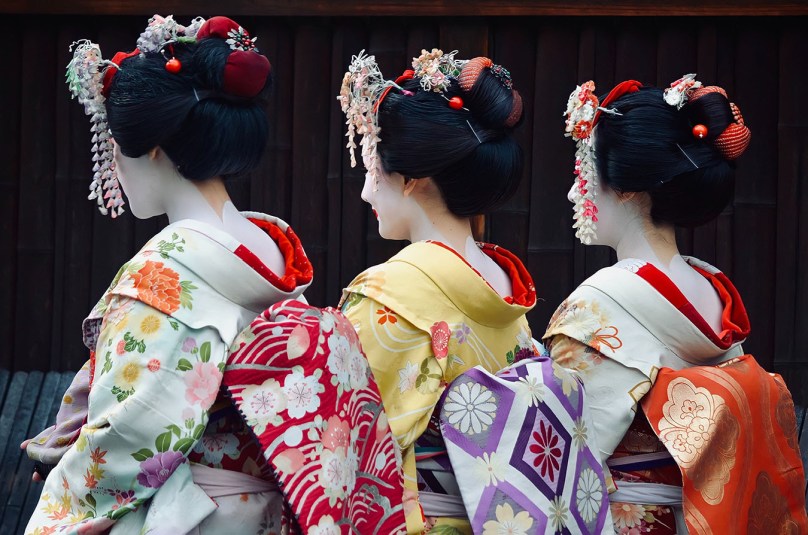
Elegant Japanese Kimonos
Today, Martine and I rode Metro Rail downtown to attend an event at the Central Library celebrating Japanese New Year, or Oshogatsu. In Japan, New Years is celebrated at the beginning of January, unlike Chinese New Year, which is based on a lunar calendar. So actually it was a little late to celebrate Japanese New Year, but I guess it was difficult to schedule the Mark Taper Auditorium at the library.
There were three main exhibits, each presented by a different locally-based Japanese-American organization.
The first was ikebana, or flower arranging. In twenty minutes, a young woman created a floral masterpiece consisting of two types of lilies, mums, pine and willow branches, and other plants. I wondered how the different components stayed in place. I learned that a kenzan, variously knoen in English as a “spiky frog” or “pin frog.” was used to hold the components in place. (See the photo below.)
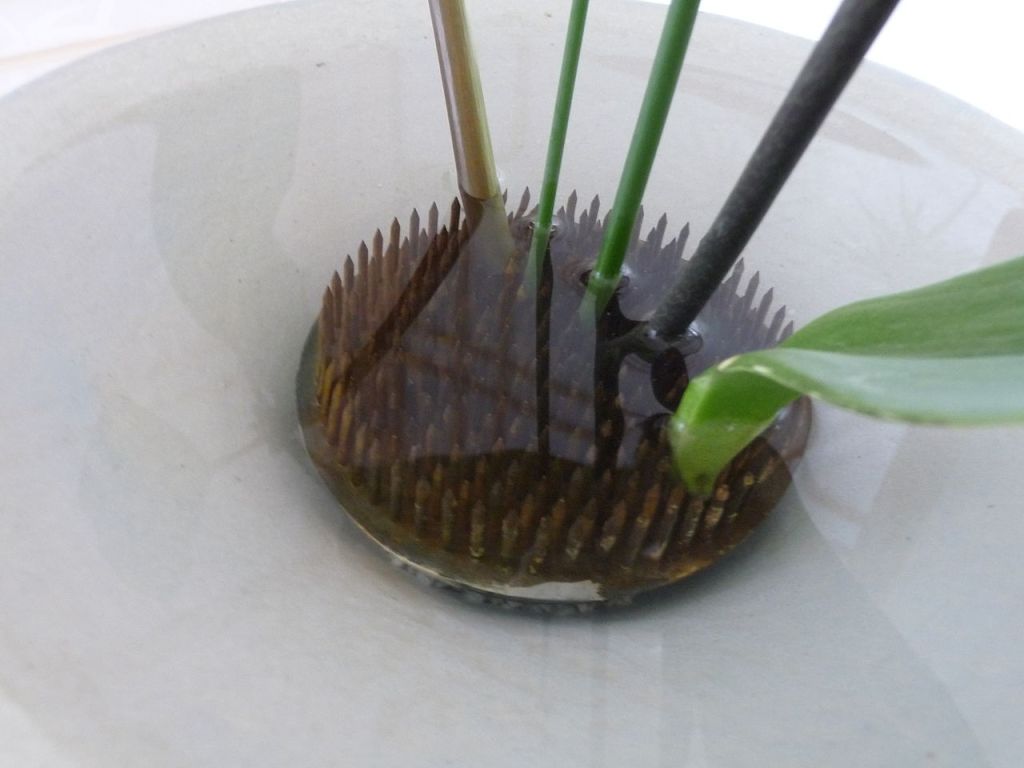
Kenzan
The rest of the program consisted of a fashion show of different types of kimonos for women (and men as well as children), accompanied by music on the koto, a zither with thirteen or more strings. On stage were three kotos played in unison.
I was first introduced to the koto at Dartmouth College, where I heard a concert given by an accomplished Japanese soloist. That, and my love of Japanese films, have introduced me to the joys of Japanese koto music.
The kimonos for women were truly lovely. I was amazed however how intricate the obis (sashes) were and how long it took to tie them. A skilled kimono-wearer could tie an obi in four or five minutes. It would probably take a klutz like me the better part of the morning, only to end up with an unholy mess.
 Tarnmoor
You must be logged in to post a comment.