Los Angeles Place Names

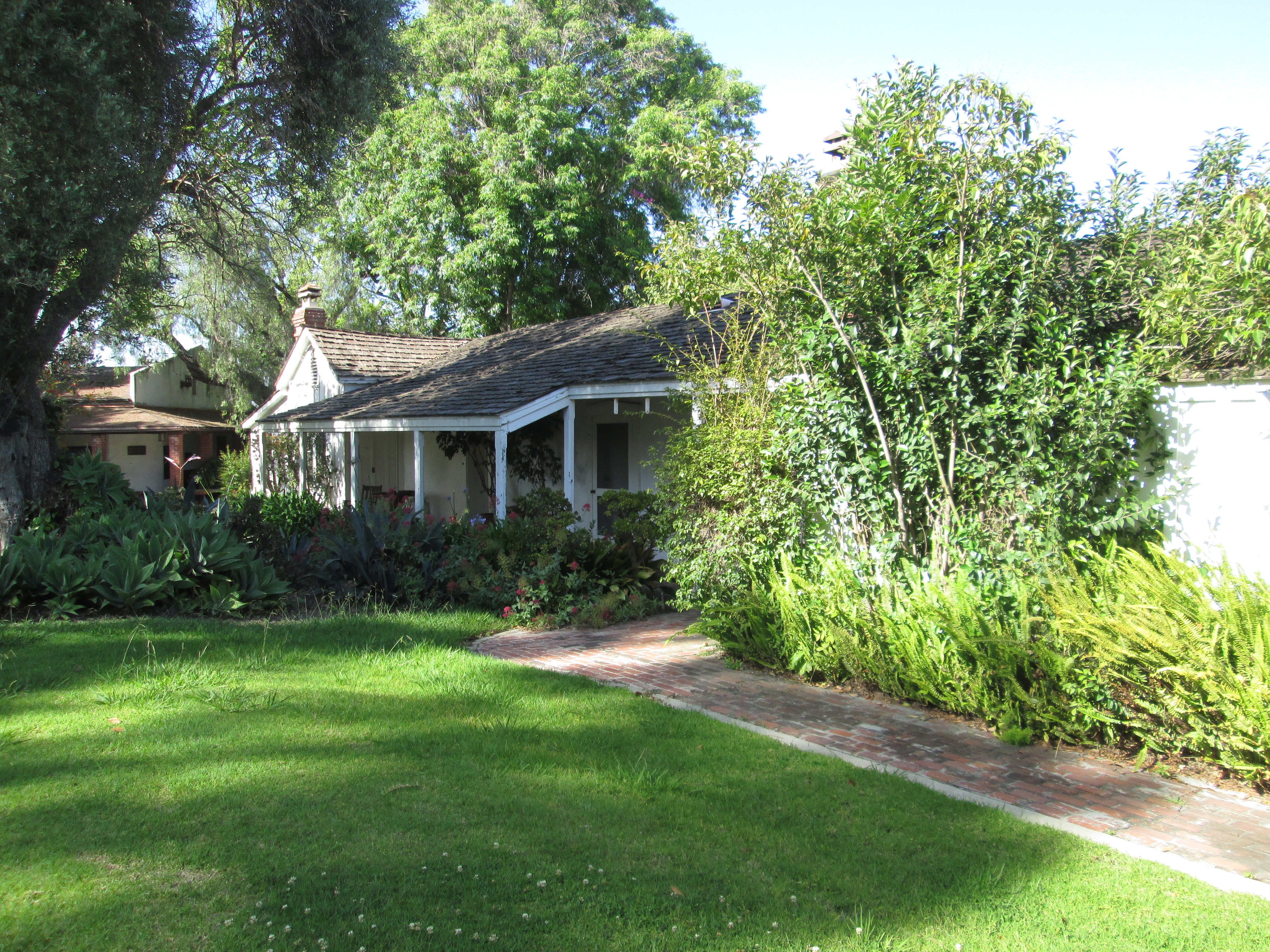
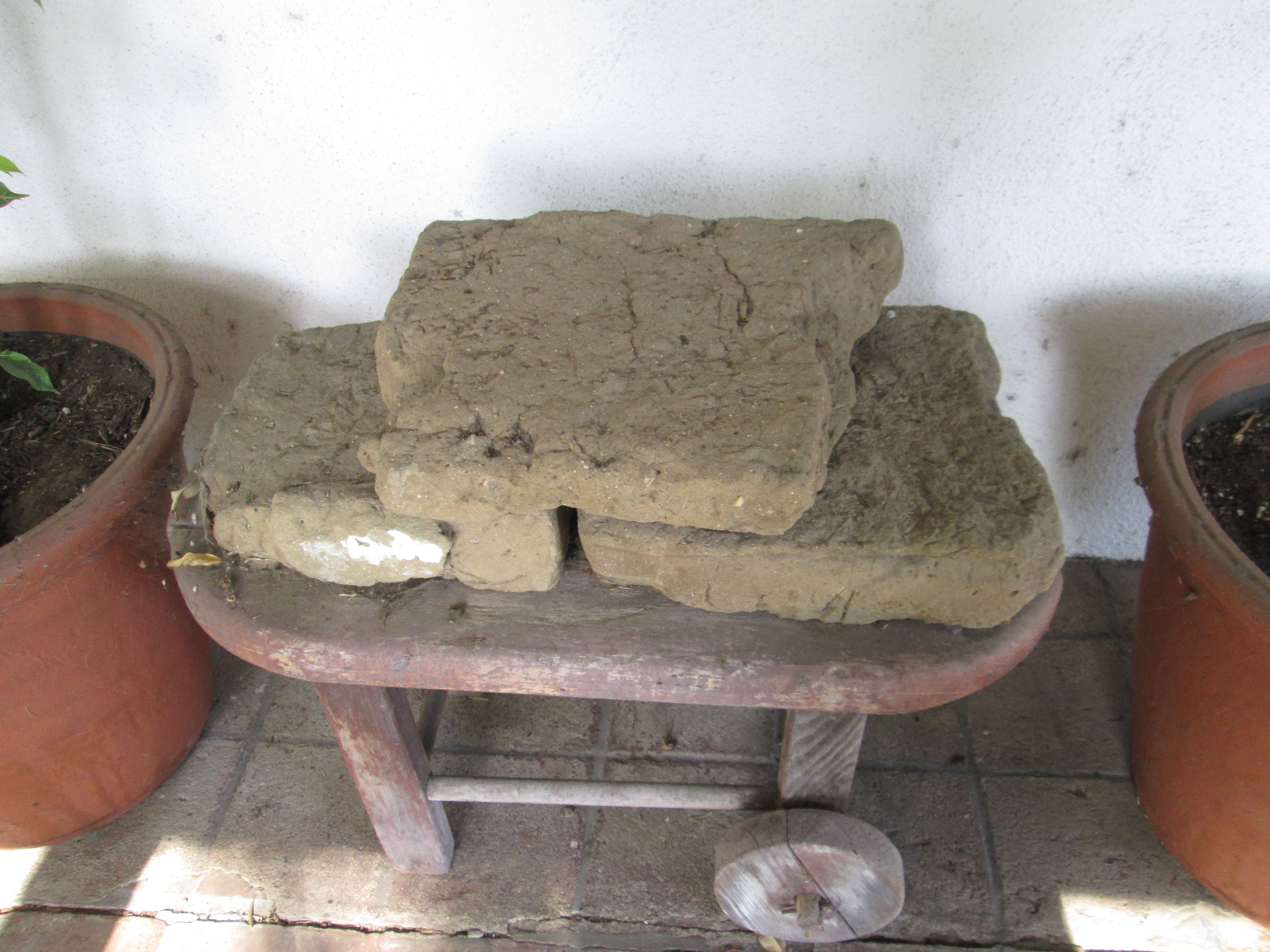
The Dining Room of the Rancho Dominguez Adobe

History in Southern California has a decidedly Spanish flavor. By the time that American settlers began to trickle into the Mexican Province of Alta California, most of the agricultural land had been surveyed and distributed among over a hundred grantees. Their names today—not coincidentally—are place names across the land. In Los Angeles County, there are grants named San Pedro, Los Nietos, San Rafael, Los Feliz, Las Virgenes, Topanga Malibu Sequit, Palos Verdes, San Antonio, Rincon de los Bueyes, Las Cienegas, La Brea, Rosa Castilla, San Pascual, Santa Gertrudes, Paso de Bartolo, San José, Sausal Redondo, La Ballona, San Vicente y Santa Monica, Boca de Santa Monica, Tujunga, Los Nogales, Azusa de Duarte, La Puente, La Cañada, San Jose de Buenos Ayres, Cahuenga, Aguaje de Centinela, and others.

Now take a detailed map of Los Angeles, and you will see these same names replicated as names of streets, communities, hills, and waterways. The road that winds around the UCLA campus is called Buenos Ayres. There are Verduga Hills in the valley, around which snake an endless number of streets with Verdugo in their names. If I were to take a bus downtown, I would go on or past streets names Santa Monica, Centinela, La Cienega, San Vicente, and La Brea—all within ten miles.

A Map of Spanish Land Grants in Los Angeles County

Scattered throughout the county are the various adobes, or what remains of the grantees’ ranchos and haciendas. I have visited the Centinela and Dominguez adobes, and there are others I’d like to see. They are usually staffed by enthusiastic volunteers and stocked with furniture of the period. The oldest house in the City of Los Angeles is the Avila Adobe, which belonged to an early alcalde and is part of the Olvera Street tourist complex.

By the way, let’s call the city by its founding name: El Pueblo de Nuestra Señora la Reina de los Angeles de Porciúncula. That translates to the town of our Lady Queen of the Angeles of Porciúncula. (Curiously, one place name that’s widely missing in L.A. is Porciûncula—too long, I guess.)


Southwest

A Place Onto Its Own

Until late in 1966, when I took a train from Cleveland to Los Angeles, I had never been farther west than Detroit. My only notion of the American Southwest came from watching Roadrunner cartoons. Then, early one morning late in December of that year, the El Capitan went through the Mojave Desert. It was d-r-y, yet there were little puddles beside the track that were frozen over. It was the beginning of my adjustment.

More than half a century later, I am still adjusting. Where back East, rain was a frequent occurrence, here it was rare, though occasionally tumultuous. In our last rain, some 17 people in Santa Barbara County were buried in mudslides when a heavy rain hit an area that had been affected by the Thomas Fire.

If you have never been “Out West,” you won’t get the picture over a short weekend. There is an element of time in the deserts of this Earth that has to be experienced. It’s not like Woody Allen breezing into town and complaining about mashed yeast and the legality of making right turns at stoplights. Experiencing L.A. will probably involve some discomfort. This ain’t no Paradise, nor yet is it Valhalla.

Hoodoos at Bryce Canyon National Park

What helps is to travel around the Southwest to see the variety of strange scenery, from the Grand Canyon to many of the other National Parks—one vastly different from the other.

After all these years, I’m just getting started on the road to understanding what life here is all about.


NYRB

Currently My Favorite Publisher

I have always played favorites with particular publishers. When I was in high school and hung around at Schroeder’s Books on Public Square in Cleveland, I was enthralled by the New Directions paperbacks. As I went to college and for years afterwards, I was particularly interested in Penguin Books (though I have been disappointed in how poorly they age). Then, for a while I collected the pocket sized hardback Oxford World Classics. Now, I find myself quite addicted to New York Review Books.

In fact, I recently counted how many NYRB titles I read in 2017. The total came to fifteen titles! They included, in the order I read them:

  • Teffi’s Tolstoy, Rasputin, Others, and Me: The Best of Teffi
  • Antonio di Benedetto’s Zama
  • Natsume Soseki’s Mon [The Gate]
  • John Williams’s Stoner
  • Robert Bresson’s Notes on the Cinematograph
  • Georges Simenon’s Tropic Moon
  • Georges Simenon’s Mr Hire’s Engagement
  • Kingsley Amis’s Girl, 20
  • Kingsley Amis’s One Fat Englishman
  • Patrick Modiano’s Young Once
  • Kingsley Amis’s Ending Up
  • Norman Mailer’s Miami and the Siege of Chicago
  • Kingsley Amis’s Take a Girl Like You
  • Raymond Quenaeau’s Zazie in the Metro
  • Henry Green’s Loving

Looking back over this list, there wasn’t a single clinker in the bunch. And my plans for 2018 call for me continuing to plow through the NYRB list.

Exercising Self-Restraint

I Could Easily Spend All My Time Attacking This Clown, But I Won’t

Again I was tempted when the Current Occupant talked about being a “Stable Genius.” I had found all these pictures of people shoveling horseshit in stables and was about to post them, indicating what type of “Stable Genius” I thought he was. But what’s the point? If you know me at all, you know what I feel about this Marmalade Nightmare, this Hairdo-from-Hell. I would rather share ingenious political cartoons which make the point ever so much more poetically than I can.

Sorry I had to put his face to this post, but know that I will try to exercise self-restraint rather than jumping to the attack all the time.


Tonya Harding Revisited

Skater Tonya Harding (R) with Coach

This afternoon, I saw the Craig Gillespie film I, Tonya (2017). I remember vividly the events of 1994, when Tonya Harding’s husband Jeff Gillooly conspired with lowlife friends to intimidate rival skater Nancy Kerrigan, but the intimidation turned into a physical attack in which Kerrigan’s knee was broken. Then a bunch of videos turned up on the Internet of Gillooly and Harding’s wedding night with its raucous nudity and sex play. Kerrigan was able to compete again, but Harding was banned from skating competition for the rest of her life.

The film was actually pretty good. The Australian-born Margot Robbie excelled as Tonya; and Allison Janney as her estranged mother LaVon was icily superb.

I always felt sympathy for Harding, because she was a girl from the wrong side of the tracks, and from a dysfunctional family. Competition skating in America wants its competitors to be little suburban princesses with happy backgrounds (or at least a reasonable facsimile thereof). Although she was less responsible for the nobbling of Nancy Kerrigan than her husband and his friends and associates, they wound up serving light sentences, but Tonya’s harsher sentence essentially killed her career—for the remainder of her life.

We pretend to be a democracy, but it hasn’t looked that way for some time:  Talented blue-collar girls suffer for not being little bundles of perfection. Tonya is still around, but no longer is she performing triple axels on the ice. She performed brief stints as a wrestler, a boxer, and a racer; and  (according to the film)  she constructed home decks. I wish her well.

Loser City

Clevelanders Parade, Flaunting Their NFL Team’s 0-16 Record

It was almost always thus. In most years, Cleveland teams piled up a dismal win/loss record. Not that I give a fig for professional sports, but while I was living there, I would have given much for a winning season. In 1959 the Indians won the American League baseball pennant (but lost the series ignominiously to the White Sox). And in 1964, the Cleveland Browns shut out Johnny Unitas and the Baltimore Colts 27-0. That was when Frank Ryan was quarterback and Jim Brown was at fullback and gary Collins and Paul Warfield were the ace receivers. After that, it was not until 2016 when a Cleveland team, the Cavaliers, won the NBA championship.

I actually had a personal stake in the Cleveland Indians doing well. As a straight-A student, I received seven pairs of free Indians tickets every summer—mostly to see them go down to defeat. Acutely, I felt that Seymour Krebs’s “The Monster That Devoured Cleveland” from The Many Loves of Dobie Gillis had struck. I was in a major dudgeon until I could leave “The Mistake on the Lake,” which I did in 1962, when I went to college in New Hampshire. Thereafter, when I came home from Dartmouth, I could watch my father stew in his juices as his teams traduced his efforts at fandom.

Cleveland’s Terminal Tower (How Appropriately Named!)

Sometimes I think my great love of travel comes from feeling stuck in Cleveland and wanting to get out at any cost. It’s a pity, because at one time it was a fairly nice place. It did not, however, fare well economically and demographically. When I was in the lower grades of grammar school, it was the seventh largest city in the U.S. Now it ranks fifty-first, behind Oakland, Tulsa, and Wichita.

Sigh!


The Great God Chac

Chac Masks at Uxmal

From my trips to Yucatán, I became impressed with the one dominant image of Yucatec Mayan art: The face of Chac (pronounced CHOCK), the rain god. You see, Yucatán is a land without surface rivers. Oh, there is plenty of flowing water underground, but none of it breaks the pitted limestone surface of the peninsula. In areas several hundred feet above sea level, such as in the Puuc Hills, the water that sustained the ancient Mayans came from chultunes, underground cisterns. In some years, the cisterns were full; in others, there was pitifully little to sustain the cornstalks that fed the people.

When one visits Yucatán, particularly in Puuc Hill sites such as Uxmal, Kabah, Labna, Sayil, and Xlapak, the dominant image is that of hundreds of Chac masks acting as façades of the Chenes-style buildings.

After the rainy winter Southern California had last year, I was hoping for a repeat, but so far this rainy season, we haven’t received anywhere near an inch, or even a centimeter, of the wet stuff. We have rain forecast for next week, but my fingers are crossed. So often the winds just blow the clouds inland where they go to water the desert.

I am thinking, perhaps, of going to Yucatán again this year. There are a number of Mayan sites I have yet to visit, such as Coba in the State of Quintana Roo and Edzna and Xpujil in the State of Campeche. Despite the heat and humidity of the great limestone block that is the peninsula, it is a fascinating tourist destination, well developed with reasonable accommodations and good food. In addition to Yucatec cuisine, which is quite distinctive with its reliance on achiote, bitter oranges, and Habanero chiles, there are Syrian restaurants (the merchant class of 150 years ago was heavily Middle Eastern), plus the standard Mexican antojitos.

If I go, it will be toward the end of the year, after the rainy season which is also super hot and sticky.


You Don’t Ever Want to Dance with Me

My Cousin Peggy and Me in Hungarian Folk Dance Costume

This is partially adapted from a post I wrote for the late lamented Multiply.Com in March 2010.

That’s me at the age of five with my pretty little first cousin Peggy. Both of us are wearing Hungarian folk dancing costumes—but I’m not quite sure about how those cowboy boots fit in. Knowing what a stubborn little cuss I was, I probably insisted on wearing them instead of the traditional black leather boots.

Stubbornness was very much a part of my early years. I did not like being photographed: Many of my early snapshots show me glowering at the camera. And I most certainly didn’t like to dance. Even in those days, I had no idea how to move in time with music without punishing the feet of my partners. Of course, that made me fiercely unpopular with all my dancing partners; and that didn’t make for enjoyable dancing lessons.

Notice how thin I was in the above picture—so thin that it was around then that my parents took me to St. Luke’s Hospital for observation. The doctors said there was nothing wrong with me and predicted that I would eat my parents out of house and home. (I did.)

I have always been a little out of step. As much as I enjoy listening to music, I recall with pleasure the anecdote about Ulysses S. Grant, who is supposed to have said, “I know only two tunes: One is Yankee Doodle, and the other one isn’t.”

Although I played the alto saxophone for many years, it was with little pleasure. By a fluke, I became first saxophone in my high school band; but Chuck Matousek, who played second sax, was much better than me. He could play “Night Train” from memory: I couldn’t play anything from memory.


Identical Twins

My Father, an Unidentified Friend, and My Uncle Emil

This photo was taken long before I was ever thought of, probably in he late 1930s or early 1940s. Both Paris twins are shown: Elek (Alex) on the left on Emil on the right. There were times as I was growing up when it was difficult to tell one from the other, but here, it is clearly my Dad on the left. What’s the giveaway? My Dad was always a bit scruffier than my Uncle, who in this picture is actually wearing spats over his shoes and, in general, is more stylishly dressed. Unfortunately, I inherited my father’s sense of style and have always been described as scruffy.

The Paris twins were born in what is today Prešov-Solivar  in the Republic of Slovakia. When they were born in 1911, it was merely a province of the Austro-Hungarian Empire, primarily under Hungarian administration. Although Elek and Emil chatted in Slovak whenever they wanted to hide something from me, both of them were more comfortable speaking Hungarian.

They had a hard life because they were abandoned my their parents in the famine that struck the area after the First World War. They had decamped to the United States, while Elek, Emil, and their sister Margit had to fend for themselves in the foothills of the Carpathians around their town. They were aided in this by an aunt, Dorcsa, whom I met in 1977. Much of the time, they hunted for mushrooms and frogs to feed themselves. In 1929, the family was reunited in Cleveland, Ohio; but there was always bad blood between the parents and their children.


“Samurai Song”

Samurai Warrior with Sword Drawn

I love this poem by Robert Pinsky, formerly Poet Laureate of the United States. It reminds me of my own situation, in which I must deal with the waning years of my life with the spirit of a warrior. The poem is called “Samurai Song.” I first discovered it in The New Yorker. Several years ago, I met Mr. Pinsky at a book festival and told him how much this poem meant to me.

Samurai Song

When I had no roof I made
Audacity my roof. When I had
No supper my eyes dined.

When I had no eyes I listened.
When I had no ears I thought.
When I had no thought I waited.

When I had no father I made
Care my father. When I had no
Mother I embraced order.

When I had no friend I made
Quiet my friend. When I had no
Enemy I opposed my body.

When I had no temple I made
My voice my temple. I have
No priest, my tongue is my choir.

When I have no means fortune
Is my means. When I have
Nothing, death will be my fortune.

Need is my tactic, detachment
Is my strategy. When I had
No lover I courted my sleep.