


I’m just not a pet person. I prefer human friendships and relationships to animals.
Home » Articles posted by Tarnmoor (Page 36)
Author Archives: Tarnmoor
12 Desert Rats

Saguaro Cacti in the Arizona Desert
As I prepare for our road trip to Tucson this next week, I have been doing a lot of reading in preparation. It struck me that there are a lot of great books about or set in deserts. Here are an even dozen recommendations organized alphabetically by author:
- Abbey, Edward. Desert Solitaire: A Season in the Wilderness. A classic of the growing environmental movement and a threnody for the beauties that have been lost.
- Anonymous, Arabian Nights (or A Thousand and One Nights). Great stories about Sinbad, Ali Baba, and others.
- Austin, Mary. The Land of Little Rain. The author’s experiences in the Owens Valley along the Eastern Edge of the Sierra Nevada Mountains.
- Banham, Reyner. Scenes in America Deserta. Delightful essays about travels in the California deserts.
- Bissell, Tom. Chasing the Sea. A visit to one of the most desolate places on Earth, namely what used to be the Aral Sea in Uzbekistan.
- Bowden, Charles. Desierto. Essays about the desert of Southern Arizona and the State of Sonora in Mexico.
- Herbert, Frank. Dune. A great. sci-fi tale of a desert planet caught in the middle between warring factions in a corrupt empire.
- Lawrence, T. E. (“Lawrence of Arabia”). The Seven Pillars of Wisdom. A British officer convinces Arabs to revolt against their Ottoman oppressors in World War I.
- McCarthy, Cormac. Blood Meridian, or the Evening Redness in the West. Violence on the desert frontier among white settlers and Indians.
- Powell, John Wesley. The Exploration of the Colorado River and Its Canyons. The first American to navigate the length of the Colorado River.
- Theroux, Paul. On the Plain of Snakes. Unforgettable scenes along the border with Mexico, with chapters on the deserts of the State of Oaxaca.
- Thesiger, Wilfred. Arabian Sands. The author’s journeys throughout the Arabian peninsula.
As I write these, I become acutely aware that there are more titles I should include. Perhaps, as I read more, I will re-visit the subject later.
Track & Field


I would choose track and field, followed by [soccer] football.
The Svinafell Troll
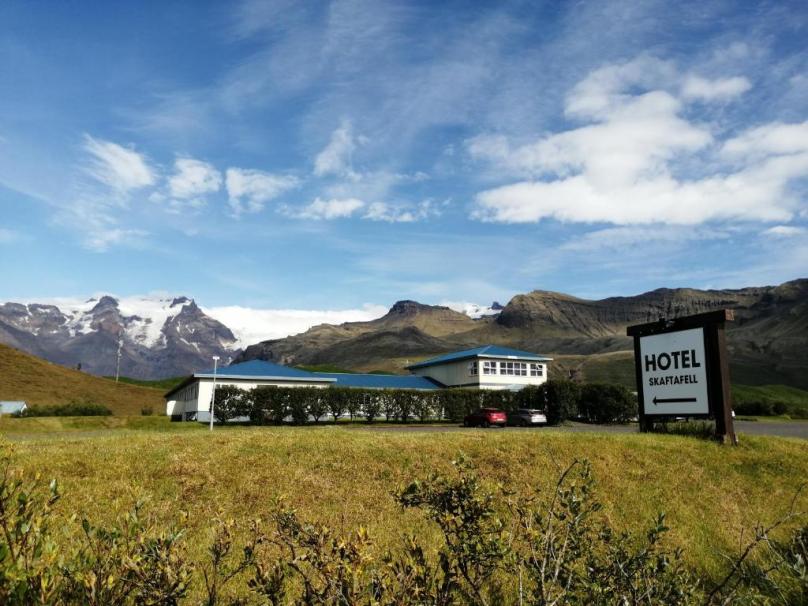
Iceland’s Skaftafell Hotel Hard by Svinafell
It was August 2001. I was spending a couple of nights at the Skaftafell Hotel in Svinafell pictured above. While I was eating dinner in the hotel’s restaurant, I was bothered by a rowdy crew of Americans who were yucking it up at a nearby table. When the leader of the crew stepped out to the restroom, the remaining members started talking about him.
Apparently, the missing partyer was none other than Charles H. Keating, Jr., described by Wikipedia as “an American sportsman, lawyer, real estate developer, banker, financier, conservative activist, and convicted felon best known for his role in the savings and loan of the late 1980s.”
When he returned to the table, he saw that I was looking somewhat disgruntled. To make up for the noise his party was making, he invited me to join them and pay for my meal. I respectfully declined, not wanting to associate myself with someone who was a real estate developer, crooked banker, and worse.
The group was traveling around Iceland in a guided minibus tour of the country.
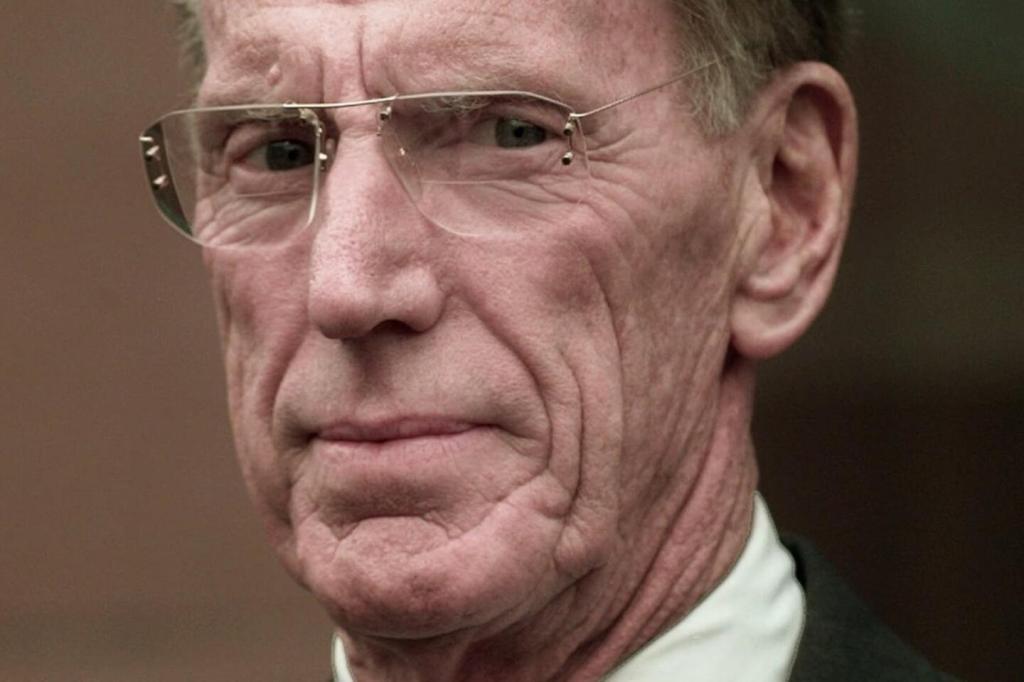
Charles H. Keating, Jr. (1923-2014)
As a saw the white minibus drive away with its noisy contingent, I though back to the one mention of Svinafell in The Njáls Saga. According to Medievalists.Net:
One of the most prominent sexual insults is when Skarpheðin calls Flosi the bride of the troll of Svinafell, this implies that he is used sexually by the troll. This insult is a form of nið, an insult intended to imply that the object is ragr, a passive homosexual or is used in this way by a man, animal or supernatural creature.
Having followed the saga of Lincoln Savings & Loan in the press, I thought he would make a good partner for the Svinafell Troll. Since he is no longer among the living, that is quite possibly what he is doing now.
Community?


Community is one of those words I distrust. It has been eroded by being too much in the mouths of politicians.
Isolation
Daily writing prompt
How have you adapted to the changes brought on by the Covid-19 pandemic?


I have tended to avoid interacting with strangers.
Disaster Zone

Boats Stranded by the Disappearance of the Aral Sea
In the deserts of Central Asia sits the ghost of the Aral Sea. The original sea bed, shared by Kazakhstan and Uzbekistan, is the poster child of decades of neglect. The rivers feeding into the sea were canalized to raise cotton. Very little cotton grows there now. In his Chasing the Sea: Lost Among the Ghosts of Empire in Central Asia, Tom Bissell describes meeting up with a couple of small boys in the eerie desert salt and pesticide-laden atmosphere of a community that used to exist on the shores of the sea.
I sat perched half in and half out of the car. The door was wide open, My chin rested upon the shelf of my hand. The sun was going down, the horizon dyed a Creamsicle orange. I watched a skinny, ravaged-looking dog sniff around various piles of refuse. A dog’s life. Then it occurred to me that American dogs have no idea what a dog’s life is. Suddenly, two little boys appeared from behind one of the houses and approached me. They were brothers, clearly. One was taller and certainly older. The other was small, perhaps five years old. The boy’s head was pumpkin-sized, seemingly twice the circumference of his brother’s, who was regarding me coldly. The younger boy smiled, his teeth cavitied and yellow, his skinny body completely naked and covered in dust. The dust was spread so evenly over his body it seemed deliberately applied. His uncircumcized penis looked like a tiny anteater nose. I smiled back at him. “Ismingiz nimah?” I asked. What is your name?
Before the boy could answer, his older brother inexplicably struck him from behind. The boy flopped face-first in the dust. The shove was two-handed and savage, like something out of provincial hockey. A sound, perhaps “Hey—,” filled my mouth. But I did nothing. The younger brother coughed into the dust. He had landed badly, arms at his sides. Now he tried to get to his feet. His brother placed a foot on his naked bottom and, almost tenderly, pushed him back into the dirt. He stared down, having satisfied some obscure but insatiable impulse, and then walked away. I waited for tears, the shrieks and cries of fraternal terror. But no. Nothing at all. The naked dusty child was silent. The dog trotted over and, as the boy picked himself up, he searched the ground blindly with a small pawing hand. Finally, he stood holding a triangular rock. He turned and threw it at the dog, hitting the creature full in the ribs; the dog flinched but otherwise took the blow in silence. The younger boy simply walked away. I made soft kissing sounds to summon the dog. It was understandably skittish, but I persisted. I did not know what else to do. When it slunk over, head lowered and panting, I saw a red spiderlike creature dug into its collarless neck. I extended my hand. The dog bit me and staggered off.
Januarius in March
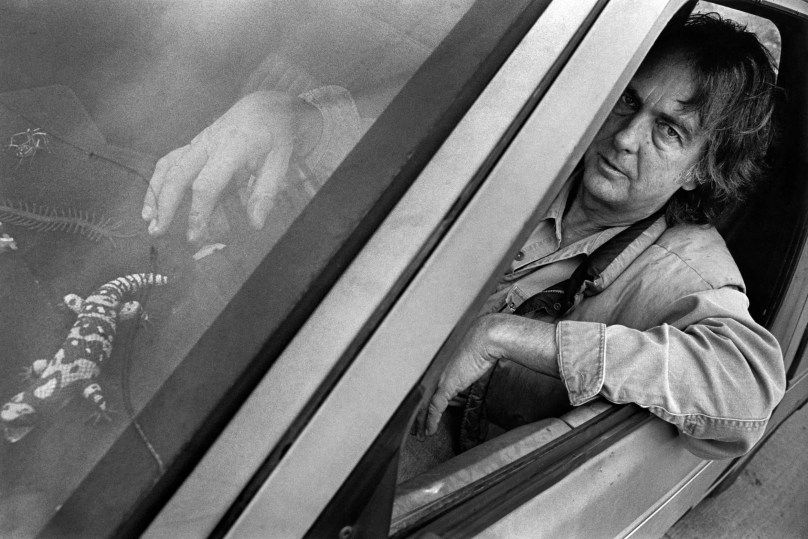
Arizona Writer Charles Bowden (1945-2014)
Typically, the only books I read during the month of January are by authors I have not before encountered. I call this my Januarius project. This last January, however, I was too ill to read more than two books—and that at the end of the month. So I decided to hold this year’s Januarius in March.
During this month, I read fifteen books by authors who were new to me:
- Lewis Grassic Gibbon, Sunset Song. This was the first (and most popular) volume of a trilogy entitled A Scots Quair. Hard times on a farm near Aberdeen before World War I.
- David R. Fideler, Breakfast with Seneca: A Stoic Guide to the Art of Living. Stoicism is one ancient philosophy applicable to modern times.
- Renata Adler, Speedboat. Consisting of seemingly unrelated scenes that manage somehow to hold together and be interesting.
- Sylvia Plath, The Bell Jar. A somewhat grim book featuring multiple suicide attempts.
- Fyodor Sologub, The Petty Demon. A 19th century Russian novel about an annoying school teacher in a country town.
- Martial, Epigrams. Amusing sardonic quips about life in Imperial Rome.
- Jean-Paul Clébert, Paris Vagabond. Paris seen from the eyes of a highly intelligent hobo.
- Edward Said, Orientalism. Intelligent critique of the whole concept of orientalism as being the result of colonialism.
- Demetrio Aguilera Malta, Seven Moons and Seven Serpents. Brazilian Magical Realism that allegorizes the whole South American experience.
- Jay Parini, Borges and Me: An Encounter. Imagine having to drive Jorge Luis Borges around the Scottish Highlands without ever having read any of his work.
- Ralph Waldo Emerson, Self-Reliance. It’s hard to believe that I’ve never before read any Emerson other than a couple of his poems.
- Charles Bowden, Desierto: Memories of the Future. The best book I read this month, about life in the Arizona and Sonora desert, the drug lords, mountain lions, and crooked developer/banker Charles Keating Jr.
- Andy Miller, The Year of Reading Dangerously: How Fifty Great Books (and Two Not-So-Great Ones) Saved My Life. The title says it all.
- Alexander Ostrovsky, The Storm. A 19th century Russian play in which the villain is a mother-in-law.
- Gao Yuan, Lure the Tiger Out oi the Mountains: The 36 Strategies of Ancient China. A somewhat lame attempt to show how ancient Chinese philosophy can improve your business acumen.
All in all, it was a good month with some writers I would like to revisit—particularly Charles Bowden. Next week, Martine and I are going to Tucson, Bowden’s home turf, where I plan to read some more of his work.
Not Me
Daily writing prompt
If you could have something named after you, what would it be?


I would much rather see something named after someone that matters or has mattered to me. Once I’m gone, I will be past caring for something named after me; but while I’m alive, it would warm my heart to commemorate my love for my mother, father, brother, or Martine.
Death in an Oasis

The Canon PowerShot A1400
At high noon, as I was preparing to shoot more snapshots of the oasis at the Whitewater Preserve, I stubbed my toe on a rock and fell on my face. My skin bore a few scrapes, and it took my brother and a large bystander to stand me up on my feet; but the lens on my trusty A1400 rangefinder camera was shattered.
I was worried that I wouldn’t be able to retrieve the pictures I had shot that day, but fortunately I had nothing to worry about. Even with a broken lens, I was able to copy the pictures to my hard drive and edit them for possible use in this blog. The following two photos were from my old camera.
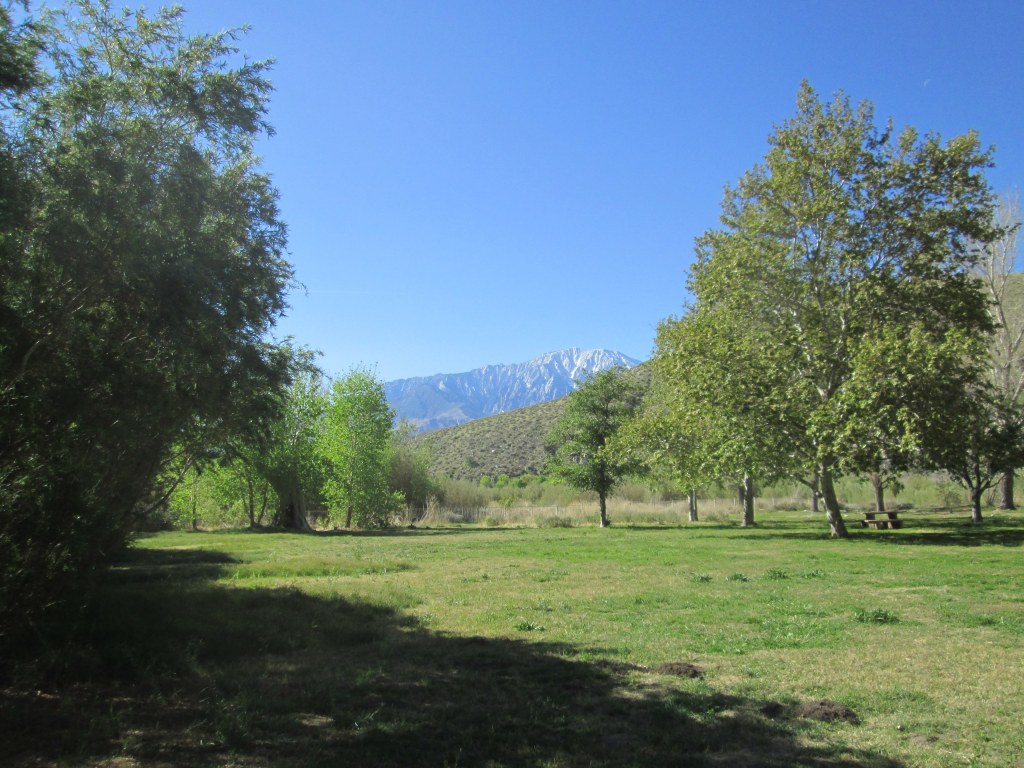
The Oasis at Whitewater Preserve
Since Martine and I are scheduled for a trip to Tucson, Arizona the week after next, I wanted to replace the camera quickly. Fortunately, a lightly used A1400 was on sale at Amazon Marketplace. I jumped on it and received it promptly. I would rather deal with old technology at this point than spend great gobs of cash for something that would take at least a month to research.

Me at Whitewater
This picture was shot by my brother using my camera. (You can see his water bottle on the fence to my right.)
 Tarnmoor
You must be logged in to post a comment.