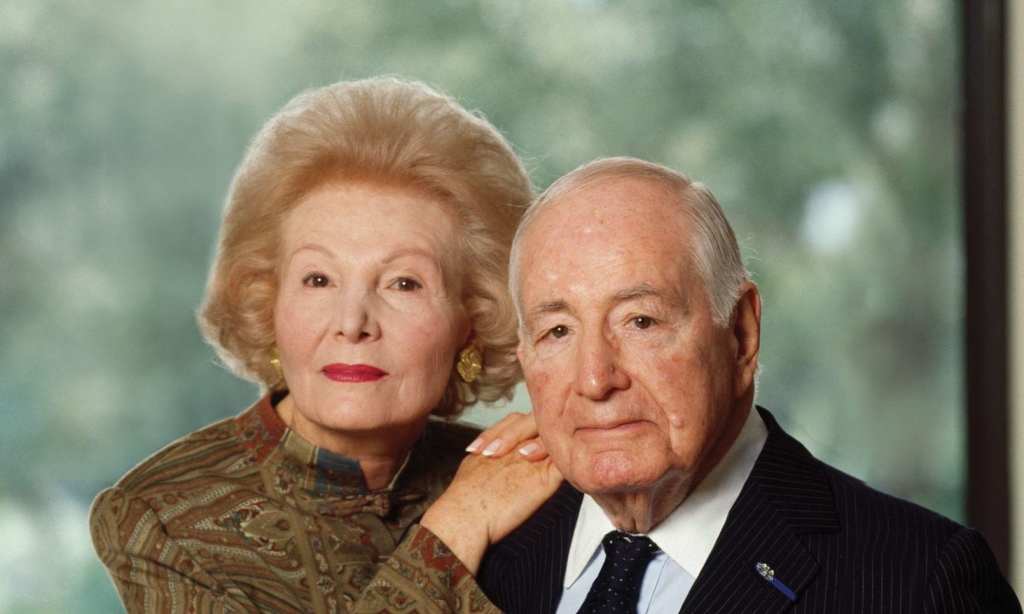
The Sunnylands Estate where Walter and Leonore Annenberg lived and entertained political and entertainment figures from around the world is one of the most interesting sights in the Coachella Valley. When I took the house tour last Sunday, I saw a beautiful example of 1960s modern architecture in the form of a single-story house that seemed to go on forever.
One strange note is that the walls were covered with reproductions of famous paintings. The originals belonged to the Annenbergs, but they were gifted in 1991 to the Metropolitan Museum of Art in New York.
During the lifetime of the Annenbergs, Sunnylands was frequently the site of meetings with world leaders, including both President Bushes, Barack Obama, Ronald Reagan, Queen Elizabeth II, Richard Nixon, Dwight D. Eisenhower, and Xi Jinping of China. In 1976, Frank and Barbara Sinatra were married there.
The Rose Garden at Sunnylands
Not only the house but the grounds at Sunnylands are worth seeing. Access is free to all, and there are tens of thousands of trees and cacti, a rose garden, and numerous other landscape features. Check out the video of the grounds at the Sunnylands website.
Some billionaires when they die leave behind treasures that could be enjoyed by future generations. Some actually manage to make the world a slightly better place. Such was publishing magnate Walter Annenberg (1908-2002). From 1969 to 1974, he also served as U.S. ambassador to the United Kingdom. His palatial 800+ acre estate at Sunnylands in Rancho Mirage served as the western version of Camp David, where world leaders met and discussed global issues.
Most billionaires, I’m sad to say, are merely a waste of skin. I am not interested in naming names, because you know who I mean.
Last Sunday, I took the tour of the Sunnylands estate and was impressed by the beauty of the house and grounds.
View from the Lower Terrace of the Sunnylands House
Now the Coachella Valley is a fairly populated place. You would never guess that from Sunnylands. There are wonderful views of Mount San Jacinto and the other mountains around Palm Springs—but the estate is so situated that one can’t tell that there are any houses or business districts in any direction. Where one would expect to find them, one is confronted by trees that give the estate a sense of splendid isolation, even though it is readily accessible from busy Bob Hope Drive.
I had visited the grounds of the estate twice before and strolled the lovely cactus gardens. The house tour, on the other hand, but be reserved and costs a pretty penny. But it is definitely worth it.
Unfortunately, it is not permitted to photograph the interiors, but I will try to find some previously published photos that I can show you in a later post.
I will not be posting to this website for a few days as I will be in the desert visiting my brother Dan. On Sunday morning, I will be doing a tour of the Annenberg Retreat at Sunnylands, “The Camp David of the West,” where many world leaders convened. Then, on Monday, because Dan will probably be at work, I will be on my own. I haven’t decided where I will go, but it will invariably be a photogenic place which will result in future blogs.
Here’s a post from ten years ago this month. I’ve always meant to read up on the Etruscans, as I admire what I know of their view of life—even though I’m not known for smiling.
The whole world of the smiling girl in he above photo is long gone, but her smile still speaks to us. It tells us that, even in Ancient Rome, there was something to laugh about. When I took the picture on Friday, I did not note the provenance of the figurine, but I wonder if it was Etruscan. This ancient people is the only one that has allowed itself to be depicted as wreathed in smiles—very contrary to the picture we have of the dour Romans.
Below is a hollow funerary urn from the Banditaccia Necropolis showing a married couple, whose ashes are presumably commingled therein:
I guess my little figurine is not Etruscan.Their images always show them as having sharp features and almond eyes. The girl above is definitely Roman.
Not to change the subject, but it reminds me somewhat of the following poem by Robert Browning:
My Last Duchess
That’s my last Duchess painted on the wall, Looking as if she were alive. I call That piece a wonder, now: Frà Pandolf’s hands Worked busily a day, and there she stands. Will ‘t please you sit and look at her? I said ‘Frà Pandolf’ by design, for never read Strangers like you that pictured countenance, The depth and passion of its earnest glance, But to myself they turned (since none puts by The curtain I have drawn for you, but I) And seemed as they would ask me, if they durst, How such a glance came there; so, not the first Are you to turn and ask thus. Sir, ‘t was not Her husband’s presence only, called that spot Of joy into the Duchess’ cheek: perhaps Frà Pandolf chanced to say, ‘Her mantle laps Over my lady’s wrist too much,’ or ‘Paint Must never hope to reproduce the faint Half-flush that dies along her throat:’ such stuff Was courtesy, she thought, and cause enough For calling up that spot of joy. She had A heart—how shall I say?—too soon made glad, Too easily impressed; she liked whate’er She looked on, and her looks went everywhere. Sir, ‘t was all one! My favour at her breast, The dropping of the daylight in the West, The bough of cherries some officious fool Broke in the orchard for her, the white mule She rode with round the terrace—all and each Would draw from her alike the approving speech, Or blush, at least. She thanked men,—good! but thanked Somehow—I know not how—as if she ranked My gift of a nine-hundred-years-old name With anybody’s gift. Who’d stoop to blame This sort of trifling? Even had you skill In speech—(which I have not)—to make your will Quite clear to such an one, and say, ‘Just this Or that in you disgusts me; here you miss, Or there exceed the mark’—and if she let Herself be lessened so, nor plainly set Her wits to yours, forsooth, and made excuse, —E’en then would be some stooping; and I choose Never to stoop. Oh, sir, she smiled, no doubt, Whene’er I passed her; but who passed without Much the same smile? This grew; I gave commands; Then all smiles stopped together. There she stands As if alive. Will ‘t please you rise? We’ll meet The company below then. I repeat, The Count your master’s known munificence Is ample warrant that no just pretence Of mine for dowry will be disallowed; Though his fair daughter’s self, as I avowed At starting, is my object. Nay, we’ll go Together down, sir. Notice Neptune, though, Taming a sea-horse, thought a rarity, Which Claus of Innsbruck cast in bronze for me!
That line about “all smiles stopped together” is grimly humorous.
I spent four years at Dartmouth College in New Hampshire while suffering from a brain tumor that caused severe frontal headaches that lasted until midnight. It was then that I started my homework, not going to sleep until three or four in the morning. It was truly horrible when I had classes scheduled for 8:00 AM.
Worst of all were the morning swimming classes that I had to attend the first two years. At the time, the college had a requirement that all students be able to swim fifty yards in one minute. I was, of course, handicapped by my pituitary tumor; but I eventually passed the test. If MRIs and CAT Scans existed back in the mid-1960s, I would have been excused. But they didn’t. The doctors all thought that I was just being a pussy. It was not until I graduated in 1966 that I collapsed at home in Cleveland, just prior to leaving for graduate school at UCLA.
Still, I loved going to Dartmouth. It was everything I wanted. It was far from home at a time when my parents were undergoing a rough patch in their marriage. It was a college that challenged students to excel intellectually. And, situated in the upper Connecticut River Valley, it was a place of beauty. Most of the majestic elm trees are long gone, having succumbed to Dutch Elm Disease; but while I was there, the campus was strikingly beautiful.
When I went with Martine to re-visit the campus in 2005, I was appalled by the campus building program that was putting multi-story buildings in all the green spaces where I tossed a frisbee with my classmates. But then, I guess that that is a problem common to many campuses. It wasn’t the buildings that educated me: it was the caliber of the faculty and the students.
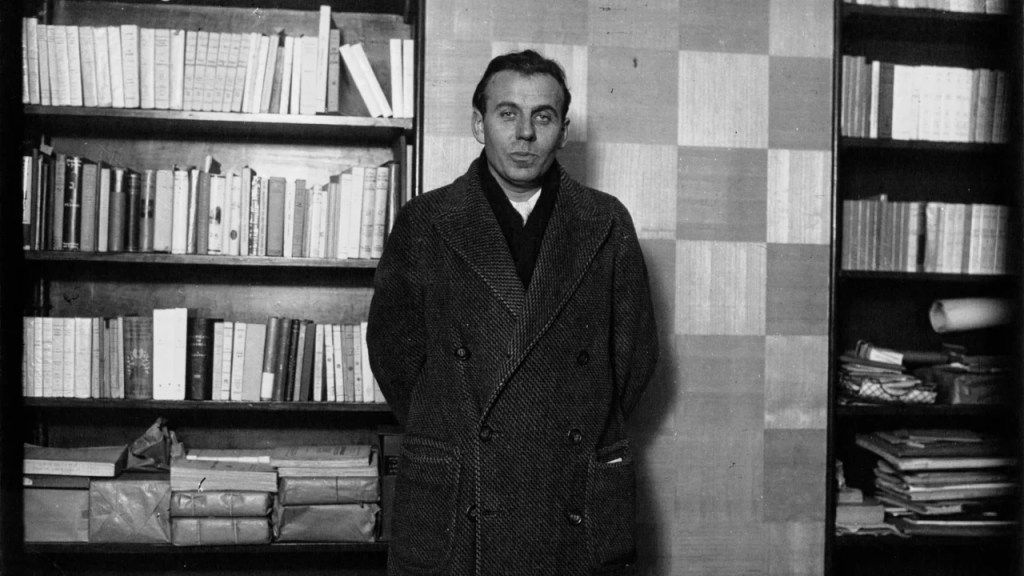
He will never win any humanitarian awards, or, for that matter, any awards, but Louis-Ferdinand Céline is one of the greatest writers of the twentieth century, an anti-Semite, a Nazi sympathizer, and probably a very decent human being otherwise. Born Louis Ferdinand Auguste Destouches in Courbevoix, France in 1894, Céline became a wounded war hero at Ypres in 1914
After the war, he became a physician and toured Africa and the Americas working for the League of Nations. In 1932, he published his greatest and most approachable novel, Journey to the End of the Night (Voyage au bout de la nuit). Unfortunately, in the early 1940s, he published several anti-Semitic books urging closer ties to Hitler’s Germany.
After the Allied invasion of France, Céline fled to Germany after having been identified by the Resistance and the British as a collaborationist. It was the beginning of a long and confused period escaping Allied bombing attacks and the Russian Army that was brilliantly described in his trilogy about being a guest of the Nazis as they were being pounded to pieces:
Castle to Castle (D’un château l’autre) 1957
North (Nord) 1960
Rigadoon (Rigadon) 1961
Years after reading the first two volumes, I have just finished reading Rigadoon and loving it. Céline and his wife are constantly being shuttled on trains from one bombed-out city to another. At one point, he escorts a group of eighteen severely retarded children from Hannover to Hamburg and manages to transfer them to a special Swedish Red Cross train taking them to safety. Unfortunately, the same train took Céline to Copenhagen, where he served a year in prison for his collaboration with the Nazis.
He died in 1961. Although his novels were a powerful influence on other novelists, Céline was never treated with the honor that his literary and medical work deserved. He spent his last years being a doctor treating poor patients in the slums of Paris.
So fair and foul a career I have not seen. I love Céline’s novels even as I detest his racial and political views. Life can be strange.
Here’s a melancholy poem to autumn by e e cummings. Here in Southern California, the trees don’t drop their leaves: They just accumulate dust or burn down. But I remember November from my days in Cleveland and New Hampshire:
cruelly, love
walk the autumn long; the last flower in whose hair, they lips are cold with songs
for which is first to wither, to pass? shallowness of sunlight falls, and cruelly, across the grass Comes the moon
love, walk the autumn love, for the last flower in the hair withers; thy hair is acold with dreams, love thou art frail
—walk the longness of autumn smile dustily to the people, for winter who crookedly care.
I am currently reading William S. Burroughs’s The Ticket That Exploded, and what a ride it is! As Anthony Burgess wrote, “Burroughs seems to revel in a new medium … a medium totally fantastic, spaceless, timeless, in which the normal sentence is fractured, the cosmic tries to push its way through the bawdry, and the author shakes the reader as a dog shakes a rat.” Here is a little sample for your delectation:
In this organization, Mr Lee, we do not encourage togetherness, esprit de corps. We do not give our agents the impression of belonging. As you know most existing organizations stress such primitive reactions as unquestioning obedience. Their agents become addicted to orders. You will receive orders of course and in some cases you will be well-advised not to carry out the orders you receive. On the other hand your failure to obey certain orders could expose you to dangers of which you can have at this point in your training no conception. There are worse things than death Mr Lee for example to live under the conditions your enemies will endeavor to impose. And the members of all existing organizations are at some point your enemy. You will learn to know where this point is if you survive. You will receive your instructions in many ways. From books, street signs, films, in some cases from agents who purport to be and may actually be members of the organization. There is no certainty. Those who need certainty are of no interest to this department. This is in point of fact a non-organization the aim of which is to immunize our agents against fear despair and death. We intend to break the birth-death cycle. As you know inoculation is the weapon of choice against virus and inoculation can only be effected through exposure … exposure to the pleasures offered under enemy conditions: a computerized Garden of Delights: exposure to the pain posed as an alternative … you remember the ovens I think … exposure to despair: ‘The end is the beginning born knowing’ the unforgivable sin of despair. You attempted to be God that is to intervene and failed utterly … Exposure to death: sad shrinking face … he had come a long way for something not exchanged born for something knowing not exchanged. He died during the night.
This will be my last election-related post for a while. Not because I am satisfied with the Trump dictatorship, but because my own personal happiness depends on a positive response to bad government. Most countries go through bad spells, and it was inevitable that, over a long lifetime like my own, I would encounter it at some point.
I am reminded of a quote from Russian Nobel Prize winning poet Joseph Brodsky: “If one is fated to be born in Caesar’s Empire, let him live aloof, provincial, by the seashore….”
Well, I am some 2 miles (3.2 kilometers) from the Pacific Ocean. I do live in the provinces, so to speak, compared to New York City or Washington, DC. And I am becoming increasingly aloof, especially when someone tries to engage me in a political discussion.
Times like these call for a more creative inner life. I will spend more time reading, meditating, and watching classic old movies. And much less time watching late night comics or news on TV. Also, most important, I will spend more time with my friends.









 Tarnmoor
You must be logged in to post a comment.