Bad Weather Ahead

Moscow in the 1920s

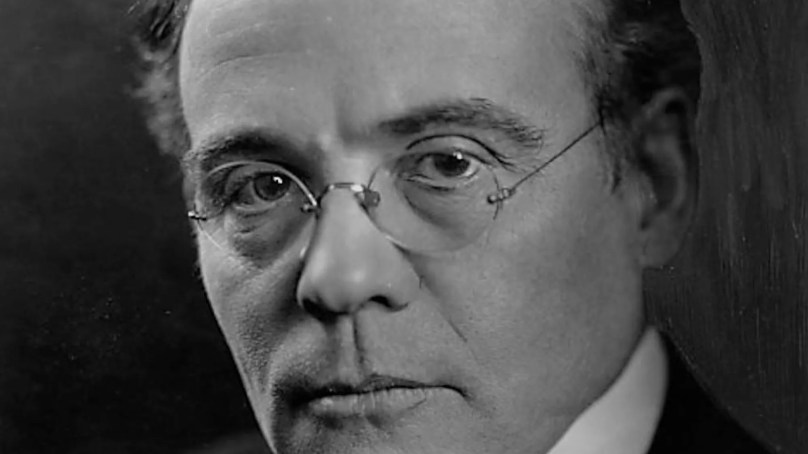
Sigizmund Krzhizhanovsky (1887-1950) was a Soviet writer who, in his own words, was “known for being unknown.” Hopefully, that will no longer be true as New York Review Books releases more of his stories. I have just finished reading his Autobiography of a Corpse, which contains a prescient 1939 story titled “Yellow Coal.” Tell me if the first paragraph of the story, quoted below, reminds you of our present situation:

The economic barometer at Harvard University had continually pointed to bad weather. But even its exact readings could not have predicted such a swift deepening of the crisis. Wars and the elements had turned the earth into a waster of its energies. Oil wells were running dry. The energy-producing effect of black, white and brown coal was diminishing yearly. An unprecedented drought had swaddled the sere earth in what felt like a dozen equators. Crops burned to their roots. Forests caught fire in the infernal heat. The selvas of South America and the jungles of India blazed with smoky flames. Agrarian countries were ravaged first. True, forests reduced to ashes had given place to ashy boles of factory smoke. But their days too were numbered. Fuellessness was threatening machines with motionlessness. Even glacier snow-caps, melted by the perennial summer, could not provide an adequate supply of waterpower; the beds of shrinking rivers lay exposed, and soon the turbine-generators would stop.

Samhainophilia

The Winner: Most Popular and Guilt-Free Holiday

There is a such a word as samhainophobia, which means hatred of Halloween. By applying the principal of parallelism, there must be such a word as samhainophilia, meaning love of Halloween. According to Wikipedia:

Samhain is a Gaelic festival on 1 November marking the end of the harvest season and beginning of winter or the “darker half” of the year. It is also the Irish and Scottish Gaelic name for November. Celebrations begin on the evening of 31 October, since the Celtic day began and ended at sunset. This is about halfway between the autumnal equinox and winter solstice. It is one of the four Gaelic seasonal festivals along with Imbolc, Bealtaine, and Lughnasa.

We don’t celebrate Imbolc, Bealtaine, or Lughnasa very much any more; but Samhain, or Halloween, is continue to grow more and more popular. Think about it: There isn’t any guilt associated with buying a few bucks worth of candy and giving it to kids. On the other hand, you have to cook up a huge complicated feast for Thanksgiving and pretend to be nice to all your most objectionable relatives.

And don’t even get me started about Christrmas! You have to kill a tree, decorate it with expensive ornaments, buy expensive gifts for everybody, and do all the same stuff required for Thanksgiving, except maybe you don’t have to serve turkey at your holiday feast.

Then there are all those other holidays: You have to set off an explosive on Independence Day, blowing off a finger or limb. You have to get drunk and endanger your marriage at a New Years office party. And so on and so on.

Heck, I’ll take the candy any day.

The above photo was taken at Los Angeles’s Grier Musser Museum of Victoriana. Martine and I spent a pleasant afternoon visiting the museum owners, Susan and Rey Tejada, who live on the premises. They have an impressive collection of holiday-related books, animated displays, and figurines. I spent over an hour looking at 3-D First World War images on a stereopticon. They also have a great collection of pop-up books of every description.

Temperate Rainforest

Forest Near Tofino on Vancouver Island, BC

Until I saw it with my own eyes, I did not know there was such a thing as a temperate rain forest. They are relatively rare, but you can find them in the Pacific Northwest and even in the Eastern Appalachians. Basically, they have an average temperature range between 39° and 54° Fahrenheit (4° and 12° Celsius) and are characterized by annual precipitation over 50 inches, dense canopies, and a proliferation of ferns, lichens, and mosses.

My encounter with one such temperate rain forest was close to the Vancouver Island town of Tofino. I was able to take a guided hike through it and take pictures.

Notice the Large Spider Web

Walking through the woods, I was reminded of my mother’s made-up fairy tales, which were always set in a sötét erdő (dark forest) and involved a tündérléány (fairy princess). I was walking not only through an actual forest but the land of my childhood dreams.

I Didn’t Like L.A. at First …

Downtown Los Angeles 2011

It took a few years for me to get to like Los Angeles. I had grown up in Cleveland, Ohio—nobody’s idea of a beautiful city. I was used to red brick buildings overlaid with grime, along with hot humid summers and unrelievedly grim winters. My first opinion of Southern California was, “This place just isn’t real!”

Oh, it was real all right. After enduring earthquakes and floods and smog and wildfires, I saw that L.A. had its own demons, which were more intermittent. (In Cleveland, they were pretty constant.)

When I was in college trying to decide where to go to grad school to study film history and criticism, I remember reading a snide book (whose title I forget) about a state whose residents were called Procals (short for Pro-California) whose residents endlessly plugged their state as “God’s country.”

The part that sticks in my mind was the description of the Pacific Coast Highway as it followed the coast north from Santa Monica. Anyhow, the highway was always being covered with destructive landslides. Well, now I live a scant two miles from that road. It is incredibly beautiful, but I haven’t the heart to drive it ever since the January wildfire that destroyed Pacific Palisades. Too many of my favorite places have been burned to a crisp.

Am I a Procal? No, not at all. There are too many people in Southern California. Too many of the recent arrivals are homeless people who live in tents pitched any which way on sidewalks, surrounded by piles of trash. They have taken a lot of the shine off Los Angeles. I still love the place, but I am all to conscious that no place ever remains the same over the decades.

Potato and Spinach Curry

Vegetarian Potato and Spinach Curry

After cooking a bland mushy dish for Martine—at her request—I had a sudden urge to make something hot and spicy. A simple and tasty vegetarian dish is a potato and spinach curry. Here are my cooking instructions:

  1. Pour several tablespoons of sunflower oil into a cooking pot and light a medium fire under it.
  2. Add about 2 tablespoons of black mustard seeds when the oil gets hot.
  3. Add the same amount of cumin seeds (jira).
  4. After about a minute, add 2 peeled russet potatoes cut into 3/4 inch cubes. Stir frequently to avoid ticking to the pot.
  5. Add approx 1 tablespoon each of turmeric, ground cumin, ground coriander, and powdered chile pepper.
  6. Add salt to taste.
  7. While cooking potatoes, soak 1 bunch of spinach leaves in a large bowl, shake off any dirt, and chop and add to the potatoes after spices added..
  8. If you like your curry fiery, chop up and add a serrano chile.
  9. Cover and cook until potatoes sufficiently cooked.
  10. Serve with plain yogurt to cut the hotness of the chiles.

The More Things Change …

Roman Graffiti from Pompeii

The following is a reprint from January 28, 2013.

Let us say we were seated across the table from an ancient Roman and, say, a Viking. Aside from the obvious language problem, would there be enough commonality to allow for a spirited discussion? I think there would be, primarily because I have read enough Roman and Viking (I should say Icelandic and Norse) literature to vouch for the fact that, when all is said and done, we are not all that different from one another.

Let me take as a case in point graffiti that has been discovered from the ruins of Pompeii and Herculaneum. You can probably find the equivalent in any nightclub’s restroom wall:

  • Philiros spado – “Philiros is a eunuch”
  • Apollinaris, medicus Titi Imperatoris hic cacavit bene – “Apollinaris, physician to the Emperor Titud, had a good crap here”
  • Oppi, emboliari, fur, furuncle – “Oppius, you’re a clown, a thief, and a cheap crook”
  • Miximus in lecto. Faetor, peccavimus, hospes. Si dices: quare? Nulla matella fuit –
    This one was found in an inn: “We have wet the bed. I admit we were wrong, my host, but if you ask why, it is because there was no chamber pot.”
  • Virgula Tertio su: Indecens esVirgula to Tertius: You are a nasty boy.“
  • Suspirium puellam Celadus thraex – “Celadus makes the girls moan”

Now I have not seen the graffiti of Ancient Rome, but I saw the viking graffiti in the tomb at Maes Howe in the Orkneys. Built over 5,000 years ago, Maes Howe was frequently visited by Viking raiders in the hopes that some buried treasure could be found there. They found none, but left such observations as the following in their Futharc runes:

  • “Thorni fucked. Helgi carved.”
  • “Ingigerth is the most beautiful of all women” next to a picture of a slobbering dog.
  • “These runes were carved by the man most skilled in runes in the Western Ocean.”

You can find more about the Pompeiian graffiti by clicking here. The runes at Maes Howe are explained here.

The more things change, the more they remain the same.

“Alone”

Edgar Allan Poe (1809-1849)

Here’s an early poem by Edgar Allan Poe:

Alone

From childhood’s hour I have not been
As others were—I have not seen
As others saw—I could not bring
My passions from a common spring—
From the same source I have not taken
My sorrow—I could not awaken
My heart to joy at the same tone—
And all I lov’d—I lov’d alone—
Then—in my childhood—in the dawn
Of a most stormy life—was drawn
From ev’ry depth of good and ill
The mystery which binds me still—
From the torrent, or the fountain—
From the red cliff of the mountain—
From the sun that ’round me roll’d
In its autumn tint of gold—
From the lightning in the sky
As it pass’d me flying by—
From the thunder, and the storm—
And the cloud that took the form
(When the rest of Heaven was blue)
Of a demon in my view—

A Cemetery for Halloween

Recoleta Cemetery in Buenos Aires

I have been to some spooky cemeteries, but I think that the spookiest one of all is El Cementario de la Recoleta in Buenos Aires. Curiously, it is also perhaps the city’s main tourist attraction.

Practically everybody who was anybody in Argentina is buried there—with some interesting exceptions. Jorge Luis Borges is interred in Geneva, Switzerland, where he died. Although Evita Perón is buried in Recoleta under her maiden name of Duarte, her husband, former dictator Juan Perón was not allowed in. He is buried on the grounds of his presidential estate at Olivos.

Many of the funerary monuments at Recoleta are spectacular. Some are grim. In a few vaults, one can look through gaps in the gates and see some occupied coffins in bad shape, apparently from families that have died out and not left instruction for their maintenance.

The last time I was in Buenos Aires, I stayed in a hotel that was across Avenida Azcuenaga from the high west wall of the cemetery. It didn’t feel spooky to me at all. It’s only by wandering up and down the rows of funerary monuments that one gets a spooky forechill.

O Canada

Floating Post Office on Vancouver Island

It was 2004. I was on an old packet boat called the Lady Rose that went back and forth on the Alberni Inlet on Vancouver Island between Port Alberni and Bamfield. It was a beautiful day, and I was surrounded by a congenial group of Canadians.

The Lady Rose has since been decommissioned, but my memories of that trip will last a lifetime. The next day, I took another ship to Ucluelet, from which I took a bus to Tofino, where I stayed for several days.

I would love to spend some more time in British Columbia. Andrew Marvell had it right: “Had we but world enough and time ….”

There is something about Canada that Martine and I love—from Nova Scotia and Quebec to Alberta and B.C. Martine loves practicing her French (she was born in Paris) in Quebec; and she loves the fact that Canadian food is generally non-threatening. I know that she would accompany me to Canada in a heartbeat, whereas Latin America is more problematic.

I know our current President (I forget his name) has a grudge against Canada, but that’s his problem.

Notorious

Edgar Allan Poe (1809-1849)

As part of my Halloween reading, I am reading Penguin Books’ The Portable Edgar Allan Poe. After having read numerous popular editions of Poe, I decided to concentrate on an edition that took him seriously as one of the greatest literary figures of the young Republic.

There is little doubt in my mind that Poe is a genius. At the same time, there is little doubt in my mind that Poe was anything but warm and fuzzy as a person. He admitted as much in his story “MS. Found in a Bottle” (1832): “Of my country and of my family I have little to say. Ill usage and length of years have driven me from the one, and estranged me from the other.”

Later in the same paragraph:

I have often been reproached with the aridity of my genius; a deficiency of imagination has been imputed to me as a crime; and the Pyrrhonism of my opinions has at all times rendered me notorious.

Looking back at Poe’s life, one can see him constantly produce brilliant stories and poems, yet struggle to earn a living or find happiness in marriage or family. He was orphaned at the age of two and had a tempestuous relationship with his stepfather John Allan, whose last name he adopted as his middle name.

Over and over again, we find that the characters in life died young of consumption. Poe did not react well: He took to the bottle. In fact, he died of alcohol poisoning at the age of forty, though the newspapers of the time blamed “congestion of the brain” or “cerebral inflammation.”

It requires some extra discipline for me to forget Poe’s unhappy life and concentrate on his works. Let’s face it: some very unhappy people have created works of such vivid imagination that made him ever so much more than the lunatic that critic Rufus Wilmot Griswold described as walking “the streets, in madness or melancholy, with lips moving in indistinct curses, or with eyes upturned in passionate prayers, (never for himself, for he felt, or professed to feel, that he was already damned).”

Poe’s life is a closed book, but his works will live on forever.