Approaching Infinity

Why do I love chess so much? Let me count the ways:

  • It has been around since the 7th century AD.
  • It is played around the world, with the current champion being from the country of origin, namely, India.
  • “There are even more possible variations of chess games than there are atoms in the observable universe.” Read about the so-called Shannon Number.
  • It is possible to improve one’s game by studying games played in the last 200 years.
  • Hell, the number of reasons I love chess also approaches infinity.

Among the top fifty players in the world today are representatives from Norway, the United States, Germany, India, France, the Netherlands, China, Hungary, Uzbekistan, Vietnam, Azerbaijan, Russia, Slovenia, Serbia, England, Poland, Armenia, Croatia, and Sweden. In fact, the only parts of the world that are under-represented are Latin America and Africa.

I learned to play the game at the age of nine from the Hungarian husband of one of my mother’s friends. Since then, there has never been a time when I didn’t follow the chess news.

That does not mean I’m particularly good at the game. I may be just another patzer, to use the Yiddish term; but I am still working on improving my game whenever I can. Though I may not have too many years left, I never regard the study of chess games and puzzles as time wasted.
Schach Jock

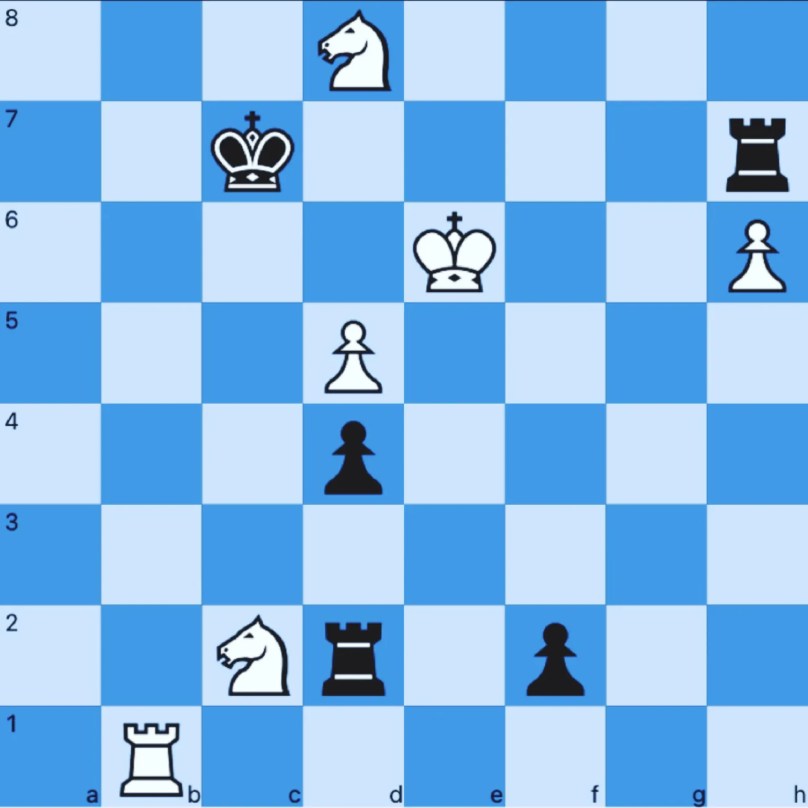
Although I learned to play chess at the age of nine, I am no wizard at the game. In fact, my game is pretty mediocre. I leave pieces en prise (open to capture). I miss mates in two. I fall into opening traps. But I love the game and spend an average of an hour a day on Chess.Com solving problems, playing chess bots, and following the latest chess news.

When the conversation turns to the latest computer game, I just smirk. Chess is a game that will occupy my mind for a lifetime, not merely an intermission on TV.

If you look at all the possible combinations for white and black for just the first ten moves, the number is larger than the number of atoms in the universe. The game is over a thousand years old: It first emerged in India as the game called Chaturanga. It came to the West through Persia, where it was called Shah Mat (“The King Is Helpless”). That is where the term Checkmate arose.

I regularly play chess openings that date from the Sixteenth Century (the Ruy Lopez). There are mating patterns from the Eighteenth Century (Legal’s Mate).

I still have several shelves of classical chess books that I have pipe dreams of studying at some point. These include game collections from the likes of Bobby Fischer, Alexander Alekhine, Paul Morphy, José Raul Capablanca, and my hero, the Estonian Paul Keres.

Whatever happens, chess will have enriched my life immeasurably.

“He Neuer Makes His Walke Outright”

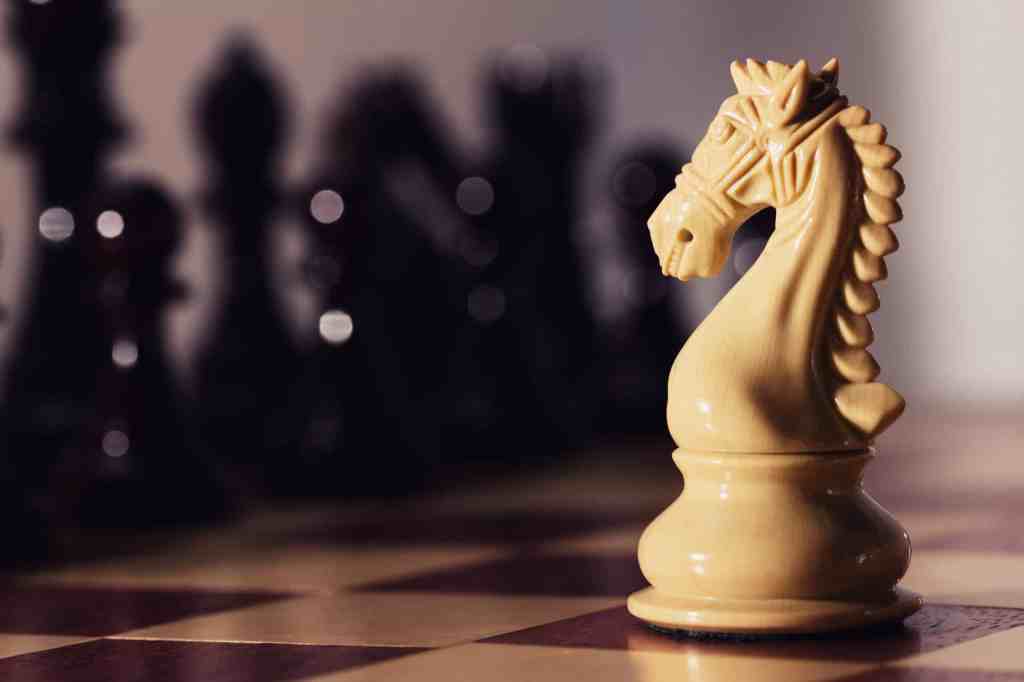
The Knight in Chess

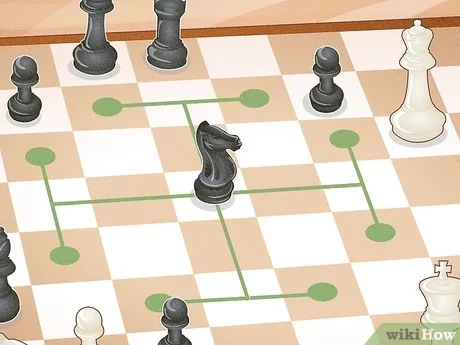
Of all the pieces on the chessboard, the most ancient is that queer duck, the knight. He is the only piece that can jump over other pieces—on his side or the enemy’s—to make a move or capture. His move can only be described as a four-square “L,” starting with one square left, right, up, or down—and then one square diagonally away from the starting point of the move. Or, look at the following illustration:

Possible Knight Moves

Just note that there could be other pieces on any of the squares that are “jumped over” and an enemy piece on the final square on which the knight lands. These are shown with green dots in the above illustration.

The following description of the knight in chess comes from Nicholas Breton’s The Chesse Play (1593):

The Knight is knowledge how to fight
against his Princes enimies,
He neuer makes his walke outright,
But leaps and skips, in wilie wise,
To take by sleight a traitrous foe,
Might slilie seek their ouerthrowe.

Over ther last several months, I have spent some time studying chess problems at Chess.Com. What I find particularly interesting is that, if the knight is in the vicinity, there is a good chance that the key move will be made by him, either checking the king or being sacrificed to allow for checkmates or winning piece grabs.