

Barking Up the Wrong Technology

Where Are We Headed with Technology?

When I was a student at Dartmouth, I taught myself how to use the new Basic programming language on the college’s General Electric computer. That was at some time in the mid 1960s. Little did I know that much of my post-graduate life would be involved with computers.

In March 1968, I was hired for the Lexicography & Discourse project at System Development Corporation in Santa Monica. My job involved proofreading and correcting the transcriptions of two Merriam-Webster dictionaries. The project was funded by the Advanced Research Projects Agency (ARPA) of the U. S. Air Force. That was the same agency which created the forerunner of the Internet, which was created to communicate with other computer nodes spread across the country even if several U. S. cities were destroyed by nuclear bombs.

The technology of the late 1960s was clunky, but it enabled us to land on the moon in 1969!

I went on to become a computer programmer and informational technology (IT) specialist for two accounting firms. During that time I saw technology change from a kind of intellectual priesthood into a pursuit for the masses. Everybody wanted in.

It all started with the Apple Macintosh, which supposedly made computing accessible to everyone. Then, the Internet was for everybody, via Prodigy and America Online. Kids were playing computer games.

A major hurdle was passed when touch-screen interfaces were invented. You didn’t need to remember commands with their complicated parameters: You simply pointed, and, if you were lucky, your choice was registered and acted upon. Of course, this went hand in hand with poor language skills. Who needed spelling and grammar when all you had to do was point at the options you wanted.

On one hand, there were many advantages to this; but techno continued to evolve with cryptocurrencies and artificial intelligence (AI). Money was now worth what you wanted it to be worth. And, with AI, you didn’t have to think any more. These are ominous developments. If technology continues to evolve along these lines, I expect no good to come of it.

AI Gets Stupid

I was doing some research on a film, so I decided to ask Google if there were any movie sequels to City Across the River (1949). At the top of every Google response is what is called the “AI Overview.” What I got in this overview made me guffaw:

There are no direct movie sequels to the 1949 film City Across the River, but other films with similar themes, like the 1956 film Don’t Knock the Rock [Not similar at all], shared some elements or settings with the movie. There is also a more recent film, Across the River and Into the Trees (2022), which may be what you are looking for [It isn’t], although it is not a sequel.

Here are some other movies with “River” in their titles that might be relevant:

Across the River and Into the Trees (2022): a more recent film that might be the one you are thinking of. [No!]
Take Me to the River: New Orleans: The second film in the award-winning series “Take Me to the River” which celebrates the musical history of New Orleans and Louisiana. [NO!!!!!]
The River (1984): A film starring Mel Gibson about a farming couple in the face of economic hardship. [No No No]
Deliverance (1972): A film starring Jon Voight and Burt Reynolds about a canoe trip that goes horribly wrong. [Correct me if I’m wrong, but is “River” in the title?]
The River Wild (1994): A film starring Meryl Streep as a woman whose family is taken hostage during a river rafting trip. [Nope]

All of the titles suggested by Google’s AI are totally off the mark. City Across the River is about a teenage gang in 1940s Brooklyn. The word “River” is in the title, but has no bearing on the film’s story.

As it happens, there was—sort of—a sequel to the film. It was called Cry Tough (1950), though it changed the locale and virtually everything else that was in Irving Shulman’s sequel. Instead of Jewish Brooklyn, the story is set in Spanish Harlem with a Puerto Rican gang.

Now if I had believed Google’s bumbling AI overview, I would have been laughed at. And I would have richly deserved it.

My Video Collection

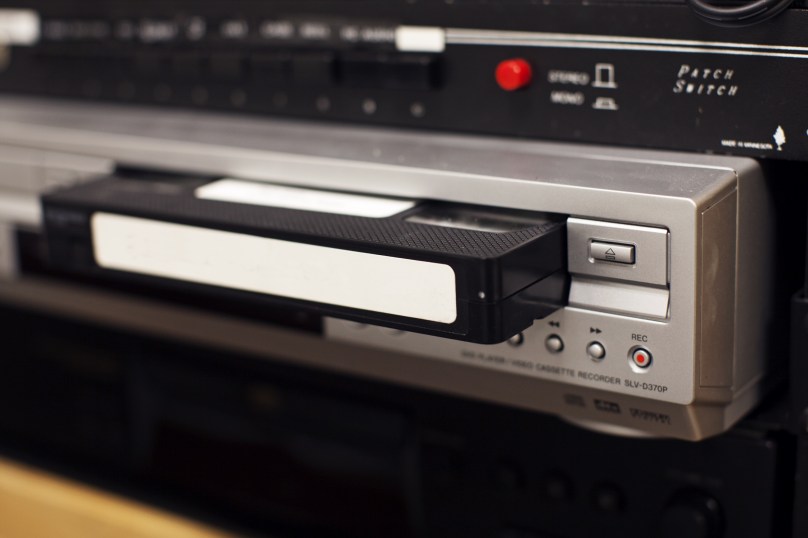
When I bought my first video cassette recorder (VCR) in the 1980s, I thought I had it made. I had a great cable television setup near a neighborhood where many film industry moguls lived, and I could record films that were being broadcast on the many channels to which I had access. Eventually, I had a library of several hundred films that any film fanatic would be proud to own.

But then, little by little, they started to go bad. The VCR units had a hard time rewinding. And, of course, you couldn’t view a film until you rewound the reel. The tapes got stretched and started to go blooey. And rewinding became more and more of a chore.

When the DVD players first came out, I thought that was the way to go. I mean the laser didn’t even make contact with the surface of the DVD the way a VCR did with a videotape cassette.

One of my friends even suggested I convert all my videocassettes to DVD. I quickly pointed out that it would take years to accomplish this feat, during which my cassettes would continue to deteriorate.

Then I found out about a thing called “laser rot.” Even DVDs were not immune. After all, there was this metallic coating on a thin plastic disk. And plastic, as we know, won’t last forever.

In the age of streaming, people don’t keep the films they see: They just play them while downloading them. After viewing the film, it is gonzo!

Entering the Era of Crummy Technology

(Not So) Smart Phones

Little did I think way back around 1964 when I was fooling around with a General Electric 265 computer at Dartmouth College that computer technology would become so prevalent sixty years later. I moved from being an English Major in 1966 to seeking a Master of Arts in film history and criticism at UCLA in Los Angeles to becoming a self trained computer programmer in 1968 at System Development Corporation (SDC) in Santa Monica, California.

From there I moved on being a computer programmer for Urban Decision Systems in 1971, morphing into a Director of Corporate Communications to avoid working directly under the president’s thumb. When that went bust in 1991, I became an Network Administrator and Office Manager for a Westwood accounting firm, which lasted until the end of 2017.

I am now retired after a lifetime with computers. As I look around me today, I find technology everywhere—from automated attendant services that make it a 45-minute ordeal to telephone a corporation to expensive smart phones that are inferior in quality to the old Bell land lines to error-prone GPS systems to touch-screen interfaces that force you to repeat your keystrokes endlessly.

Tomorrow, I will have to pay a Blue Cross bill over the phone—and I dread the interaction with their automated attendant. They refuse to make it easy to pay them unless I let them auto-fill all my prescriptions. Even when my doctor changes medications or dosages.

I own a flip phone, but not a smart phone. Being a senior, I cannot read the tiny screens without changing to my reading glasses. If I were an eight-armed Hindu deity, it would be no trouble at all. But, alas, I am a mere human.

At SDC, I wrote three hefty user manuals. Now I find that user manuals are hard to come by. If you can’t find a portable data file (pdf) version on the Internet, you have to just fly by the seat of your pants. I guess people just don’t like to read any more.

What frightens me is not that we advance three steps forward and two steps back, but two steps forward and three steps back.

Our Salvation Lies in Robots?

Some of the Food Offerings at India Sweets & Spices

About once a week on the average, I drop in for a quick lunch at India Sweets & Spices in Culver City. The vegetarian curries are tasty and not overly expensive, and one does not have a order a meal too big to finish.

As I entered the store, I was greeted by a garrulous retiree who was sitting at one of the outside tables. As is my custom, I answered him politely, but in the 1930s Hungarian rural dialect which I adopt when trying to avoid a chatty individual.

He took the hint quickly while I passed inside to order a samosa and lentil fritter. When I came out with my food, I had to sit at a table within earshot of him. He was regaling one of his captives with an encomium on robots and how they were going to replace surgeons. Someone looking at my face at that point would have guessed that I had just smelled something foul.

You can’t talk about robots without talking about computer algorithms. And I was a person who had just spent an hour explaining to my pharmaceutical mail order firm—three times—that I am not Hispanic (marque dos) before getting to speak to a human being. If most companies cannot reasonably handle automated phone attendants, why would I submit to a computer algorithm with my body for surgery?

Fortunately I was able to finish my vegetarian snack quickly and vanish from sight before hooting derisively.

Becoming a Techie

Logo of System Development Corporation

I came to Southern California to become a graduate student in film at UCLA. After my first year as a student, I needed an income, as my parents weren’t able to foot the bill for me much longer. In March 1968, I visited the job counseling center on campus and applied for a job at a Santa Monica tech company called System Development Corporation, or SDC.

The job was for an interesting project. The Air Force’s Advanced Research Projects Agency (ARPA) had funded SDC’s Lexicography and Discourse project. The work done previously was to key in the complete contents of two dictionaries—the Merriam-Webster Seventh Collegiate Dictionary and the Merriam-Webster Pocket Dictionary—onto paper tape. Included were definitions, pronunciations, and etymologies. The paper tape had been converted to IBM punch cards, which were printed out. The printouts of the two dictionaries was in two piles that ran floor to ceiling of the office I was to use.

Interestingly, my predecessor in the position was murdered by a UCLA graduate student from the film department. I never was to find out who did it.

For the next couple of years, I proofread the transcriptions of both dictionaries and made corrections to the data files, which resided on a military AN/FSQ-32 computer whose parts were encased in epoxy so as to be able to survive a nuclear attack. Unfortunately, it had a single I/O channel, so that if a large number of users were logged in, as was the usual case, simple transactions took forever on the computer’s primitive time-sharing system.

If you are interested in finding out more about the project, you can see the document that described the project: Two Dictionary Transcripts and Programs for Parsing Them. Volume I. The Encoding Scheme, PARSENT and CONIX by Richard Reichert, John Olney, and James Paris (that’s me). It is still available from the Defense Technical Information Center (DTIC).

Incidentally, ARPA also created the Internet. It was originally designed to allow for uninterrupted communications between two points when certain key cities in between were destroyed by nuclear bombs.

Back Online

I am finally back online. Although I have some sixty years of computer experience, I am not much of a do-it-yourself systems man. My friends who are spend great gobs of time in frustrating attempts to make their computers work. I find it easier to hire a professional, who also happens to be my friend.

The reason my blog was down so long was that my friend was in high demand by his big clients. But in the end, he came through with a new computer that was custom configured to use Microsoft Windows 11 as if it were an earlier version of the system, so I wouldn¹t have to spend so much time reacting to every new major release.

In the end, it would have taken twice as long—amid great frustration—to do it all myself. In the end, it may well even have cost more, as I could take advantage of his professional discounts.

Oops! I’m Running for President!

The Residence of the President of Iceland (Center)

I read an amusing story in the current edition of the Reykjavík Grapevine. It appears that it is so easy to run for the presidency of Iceland using a handy website that a number of people accidentally put their names in for nomination. According to the Grapevine article:

As the upcoming presidential elections draw near, more and more viable candidates are entering the race. Potential contenders need to collect at least 1500 signatures before April 26 to be eligible for election. This is the first time the entire process is conducted online, leading some people to unintentionally run for president on island.is with the push of a button.

On March 24, approximately 80 people had put their names forward, formally entering the presidential race. RÚV [the Icelandic English-language news service] reports that 40 candidates subsequently removed their submissions, with at least six individuals unknowingly entering the 2024 presidential race. The National Election Board has remedied the technical glitch.

53 candidates are currently in the process of collecting signatures, with voters choosing the next President of Iceland on June 1.

I’m Back

Angels at the Grier-Musser Museum

My computer was down last week, so I was consequently unable to post. It’s been patched up for now, and a new computer is on order. After all, I’ve had this Dell Optiplex 9010 for ten years, so it’s about time to replace it.

In the meantime, Merry Christmas to all my readers. Oh, and I think I’ll also add a “bah humbug!” for good measure.

A Double-Edged Sword

Dr. Michio Kaku, famous American physicist and futurologist, probably said it best:

We have to realize that science is a double-edged sword. One edge of the sword can cut against poverty, illness, disease and give us more democracies, and democracies never war with other democracies, but the other side of the sword could give us nuclear proliferation, biogerms and even forces of darkness.

This double-edged quality affects us on an everyday level as well. Take computers, for example. Technology seems to promise us so much, but delivers so much frustration. For example, under no circumstances would I purchase an automobile whose electronics are so complicated that even experienced computer users are frustrated getting them to work properly without expending undue effort.

The average home computer user is presented with an infinite number of options as to which application software to use. But is he or she able to make wise decisions in this area? The temptation to go cheap or free is overwhelming.

I have one friend who loaded his computer with open-source word processing and portable data file (PDF) systems, only to spend untold hours trying to make it work with the operating system and with all the other software on the computer. He has recently uninstalled most of these cheapster programs.

A year ago, I bought a data tablet that actually had no user manual available on the Internet, or anywhere else. I got it to work … sometimes. I have since laid it aside with some regret.

At the same time, I have benefited from sturdy software like Microsoft Office and Adobe Acrobat. I manage to get a lot done on my computer, but dread having to face operating system upgrades.