A Moment of Adrenal Insufficiency

Lethargy Struck Yesterday

It happened a little differently yesterday. After breakfast, I started feeling extremely lethargic. Instead of doing anything, I just sat on the couch staring at the wall … at the television which was off … at my feet. At one point, when Martine came into the room, I told her I was suffering another adrenal episode, meaning that I was not getting any adrenaline.

Usually when that happens, my digestive system goes out of whack with explosive vomiting and diarrhea. Followed by blacking out. Not this time. Fortunately.

I knew what to do. I was able to stand up and walk to the kitchen, where my 10 mg Hydrocortisone HCL pills were stored. I took three tabs with cold water and returned to the living room couch.

After several hours of s-l-o-w-l-y diminishing lethargy, I got all better. But I took it slowly. There’s no way of rushing the cure.

Because I have no pituitary gland, there are times when my body is just not getting the adreno-cortico-tropic hormone (ACTH) it needs. In the past, I was usually admitted to the emergency room when this happened, and I had to hang out there for several days while the cardiologists who usually run the ER tried to puzzle out what I had and how it affected their specialty. (It doesn’t really.)

This morning I felt good so I went downtown and attended the Thursday Mindful Meditation session at the Central Library. After, I went across the street and had a big bowl of pho at the Downtown LA Pho Restaurant. I was back to normal.

Sick Again

Twice in the last eight days, I have come down with a combined attack of nausea and diarrhea complicated by a lack of adrenaline to fight them. Both times, I wound up lying on my back in bed while my intestines attempted to turn my body into a Niagara of something browner and more disgusting than Lake Ontario.

I felt almost too weak to make the occasional dash to the bathroom, and for a while, I had the chills.

There was no fever, however, and there was a very clear solution. I took 60 mg of Hydrocortisone and waited several hours for it all to go away. By 4 PM, I was up and about and even able to eat some crackers and plums.

The good thing about my lack of a pituitary gland in these situations is that the solution is increased Hydrocortisone or Prednisone. The illness departs in a few hours and leaves no trace behind.

Except, one of these days I will be alone and too sick to take the steroids, and I will slowly, peacefully, glide out of this life. It’s not a bad death as deaths go, but it is just as final as any other.

Sorry I had to leave you with this image, but it is an aspect of my life that I cannot ignore. Thanks to Martine’s kind nursing, I’m still kicking.

In Search of Okayness

The Archetypal Image of Wellness

In America, the cult of Wellness promises endlessly but doesn’t deliver. The image of a twenty-something blonde doing yoga in a beautiful landscape is all well and good, but not exactly the best guide for someone who has been knocked around by life.

It has also become associated with unhelpful practices such as opposition to vaccines, strange dietary practices and weird nutritional supplements.

What I propose to replace the notion of wellness is a concept I have invented called okayness. Let’s face it: You’re not going to live a perfect life. You will have strange illnesses, your teeth will be less than perfect, your family life will be somewhere south of the rom com ideal. What you need is a philosophy of living an acceptable, or okay, life.

Start by disavowing perfection. Start feeling some compassion for yourself. You’re not going to eat seven pounds of kale each day or buy $500 worth of nostrums advertised or recommended by TikTok influencers.

Go for variety in your life. That includes food, activities, and travel. Don’t waste time arguing about religion, politics, or money. Get by. Be okay!

Csuri Madár

A Baby Bird With Crusty Eyes

Fort much of my life I have been plagued with crusty eyes. When I was a little boy, my mother referred to me as a csuri madár, which meant a cute little fledgling bird with crusty eyes whose mouth was always open for food. Later on, my ophthalmologist identified my ailment as blepharitis.

Even as I am writing this post, my eyes are watering and there are small solid particles dotting the line of my eyelashes. There are four things I can do to make me feel good for a little while:

  • Cleanse my eyelashes with a medicated wipe
  • Put a warm compress on my eyes for about fifteen minutes or more
  • Use extra-strength Pataday eye drops once in a 24 hour period
  • Use artificial tears eye drops as needed

The only thing that really works is for summer to return. The blepharitis plagues me only during the fall, winter, and spring—roughly nine months out of the year.

It doesn’t keep me from reading: It just makes me feel extremely yucky most of the time. If that isn’t existential, I don’t know what is.

Sugar Water

The Many Varieties of Sugar Water

Every time I visit the supermarket, I am amazed by the large variety of sugary drinks, both carbonated and non, and the high price of same. Every so often, I get suckered in to try one, but usually find myself disappointed.

When I travel in Latin America, my usual beverage of choice at restaurants is agua mineral con gas, which is widely available and doesn’t cost much. For some reason, in the United States the beverages are much more expensive, and not always so tasty. I’ve always wondered why this is so.

That’s why at home I usually drink either iced water or my own iced tea, which consists of what remains in my cheap Japanese metal teapot after my breakfast hot tea. Right now, it’s Darjeeling, which makes it much higher quality than the bottled iced teas on the supermarket shelves, and unsweetened to boot. (I am diabetic, so have reason to cut back on sugar at every opportunity.)

As a result, my grocery bill is light on beverages, except for Martine’s low fat milk and distilled water. On the other hand, when I see other supermarket patrons, their carts are loaded down with alcoholic beverages and sweet fizzy water. (For me, the predominant item consists of fruits and vegetables.)

It took many years to switch from the inevitable Coke or Ginger Ale to what I am drinking today. Fortunately, as a result, my blood sugar is manageable, and, I think, my health overall is better.

Puzzlement

The Human Body Is an Endless Mystery

Yesterday I didn’t post because I had one of my periodic, mystery illnesses. The symptoms were weakness, diarrhea, and vomiting. This time, I did not go into the emergency ward because I knew that I would get better in a few hours, especially after taking four 10mg hydrocortisone pills.

As I no longer have a pituitary gland, that is meant to supply me with the adrenocorticotropic hormone (ACTH) my body no longer produced on its own. Apparently, when I get one of those episodes—with or without diarrhea and vomiting—it usually takes six to eight hours to return to normal.

Was it food poisoning that caused my illness? Was it low blood pressure (which was lower than usual when I measured it in the evening)? Was it high blood sugar (which was in fact running high when I measured it in the late afternoon)?

The thought suddenly came to me that we are so used to living in a digital world with its clearly demarcated boundaries that we tend to forget that we are primarily an analogue entity. My doctor thinks that what causes these incidents is an interaction involving the hormonal, circulatory, and digestive systems. Whatever the condition(s) that cause me to go out of whack, the treatment is the same: Hydrocortisone or Prednisone. Or 100mg Solu-Cortef injected into my bloodstream.

I will probably never find out what causes these bodily crises. I would be willing to bet that it may not even be determinable from an autopsy.

The health of the body is a mystery. I just have to be careful about eating, sleeping, pushing my body beyond its limits, and everything else. At the same time, I have to maintain a certain sense of humor about what is an endless conundrum.

Martine Is Back!

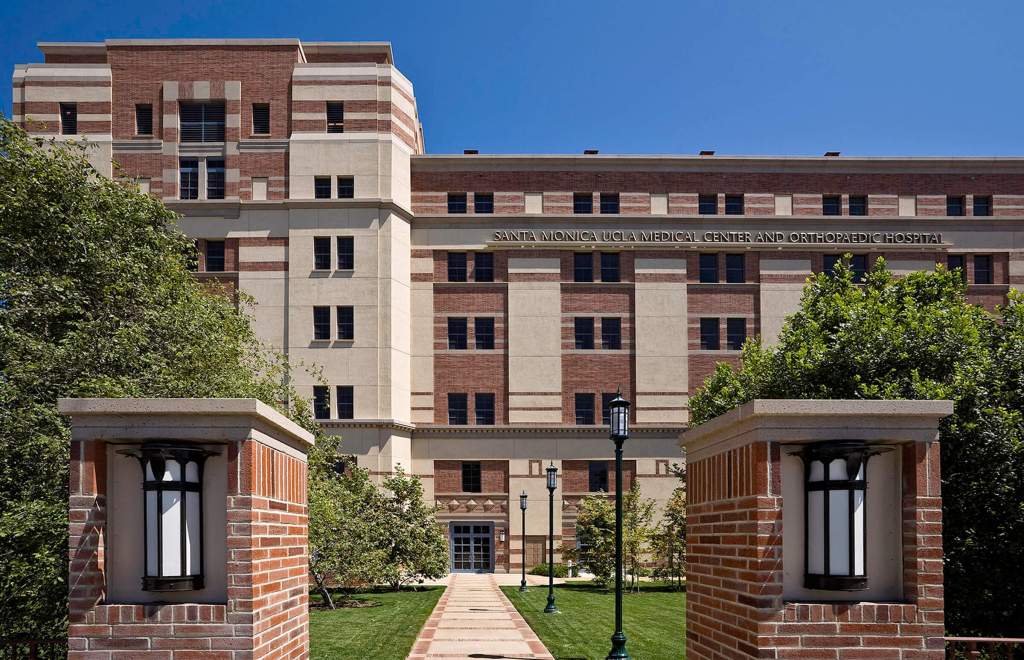
UCLA Santa Monica Medical Center

After spending some five days in a hospital room, Martine was finally discharged today. She feels good, and there is no longer an issue with low sodium levels in the blood. The medical name for this is hyponatremia. According to the Mayo Clinic website, signs and symptoms can include:

  • Nausea and vomiting
  • Headache
  • Confusion *
  • Loss of energy, drowsiness and fatigue *
  • Restlessness and irritability *
  • Muscle weakness, spasms or cramps *
  • Seizures
  • Coma

On Tuesday, Martine was suffering from four of these (marked above with asterisks). In the hospital, she was immediately put on intravenous electrolytes which, over the space of two days, restored her condition to normal. Then she was kept on for observation for a couple more days to make sure her blood levels were normal.

What caused this? Martine thought it was that she accidentally took a second dose of Pilocarpine 2% ophthalmic solution for glaucoma two hours after taking a first dose. Although one physician I talked to in the emergency room said this couldn’t be the cause, the literature accompanying the drug indicated that it was indeed possible.

Whatever the cause, I am convinced that the treatment was correct.

The human body is a strange and wonderful thing, and doctors are not infallible. We tread a narrow path over two abysses. Thankfully, Martine is okay for now.

In the Hospital Again

UCLA Santa Monica Medical Center

Ye gods, not again! On Sunday during the hour of the wolf (around 4 AM), my digestive system spewed waste with great force. While still in bed, I projectile vomited with such velocity that nothing within an eight foot radius was left unmarred by my effluvia. This was followed up what the doctors at UCLA Santa Monica Medical Center referred to in my discharge papers as “acute weakness.” It was more than weakness: I was too lethargic to get out of bed.

Unaffected was my brain function. Martine wanted to call an ambulance to take me to the hospital. I demurred. Then she called my brother in Palm Desert and got him into the act. At that point, I finally agreed. Martine cleaned me up as best she could. In no time at all, the Los Angeles Fire Department was there hoisting me up and strapping me in a device that took me down the apartment steps to the waiting ambulance that stood there with its lights flashing.

I asked to go to the UCLA Ronald Reagan Medical Center. Apparently, their emergency room was filled to capacity with the usual weekend accidents. Fortunately, there was an opening at the UCLA-owned Santa Monica Medical Center. If I were to go to a non-UCLA-affiliated emergency room, I would be poked, prodded, and tested for days for the simple reason that few if any hospitals could afford to keep an endocrinologist on hand at all hours. Probably not even Bellevue in New York or the Mayo Clinic in Rochester, Minnesota!

So, what happened? I am no longer possessed of a working pituitary gland in the center of my head (due to a benign tumor I had roughly between 1956 and 1966). No pituitary gland means no signal to my glands to produce hormones. So, no hormones at all—zilch. That means no thyroid, no testosterone, and—most important—no adrenaline.

Sometime in the early morning hours of Sunday, my body made a request for adrenaline due to something I ate. When it did not respond to that request, my body basically shut down. Fortunately, I was conscious the times I wasn’t snoozing.

And so what did they do at the hospital to make me better? Not a damned thing. Before the paramedics came, I asked Martine for a glass of water and five 10mg tabs of Hydrocortisone, which I was able to ingest. I was still weak for several hours, but that’s what made me feel able to get up and walk.

What the hospital staff did do was X-Ray me, start an IV, and take my vital signs. Fortunately, the hospital had access to previous hospital admissions which gave my medical history. When they finished poking and prodding me, they discharged me. Scram, Buddy, we need your space for other patients. So they called Martine, who was having back pains from having to clean the mess I made; and she grabbed my car keys and picked me up.

In the end, I wonder whether I should have gone to the hospital at all. I decided to mainly because Martine and my brother were bummed out by my condition. I’ll have to talk to my doctor about this when I see her.

Náthás

My Nasal Congestion Was Nowhere So Pretty As Hers

Sometimes, from deep inside my early memories, a Hungarian word comes flying to the surface, bringing with it a whole jumble of interconnected moments from my past.

Today’s word is náthás, which was a word frequently applied to me as a child. It is pronounced like naht-hahsh, equally accented on both syllables. According to my trusty Országh Magyar-Angol Kéziszotár (translates as Handy Hungarian-English Dictionary), the word means “having a cold.” Actually, in my experience, it really means “having the symptoms of a cold, whether from an actual cold or allergy.”

In my case, it was respiratory allergies, going back to an early age. I remember all the vain attempts to unblock my nose, starting with the deceitful over-the-counter nose drops called Neo-Synephrine. It actually succeeded in unplugging the blockage for up to half a minute, immediately followed by an even more resistant blockage.

Then there was the old Hungarian remedy of filling a large pan with boiling water and mixing it with table salt. I would hold a towel over my head and bend low over the steaming salty water, breathing deeply. That didn’t work any better than the Neo-Synephrine. So much for old remedies.

Nowadays there are more effective medications and procedures. One good nasal unplugger is a sinus rinse in which salt is dissolved in distilled water and shot up each nostril using a squeeze bottle—the principle being that what goes up one nostril comes out the other, bringing with it the muck stored in the sinus cavity.

Nevertheless, I am still very much náthás, due to snorting, sneezing, and nose-blowing. That never seems to go away. I like to think of myself as a superhero in the Marvel Comic Universe, my super power being the ability to shoot great gobs of mucus at evildoers.

Discharged

I Was Expecting Something Much More Demanding

If you’ll remember, I was hospitalized in November for two days and a night at UCLA’s Ronald Reagan Medical Center for losing consciousness in the bathroom in the middle of the night—either from a lack of adrenaline (my pituitary was removed years ago) or low blood pressure. If not, you can read about it in my post entitled “I Dodge a Bullet.”

Although I had been hospitalized for roughly similar reasons three times before, this time I also had an ugly hematoma on my left forehead and a broken eleventh rib.

Apparently, this qualified me for a higher level of care than previously. Also, I am now 78 years old; and the good doctors probably thought I was a shut-in. So I had eight weeks of visits from a nurse, occupational therapist, physical therapist, and even a social worker. The last official visit was today from the physical therapist, a stunningly beautiful young woman from Ecuador.

Back when I was in high school, my mother worked at a Cleveland hospital for the terminally ill. During the summers, I volunteered in the hospital’s physical therapy department—not working with patients, but mainly inventorying and storing the materials used by the therapists. Most of the department’s patients were paraplegics and hemiplegics.

Three times before, I had benefited from physical therapists who had worked with me when I had a hip replacement in 2002 and two separate broken shoulders, one from a fall in Argentina and another (on the other shoulder) closer to home. As a result, I have always respected the profession.

The home visits from the therapist sent by UCLA were likewise helpful to me. The balls of my feet have for several years been tingling from diabetic neuropathy. The exercises the therapist had me do were relatively simple, but have mitigated the neuropathy to some extent. That’s good, because I remember one of my former physicians had the same problem and had to retire when they had to amputate his feet, which exhibited a severe case of neuropathy.

So I have now been discharged from the home visits, which have been extremely helpful in transitioning me to what is to come.