What Does a Tea Drinker Do … ?

This Is What Gets Me Going in the Morning

This Is What Gets Me Going in the Morning

If one is not a coffee drinker—as I certainly am not—occasionally one needs something to administer a matutinal kick in the butt in order to get moving. For most of the year, I’ll drink a nice mellow tea like a good grade of Ceylon or, if I’m feeling rich, a Darjeeling. But during tax season, when it’s still dark at 6:30 in the morning, I need something that will keep me from pouring my body back into bed.

I buy most of my tea loose and prepare a whole pot using one heaping tablespoon measure per 1.5 liter pot. A pound of tea, which lasts me for four to six months, costs somewhere between $5.00 and $10.00. (Compare them with coffee prices, if you will!)

The Assam teas available from Ahmad of London are Barooti and Ghalami. Curiously, neither are featured on the company’s U.S. website, probably because they’re packaged for the Persian market; and I buy all my tea at the local Persian markets. Since I live and work in a neighborhood that is joking referred to as Tehrangeles, it’s not difficult to find a number of well-stocked Persian markets, such as, for instance, Star Market on Santa Monica Boulevard and the Jordan Market on Westwood Boulevard.

Every time I’ve ever written about tea, I make the point that tea has far less caffeine than coffee—even the stronger Assam blends—because a pound of tea makes infinitely more tea than the equivalent weight of coffee beans makes coffee.


Tarnmoor’s ABCs: Earthquakes

Earthquake Fissure in Road

Earthquake Fissure in Road

I was very impressed by Czeslaw Milosz’s book Milosz’s ABC’s. There, in the form of a brief and alphabetically-ordered personal encyclopedia, was the story of the life of a Nobel Prize winning poet, of the people, places, and things that meant the most to him. Because his origins were so far away (Lithuania and Poland) and so long ago (1920s and 1930s), there were relatively few entries that resonated personally with me. Except it was sad to see so many fascinating people who, unknown today, died during the war under unknown circumstances.

This blog entry is my own humble attempt to imitate a writer whom I have read on and off for thirty years without having sated my curiosity. Consequently, over the next few months, you will see a number of postings under the rubric “Tarnmoor’s ABCs” that will attempt to do for my life what Milosz accomplished for his. I don’t guarantee that I will use up all 26 letters of the alphabet, but I’ll do my best.

If there is any natural phenomenon that frightens me, I would have to say it is earthquakes. During my years in Southern California, I have lived through two big ones: The Sylmar earthquake on February 9, 1971 (Richter 6.6) and the Northridge earthquake of January 17, 1994 (Richter 6.7).

On Friday, we had a small tremor centered on nearby Marina Del Rey. It was only a 3.2, but I acted as if it were just the start of a much bigger shake. Sitting in my library reading Proust, I dropped the book, jumped clear over the hassock and headed to the hallway just outside my bathroom to brace myself for what (perhaps) was to come. It didn’t. In the meantime, Martine peered around the corner and asked what was wrong. Did she feel the quake? Yes, but it was only a tiny one. But there I was, standing in the doorway with my heart racing, preparing myself for the worst.

The origins of my fear go back to 1994, when I used to sleep on an improvised futon in my living room. It was around 4:30 am when the earth began to shake in the darkness of the pre-dawn hours. Lights flashed whenever a nearby transformer exploded. Things were falling down from the walls and shelves, and some of them even rolled to where I was lying in terror as the sounds and smells and shaking had incapacitated me. What happened immediately after, I don’t recall because I actually lost my memory. All I know was that I was picked up by the police several hours later carrying two gallon jugs of purified water on Santa Monica Boulevard with blood flowing down my right leg.

Little by little, my terror subsided, only to be ramped up again with each aftershock. The damage caused by the quake was substantial: some nearby buildings were askew, and my kitchen had to be cleaned up with a shovel.

Ever since then, I do not go to bed without laying out all my clothes for the next day on a chair between the bedroom and the front door. Walking barefoot on broken glass and crockery is not a pleasant experience. So even now, a small temblor is capable of bringing back the terror, for however short a time.


Getting the Joke 55 Years Later

Tenniel’s White Queen in Through the Looking Glass

Tenniel’s White Queen in Through the Looking Glass

I was a mere fourteen years old, a Freshman in Latin 1 at Chanel High School in Bedford, Ohio. My instructor was the Rev. Seamus MacEnri, S.M., from Dungannon, County Tyrone, Northern Ireland. One day, he archly drew the following on the chalkboard:

Jam tomorrow, jam yesterday, but never jam today

Our reaction was a uniform, “Whaaa?” But then, we were all a bunch of hayseed kids from the southeastern suburbs of Cleveland and didn’t have Father MacEnri’s breadth of experience. It took quite a while before the whole joke became clear to me. Today, in this post, I will analyze the joke, effectively forestalling any laughter or snickers.

First, let’s take a look at this from Lewis Carroll’s Through the Looking Glass:

“I’m sure I’ll take you with pleasure!” the [White] Queen said. “Two pence a week, and jam every other day.”

Alice couldn’t help laughing, as she said, “I don’t want you to hire me – and I don’t care for jam.”

“It’s very good jam,” said the Queen.

“Well, I don’t want any to-day, at any rate.”

“You couldn’t have it if you did want it,” the Queen said. “The rule is, jam to-morrow and jam yesterday – but never jam to-day.”

“It must come sometimes to ‘jam to-day’,” Alice objected.

“No, it can’t,” said the Queen. “It’s jam every other day: to-day isn’t any other day, you know.”

“I don’t understand you,” said Alice. “It’s dreadfully confusing!”

And so were we all confused. Now, why would a teacher of Latin spring this rather arcane joke on a bunch of high school freshmen. It took a while to swirl around in my mind before I got the picture. It all comes down to something that Medieval copyists started doing in the 13th century:

Sometimes one will see a “j” in Latin. Technically Latin has no letter J. It was introduced in the 13th century or thereabouts to differentiate between the vowel i and the consonant i. The consonantal i is like our y. “Major” in Latin is pronounced as MAH-yor. Until this last century, most printed Latin texts used the j to indicate the different sounds. Today the j’s are usually replaced with the more classical i’s.

That’s why we have words like juvenile and justice, which come from the Latin iuvenilis and iustitia respectively.

Now, what does jam—or should I say iam?—mean in Latin? It means nothing less than now. Jam tomorrow, jam yesterday, but never jam now.

Well, Father MacEnri, I finally got the joke—and damned near killed it, too.

Tarnmoor’s ABCs: Dartmouth College

Dartmouth Hall

Dartmouth Hall

It was a beautiful place to spend four years, even if I had never really been more than a few miles away from home by myself before then. I went from being a valedictorian who had won all the non-sports-related honors at Chanel High School to one of hundreds of similar people from all around the country, including those famous prep schools that have sprouted up over all of New England.

At that time, Dartmouth College was isolated by the fact that the Interstate Highway system had not yet made its way into New Hampshire and Vermont. Today, Hanover, New Hampshire, is less than two hours from Boston via I-89. During the months of January and February, we were at times cut off from all supplies until the snow plows could cut a channel for cars and trucks. All four years, I stayed in Middle Wigwam Hall, which was later renamed to McLane Hall. My dorm stood a mile from the center of campus. To get to class, I had to trudge past the eerie old Hanover cemetery, with its tombs dating back to the Eighteenth Century, often on a sidewalk that had obligingly turned into a sheet of ice.

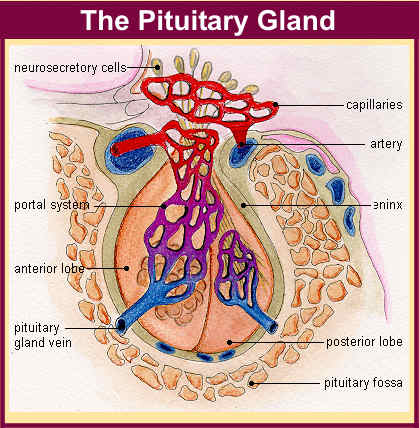
During those years, I suffered frequently from severe frontal headaches, which were the result of a pituitary tumor (chromophobe adenoma) pressing on my optic nerve. The attacks occurred on 50% of all days, with the “penumbra” of the headache beginning around 11 am and reaching a crescendo around midnight. That’s why I did most of my homework before midnight and 3 am. It was not until after I graduated that I was properly diagnosed: Until then, doctors did not know what to think—especially since MRIs and CT Scans had not yet been invented.

Pain and all, I loved Dartmouth. The quality of the instructors was, for the most part, incredibly high. Particularly in the English department, I had a succession of professors I will never forget: men like Chauncey Loomis, Peter Bien, and Thomas Vance.

At first, I hoped to become an English professor, until the movies turned by head. The Dartmouth Film Society screened great films, including a huge year-round Alfred Hitchcock festival. Plus I made the acquaintance of Arthur L. Mayer, the former “Merchant of Menace” from New York’s Rialto Theater and the author of Merely Colossal (1953). It was while at Dartmouth that I decided to go to graduate school in film history and criticism at UCLA—and that’s how I wound up in La La Land.

Dartmouth College had been founded as a missionary school for Indians in 1769 under the patronage of the Earl of Dartmouth. In 1819, the school made legal history when Daniel Webster argued before the Supreme Court in Trustees of Dartmouth College vs. Woodward, better known as the Dartmouth College Case. President Franklin “Handsome Frank” Pierce graduated from there and went on to become one of the most mediocre presidents in U.S. history.

I will leave you with the official seal of Dartmouth:

“A Voice Crying in the Desert”

“A Voice Crying in the Desert”

The motto was most appropriate considering the school’s winter isolation.


Tarnmoor’s ABCs: Cleveland

My Home Town

My Home Town

Cleveland has not aged well. When I was a grade school student, it was one of the ten largest cities in the United States, famed for its steel, machine-tool building, and automotive support industries. Now it is a fraction of the size, with a large bombed-out crater of a central business district and suburbs stretching across several counties in Northeast Ohio. When I graduated from high school, there was a regular diaspora to … anywhere but Cleveland.

The “Mistake on the Lake.” The “Worst Location in the Nation.” Perhaps the ultimate insult was when Amtrak pondered whether it was worth even stopping at the large underground station in the Terminal Tower, illustrated above. There was a time when the Terminal Tower was the largest building in the country outside of New York City.

Just being from Cleveland makes one feel humble. Wasn’t the movie that Maynard G. Krebs of The Affairs of Dobie Gillis always going to see The Monster That Devoured Cleveland? Well, Cleveland got devoured all right: The monster that devoured it was rampant unemployment.

I can only talk about the Cleveland that was because, after 1962, I spent most of my time elsewhere, either in Hanover, New Hampshire, attending Dartmouth College, or here in Los Angeles, where I seem to have set down roots.

The last time I saw my native city was 1998, when I attended my mother’s funeral. She had died in Kings Beach, California, on the shores of Lake Tahoe; but at her request, my brother and I had the body flown to Cleveland, where it was buried next to my father. After the funeral, my brother and I spent some time driving around our old haunts.

What surprised me more than anything else were the trees! When I lived on East 176th Street in the 1950s, the neighborhood was still relatively new and bare; and the trees were all tiny. By 1998, they were gigantic and imposing. It was actually rather nice. I should probably go back there again, perhaps stopping in on a visit to New York or Boston. Most of the people I grew up with are either elsewhere or under the ground, especially the older generation. So it goes.

Desert Interlude

Sunset in the Anza-Borrego Desert

Sunset in the Anza-Borrego Desert

Before tax season gets too intense, Martine and I will spend a four-day weekend in Southern California’s Anza-Borrego Desert. Occupying the eastern third of San Diego County and stretching roughly from just south of Mount San Jacinto to the Mexican Border, the Anza-Borrego Desert State Park is the largest state park in the United States, and also one of the least known. And, for all its desolation, it is a place of surpassing beauty. Here one can actually sees stars at night—by the million.

If one goes at the right time of year, the desert can be a healing place. What is the right time of year? I would say from late October to late May. During the summer, temperatures can rise to 130 degrees Fahrenheit (or 54.5 degrees Celsius). Only emergency workers and German tourists try to brave the blast furnace heat of a desert summer.

As I do not have a notebook computer (nor do I want access to one at this time), I will not be blogging again until Sunday or Monday.


Zsofi Sebek Returns to Cleveland

My Mother Before She Married

My Mother Before She Married

My mother was actually born in Cleveland, Ohio, but was raised by her grandparents, Daniel and Lidia Toth. Her own mother and father were too feckless to be trusted with the care of a child, and the mother eventually became an alcoholic and ended up at the State Mental Hospital in Pontiac, Michigan. Daniel and Lidia decided that it would be best to bring up their little Zsofi in the Old Country, so they went back to their little farmstead in Felcsut, just southwest of Budapest.

It was not until 1937, when Zsofi was nineteen, that the three returned to Cleveland. Hitler was threatening, and Austria had already fallen. So the Toths and Zsofi sailed on the Queen Mary from Cherbourg to Southampton, England, and from thence to New York. Below is the cover of the passenger list for that sailing:

The Title Page of the Passenger List

The Title Page of the Passenger List

And here, below, is my mother’s name on the passenger list:

Not Quite Spelled Right

Not Quite Spelled Right

The Cunard Lines people who signed her in misspelled her name, as if she were German. In Hungarian, the letter “s” by itself is pronounced as if it were “sh” or “sch” if you’re of the German persuasion.

One would think that my Mom was able to hit the ground running, inasmuch as she was born here. Not quite. She didn’t speak a word of English, and neither did my great grandparents Daniel and Lidia. She had to work as a maid and take night school classes in English before she was able to get hired for a better job. Years later, Mom got a professional certification by a humorous white lie on her application. When asked about her college education, she penciled in, “University of Hakapeszik.” That’s Magyar for “School of Hard Knocks.” P.S.: She got the job.

Osagyefo

O Brave New World!

O Brave New World!!

Like many American boys at the time, I was a “serious” stamp collector. The quotes are because I was enthusiastic, but I probably had nothing in my collection worth more than eighty cents. I remember going to a stamp show at one of the downtown Cleveland hotels where the big event was the release of stamps from a newly independent African country. The former Gold Coast was now Ghana.

There were already several independent nations which had shed their colonial mantles by that time, including Egypt and Sudan. But that was “before my time.” I was frantic to find everything I could about the new nation, with its heroic leader, Kwame Nkrumah, who called himself the “Osagyefo” (see below).. In English, that meant “The Redeemer.”

Kwame Knrumah, the Osagyefo

Kwame Knrumah, the Osagyefo

I had been someone weary of all the British colonial stamps with their profile of Queen Elizabeth II, who at that time was certainly the cutest monarch with which I was acquainted, but I was ready for some novelty.

It didn’t take long for me to be disabused of the Osagyefo. Right around then, Egypt’s Gamel Abdel Nasser tried to rally the leaders of independent (and, presumably, soon to be independent) states to join his movement of non-aligned countries. As Nasser himself was leaning more and more toward the Communists (Oh Horrors!), it wasn’t long before I began to see him as a fellow traveler. Sure enough, after roiling the waters of West Africa for a few years with his increasingly authoritarian rule, he ended up in Romania, where he died in 1972.

Ghana was just the beginning of a rush to independence of former British colonies. After disillusionment with Nkrumah I became a bit more leery about wishing them well. But then I was only a twelve-year-old stamp collector. What did I know?


A Thai Christmas

Martine at the Sala Thai in Chinatown

Martine at the Sala Thai in Chinatown

I had forgotten all about this photo. Although I cook four or five days a week, we didn’t have anything in the refrigerator on Christmas Day, so we had to go out to eat. Now on that Holiest of Holidays, most restaurants of the Euro-American variety are shut tight; so I suggested that we go to Chinatown, where we were sure to find some good restaurants that were open. (It kind of reminds me of that last scene in The Christmas Story, when the whole family goes out to have Peking Duck after the Bumpus’s dogs had demolished their dinner.) Martine and I have always been partial to a little Thai restaurant called the Sala Thai at the corner of Alpine and New High Streets. It is one of the rare Chinatown restaurants that sports an “A” health department inspection rating (see above). Once you step inside, though, it feels as if you were on a side street in Bangkok.

Fortunately, it was open. So while Martine has a chicken pad see ew with broccoli, I had some spicy fish filet with veggies. It was not quite what one thinks about for a holiday dinner, but it was good. Afterwards, we strolled through several souvenir shops and Chinese bakeries in the Chungking Plaza area.

That evening, we also had an interesting dinner experience. The only place we could find open was a Denny’s in Santa Monica. There was a long line—about three quarters of an hour—before we were seated. Apparently, both the waitstaff and the kitchen were short-handed, not having anticipated a high demand for their food on Christmas Day.

I was ready for New Year’s Day. I had cooked a big pot of a vegetarian curry for the week. It was Monica Dutt’s recipe for Gobi Alu aur Matar ki Tarkari, or, as it is also known, Curried Cauliflower, Potatoes, and Green Peas. I had bought some delicious (and spicy) tomato chutney and garlic pickle at India Sweets and Spices in Culver City the Saturday before, and added it to make a delicious entrée. The recipe can be found on page 126 of The Art of Indian Cooking (if you can find a copy of this now rare item).


Auld Lang Whatever

Time to Change Your Calendar

Time to Change Your Calendar

In the accounting profession, we are apt to view New Years Day with a jaundiced eye. It is the beginning of the 100-day Bataan death march that is tax season. For a while, we will have weekends. Then, at some point in February, we begin to work Saturdays. In March, Sundays are also added. That is in a high-rise building with no weekend air-conditioning, unless we pay for it. To add insult to injury, the two national holidays during this period—Martin Luther King Day and Presidents’ Day—are just two more workdays. (The company makes up the time lost later.)

Every year, our clients tend to be later and later in supplying us the information we need to file the returns, and gradually increasing pressure is applied between February 1 and April 15, until the last week is a nightmare of running around, making last-minute changes, and printing numerous copies of multiple hundred page returns.

Not a pleasant prospect.

So, auld lang whatever. Put up a new calendar, start paring away at your social life (such as it is), be sure to get some exercise, and read some good books.