Serendipity: Books and Brain Pickings

“A Marvellously Noble and Transcendent Chimera”

“A Marvelously Noble and Transcendent Chimera”

I do not follow many blog sites; though every once in a while, I find one that is superb. Such is Brain Pickings, which I have now included among my links.

The following observation on reading comes from Hermann Hesse’s My Belief: Essays on Life and Art, by way of Brain Pickings:

The great and mysterious thing about this reading experience is this: the more discriminatingly, the more sensitively, and the more associatively we learn to read, the more clearly we see every thought and every poem in its uniqueness, its individuality, in its precise limitations and see that all beauty, all charm depend on this individuality and uniqueness — at the same time we come to realize ever more clearly how all these hundred thousand voices of nations strive toward the same goals, call upon the same gods by different names, dream the same wishes, suffer the same sorrows. Out of the thousandfold fabric of countless languages and books of several thousand years, in ecstatic instants there stares at the reader a marvelously noble and transcendent chimera: the countenance of humanity, charmed into unity from a thousand contradictory features.

A Book of Essays I Will Have to Read

A Book of Essays I Will Have to Read

Good books lead everywhere, but especially to places worth going.


Serendipity: Vikings in Black and White

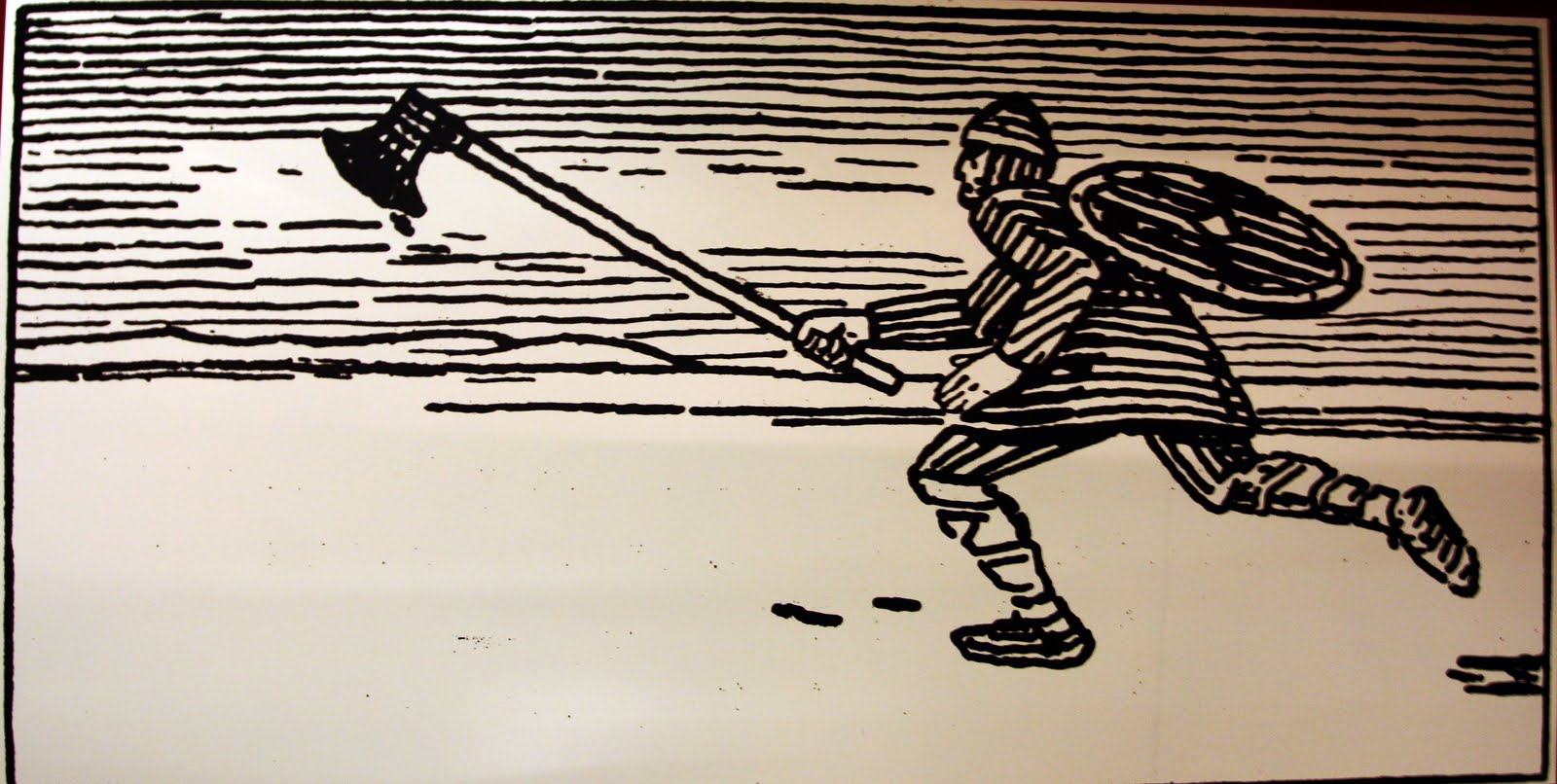
Skarphedinn the Viking Warrior from Njal’s Saga

Skarphedinn the Viking Warrior from Njal’s Saga

It took a blind poet to note something very interesting about Nordic literature at the time of the Vikings. On October 21, 1966, the Argentinian poet Jorge Luis Borges gave a class on Anglo-Saxon literature at the University of Buenos Aires. The book consists of notes recorded by the lecturer’s students and translated and published by New Directions in a volume entitled Professor Borges: A Course on English Literature. When the I read the following this morning at Los Angeles’s Central Library, I had chills up and down my spine:

And further south is what the Norse historians called Blaland, “blue land,” “land of blue men,” or rather Negroes, because they mixed the colors up a little. Besides one word, sölr, which means “yellowed” and is used to describe fallow fields and the sea, they have no colors. The snow is often spoken of, but they never say the snow is white. Blood is spoken of, but they never say it is red. They talk about the fields, but they never say they are green. We don’t know if this is the result of some kind of colorblindness or if it was simply a poetic convention. The Homeric Greeks said “the color of wine.” But we don’t know what color wine was for the Greeks; they don’t talk about colors, either. On the other hand, Celtic poetry that is contemporaneous or prior to Germanic poetry, contains an abundance of colors—it’s full of colors. There, every time a women is mentioned, they speak about her white body, her hair the color of gold or fire, her red lips. They also talk about green fields, and specify the colors of fruits, etcetera. In other words, the Celts lived in a visual world; the Norse did not.

At the time Borges gave this literature, his blindness was almost complete, though he was able to detect the color yellow.

Serendipity: On Dealing With Disappointment

It’s Not Always a Bad Thing

It’s Not Always a Bad Thing

The following insight comes from Tibetan Buddhist teacher Chögyam Trungpa Rinpoche in his book Cutting Through Spiritual Materialism:

We must surrender our hopes and expectations, as well as our fears, and march directly into disappointment, work with disappointment, go into it and make it our way of life…. If we can open, then we suddenly begin to see that our expectations are irrelevant compared with the reality of the situations we are facing. This automatically brings disappointment. Disappointment is the best chariot to use on the path of the dharma. It does not confirm the existence of our ego and its dreams.

This, along with hundreds of other interesting quotes from Tibetan Buddhist teachers, can be found in Reginald A. Ray’s The Pocket Tibetan Buddhism Reader, a shirt-pocket-sized paperback from Shambala.

Serendipity: The More Things Change …

Greek Ruins at Agrigentum in Sicily

Greek Ruins at Agrigentum in Sicily

It was the Sixth Century BC, and Phalaris, the Greek Tyrant of Agrigentum, described a voting public not so different from our own:

The people, as a whole, are undisciplined, senseless, unmanageable, very ready to be turned in any direction whatsoever, faithless, fickle, passionate, treacherous, mistaken, a mere useless noise, and easily swayed toward praise and toward anger.

δῆμος ἄπας ἄτακτος, ἄνους, ἄπρακτος, ἑτοιμότατος ἐφ’ ὅ τι ἂν τύχῃ μεταχθῆναι, ἄπιστος, ἀβέβαιος, ὀξύς, προδοτιχός, ἐψευσμένος, φωνὴ μόνον ἀνωφελής, καὶ πρὸς ἔπαινον καὶ πρός ὀργὴν εὐχερής.

The odd thing was that Phalaris is remembered primarily for his cruelty. He built a hollow brass bull in which he roasted his enemies alive. No less a poet than Pindar described his atrocities a hundred years later.

I owe this quote to my favorite source of the thinkers of past times, especially the Greek and Roman classics, namely: Laudator Temporis Acti.

Serendipity: I Am Flying Home

Flower at the Lake Shrine

Flower at the Lake Shrine

I did some work this morning, but I had the afternoon free. So Martine and I went to the Lake Shrine of the Self Realization Fellowship in Pacific Palisades. It was balm for my troubled mind, which was still frazzled with this morning’s tax problems. While there, I bought a copy of Metaphysical Meditations by the SRF founder and sage, Paramahansa Yogananda. There, I found this quote on page 44, which decided me to buy the book:

Good-bye blue house of heaven. Farewell, stars and celestial celebrities and your dramas on the screen of space. Good-bye, flowers with your traps of beauty and fragrance. You can hold me no longer. I am flying Home.

Adieu to the warm embrace of sunshine. Farewell, cool, soothing, comforting breeze. Good-bye, entertaining music of man.

I stayed long, reveling with all of you, dancing with my variously costumed thoughts, drinking the wine of my feelings and my mundane will. I have now forsaken the intoxications of delusion.

Good-bye, muscles, bones, and bodily motions. Farewell, breath. I cast thee away from my breast. Adieu, heartthrobs, emotions, thoughts, and memories. I am flying Home in a plane of silence. I go to feel my heartthrob in Him.

I soar in the plane of consciousness above, beneath, on the left, on the right, within and without, everywhere, to find that in every nook of my space-home I have always been in the sacred presence of my Father.

Serendipity: Two Armies

Russian Spetznaz Special Forces Troops in Camouflage

Russian Spetznaz Special Forces Troops in Camouflage

I saw this passage in an introduction by Robert D. Kaplan, who was quoting French military writer Jean Lartéguy’s The Centurions:

I’d like … two armies: one for display, with lovely guns, tanks, little soldiers, fanfares, staffs, distinguished and doddering generals, and dear little regimental officers … an army that would be shown for a modest fee on every fairground in the country.

The other would be the real one, composed entirely of young enthusiasts in camouflage battledress, who would not be put on display but from whom … all sorts of tricks would be taught. That’s the army in which I should like to fight.

The first army would be huddled in the Green Zone or Bagram AFB, eating pizzas and drinking Cokes. Whenever they would venture out in force, they would be blown to smithereens without ever having seen the face of their enemy.

The second army was the one that bagged Osama bin Laden at Abbottabad and that will defeat ISIS if ISIS is ever to be defeated.

By the way, do not underestimate the French military. They are not all “surrender monkeys,” as some Americans would have it. It was the first army—the parade ground army—that surrendered at Sedan and Dien Bien Phu.

Serendipity: Byron—Pessimism or Optimism?

Thunderstorm Spectator at Tofino on Vancouver Island

Thunderstorm Spectator at Tofino on Vancouver Island

I have been reading G. K. Chesterton’s early book, Twelve Types (1902), and found this fascinating discussion of Byron’s curious joy in … pessimism?

Now Byron had a sensational popularity, and that popularity was, as far as words and explanations go, founded upon his pessimism. He was adored by an overwhelming majority, almost every individual of which despised the majority of mankind. But when we come to regard the matter a little more deeply we tend in some degree to cease to believe in this popularity of the pessimist. The popularity of pure and unadulterated pessimism is an oddity; it is almost a contradiction in terms. Men would no more receive the news of the failure of existence or of the harmonious hostility of the stars with ardour or popular rejoicing than they would light bonfires for the arrival of cholera or dance a breakdown when they were condemned to be hanged. When the pessimist is popular it must always be not because he shows all things to be bad, but because he shows some things to be good. Men can only join in a chorus of praise even if it is the praise of denunciation. The man who is popular must be optimistic about something even if he is only optimistic about pessimism. And this was emphatically the case with Byron and the Byronists. Their real popularity was founded not upon the fact that they blamed everything, but upon the fact that they praised something. They heaped curses upon man, but they used man merely as a foil. The things they wished to praise by comparison were the energies of Nature. Man was to them what talk and fashion were to Carlyle, what philosophical and religious quarrels were to Omar, what the whole race after practical happiness was to Schopenhauer, the thing which must be censured in order that somebody else may be exalted. It was merely a recognition of the fact that one cannot write in white chalk except on a blackboard.

Surely it is ridiculous to maintain seriously that Byron’s love of the desolate and inhuman in nature was the mark of vital scepticism and depression. When a young man can elect deliberately to walk alone in winter by the side of the shattering sea, when he takes pleasure in storms and stricken peaks, and the lawless melancholy of the older earth, we may deduce with the certainty of logic that he is very young and very happy. There is a certain darkness which we see in wine when seen in shadow; we see it again in the night that has just buried a gorgeous sunset. The wine seems black, and yet at the same time powerfully and almost impossibly red; the sky seems black, and yet at the same time to be only too dense a blend of purple and green. Such was the darkness which lay around the Byronic school. Darkness with them was only too dense a purple. They would prefer the sullen hostility of the earth because amid all the cold and darkness their own hearts were flaming like their own firesides.

I am reminded of a curious form of tourism in Canada: winter storm watching, which reaches its peak at the Vancouver Island resort of Tofino.  When I am finished spending my winters working on tax preparation, I am tempted to take a room at Wickanninish Inn on Chesterman Beach some five miles south of Tofino and watch the storm and waves hurl themselves at me.

Chesterton got it right. I feel the same way.

Serendipity: A Snark-y Response

The Snark at the Dock

The Snark at the Dock

The following comes from the Foreword of Jack London’s The Cruise of the Snark:

Our friends cannot understand why we make this voyage.  They shudder, and moan, and raise their hands.  No amount of explanation can make them comprehend that we are moving along the line of least resistance; that it is easier for us to go down to the sea in a small ship than to remain on dry land, just as it is easier for them to remain on dry land than to go down to the sea in the small ship.  This state of mind comes of an undue prominence of the ego.  They cannot get away from themselves.  They cannot come out of themselves long enough to see that their line of least resistance is not necessarily everybody else’s line of least resistance.  They make of their own bundle of desires, likes, and dislikes a yardstick wherewith to measure the desires, likes, and dislikes of all creatures.  This is unfair.  I tell them so.  But they cannot get away from their own miserable egos long enough to hear me.  They think I am crazy.  In return, I am sympathetic.  It is a state of mind familiar to me.  We are all prone to think there is something wrong with the mental processes of the man who disagrees with us.

The ultimate word is I LIKE.  It lies beneath philosophy, and is twined about the heart of life.  When philosophy has maundered ponderously for a month, telling the individual what he must do, the individual says, in an instant, “I LIKE,” and does something else, and philosophy goes glimmering.  It is I LIKE that makes the drunkard drink and the martyr wear a hair shirt; that makes one man a reveller and another man an anchorite; that makes one man pursue fame, another gold, another love, and another God.  Philosophy is very often a man’s way of explaining his own I LIKE.

Serendipity: Who’s Afraid Like Virginia Woolf?

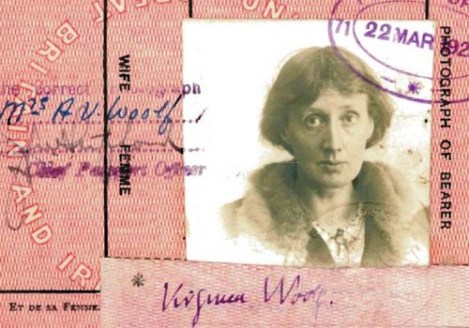
British Author Virginia Woolf

British Author Virginia Woolf

The following is the beginning of a book review by Linda Colley of Jenny Uglow’s In These Times: Living in Britain Through Napoleon’s Wars, 1793-1815. The review is entitled “Facing Napoleon’s Own EU” and can be found in the November 5, 2015 issue of The New York Review of Books.

Throughout 1940, Virginia Woolf struggled with the terrors and mysteries of war. Neither of the Woolfs knew that their names were on the “black list” of Britons set to be arrested—and presumably killed—in the event of a successful Nazi invasion, but since [husband] Leonard was Jewish, the couple prepared for the worst. They hoarded gasoline in their garage so as to be able to kill themselves by inhaling carbon monoxide, and took the further precaution of of acquiring a deadly dose of morphine from a friend. But none of this protected them from hearing Hitler’s voice over the radio, or the noise of German bombers flying over their London house at night, rattling its windowpanes.

“Here they are again,” wrote Virginia in a famous essay published five months before her suicide. “It is a queer experience lying in the dark and listening to the zoom of a hornet which may at any moment sting you to death.” Earlier, she had written about how different all this was from British experience of the Napoleonic Wars. Both Jane Austen and Walter Scott lived through these conflicts, she noted, yet neither had mentioned it in their novels. This, she thought, demonstrated “that their model, their vision of human life, was not disturbed or agitated or changed by war. Nor were they themselves…. War were then remote:; wars were carried on by soldiers and sailors, not by private people.”

Unfortunately, Woolf was particularly prey to depression. Her house in London was destroyed by bombing, and her most recent book (a biography of her friend Roger Fry) was not well received. On March 28, 1941, she loaded her pockets with heavy stones and walked into the River Ouse, drowning herself. Her body was not found until weeks later. In her last note to her husband, she wrote:

Dearest, I feel certain that I am going mad again. I feel we can’t go through another of those terrible times. And I shan’t recover this time. I begin to hear voices, and I can’t concentrate. So I am doing what seems the best thing to do. You have given me the greatest possible happiness. You have been in every way all that anyone could be. I don’t think two people could have been happier till this terrible disease came. I can’t fight any longer. I know that I am spoiling your life, that without me you could work. And you will I know. You see I can’t even write this properly. I can’t read. What I want to say is I owe all the happiness of my life to you. You have been entirely patient with me and incredibly good. I want to say that—everybody knows it. If anybody could have saved me it would have been you. Everything has gone from me but the certainty of your goodness. I can’t go on spoiling your life any longer. I don’t think two people could have been happier than we have been.

So when you hear about ISIS and Donald Trump’s latest outrage, remember that it is still possible to survive, and even prevail. I look at Virginia Woolf’s face and cannot help falling in love with it.


Serendipity: Documents of the Ultra-Terrain World

“Blue Harbor” by Xul Solar

“Blue Harbor” by Xul Solar

While in Buenos Aires last month, I visited the museum of painter Xul Solar, friend of Jorge Luis Borges. It was Borges who wrote the prologue to the museum’s catalog, which is reproduced here in its entirety:

Man versed in all disciplines, curious of all enigmas, father of writings, languages, utopias, mythologies, guest of hell and heavens, chessplayer author and astrologist, perfect in indulgent irony and friendly generosity, Xul Solar is one of the most outstanding events of our epoch. There are minds which profess the truth, others indiscriminate abundance: the large creativity of Xul Solar does not exclude the strict honesty. His paintings are documents of ultra-terrain world, of metaphysical world in which gods take the form of the imagination of the ones dreaming. The passionate architecture, the happy colours, the many circumstantial details, the labyrinths, the dwarves and angels unforgettably define this delicate and monumental art.

The taste of our time vacillates between the more lineal preference, the emotive transcription and the realism of wall painters: Xul Solar renews, in his ambitious way of being modest, the mystic painting of the ones who do not see with physical eyes in the sacred world of Blake, Swedenborg, yogis and bards.