Thor the Thunderer

Storm Off the Island of Hoy, Orkney, Scotland

For many years, Scottish writer and poet George Mackay Brown wrote a column for the local newspaper of the Orkney Islands, The Orcadian. The following column from his collection Rockpools and Daffodils: An Orcadian Diary 1979-1991. describes a once-in-a-generation thunderstorm:

I think we have never had a thunderstorm like it this generation in Orkney.

We had almost forgotten what a thunderstorm was. A few warnings lingered in the memory. ‘Cover the mirrors’ … ‘Don’t take shelter under a tree’ … Someone had said to us as children, ‘The lightning won’t strike if you wear rubber boots.’ … (Old wives’ mutterings beside the fire, half-forgotten.)

I suppose we ought to have been prepared for thunder—day after day of sunshine, a still brooding loaded atmosphere, no rain for weeks.

We were so thankful for early tokens of a good summer, no-one was complaining.

It came with dramatic suddenness, between breakfast and lunch. The darkening sky, the first vfew rain-drops heavy as coins, a low growl across the sky (as if Thor wasn’t in the sweetest of tempers). But Thor, in the last two or three decades, has occasionally given a growl or two on a summer day, and turned over to sleep again.

Thor the Thunderer had urgent things to do today, it soon became obvious. He had business on his hands. His mighty hammer thudded on the hills, amid flashings.

The clouds were torn apart. Black bags of water, they emptied themselves upon the town. The gardens, at least, must have loved it, after the long drought. One could sense the roots gorging themselves.

The stones of Stromness [Brown’s home town] could do nothing with the sudden weight of water. The gutters gushed and spluttered. Down the Distillery close came a river of water, and swung south. The lightning was mostly vivid blinks, followed at once by peal upon peal. Hundreds of tons of coal were being shifted along the horizon. There was a mighty furniture removal in the sky: grand pianos and huge Victorian sideboards. And sometimes it was as if a cannon had exploded by accident in a close or down a pier, a hideous ripping of hot metal.

The cosmic electricity had quelled the little expensive electricity that man makes. I switched on the light in the eerie darkling room—nothing doing.

A candle responded with a tranquil flame.

A golden fork stabbed down and singed Hoy Sound!

After a time it seemed that Thor had finished his mighty labours for the day. The sky brightened, the thunder grumbled under the horizon.

But Thor must have forgotten some tool in his sky-smithy. Back he came and blew up his forge and struck the anvil a few more mighty blows: while we nervous earthlings below trembled. By early afternoon it was all over. We looked at each other in the cleansed air, we spoke to each other, like folk who had had some wonderful, frightening new experience.

Moral Unease

American Writer Renata Adler (Born 1937)

I found the following in Renata Adler’s Pitch Dark, which was published after her first novel, Speedboat:

We have the sins of silence here. Also the sins of loquacity and glibness. We have the sins of moderation, and also of excess. We have our sinner gluttons, and our sinner anorectics. We have the sins of going first, and of After you, Alphonse. We have the sins of impatience, and of patience. Of doing nothing, and of taking action. Of spontaneity and calculation. Of indecision, and of sitting in judgment on one’s peers. We try to be alert here for infractions, and when we find none, we know we have fallen among the sins of oversight, or of smugness. We have the sins of disobedience, and of just following orders. Of gravity and levity, of complacency, anxiety, indifference, obsession, interest. We have the sins of insincerity, and of telling unwelcome truths. We have the sins of ingratitude for our many blessings, and of taking joy in any moment of our lives. We have the sins of skepticism, and belief. Of promptness, and of being late. Of hopelessness, and of expecting anything. Of failing to think of the starving children in India, of dwelling on thoughts about those children, or to Uncle Bill, or Granny, or poor Joel, or whomever we are being asked to take another spoonful for. We have the sins of depression, and of being comforted. Of ignorance, and being well-informed. Of carelessness, and of exactitude. Of leading, following, opposing, taking no part in. Very few of us, it seems fair to say, are morally at ease.

Prose Poem

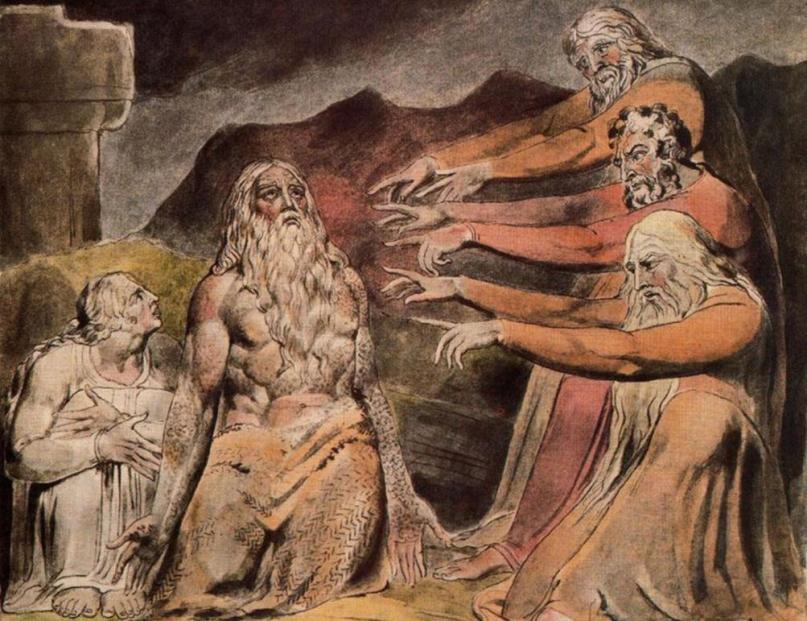
William Blake Illustration from the Book of Job

The following prose poem by Wisława Szymborska is the best treatment I have ever read of the Old Testament Book of Job.

SYNOPSIS

Job, sorely tried in both flesh and possessions, curses man’s fate. It is great poetry. His friends arrive and, rending their garments, dissect Job’s guilt before the Lord. Job cries out that he was righteous. Job does not know why the Lord smote him. Job does not want to talk to them. Job wants to talk to the Lord. The Lord God appears in a chariot of whirlwinds. Before him who had been cloven to the bone, He praises the work of his hands: the heavens, the seas, the earth and the beasts thereon. Especially Behemoth, and Leviathan in particular, creatures of which the Deity is justly proud. It is great poetry. Job listens: the Lord God beats around the bush, for the Lord God wishes to beat around the bush. Job therefore hastily prostrates himself before the Lord. Events now transpire in rapid succession. Job regains his donkeys and camels, his oxen and sheep twofold. Skin grows over his grinning skull. And Job goes along with it. Job agrees. Job does not want to ruin a masterpiece.

—Wisława Szymborska. Poems New and Collected 1957-1997

The Night the Man with the Watermelon Died

The following is from Jack Kerouac’s Doctor Sax, about his youth in Lowell, Massachusetts. Here he describes a sobering scene in his typical jazzy style:

A man carrying a watermelon passed us, he wore a hat, a suit in a warm summer night; he was just on the boards of the bridge, refreshed, maybe from a long walk up slummy swilly Moody and its rantankling saloons with swinging doors, mopped his brow, or came up through Little Canada or Cheever or Aiken, rewarded by the bridge of eve and sighs of stone—the great massive charge of the ever stationary ever yearning cataracts and ghosts, this is his reward after a long dull hot dumb walk to the river thru houses—he strides on across the bridge—We stroll on behind him talking about the mysteries of life (inspired we were by moon and river), I remember I was so happy—something in the alchemy of the summernight, Ah Midsummer Night’s Dream, John a Dreams, the clink of clock on rock in river, roar—old gloor-merrimac figalitating down the mark all spread—I was happy too in the intensity of something we were talking about, something that was giving me joy.

Suddenly the man fell, we heard a great thump of his watermelon on wood planks and saw him fallen—Another man was there, also mysterious, but without watermelon, who bent to him quickly and solicitously as by assent and nod in the heavens and when I got there I saw the watermelon man staring at the waves below with shining eyes (‘Il’s meurt, he’s dying,’ my mother’s saying) and I see him breathing hard, feeble-bodied, the man holding him gravely watching him die, I’m completely terrified and yet I feel the profound pull and turn to see what he is staring at so deadly-earnest with his froth stiffness—I look down with him and there is the moon on shiny froth and rocks, there is the long eternity we have been seeking.

Disaster Zone

Boats Stranded by the Disappearance of the Aral Sea

In the deserts of Central Asia sits the ghost of the Aral Sea. The original sea bed, shared by Kazakhstan and Uzbekistan, is the poster child of decades of neglect. The rivers feeding into the sea were canalized to raise cotton. Very little cotton grows there now. In his Chasing the Sea: Lost Among the Ghosts of Empire in Central Asia, Tom Bissell describes meeting up with a couple of small boys in the eerie desert salt and pesticide-laden atmosphere of a community that used to exist on the shores of the sea.

I sat perched half in and half out of the car. The door was wide open, My chin rested upon the shelf of my hand. The sun was going down, the horizon dyed a Creamsicle orange. I watched a skinny, ravaged-looking dog sniff around various piles of refuse. A dog’s life. Then it occurred to me that American dogs have no idea what a dog’s life is. Suddenly, two little boys appeared from behind one of the houses and approached me. They were brothers, clearly. One was taller and certainly older. The other was small, perhaps five years old. The boy’s head was pumpkin-sized, seemingly twice the circumference of his brother’s, who was regarding me coldly. The younger boy smiled, his teeth cavitied and yellow, his skinny body completely naked and covered in dust. The dust was spread so evenly over his body it seemed deliberately applied. His uncircumcized penis looked like a tiny anteater nose. I smiled back at him. “Ismingiz nimah?” I asked. What is your name?

Before the boy could answer, his older brother inexplicably struck him from behind. The boy flopped face-first in the dust. The shove was two-handed and savage, like something out of provincial hockey. A sound, perhaps “Hey—,” filled my mouth. But I did nothing. The younger brother coughed into the dust. He had landed badly, arms at his sides. Now he tried to get to his feet. His brother placed a foot on his naked bottom and, almost tenderly, pushed him back into the dirt. He stared down, having satisfied some obscure but insatiable impulse, and then walked away. I waited for tears, the shrieks and cries of fraternal terror. But no. Nothing at all. The naked dusty child was silent. The dog trotted over and, as the boy picked himself up, he searched the ground blindly with a small pawing hand. Finally, he stood holding a triangular rock. He turned and threw it at the dog, hitting the creature full in the ribs; the dog flinched but otherwise took the blow in silence. The younger boy simply walked away. I made soft kissing sounds to summon the dog. It was understandably skittish, but I persisted. I did not know what else to do. When it slunk over, head lowered and panting, I saw a red spiderlike creature dug into its collarless neck. I extended my hand. The dog bit me and staggered off.

Sidewalk Contamination

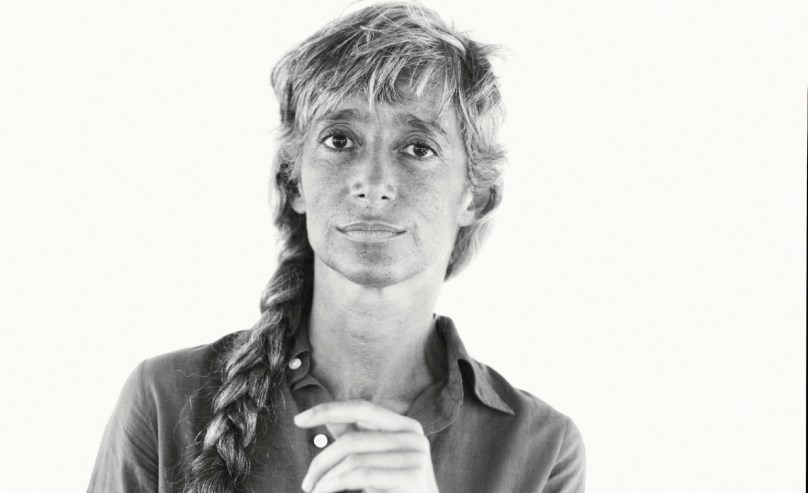
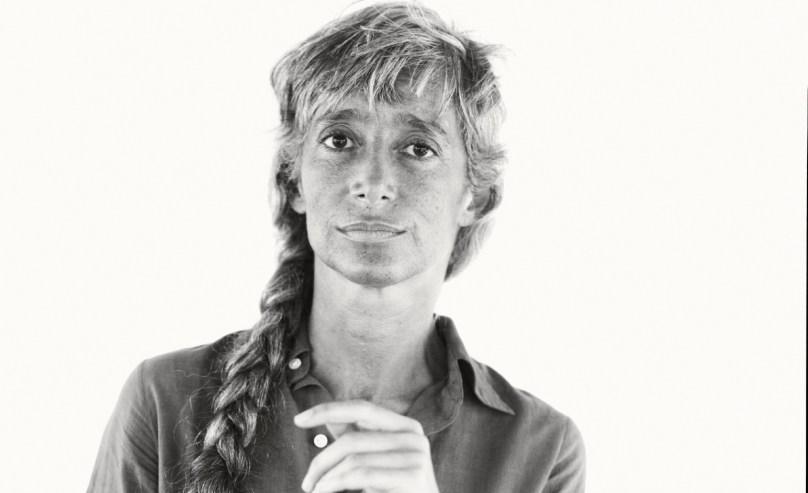
Author Renata Adler (Born 1938)

The following paragraph was pretty much self-contained in Renata Adler’s Speedboat, which consists of hundreds of similar paragraphs, some of which are loosely linked.

Kate was walking along Forty-second Street from the subway station. She saw a tall, young, scholarly-looking man obviously about to say something to her. “Excuse me,” he said at last. He said he was from the Stanford urban-contaminations study. Kate said nothing. “Sidewalks,” he went on, frowning slightly. “Sidewalk contamination.” He said they were working on the right shoes of pedestrians. He wondered whether he might take a slide from hers? Kate nodded. She felt a flash of unease the moment she leaned against a wall and raised her foot to take the shoe off. He was already on the sidewalk, quietly licking the sole. No passerby took any notice. In another moment, he had stood up and walked away.

The Real Thing

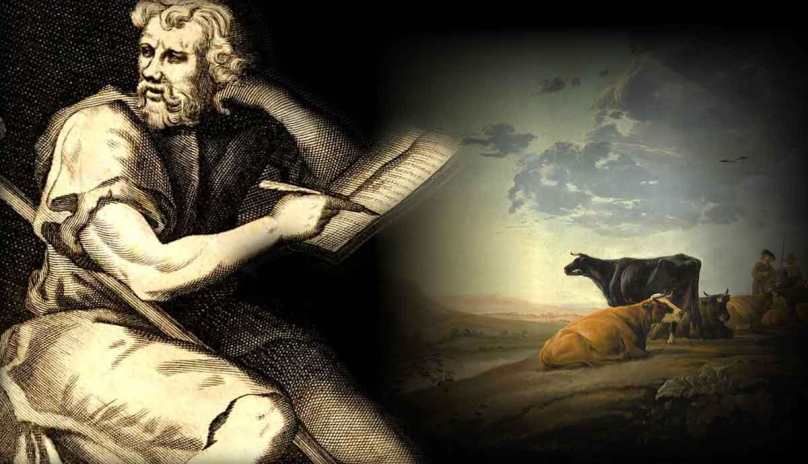
Roman Slave Turned Philosopher Epictetus

In my previous post, I mentioned three Roman Stoic philosophers. One of them was Epictetus (50-135 AD). Here are the opening paragraphs to his most famous work, The Enchiridion:

There are things which are within our power, and there are things which are beyond our power. Within our power are opinion, aim, desire, aversion, and, in one word, whatever affairs are our own. Beyond our power are body, property, reputation, office, and, in one word, whatever are not properly our own affairs.

Now the things within our power are by nature free, unrestricted, unhindered; but those beyond our power are weak, dependent, restricted, alien. Remember, then, that if you attribute freedom to things by nature dependent and take what belongs to others for your own, you will be hindered, you will lament, you will be disturbed, you will find fault both with gods and men. But if you take for your own only that which is your own and view what belongs to others just as it really is, then no one will ever compel you, no one will restrict you; you will find fault with no one, you will accuse no one, you will do nothing against your will; no one will hurt you, you will not have an enemy, nor will you suffer any harm.

Aiming, therefore, at such great things, remember that you must not allow yourself any inclination, however slight, toward the attainment of the others; but that you must entirely quit some of them, and for the present postpone the rest. But if you would have these, and possess power and wealth likewise, you may miss the latter in seeking the former; and you will certainly fail of that by which alone happiness and freedom are procured.

Seek at once, therefore, to be able to say to every unpleasing semblance, “You are but a semblance and by no means the real thing.” And then examine it by those rules which you have; and first and chiefly by this: whether it concerns the things which are within our own power or those which are not; and if it concerns anything beyond our power, be prepared to say that it is nothing to you.

The Way Things Are

English Poet, Writer, and Novelist Walter de la Mare (1873-1956)

Usually, during the month of January, I concentrate on reading the work of authors that I have not read before. Due to illness and wildfires, my reading this month has been mostly nil. As a result of reading an article in the New York Review of Books, however, I have decided on my next new “discovery,” Walter de la Mare. The following quote comes from his Memoirs of a Midget (1921).

Not that in an existence so passive riddles never came my way. As one morning I brushed past a bush of lads’ love (or maidens’ ruin, as some call it), its fragrance sweeping me from top to toe, I stumbled on the carcass of a young mole. Curiosity vanquished the first gulp of horror. Holding my breath, with a stick I slowly edged it up in the dust and surveyed the white heaving nest of maggots in its belly with a peculiar and absorbed recognition. “Ah, ha!” a voice cried within me, “so this is what is in wait; this is how things are”; and I stooped with lips drawn back over my teeth to examine the stinking mystery more closely. That was a lesson I have never unlearned.

The Ghost of New Years Past

Lucky New Year’s Postcard

I’ve said on many occasions, usually around this time of year, that only a fool celebrates the passing of time. Every January 1, take a picture of yourself in your bathroom mirror and note the thinning and graying of your hair, the mottling of your skin, and the network of spidery lines demarcating the zones of your face. Oh, well, it’s all a natural process.

On a more positive note, let’s see what the youthful Charles Dickens wrote about New Years Day in his first book, Sketches by Boz:

Next to Christmas-day, the most pleasant annual epoch in existence is the advent of the New Year. There are a lachrymose set of people who usher in the New Year with watching and fasting, as if they were bound to attend as chief mourners at the obsequies of the old one. Now, we cannot but think it a great deal more complimentary, both to the old year that has rolled away, and to the New Year that is just beginning to dawn upon us, to see the old fellow out, and the new one in, with gaiety and glee.

There must have been some few occurrences in the past year to which we can look back, with a smile of cheerful recollection, if not with a feeling of heartfelt thankfulness. And we are bound by every rule of justice and equity to give the New Year credit for being a good one, until he proves himself unworthy the confidence we repose in him.

This is our view of the matter; and entertaining it, notwithstanding our respect for the old year, one of the few remaining moments of whose existence passes away with every word we write, here we are, seated by our fireside on this last night of the old year, one thousand eight hundred and thirty-six, penning this article with as jovial a face as if nothing extraordinary had happened, or was about to happen, to
disturb our good humour.

Hackney-coaches and carriages keep rattling up the street and down the street in rapid succession, conveying, doubtless, smartly-dressed coachfuls to crowded parties; loud and repeated double knocks at the house with green blinds, opposite, announce to the whole neighbourhood that there’s one large party in the street at all events; and we saw through the window, and through the fog too, till it grew so thick that we rung for candles, and drew our curtains, pastry-cooks’ men with green boxes on their heads, and rout-furniture-warehouse-carts, with cane seats and French lamps, hurrying to the numerous houses where an annual festival is held in honour of the occasion.

We can fancy one of these parties, we think, as well as if we were duly dress-coated and pumped, and had just been announced at the drawing-room door.

Psychological Experiments

John Cleese on Lawyers

I just finished reading John Cleese’s Professor at Large, which reprises a number of talks he gave at Cornell University while he was a visiting Professor-at-Large there over a period of some eighteen years. I broke out laughing when I read the following:

CLEESE: I had to switch to law [at Cambridge University] because there was almost nothing else I could switch to:

INTERVIEWER: So, you’re saying law is easier?

CLEESE: Well, law was kind of easier for me because I am fairly precise with my use of words and I can think in terms of categories, which is all law is—until you start practicing, and then it’s about villainy and low cunning.

I’ll tell you my favorite joke about lawyers because it actually involves universities. The psychological departments of universities are using lawyers now, instead of rats, in their experiments. There are three reasons for this. One is that there are more lawyers than rats. Second, there are some things that rats just won’t do. And thev third is is that there was a bit of a problem because sometimes the experimenters got fond of the rats. And I want you to know that joke has nothing to do with the fact that I am going through an expensive divorce at the moment.