Majális

Celebrating May Day and Mothers’ Day Together

Celebrating May Day and Mothers’ Day Together

On the first Sunday in May, the Grace Hungarian Reformed Church in Tarzana celebrates May Day and Mothers’ Day together. Although we are not members of the church, we regularly show up for some good Hungarian home cooking and some cute children’s singing and recitations.

Available were not only the world-class Magyar pastries, including ground walnut rolls and a lethal type of cream pastry called crémes (pronounced CRAY-mesh), but two kinds of soups—including Hungarian goulash—sausages, flekken, and assorted beverages. You can see the menu in Hungarian below:

Program (and Menu) for the Fesztivál

Program (and Menu) for the Fesztivál

The only unfortunate event is that, toward the middle of he afternoon, I saw one elderly lady trip over a concrete parking stop and break her right shoulder. She was scared and didn’t know what to do, but one of the parishioners drove her to a the hospital. It was eerie actually seeing the same sort of thing that happened to me happen to someone else. Except that I was in the company of a friend who is a nurse for the county and who knew exactly what to do. It’s no picnic, especially at her advanced age.



The Fragrance of Spring

Jasminum polyanthum

Jasminum polyanthum

Now that tax season is over, and I am slowly coming back to normal after my broken shoulder ordeal, I am beginning to notice some of the more beautiful aspects of spring in Southern California. For me, spring in L.A. means jacaranda trees in bloom with their purple flowers. But I have written about jacarandas before—and noted that they originated in Argentina or Bolivia.

What I want to talk about today is the variously called white jasmine, pink jasmine, or—to be scientific about it, Jasminum polyanthum. Everywhere I go, there seems to be sturdy jasmine bushes with their aromatic blossoms, which last into the beginning of summer, as do the jacaranda blossoms by the way.

In a 2013 post, I misidentified our jasmine bushes as Star Jasmine, or Trachelospermum jasminoides. The Los Angeles Times set me straight in an article entitled “Jasmine, the Fragrant Harbinger of Spring.”

I love to pinch a few jasmine blossoms off the bush, rub them in my hands, and bring the sweet-smelling mixture to my nose. In my experience, only lilacs have a stronger and sweeter scent. I don’t have to go far: There is a sturdy bush right at the foot of the stairs to my second-floor apartment.

Like the jacaranda, the white jasmine is an invasive plant, but a welcome one. According to Wikipedia, it originated in the area around China and Myanmar.


Emeric Toth and the City

Emeric Toth Is My Alter Egp

First Impressions of a Megalopolis

This posting is reprinted from Yahoo! 360 from February 2009, when I wrote some quasi-fictional pieces starring my alter ego, one Emeric Toth.

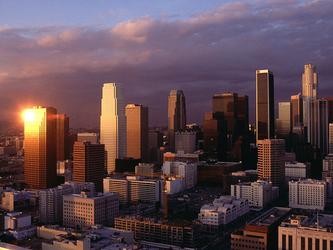
What was there to love about this city? Ten million plus people living their lives on a series of shelves between the mountains and the sea. Most of the time, the sun beat down relentlessly on the people, the buildings, and the gigantic road network that radiated like octopus appendages out from the center. When he first arrived there over forty years ago, Emeric Toth heard Los Angeles described as seventy-five towns in search of a city. He remembered the confusion on the ride to his first apartment from Union Station. He started downtown, went some five miles and—bam!—there was another downtown by Hollywood. A few miles further and—bam!—another downtown by a new place called Century City.

He had heard about the strangeness of the place and its inhabitants, who lived in metastasizing suburbs that stretched out for miles in every direction but one: The sea was an effective barrier.

The new state governor was an actor named Ronald Reagan, whom Toth had seen co-starring with a chimpanzee in Bedtime for Bonzo (1939). The whole hippie thing was just beginning, which he traced with some amusement in the weekly newspaper called the Los Angeles Free Press, or Freep for short. The Vietnam war was just beginning to arouse massive resentment: In just two short years, Johnson would refuse to run for a second term because he felt tainted by the war. That’s when presidents cared what people thought.

So many things have changed, most notably Emeric Toth himself. The city was still recognizably the same, grimier in some instances, and new and shiny in others. He sat at a local café slowly savoring a small pot of Darjeeling tea as he watched the young people chattering away at adjacent tables. In another forty years, those kids would still be there, drinking whatever the beverage of choice would be, but he himself would not be. But some part of himself would be still be attenuated and distributed across the hundreds of square miles of buildings and freeways and occasional green spaces and towering peaks (if they’ll be able to see them then) and above all that dark green and black ocean whose waves break endlessly on the shore of Santa Monica Bay.

Turtles—But No Rain

Turtles at Mulberry Pond

Turtles at Mulberry Pond

There is a Native American rain ritual involving turtles, which, being a Hungarian American, I feel would not work if I performed it. So I watched the turtles at Descanso Gardens, which seemed to be having a population explosion. Maybe they’re doing the rain turtle ceremony themselves; and maybe, later in March, we will have a proper inundation.

I have come to suspect, however, that weather forecasters are evil sorcerers. Whenever we get some measurable rain, and we’ve had more so far than last year at this time, I believe that the forecasters suck it all up for filling their swimming pools. They take such pleasure in telling us after every rain that it did nothing to relieve the drought: In fact, it probably made it worse.

Then, whether the weather gets hot and dry, they take even more pleasure in announcing how lovely the weather is, what with all the surrounding brown hillsides with are bound to catch fire in the fall.

There’s more here than meets the eye!

Tulpomanie

That’s Dutch for “Tulip Mania”

That’s Dutch for “Tulip Mania”

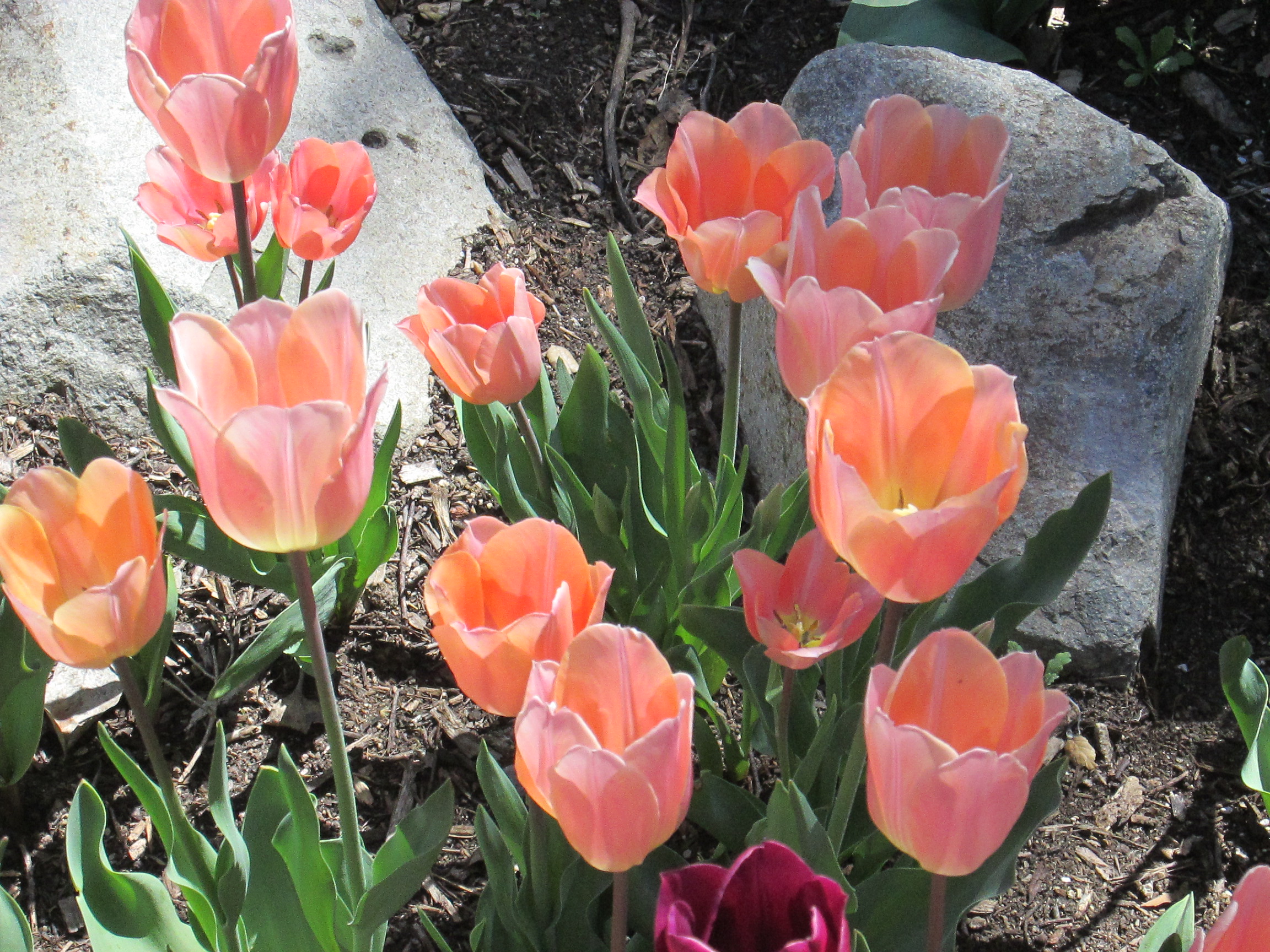
Tulips are my favorite flowers. Sadly—in Southern California anyhow—they are in bloom only during the months of March and April. Wouldn’t you know it: That’s just when I am most occupied doing overtime work on taxes. When I got an e-mail from Descanso Gardens saying the tulips were in bloom, I wasted no time getting out there with my camera. Even though Martine has not been feeling good lately, the flowers and the warm weather made her feel a little better. As for me, it was a major lift for my spirits.

There was a time in the Seventeenth Century that tulips were big business in the Netherlands. Introduced to Europe late in the previous century from Turkey, tulips spread like wildflower (sorry about the pun). British journalist Charles Mackay wrote a book in 1841 called Extraordinary Popular Delusions and the Madness of Crowds, in which there was a chapter about Dutch tulip mania, or tulpomanie. At its height around 1637, a single bulb for the tulip called “The Viceroy” (see below) cost between 3,000 and 4,200 guilders—this while the average skilled tradesman made around 300 guilders for an entire year.

Catalog Picture of “The Viceyoy” Tulip

Catalog Picture of “The Viceroy” Tulip

If you are interested in reading more, you can still find the Mackay book around, and you may be even more interested in reading Alexandre Dumas Père’s The Black Tulip, which dramatizes the whole tulip mania period in Holland. When the City of Haarlem offers 100,000 guilders to anyone who can produce a black tulip, all hell breaks loose.

Land of Little Rain

Is This Where We’re Headed?

Is This Where We’re Headed?

The title for this post is the same as a that of a classic book by Mary Austin about her life in the Owens Valley. While there is little doubt that deserts can be starkly beautiful—as for instance Death Valley or the National Parks of Southern Utah—it can be frustrating to have forecast rain turn into little more than a dirty drizzle.

I call it a dirty drizzle because there’s only enough rain to smear my windshield when I run my wipers. As my windshield wiper reservoir is leaking and its replacement costs a small fortune for my twenty-year-old Nissan Pathfinder, I spend a good part of .L.A.’s so-called rainy season driving around looking through a coating of dirt.

I have no faith in weather forecasters. Why? Because they are only intent on selling advertising. Therefore, they tend to wildly exaggerate any rain forecast. Even if there’s so much as a 10% chance of showers, newsmen will spend hours telling us to look for the forecast in the next fifteen minutes, er…, half hour, er… hour. What usually happens, the mountains to the north of us get the rain, or the deserts beyond the mountains. What we get, at most, is a pittance.

People in the Northeast must be looking at us with ill-suppressed envy, as they struggle with snow and cold and “polar vortexes,” whatever those are. In the meantime, we continue to dry out. Our state’s agriculture, once the envy of the nation, is looking at a potential dust bowl.

“Heart of Oak”

The Oak Forest at Descanso Gardens

The Oak Forest at Descanso Gardens

“Heart of Oak” is and has for more than 200 years been the official march of the Britain’s Royal Navy. If you want to hear the lyrics, see below:

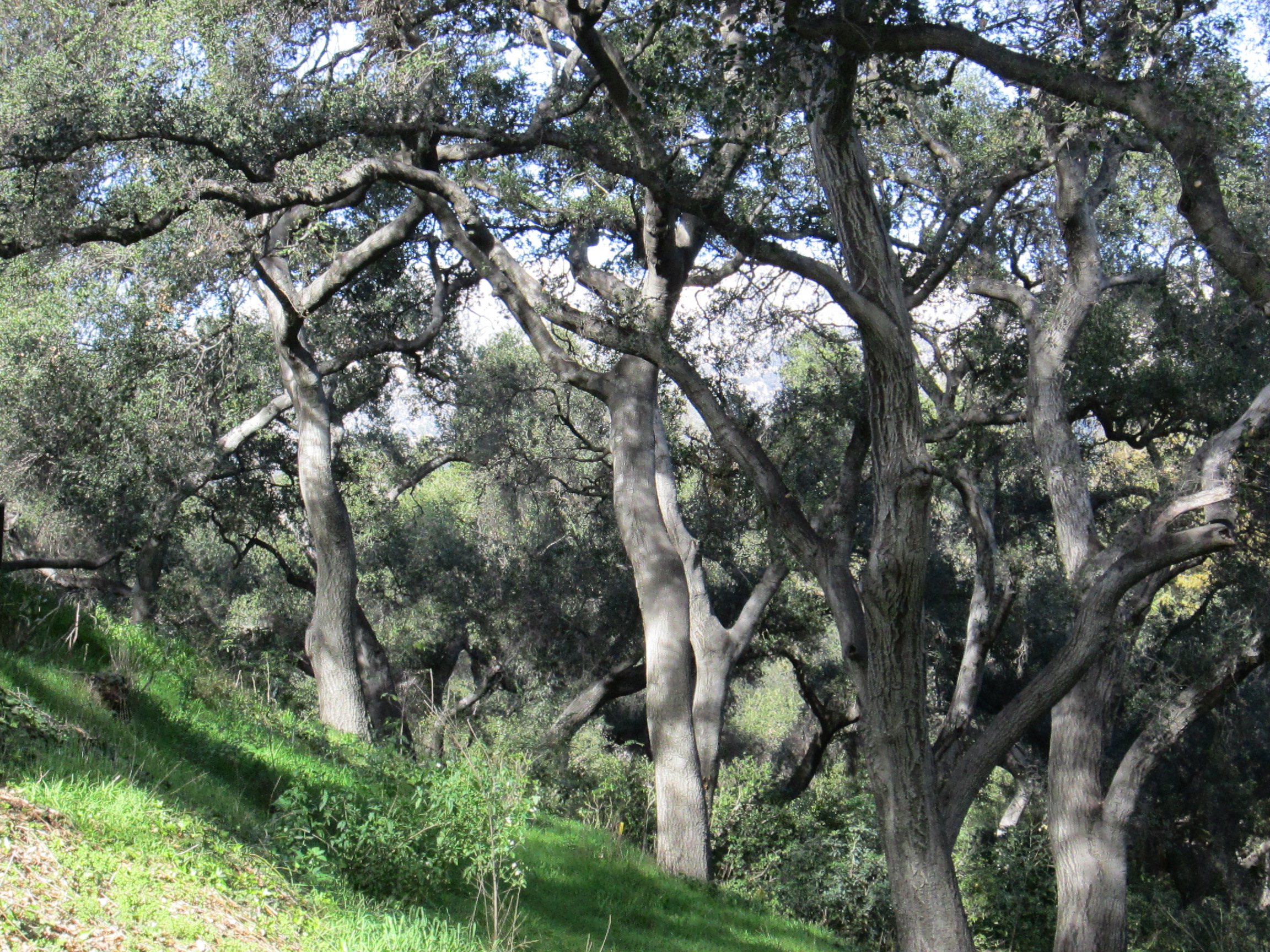
For me, the connotation is somewhat similar: There is something about oak trees that exude both strength and beauty. At Descanso Gardens in La Cañada-Flintridge, there is a massive oak canopy protecting a host of other plants, most particularly the acres of camellias that Descanso is famous for. According to the park website:

Experience the giants in the Descanso landscape, the Coast live oaks (Quercus agrifolia). These trees, some centuries old, are the remainder of a forest that once blanketed the region. The Coast Live Oak typifies the natural Southern California coastal landscape. These trees are flowering plants and belong to the beech family (Fagacea). There are 19 species of Quercus native to California. The Coast Live Oak is an evergreen tree oak. Its natural distribution ranges from California’s Mendocino County along the Coast Ranges down to northern Baja California.

The Coast Live Oak is known as a “keystone species,” meaning that the tree supports the existence of hundreds of other species, including mammals, birds, insects, fungi, plants, and even reptiles and amphibians. The Tongva [Gabrielino] people who made this region their home relied on acorns as an important food source. The importance of the Coast live oak in the interconnected web of life cannot be overstated.

For me, the oak forest is the principal year-round draw. Because California is in the middle of a drought, the camellias are not as lush as in previous years, but the oaks are always evergreen. The pattern of intersecting branches as in the above photo are Zen-like in heir intensity and always make my heart glad.

Boxing Day at the Hart

The William S. Hart House in Newhall, CA

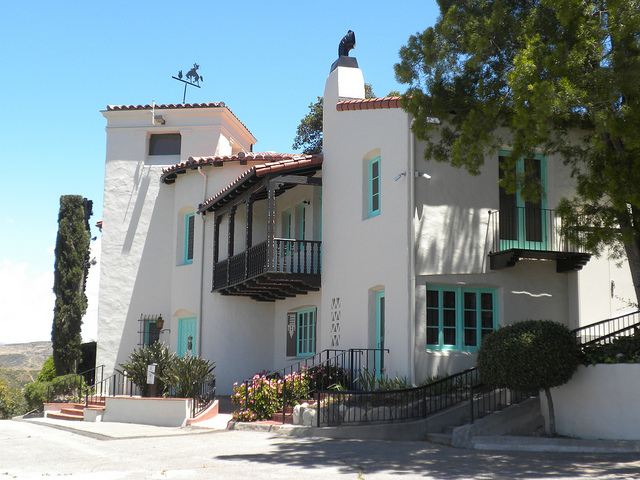
The William S. Hart Ranch House and Museum in Newhall, CA

In the United Kingdom, the day after Christmas is celebrated as Boxing Day. It has nothing whatever to do with pugilism; rather, it commemorates the day that servants and tradesmen received a “Christmas Box”—fortunately, not on their ears—from their employers, by way of a gift.

As today was not a working day for me, Martine and I decided to visit the William S. Hart Ranch and Museum in Newhall. On the way, we decided to try Brett’s Deli in North Hills, but the place was so mobbed at we just wrinkled our noses and shook our heads, proceeding instead to Maria’s Italian Deli in Newhall, where we had a good lunch.

Why do I keep returning to the Hart Ranch? This must easily have been our seventh or eighth visit. Each time, we take the quarter mile trail up the hill for free tour of the house given by a docent. On the way down, we look at the herd of bison donated by the Walt Disney Company to the ranch in 1962. I guess there was something about the silent cowboy star that appeals to me. I still watch his movies. Today, in the old ranch house at the foot of La Loma de los Vientos, the Hill of the Winds, the name of Hart’s property, I viewed the last half of Hell’s Hinges (1916), in which the cowboy star wreaks horrible vengeance on an evil town which kills the preacher with whose sister Hart has fallen in love. Hart was the first big cowboy star.

During the 1980s, I was personally acquainted with the actor’s son, William S. Hart, Jr. He taught real estate at Cal State Northridge (CSUN), and he invited me several times to give a guest lecture on my specialty, the use of census and other government data for site research. (At one time, I was an expert on the subject.)

It was a cold and windy day at La Loma de los Vientos, but not unseasonable. Newhall is near the canyons attached to the transverse mountain ranges that have been the epicenter for so many earthquakes in recent years. They are also a racecourse of the winds originating in the Mojave Desert and blowing the smog out to sea.


Couldn’t They at Least Get Crimea in Exchange?

Russian Yakovlev Yak-3 Fighter from World War Two

Russian Yakovlev Yak-3 Fighter from World War Two

If you’ve seen the above photograph, it was in February 2013 when I wrote a posting about the Museum of Flying in Santa Monica. At the time, I was impressed by the Yakovlev Yak 3 fighter. When Martine and I looked for it today, we were told that the museum gave it as a gift to the Russian people. Did the Russian people give anything in exchange? Not really, but the Russian Consulate in San Francisco did send a Christmas card.

According to one aviation website:

Design began at the end of 1941 of a single-seat fighter using the new VK-107 engine, requiring the least-possible drag, smallest dimensions and weight consistent with a manoeuvrable and tough machine. Due to delays with the new engine and pressure to build the maximum number of aircraft already on the production lines, this new Yak-3 programme was shelved. A new small wing was developed and tested along with other changes on a Yak-1M in late 1942, and the first Yak-3 prototype was flown in late 1943. Although evaluation aircraft flew in combat, the first series Yak-3s did not enter operation with the 91st IAP until July 1944. The Yak-3 was found to be an exceptional dogfighter at altitudes up to 4000m. Its improved performance was remarkable, particularly as the initial non-availability of the VK-107 engine forced reliance to be placed on the VK-105PF-2 that had powered earlier Yaks. Built to a total of 4,848, the Yak-3 achieved fame and a very high score rate against German aircraft in 1944-45. The Yak-3 equipped the famous Free French ‘Normandie-Niemen’ unit, and achieved its peak of perfection when the VK-107A engine of 1268kW became available in limited numbers from August 1944, the type’s maximum speed then improving to 720km/h at 6000m.

Russian fighter pilots and ground crews actually preferred the Yak 3s to the P-51s and Spitfires being sent via Lend Lease. Could it be because the instructions were in Russian?


“Angels We Have Heard on High…”

Christmas Angel at Grier Musser Museum

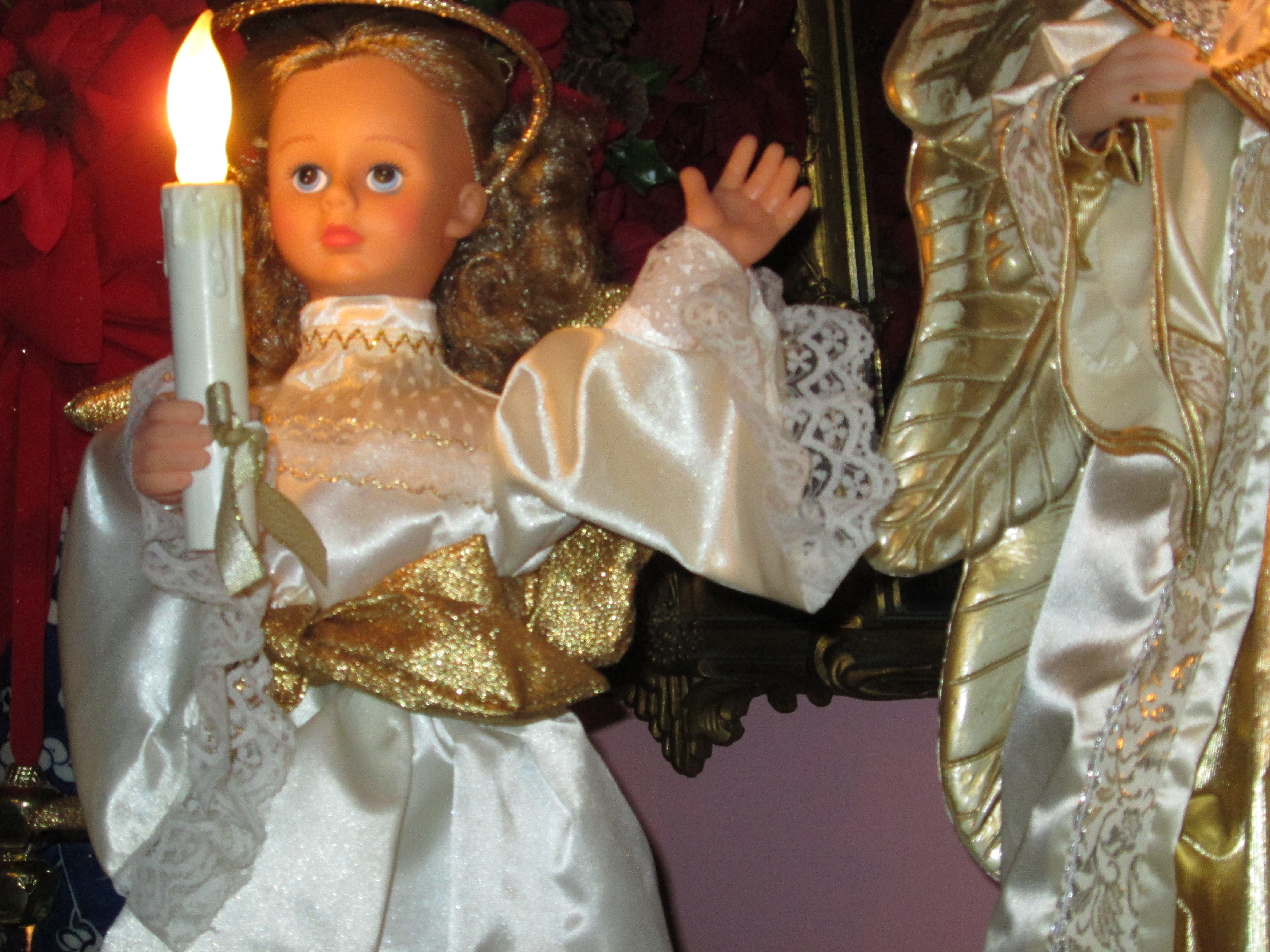
Christmas Angel at the Grier Musser Museum

Martine and I don’t go in for celebrating Christmas in a big way, but we like to visit the holiday show at the Grier Musser Museum and look at all the decorations, some dating back to Victorian times, some as new as yesterday. Susan and Ray Tejada have accomplished no less than providing a popular history of Yule memorabilia. Most of the displays did not cost much at the time they were printed or manufactured, but they are the type of “stuff” that people fill impelled to discard because it tends to fill all the available space.

I have always loved the three candle-holding angels (the leftmost one is in the above photo). They appear with a wide selection of greeting cards, pop-up books, commemorative dishes, figurines, paintings, “Depression glass,” music boxes, and other memorabilia relating to the season.

After we did the tour of the house, Susan took us downstairs to see the two television shows that the late Huell Howser did featuring the Grier Musser Museum. It is unfortunate that Huell, who taught us how to appreciate so much of California, is no longer with us. But it was his influence that led Martine and I to begin visiting the museum, which has become one of our own holiday traditions.