A population may be too crowded, though all be amply supplied with food and raiment. It is not good for man to be kept perforce at all times in the presence of his species. A world from which solitude is extirpated, is a very poor ideal. Solitude, in the sense of being often alone, is essential to any depth of meditation or of character; and solitude in the presence of natural beauty and grandeur, is the cradle of thoughts and aspirations which are not only good for the individual, but which society could ill do without. Nor is there much satisfaction in contemplating the world with nothing left to the spontaneous activity of nature; with every rood of land brought into cultivation, which is capable of growing food for human beings; every flowery waste or natural pasture ploughed up, all quadrupeds or birds which are not domesticated for man’s use exterminated as his rivals for food, every hedgerow or superfluous tree rooted out, and scarcely a place left where a wild shrub or flower could grow without being eradicated as a weed in the name of improved agriculture. If the earth must lose that great portion of its pleasantness which it owes to things that the unlimited increase of wealth and population would extirpate from it, for the mere purpose of enabling it to support a larger, but not a better or a happier population, I sincerely hope, for the sake of posterity, that they will be content to be stationary, long before necessity compels them to it.—John Stuart Mill, Principles of Political Economy

Home » texts (Page 6)
Category Archives: texts
“Not More Foolish Than Any Other Love”
The love of books is really a commendable taste. Bibliophiles are often made fun of, and perhaps, after all, they do lend themselves to raillery. But we should rather envy them, I think, for having successfully filled their lives with an enduring and harmless pleasure. Detractors think to confound them by declaring they never read their books. But one of them had his answer pat: “And you, do you eat off your old china?” What more innocent hobby can a man pursue than sorting away books in a press? True, it is very like the game the children play at when they build sand castles on the seashore. They are mighty busy, but nothing comes of it; whatever they build will be thrown down in a very short time. No doubt it is the same with collections of books and pictures. But it is only the vicissitudes of existence and the shortness of human life that must be blamed. The tide sweeps away the sand castles, the auctioneer disperses the hoarded treasures. And yet, what better can we do than build sand castles at ten years old, and form collections at sixty? Nothing will remain in any case of all our work, and the love of old books is not more foolish than any other love.—Anatole France, The Garden of Epicurus
Ice
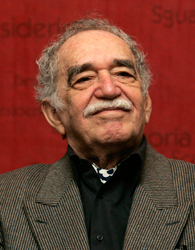
Many years later, as he faced the firing squad, Colonel Aureliano Buendía was to remember that distant afternoon when his father took him to discover ice. At that time, Macondo was a village of twenty adobe houses, built on the bank of a river of clear water that ran along a bed of polished stones, which were white and enormous, like prehistoric eggs. The world was so recent that many things lacked names, and in order to indicate them it was necessary to point. Every year during the month of march, a family of ragged gypsies would set up their tents near the village, and with a great uproar of pipes and kettledrums they would display new inventions. First they brought the magnet. A heavy gypsy with an untamed beard and sparrow hands, who introduced himself as Melquíades, put on a bold public demonstration of what he himself called the eighth wonder of the learned alchemists of Macedonia. He went from house to house dragging two metal ingots and everybody was amazed to see pots, pans, tongs, and braziers tumble down from their places and beams creak from the desperation of nails and screws trying to emerge, and even objects that had been lost for a long time appeared from where they had been searched for most and went dragging along in turbulent confusion behind Melquíades’ magic irons. “Things have a life of their own,” the gypsy proclaimed with a harsh accent. “It’s simply a matter of waking up their souls.”—Gabriel García Marquez, the opening lines of One Hundred Years of Solitude
“Mildness and Complaisance”
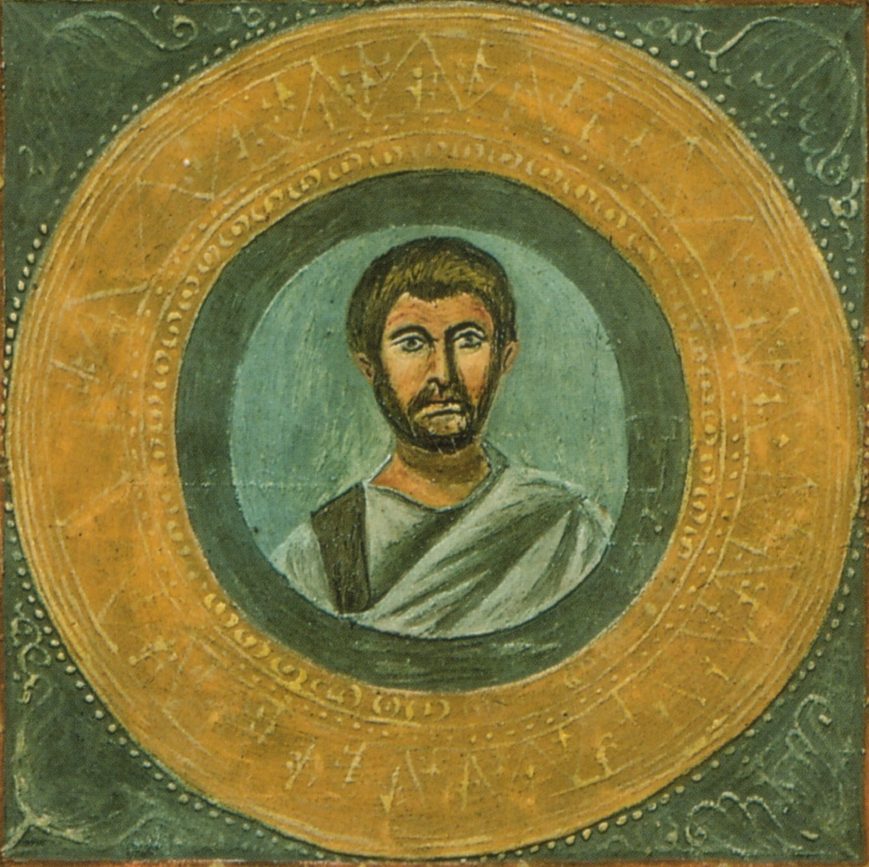
However well a man may have calculated his scheme of life, still circumstances, years, experience, always introduce a new element and teach new lessons. You find that you don’t know what you thought you did know, and what you thought of primary importance that in practice you reject. That’s what has happened to me. The hard life, which up to now I have lived, now that my race is almost run I renounce. And why? Hard facts have taught me that a man can have no better qualities than mildness and complaisance.—Terence, Adelphoe
It’s Greek To Me
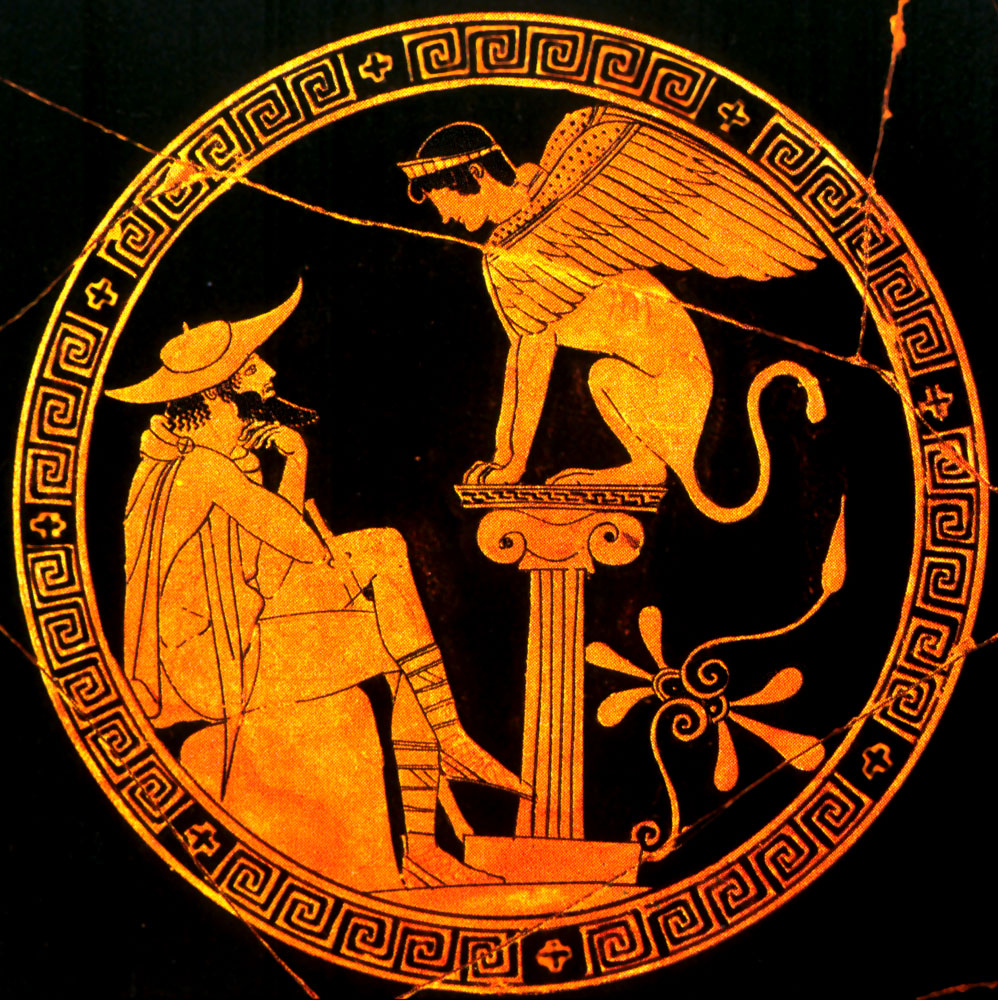
Nothing grows clearer to me year by year than that the nature of the Greeks and of antiquity, however simple and universally familiar it may seem to lie before us, is very hard to understand, indeed is hardly accessible at all, and that the facility with which the ancients are usually spoken of is either a piece of frivolity or an inherited arrogance born of thoughtlessness. We are deceived by a similarity of words and concepts: but behind them there always lies concealed a sensation which has to be foreign, incomprehensible or painful to modern sensibility.—Friedrich Nietzsche, Daybreak, Book III
De Incommodis Senectutis
But even then, if anyone does reach old age, his heart weakens, his head shakes, his vigor wanes, his breath reeks, his face is wrinkled and his back bent, his eyes grow dim and his joints weak, his nose runs, his hair falls out, his hand trembles and he makes silly gestures, his teeth decay, and his ears get stopped with wax. He will believe anything and question nothing. He is stingy and greedy, gloomy, querulous, quick to speak, slow to listen, though by no means slow to anger. He praises the good old days and hates the present, curses modern times, lauds the past, sighs and frets, falls into a stupor, and gets sick. Hear what the poet says: Many discomforts surround an old man. But then the old cannot glory over the young any more than the young can scorn the old. For we are what they once were; and some day we will be what they are now.—Pope Innocent III, On the Misery of the Human Condition
The Bolivians Attack
Were the consequences not so tragic, [Bolivian President Hilarion] Daza’s trek through Tarapacá’s hinterland might provoke coarse laughter. From the onset of his campaign, the general demonstrated an almost monumental incompetence: he refused to hire guides to lead his forces through the unforgiving and unknown wasteland. Rather than travel at night, and thus spare his men from the searing desert sun, Daza instead advanced during the day. (Apparently he feared, with good reason, that his troops might desert under the cover of darkness.) The Bolivian general rejected a Peruvian offer of ambulances, and he ordered his artillery to remain in Arica [to the rear]. Perhaps one of Daza’s most criminally negligent acts was that [of] his refusal to bring sufficient water with him. Worse, he permitted his men to fill their canteens with wine or raw spirits, a disastrous mistake given the fact that the nearest supply of water was a substantial distance away from Arica. Col. Narciso Tablares, alerted by a commissary official that Daza’s expedition would carry only eleven water skins, warned the general that his men might run out of water. When Daza haughtily dismissed these fears with the words “You do what you are told,” Tablares had little choice but to obey.—William F. Sater, Andean Tragedy: Fighting the War of the Pacific, 1879-1884
“Her Impact Was … Very Slight”
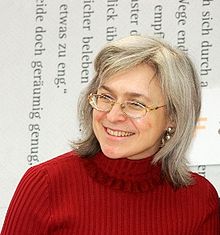
I would like to say a few words on this subject [of Anna Politkovskaya’s murder]. First of all, I would like to say that no matter who committed this crime and no matter what the motives behind it, it was a horribly cruel crime and it cannot go unpunished. There could have been a number of different motives. This journalist was indeed a fierce critic of the current authorities in Russia. But, as the experts know, and as journalists should realise, I think, her impact on Russian political life was only very slight. She was well known in the media community, in human rights circles and in the West, but her influence on political life within Russia was very minimal. The murder of someone like her, the brutal murder of a woman and mother, was in itself an act directed against our country and against the Russian authorities. This murder deals a far greater blow to the authorities in Russia, and in Chechnya, to which she devoted much of her recent professional work, than did any of her publications. This is very clear to everyone in Russia. But, as I said, no matter what the motives behind the perpetrators’ actions, they are criminals and they must be identified, caught and punished. We will do everything necessary to ensure that this is done.—Vladimir Putin, News Conference in Germany, 2006
“The Best Solitary Company in the World”
Here is the best solitary company in the world, and in this particular chiefly excelling any other, that in my study I am sure to converse with none but wise men; but abroad it is impossible for me to avoid the society of fools. What an advantage have I, by this good fellowship, that, besides the help which I receive from hence, in reference to my life after this life, I can enjoy the life of so many ages before I lived! — that I can be acquainted with the passages of three or four thousand years ago, as if they were the weekly occurrences! Here, without travelling so far as Endor, I can call up the ablest spirits of those times, the learnedest philosophers, the wisest counsellors, the greatest generals, and make them serviceable to me. I can make bold with the best jewels they have in their treasury, with the same freedom that the Israelites borrowed of the Egyptians, and, without suspicion of felony, make use of them as mine own. I can here, without trespassing, go into their vineyards and not only eat my fill of their grapes for my pleasure, but put up as much as I will in my vessel, and store it up for my profit and advantage.—William Waller, Divine Meditations: Meditation Upon the Contentment I Have in My Books and Study
Against Oligarchy
You will hear everlastingly, in all discussions about newspapers, companies, aristocracies, or party politics, this argument that the rich man cannot be bribed. The fact is, of course, that the rich man is bribed; he has been bribed already. That is why he is a rich man. The whole case for Christianity is that a man who is dependent upon the luxuries of this life is a corrupt man, spiritually corrupt, politically corrupt, financially corrupt. There is one thing that Christ and all the Christian saints have said with a sort of savage monotony. They have said simply that to be rich is to be in peculiar danger of moral wreck. It is not demonstrably un-Christian to kill the rich as violators of definable justice. It is not demonstrably un-Christian to crown the rich as convenient rulers of society. It is not certainly un-Christian to rebel against the rich or to submit to the rich. But it is quite certainly un-Christian to trust the rich, to regard the rich as more morally safe than the poor. A Christian may consistently say, “I respect that man’s rank, although he takes bribes.” But a Christian cannot say, as all modern men are saying at lunch and breakfast, “a man of that rank would not take bribes.” For it is a part of Christian dogma that any man in any rank may take bribes.—G. K. Chesterton, Orthodoxy


You must be logged in to post a comment.