A 20-Year-Old Fan Letter


Harper Lee (1926-2016)

Harper Lee (1926-2016)

The author of everybody’s favorite book, To Kill a Mockingbird (1960), died today at the age of 89. Most literate Americans revere her memory, even after the recent publication of Go Set a Watchman (2015), in which Atticus Finch is revealed to be a (gasp!) bigot. I take no position on it, however, as I have not read the book; and I find the first reaction to anything by the media is usually wrong.

But what I want to write about is a letter Ms. Lee wrote to cartoonist Berkeley Breathed twenty years ago, when he decided to voluntarily stop publishing “Bloom County,” “Outland,” and “Opus.” It was the character of Opus the Penguin that she would miss the most. Here is the text of the letter as it appeared in Breathed’s Facebook posting today:

Dear Mr. Breathed,

This is a plea from a dotty old lady, and from others not dotty at all: Please don’t shut down OPUS. Can’t you at least give him a reprieve? OPUS is simply the best comic strip there is….

The letter goes on, but that’s all that Breathed shares with us. Fortunately, Opus is back, along with his Bloom County buddies, on Facebook, where I religiously check it each day.
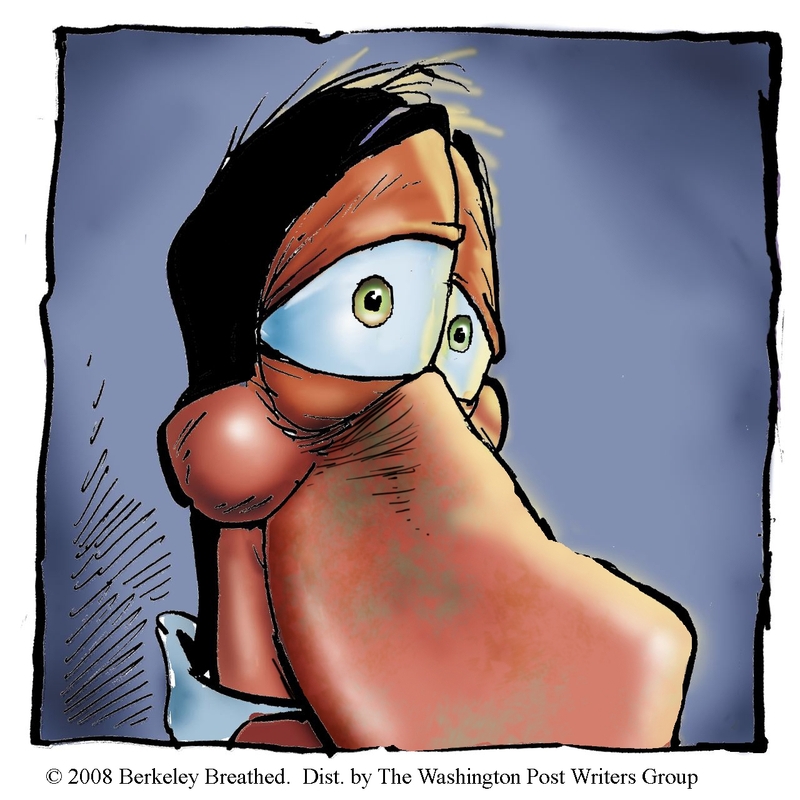
Opus the Penguin

Opus the Penguin

Commenting on her letter, the cartoonist writes:

Bloomers: Many, but not all of you, know that in the way that creative life can often surprise, Harper Lee was one of you. One of us. You might be as surprised as I am that she played a large role in my recent return to the streets of Bloom County—streets inspired by those of Maycomb. When I retired Opus from the Sunday comics some years ago, Harper let me know her displeasure, with all the southern, gracious elegance we knew her for. See the letter below. I’ve waited until her passing to show it. We came to exchange many similar notes… including one in which she grudgingly forgives me for my retirement (irony alert). Imagine my 14 year-old self—freshly savoring the first reading of Mockingbird and sending Miss Lee a fan letter in 1970—being told about another fan letter returning my way almost 40 years distant. Life is wonderful and strange and wistful and happy at the same time. And I’m happy to share this with all of you today.

To follow Opus and his buddies, click here.


Slim Memed

Yasha Kemal (1923-2015)

Yasha Kemal (1923-2015)

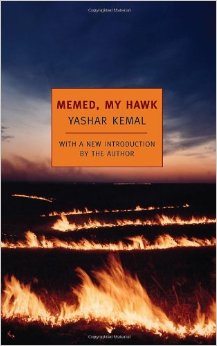
My Turkish friend David urged me to read Yasha Kemal’s Memed, My Hawk (1955). As part of my Januarius program of reading authors I’d never read before, I decided to look into it. It was nothing short of amazing. The following is from my review of the book for Goodreads.Com:

Yashar Kemal is probably the best known author from that most admirable of Middle-Eastern peoples: The Kurds. His Memed, My Hawk is a folk tale of injustice by a cruel landlord turning a young farmer’s son to brigandage. At the same time he is a brigand, he is scrupulously justice, especially when dealing with the poor and the innocent.

“Slim Memed,” as he is called, is a hero created by an author who doesn’t believe in heroes. In his introduction to the New York Review Books edition, Kemal writes:

I have never believed in heroes. Even in those novels in which I focus on revolt I have tried to highlight the fact that those we call heroes are in effect instruments wielded by the people. The people create and protect these instruments and stand or fall together with them.

PICMemedMyHawk

Still and all, Kemal was to write three more books featuring Slim Memed. For the first one, he was shortlisted for the Nobel Prize in Literature in 1973. That award was won by the Australian Patrick White. I think it should have gone to Kemal.

Kemal’s villain is the landlord Abdi Agha, one of the most craven and beastly characters in all of literature. It is not until the end that Memed shoots three bullets into his chest, killing him; but he had been spiritually dead for years after Memed killed his nephew and wounded him.


Neither Rare Nor Well Done

Perhaps the Most Inventive Funnyman in Television

Perhaps the Most Inventive Funnyman in Television

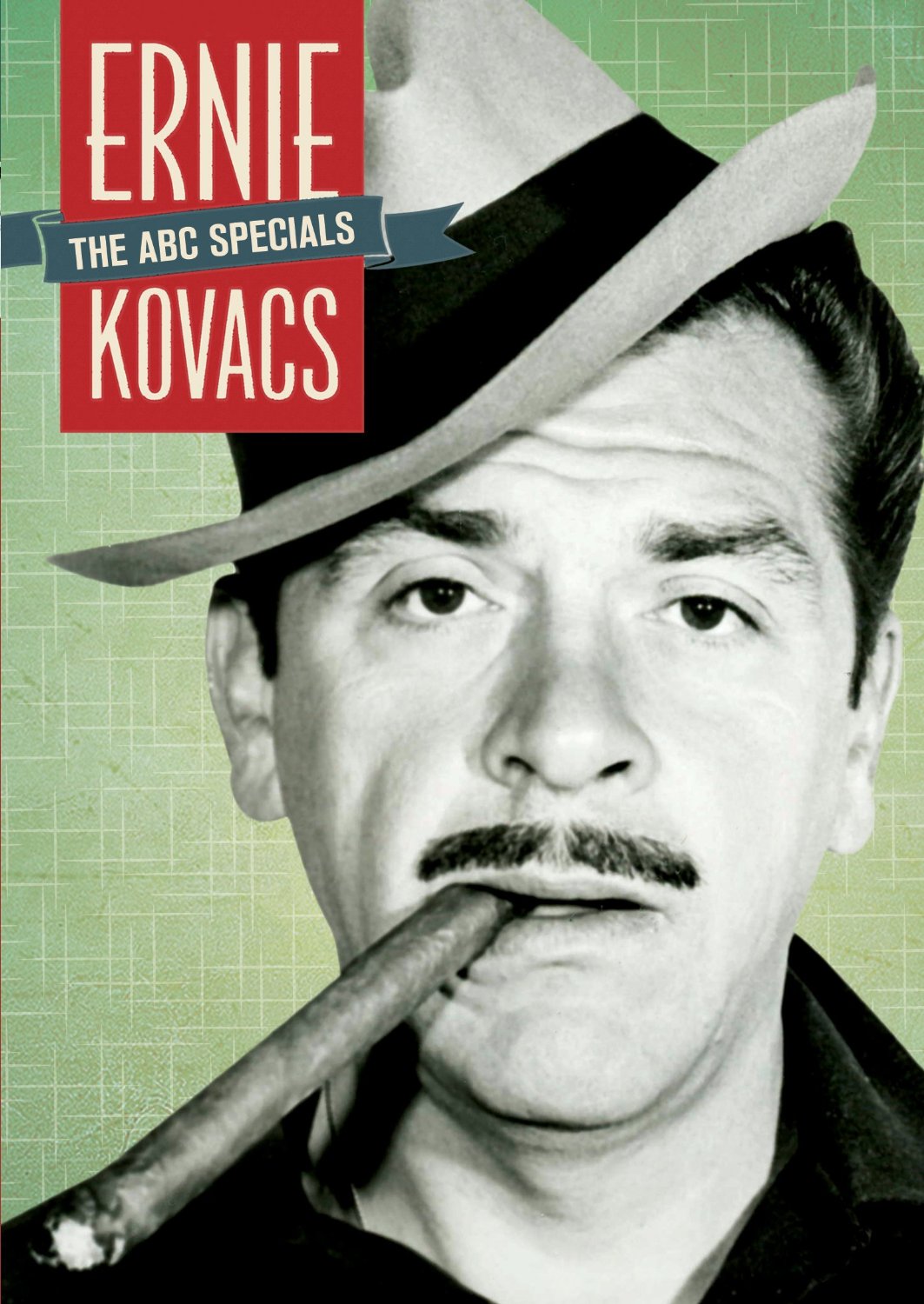
Because it was a drizzly day (courtesy of El Niño), Martine and I spent the afternoon at the Paley Center for Media in Beverly Hills. While Martine was bringing up episodes of “Superman” with George Reeves, Captain Kangaroo, and “My Little Margie,” I was watching a number of episodes of “The Ernie Kovacs Show.”

What Georges Méliès was to the cinema, Ernie Kovacs was to the medium of television: He was brilliantly inventive and something of a magician. All the other comedians on early TV came up from vaudevillian comedy skits, Kovacs started with the new medium itself. He was not only the starring actor: He was also the director and, if the show had one, the main writer.

Music was a recurring unifying theme to the strange collection of cutaways which might include:

  • A cute young woman taking a bubble bath, with strange things happening in the tub
  • The Nairobi Trio, three apes playing music and annoying one another
  • The furniture in an office acting as instruments, from the filing cabinet to the typewriter to the telephone switchboard to the water cooler
  • Artistic variations on a cowboy gun duel

One recurring piece of music used was “Mack the Knife” sung in German, but he has also used the 1812 Overture (during which we cut to Kovacs breaking a stalk of celery at key junctures), and “The Tennessee Waltz” sung in Polish—or was it Slovenian?—while he unsuccessfully lowers a chained escape artist into the river who never manages to re-emerge.

For the three hours that I watched the shows, I was in seventh heaven. Kovacs is a fellow Hungarian (though he, like me, was born in the U.S.), and he occasionally inserts some phrases in Magyar.

On the way home, I drove by the intersection of Santa Monica Boulevard and Beverly Glen where Kovacs died in an auto accident on my seventeenth birthday in 1962.

The one quote that he is remembered for is typical Ernie: “Television: A medium. So called because it’s neither rare nor well done.” Well, when Ernie Kovacs was on the job, it was well done.

Mr. Sulu Has Morphed

Who Says There Are No Second Acts in American Life?

Who Says There Are No Second Acts in American Life?

Mr. Hikaru Sulu of the original Star Trek series has had more lives than a truckload of cats. Since he came out of the closet in 2005, he has become identified with gay causes. I like what he said around that time: “It’s not really coming out, which suggests opening a door and stepping through. It’s more like a long, long walk through what began as a narrow corridor that starts to widen.”

Since then, he has started a Facebook site that is perhaps one of the most popular, most amusing, and—at the same time—one that is at the same time of general interest without yielding one millimeter on his personal beliefs. And now he is coming out with a musical on Broadway called Allegiance about the internment camps for Japanese-Americans during the Second World War. Takei not only directs, but he co-stars.

What is more, as a result of his experiences on he Internet, he has come out with two books: Oh Myyy! (There Goes the Internet) and Lions and Tigers and Bears (The Internet Strikes Back). I have read both books on my Kindle and enjoyed Takei’s wit, which is considerable.

If he keeps going at this pace, and if (God willing) he lives a long and fruitful life, I think we can expect to hear a lot more from “St. George,” slayer of dragons.

Grace Notes

Ex-President Jimmy Carter

Ex-President Jimmy Carter

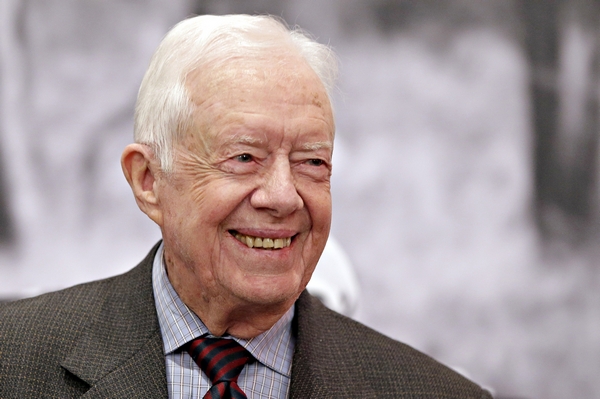
I’m not going to wait for Jimmy Carter to die before giving him the tribute I think he so richly deserves. No man who has served as President of the United States has gone on to have such an inspiring post-political career. He has been a force for good both in the United States (Habitat for Humanity) and across the world (The Carter Center).

In a recent interview, he says he has had a good life, and that the best decision he ever made was marrying his wife Rosalynn. (The worst decision was not sending an additional helicopter to rescue the Iranian hostages.) He is thankful for his life—and millions around the world who have been touched by his good deeds are thankful for his life.

I once worked with Manuel D. Plotkin, who served as Carter’s director of the Bureau of the Census. He recalls once meeting his former boss in a hotel lobby. Upon recognizing him, Carter asked how he feels the 1980 census, which was performed under his watch, came out. Plotkin smiled and said, “It was a resounding success, Mr. President.” Carter smiled and shook his hand, replying, “I’m happy something turned out well.”

Today, as his days dwindle down to a few, Carter is the closest thing we have to a living saint. Never have I seen an Evangelical Christian who not only showed he had something between his ears other than mucus, but demonstrated in his own life a muscular and honest Christianity that serves as a beacon to all men of all faiths. I understand that after his cancer treatments today and tomorrow, he plans to teach Sunday school. I think that what he would have to say would be worth listening to, because who today—especially if he or she has been in politics—has lived the Sermon on the Mount the way he has?

If the Christian heaven truly exists, President Carter, it is because of the efforts and beliefs of men like you!

Carlos Gardel

He Died Eighty Years Ago Today in a Plane Crash

He Died Eighty Years Ago Today in a Plane Crash

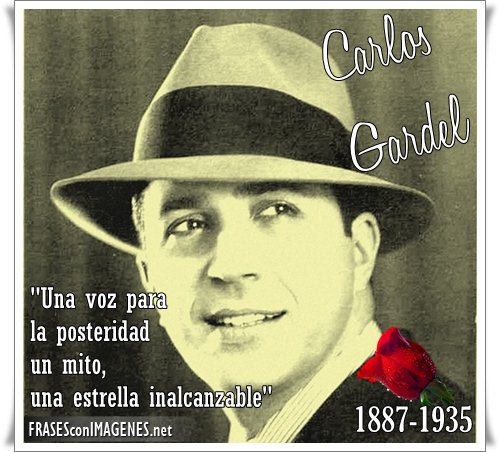
Perhaps the greatest singer Argentina ever produced died eighty years ago today in a plane crash near Medellín, Colombia. The following is a re-post from Multiply.Com dated July 4, 2011:

The most enduring popular music of Argentina and Uruguay is tango. Both countries lay claim to have originated it, though from our point of view, some six thousand miles north of the Pampas, it hardly matters. Suffice it to say that there was one master of the form who from 1917 to 1935 made such a mark that he will never be forgotten.

I am referring to Carlos Gardel (1890-1935), who died in a plane crash near Medellín, Colombia, at the height of his career. According to the Argentina Independent, Gardel’s story comes replete with all the makings of a folk hero: immigrant origins, a middle class upbringing, musical genius, and a tragic death. As is typical of an artist as high profile as Gardel, controversy lingers surrounding the location of his birth: though his lawyer recently presented an original birth certificate of Charles Romuald Gardés, born in Toulouse, France, any Uruguayan will remind you that Gardel often affirmed that he was born in Tacuarembó, Uruguay: “My heart is Argentine, but my soul is Uruguayan, because that is where I was born,” he once declared.

Gardel grew up in the Abasto neighborhood of Buenos Aires, where he attained the affectionate nickname ‘Carlitos’ and learned to sing operas and Argentine folk music while working as a professional applauder in opera houses. He recorded his first tango, ‘Mi Noche Triste’ (My Sad Night) in 1917. Until then, tango had been an almost entirely instrumental form of music. Gardel’s music revolutionised the genre by bringing tango from underground dance salons to upper class and international popularity. His name continues to serve as a synonym for tango, and his songs live on as classics of the modern era.

Perhaps his most famous tango is ‘Por una Cabeza’ (By a Head), which tells the story of a horse-track gambler who is addicted to excitement and romance. Just by happenstance, Gardel recorded his most famous tango on film. You can see it by clicking here.

Whether he was born in France or Uruguay doesn’t matter any more. What matters is what he did to a musical form that took the world by the storm in the 1920s. It all started when Rudolph Valentino made his silent film The Four Horsemen of the Apocalypse in 1921. Audiences wanted to know more about the music that their screen idol was dancing to, and so from the piano score of a silent film it spread like wildfire.

In preparation for my [2011] trip to Argentina, I am loading my MP3 player with tangos by Gardel and others. You might want to see some more of the YouTube videos clips featuring his lyrics sung by him (as opposed to instrumental versions).

The lyrics of the early tangos were written in the lunfardo dialect of Argentinian Spanish (or Castellano), which essentially a form of slang which emerged from the slums of Buenos Aires.

Sir Christopher Lee (1922-2015)

Paying Tribute to “The Prince of Darkness”

Paying Tribute to “The Prince of Darkness”

The 6’4” Englishman was one of the greatest villains in all of the cinema. He reached his apogee in the Hammer horror films made from the late 1950s into the 1970s, with my favorite of his productions being the title character in Dracula Prince of Darkness, released in 1966. More recently, he has played Saruman in the Lord of the Rings and Count Dooku/Darth Tyranus (?!) in the later Star Wars films. I also remember him fondly as Mycroft Holmes in Billy Wilder’s The Private Life of Sherlock Holmes (1970) and Lord Summerisle in The Wicker Man (1973). If you scan his filmography, you will be surprised how many great roles he played over some six decades plus.

What with the film industry being what it is today, there are not a lot of great villains. Now they’re selected more on the basis of having a villainous face rather than any acting talent. One of the reasons for his success is the variety he brought to his parts. As he once said, “One thing to me is very important, if you’re playing somebody that the audience regards as, let’s say evil, try to do something they don’t expect, something that surprises the audience.”

Well, he surprised and delighted me for many years. I will miss him grievously.


“History Never Really Says Goodbye”

We Lost Another Great One Today

We Lost Another Great One Today

There are many great writers who have written powerfully about Mexico, Argentina, Colombia, Chile, and Brazil—but only one who saw Latin America as a whole, saw to the core of its myriad tragedies, and wrote a great body of work analyzing it. That was Eduardo Galeano, who died today in Montevideo, Uruguay, at the age of 74.

I loved what he wrote in Children of the Days: “History never really says goodbye. History says ‘See you later!’”

My favorite of his works is the trilogy Memory of Fire (1982-1986), an anecdotal history of Latin America from before 1492 to the present day, liberally interlarded with quotations and observations. Perhaps, however, he is most famous for The Open Veins of Latin America: Five Centuries of the Pillage of a Continent (1971).

As you may know, I have had a love affair with Latin America since my first visit to Mexico in 1975. In addition to Mexico, I have also visited Peru, Argentina, and Uruguay. And as long as the blood is flowing in my veins, I am planning yet more trips.

In The Open Veins of Latin America, Galeano wrote:

The division of labor among nations is that some specialize in winning and others in losing. Our part of the world, known today as Latin America, was precocious: it has specialized in losing ever since those remote times when Renaissance Europeans ventured across the ocean and buried their teeth in the throats of the Indian civilizations. Centuries passed, and Latin America perfected its role. We are no longer in the era of marvels when face surpassed fable and imagination was shamed by the trophies of conquest— the lodes of gold, the mountains of silver…. Our defeat was always implicit in the victory of others; our wealth has always generated our poverty by nourishing the prosperity of others.

Galeano’s life has been a stressful one. Always a lover of liberty, he fled Uruguay for Argentina in 1973 when a military coup took over his country. Three years later, when the rightist generals rose to power in Argentina, he was off to Spain, from whence he did not return until 1985, when Uruguay restored civilian rule.

At a speech he delivered at the University of Wisconsin, he said, “I tried, I try, to be stubborn enough to go on believing, in spite of all evidences that we humans are badly built, but we are still unfinished.”

The question is: Will we as a species be undone before we are ever finished? If so, we need more writers like Galeano.


The Enigma

Alan Turing on a £10 Banknote (Rejected!)

Alan Turing on a £10 Banknote Design (Rejected!)

No, no such £10 banknote exists. It would have been a nice idea, though. After all, Alan Mathison Turing contributed as much, if not more, to modern life as Albert Einstein, Charles Darwin, or Niels Bohr. During the Second World War, the Germans had an encryption machine which generated a code that was thought to be unbreakable. At Bletchley Park in Buckinghamshire, the British ran a decrypting project whose star quickly became Turing. His solution was brilliant: Create a universal computing machine that could not only solve the code, but ultimately any code constructed along logical lines. Such a machine was referred to as a Turing machine. We now call it a computer.

During the middle of the War, Turing’s machine, called Colossus, began breaking the Nazi code, and continued to do so through the war. The trick was not to react in such a way that the Germans knew that the code was cracked. Bletchley Park worked closely with British MI6 (Military Intelligence, Section 6) to feed selected information carefully to the Russians and to their own allied forces. During the course of the War, the Germans never did find out that they were communicating as much with Sir Winston Churchill as with their forces in the field. It is thought that Turing’s invention saved the lives of millions of men and shortened the war by as much as two years. (It’s not provable, of course, but it’s nice to think so.)

A German Enigma Machine

A German Enigma Machine

Why Alan Turing is not better known is owing to a shameful episode in history. The Cambridge mathematician who was as much of a hero as any allied general in the conflict was a homosexual, and under the laws in Britain, was a criminal. In 1952, he was caught and offered the choice of prison or accepting hormone therapy. He chose the latter, but the result of taking the primitive medicines, he lost his edge as one of the greatest mathematicians in history. In 1956, he committed suicide rather than continue the therapy.

Yesterday, I reviewed The Imitation Game, which tells the story of Turing at Bletchley park. While it simplifies what actually happened, it is in large part true to its subject.


Fade to Black

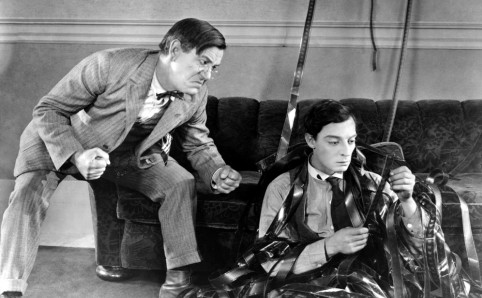
Buster Keaton in Sherlock Jr. (1924)

Buster Keaton (Right) in Sherlock Jr. (1924)

I lost a good friend of forty-six years yesterday morning. Lee Sanders died of pancreatic cancer in a hospice only two blocks from my apartment. Since he was admitted a week and a half ago, Martine and I had taken to visiting him at least every other day.

Searching through my vast archive at Yahoo! Flickr, I am dismayed to find I have no photos of him. I realize now why this is so: Lee was a motion picture projectionist and an avid film goer, so I only ever saw him indoors where I would have had to use flash, which I hate. So I’ll reproduce this scene from the 1924 film Sherlock Jr., with Buster Keaton as a projectionist. I did not want to take any pictures of Lee at the hospice, because he deteriorated so markedly from visit to visit that it saddened me to have to document it. The last day, just hours before his passing, he was barely able to talk articulately; and he was obviously in great discomfort with his swollen left arm, which was elevated on pillows.

Lee had been not only a projectionist, but an officer in IATSE Local 33. He was frequently interviewed about the art of projection and the plight of that art now that digital projectors were being installed in theaters around the country. In a website entitled A Hollywood Job Fades to Black: Film Projectionist, you can hear his voice saying that he intended to be “the last projectionist alive.” Unfortunately, he didn’t make it.

I know union people because my father was a shop steward for MESA in Cleveland. Lee did not quite fit the image: He was articulate, soft-spoken, and scholarly. He spent his spare time seeing great films. His favorites included F. W. Murnau’s Sunrise (1927), John Ford’s The Searchers (1956), and Carl Theodor Dreyer’s Gertrud (1964). You can see a list of Lee’s favorite American films, to which I’ve added my own in the rare cases where we disagreed:

In fact, Lee was a major influence on my film-going. I could never hope to have seen as many pictures as he had—though there was a time in the late Sixties and early Seventies when I could match him film by film.

Something of a renaissance man, Lee was also an avid reader and aficionado of classical music. He frequently drove up to Carmel for the Bach Festival. And he was not only active in the Culver City Democratic Club, but honored by them with a plaque appreciating his efforts that he had hung on his hospice room wall.

Although he never married and had a family, Lee was well liked. I remember his telling me he took a date to a quadruple feature and was surprised to find that she couldn’t (and wouldn’t) sit through the whole show. Martine liked him better than all my other friends.

In all our years of friendship, I never remember him getting angry. He was like a Bodhisattva among people pretending (badly) to be wrathful deities. But then he was a graduate of the Besant Hill School of Happy Valley in Ojai. The school was co-founded by Annie Besant, J. Krishnamurti and Aldous Huxley. His time there was a happy one, and he remained close to the school all his life.

Now there is a hole in my life with Lee’s passing, and I am not sure how to fill it.