Quartzite

Quartzite’s Main Street

On the way to Tucson and on the way back, Martine and I stopped in Quartzite, Arizona. On the way back, we actually spent the night. Why? Enroute to Tucson, we stopped at the Stagecoach Chinese Restaurant and had, respectively, chicken chow mein and kung pao beef. Martine urged me to stop there on the way back as well.

In fact we spent the night in the motor hotel connected to the Stagecoach Chinese Restaurant. (We had decided it was better to take two days to drive the 500 miles (805 kilometers) between Tucson and Los Angeles. And Quartzite was close to the middle of the trip.

The Stagecoach Restaurant and Motel

Quartzite was a strange little town whose residents appeared to be mostly snowbirds living out of their RVs during the winter. There were about 20 RV encampments scattered around the town.

There is a monument in town to one Hi Jolly, a Syrian-born camel driver who was involved with the U.S. army’s attempt in the 1850s to introduce camels into the cavalry posts of the Southwest. After the program fizzled out, Hi became a resident of Quartzite. Today there are numerous statues of camels distributed among many of the local businesses. (See top photo.)

Oh, and by the way, if you like beef jerky as much as I do, I highly recommend Daniel’s Really Good Fresh Jerky. I tried the popular Cowboy flavor and also the Habanero Mango flavor (H-O-T but good). And don’t forget the Chinese food at the Stagecoach.

White Dove of the Desert

The Mission Church of San Xavier del Bac

South of Tucson, visible from I-17, is the mission church of San Xavier del Bac. On Indian land belonging to the Tohono O’odham (Papago) tribe, the church was originally founded by the Jesuit Father Eusebio Kino in 1692 and is the oldest European structure in the State of Arizona, although it has been rebuilt several times. In fact, there is still scaffolding by the church’s entrance.

The mission has been called the White Dove of the Desert. The name fits, as the church’s interior and exterior are nothing short of beautiful.

To get a feeling for the church’s interior, click on this tour of the interior. Just pan the view by moving your mouse to the left or right.

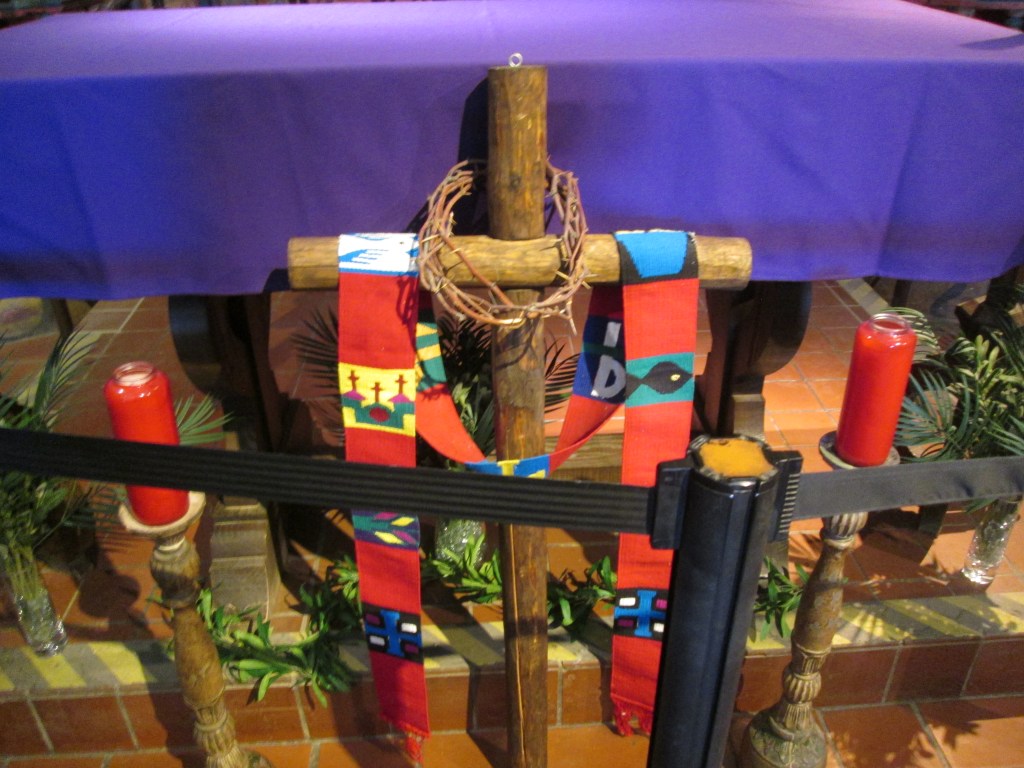
Crucifix with Crown of Thorns and Decorative Papago Cloth

Needless to say, it was another hot day; and I was content to take a pew and ogle the church’s interior. None of the Junipero Serra missions in California could hold a candle to San Xavier del Bac. It is easily worth two or three hours to view the church and its grounds. Afterwords, you can go get some good Indian fry bread at the little cafe just south of the church. (I always like my fry bread topped only with honey.)

Although we had a whole half day of sightseeing left after visiting San Xavier, we ran into some bad luck. We couldn’t visit the Arizona State Museum on the University of Arizona grounds because we could not find anyplace to park. Then, we attempted to visit the International Wildlife Museum on Gates Pass Road, but found it was unaccountably closed.

The Bajada Loop

Touring by Car Through the Saguaro National Park West

After spending the early part of a super hot day at the Arizona-Sonora Desert Museum, we stopped at the nearby western portion of the Saguaro National Park. Taking a hike in the oven-like heat was out of the question, so we decided to survive the day with a modicum of comfort.

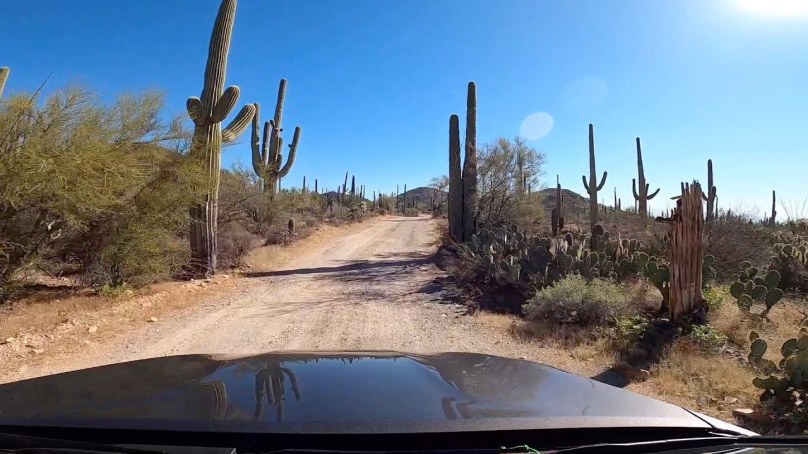
First, we spent some time at the National Park visitor center viewing the exhibits and a slide show about the Tucson Mountain District portion of the park. Then, with the air conditioner on, with drove the six-mile Bajada Loop. The road was unpaved, but well maintained. The view, especially for the southern part of the loop, was outstanding. The desert floor was crowded with fat, healthy saguaro cacti and other desert flora. Because I was driving, I didn’t take any pictures with my camera—especially as my windows were covered with dirt, smashed insects, and bird poop.

Unfortunately, we didn’t have enough time to see the eastern, or Rincon Mountain District, portion of the Saguaro National Park. No problem: I am not finished with Tucson and would gladly come back, but when the weather was more tolerable.

Dinos in the Desert

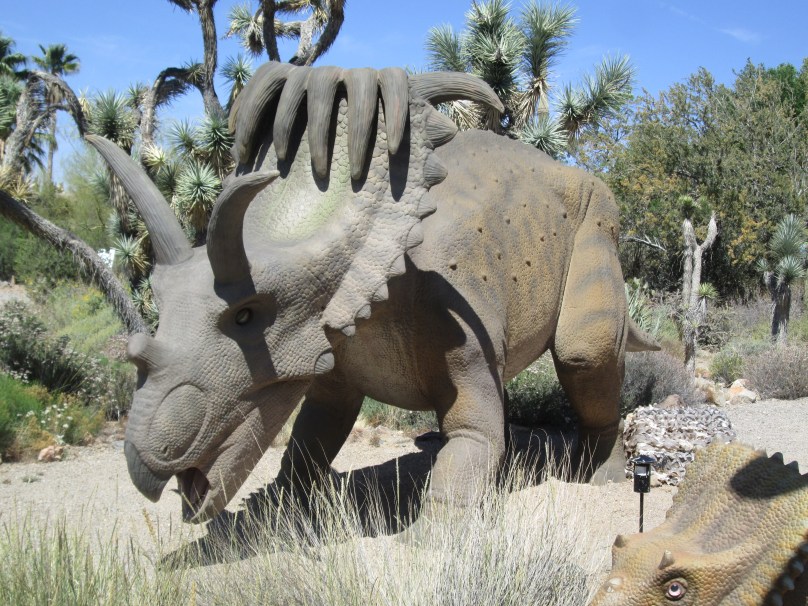
Animatronic Dinosaur at the Arizona-Sonora Desert Museum

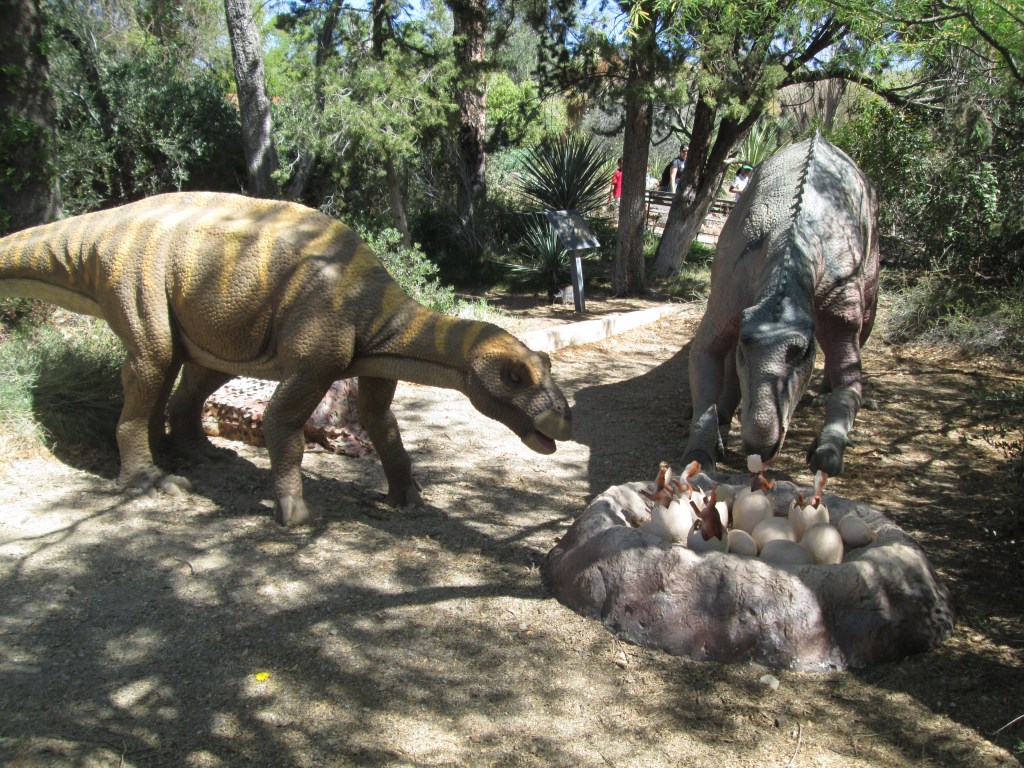
Until Sunday, the Arizona-Sonora Desert Museum near Tucson has animatronic dinosaurs interspersed with the flora and fauna of its regular exhibits. When Martine and I were in the snack shop eating our breakfast, we kept hearing roars. It didn’t take long to find out that these roars were coming from life-sized dinosaurs that moved around and roared.

I can understand why the dinosaurs are a temporary exhibit. As the temperature approaches 120° Fahrenheit (49° Celsius), the dinosaurs could melt. When we were at the museum, the mercury stood at 100° Fahrenheit (38° Celsius). It was enough to make me seek shade, water, and seating in that order.

Notice the Freshly Hatched Dino Eggs

The dinosaurs are a clever attempt to engage the interest of small children, who tend to be dinosaur experts.

A Desert That Inspires Love

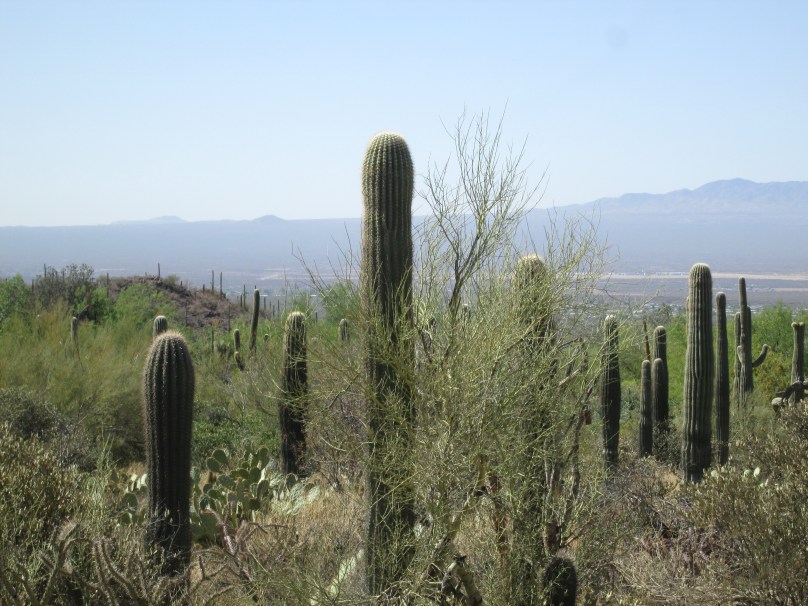
Saguaro Cacti at the Arizona-Sonora Desert Museum

In his 1951 book The Desert Year, Naturalist Joseph Wood Krutch writes:

One can own, either rightfully or fruitfully, only those things—and only so much of a thing—as one can come into some intimate relationship with. One cannot really own any land to which one does not in turn belong, and what is true of land is true of everything else. One can own only what one loves, and love is always some kind of reciprocal relationship. I may buy a thing when I have the money to pay for it, but I do not actually possess it until I have allowed it, in some sense, to possess me.

When Martine and I visited the Arizona-Sonora Desert Museum west of Tucson, we encountered a lush desert that made us love it. Mind you, we also love the Mohave Desert of California; but it is a drier, more austere desert that is harder to love. It is like the desert in which Satan appeared to Christ and tempted him to worship him in return for control over all the kingdoms of this earth—which, being God, he already had.

As soon as one entered Gates Pass Road in Tucson, we were in the presence of a higher order of desert beauty. There is more than three times as much rain that falls here than in the Mohave, and the variety and stateliness and richness of the plant life filled us with awe.

The Entrance to the Museum Just Before Opening Time

Unfortunately, the temperature on the day of our visit was in the triple digits (over 38° Celsius), and I was exhausted and thirsty. Fortunately, the grounds were dotted with cool water fountains and shady places to rest. We could have seen more of the museum on a cooler day, but we had to deal with the cards we were dealt.

Even so, the museum was first class. I think I speak for Martine when I say we look forward to another visit if possible.

The Pima Air & Space Museum

Cool Planes on a Hot Day

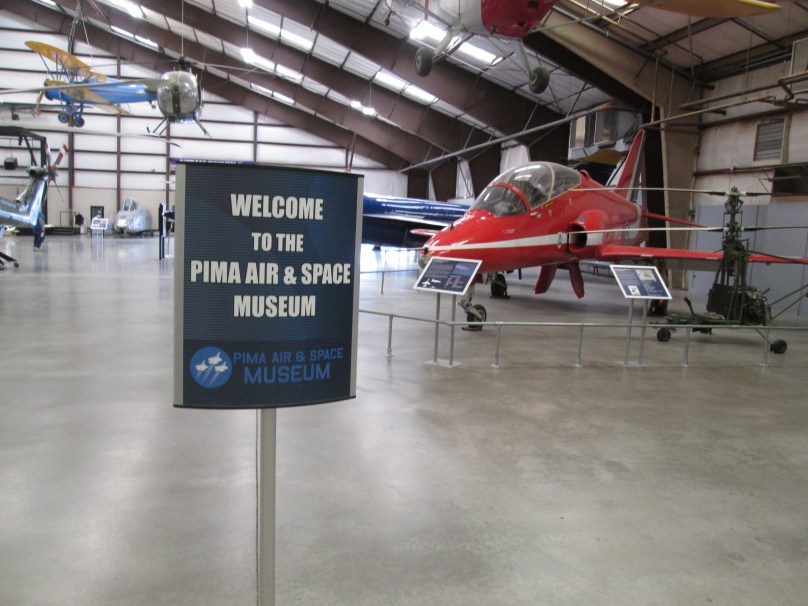
After a morning visiting the Titan II Missile Silo in Green Valley, Martine and I returned to the South Tucson area to visit the Pima Air & Space Museum. We were surprised at the size of the museum, which consisted of some five buildings and numerous planes parked outdoors.

Since the temperature stood at 100° Fahrenheit (38° Celsius), we restricted our efforts to the main building. If we ever come back to the Tucson area when the weather is less forbidding, we would gladly revisit the museum and probably spend a whole day viewing the exhibits. As it was our vacation, however, our first obligation was to survive the heat. I spent much of the time sitting on benches and drinking ice tea in the museum’s snack shop.

The Floor (and Ceiling) of the Main Building

We have visited several similar aviation museums in California, but nothing the size of the Pima Air & Space Museum, which is located adjoining the Davis-Monthan Air Force Base.

The Desert Training Center

Display at the General Patton Memorial Museum

When Germany declared war on the United States right after Japan’s Peal Harbor attack, the U.S. Army set up a Desert Training Center in the Mohave Desert, centered on the Chiriaco Summit. Only the Army called it Camp Young and even built an airstrip so that top brass could fly in.

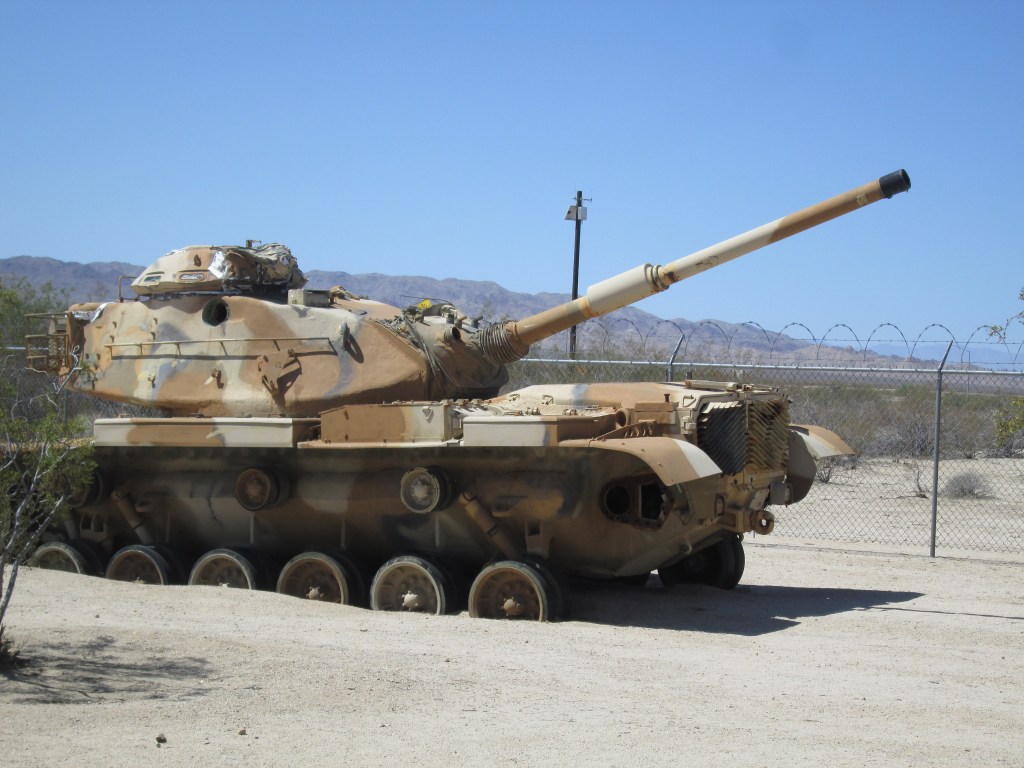
On the trip to Arizona, Martine and I spent a couple of hours at the Summit’s General Patton Memorial Museum seeing numerous exhibits on Patton’s life and the U.S.military in the Second World War, Korea, Viet Nam, and Iraq. It was nice and cool and there were a lot of things to see. We even braved the desert heat to view the tanks and other military vehicles parked outside.

Camouflaged Tank at the General Patton Memorial Museum

Martine liked the museum so much that she talked me into stopping there on the way back from Arizona. It was all right with me, because I know that my little girl is fond of military museums, having been a civilian Army employee for many years at Fort Monmouth in New Jersey, the Sacramento Army Depot, and the Twentynine Palms Marine Combat Center.

Plus we had the opportunity of eating a yummy lunch at the Chiriaco Summit Coffee Shop and a Foster’s Freeze chocolate cone at the convenience store.

Sometimes I wonder what will happen to all the military museums scattered across the country when all the veterans who fought in WW2 have passed on. These museums are most densely distributed in areas where Veterans have made their homes after they retired from the military. These museums are a useful reminder of one of the most traumatic episodes in our country’s history.

High Point

Interior of the Chiriaco Summit Coffee Shop

In the 100 or so desolate miles (161 km) between Indio, California and the Arizona State Line, there is really only one inviting place to stop and relax along the way. The highest point enroute is the Chiriaco Summit at an altitude of 1,706 feet (520 meters), some one-third of the way to the border.

There, one can find:

  • A gas station with multiple fuel pumps
  • An inviting coffee shop with good food
  • A Foster’s Freeze concession in the convenience store
  • The General Patton Memorial Museum, at the site of World War 2’s Camp Young of the Desert Training Center

A few years back, Huell Howser did a program in which he interviewed the descendants of the founding family of Chiriaco Summit. You can view it by clicking here.

Martine liked the General Patton Memorial Museum so much that we visited it twice, once on the way to Tucson and once on the return trip. I will be writing a separate post about the museum this weekend.

The Titan II Missile Silo

The Last Remaining Titan II Missile Silo

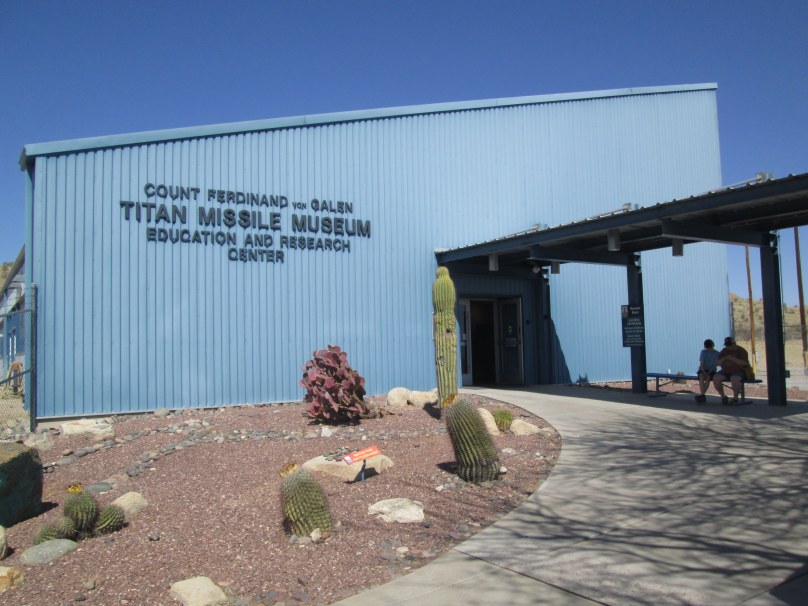
Our first destination the morning after our arrival in Tucson was the Titan Missile Museum in Green Valley, AZ. At one time, there were numerous Titan missile silos scattered across the United States; today, due to the provisions of the SALT Treaty with the Soviet Union, there is only this one silo still around. However, the missile it contains does not have a nuclear warhead: It is there only for educational purposes.

I remember vividly the dark days of the Cold War. At Saint Henry School, we practiced hiding under our school desks should the alert sound—as if that would prevent us from a swift and horrible death. And if we survived, the radiation would probably be worse than instant death.

If you have ever seen Stanley Kubrick’s Doctor Strangelove or: How I Learned to Stop Worrying and Love the Bomb (1964). you know how the possibility of an accidental launch was the topic of the day. Well, the designers of the missile silo were acutely aware of the problem and instituted elaborate procedures to make sure that never happened. The fact that the world was not vaporized is a testimony to their success.

Martine and Titan II Missile in Silo

The memory of my childhood fears of nuclear war made me feel nauseated as I descended the steps to the silo and watched a re-enactment of the procedures to launch the missile. Of course, it didn’t help that the temperature was 100° Fahrenheit (38° Celsius) and I was feeling woozy from the heat in addition to reliving my old fears.

We are not out of the woods yet. If the current occupant of the White House wakes up feeling icky, I wouldn’t be surprised if he muses about pushing the button that incinerates Denmark for refusing to sell Greenland to the United States.

That’s why I think that more people should be aware of the Titan Missile Museum and what horrors underlie some of our military technology.

Heat and Traffic

Record Heat in Arizona—During April Yet!

Martine and I seem to have bad luck when it comes to visiting the desert. Several years ago, we spent two weeks in New Mexico during which the mercury climbed to over 100° Fahrenheit (38° Celsius) on each and every day. But of course, that was June; and June in New Mexico is hot, even before the summer solstice.

But April!? The five days we spent in Arizona broke heat records for four of the days, going as high as 102° Fahrenheit (39° Celsius) on the worst of them.

The other problem we had was heavy traffic: In Arizona, we ran into two traffic jams, both on the I-10. The first was between Buckeye and Phoenix as we sought Arizona 202 to supposedly bypass the worst of the city traffic, and the second as we approached Tucson and ran into an unexplained jam south of Casa Grande. On the return trip, we spent two hours in a jam on I-10 between Palm Springs and Cabazon.

Other than these two negative notes, we had a wonderful time. The things we chose to see were eminently worth seeing, and both of us enjoyed them immensely. They were, in the order we saw them:

  • The Titan Missile Museum in Green Valley
  • The Pima Air & Space Museum in South Tucson
  • The Arizona Sonora Desert Museum west of Tucson
  • Saguaro National Park (just north of the Desert Museum)
  • Mission San Xavier del Bac on the Tohono O’odham Indian Reservation

In the days to come, I will describe these destinations as well as some general observations about the Tucson area.