With the Warbirds

Warbirds

At the Estrella Warbirds Museum in Paso Robles

At various points across the United States, there are little flying museums usually tended to by retired military aviators and their families. One such is the Estrella Warbirds Museum in Paso Robles, which is located along the south edge of the local general aviation airport. In addition to the old fighter jets and prop planes, helicopters, jeeps, and ammo, there is adjoining all the weaponry a car exhibit called the Woodland Auto Display.

After leaving my brother and sister-in-law in Paso, Martine and I headed east on Route 46, stopping first for a couple of hours to see the displays. We weren’t able to give much time to the exhibits parked outside, largely because the temperature was 106° Fahrenheit (or 41° Celsius). Martine loves to visit these old military museums (including the one at Palm Springs, by the Santa Monica Airport, and the Torrance airport). It’s sad to think that the vets who flew these aircraft are beginning their own inexorable journey toward the setting sun. Very likely many of these museums won’t be around in a few years.

Considering the news from Iraq, the bomb photographed below might well become more topical:

Leftover Bomb from 2003 Invasion of Iraq

Leftover Bomb from 2003 Invasion of Iraq


After our visit to see the warbirds, Martine and I headed further east on 46 and 41 until we joined Interstate 5 around Kettleman City. Our destination for the night was the Harris Ranch Inn at Coalinga, where we spent the night in air conditioned comfort and gorged ourselves on prime beef.

Ugly But Magnificent

Andean Condor

Andean Condor

Andean Condors, like all members of the vulture family, are not exactly cute; but with their 10-foot wingspans, they are awe-inspiring. The only time I ever saw Vultur gryphus was on in Argentinian Patagonia, on my way to the dock to take a cruise to see the glaciers that feed into Lago Argentino. There were two of them a few miles out of El Calafate visible from the left side of the bus. Of course, by the time I got my camera out, they had swooped around the hill and out of sight.

In Peru, I hope to photograph them at Colca Canyon, about a hundred miles northwest of Arequipa. The Canyon has a depth of 13,650 feet (4,160 meters), making it twice as deep as the Grand Canyon in Arizona. I will try to take a tour that stops at Cruz del Condor, where they tend to glide in large numbers past a viewing point looking for their favorite carrion. I hope I can get a few pictures to bring back and post on this blog site.

Colca Canyon is probably the third most popular tourist destination in Peru, after Machu Picchu and Lake Titicaca.


Getting Off Our High Horse

Miniature Mare and Her Foal

Miniature Mare and Her Foal

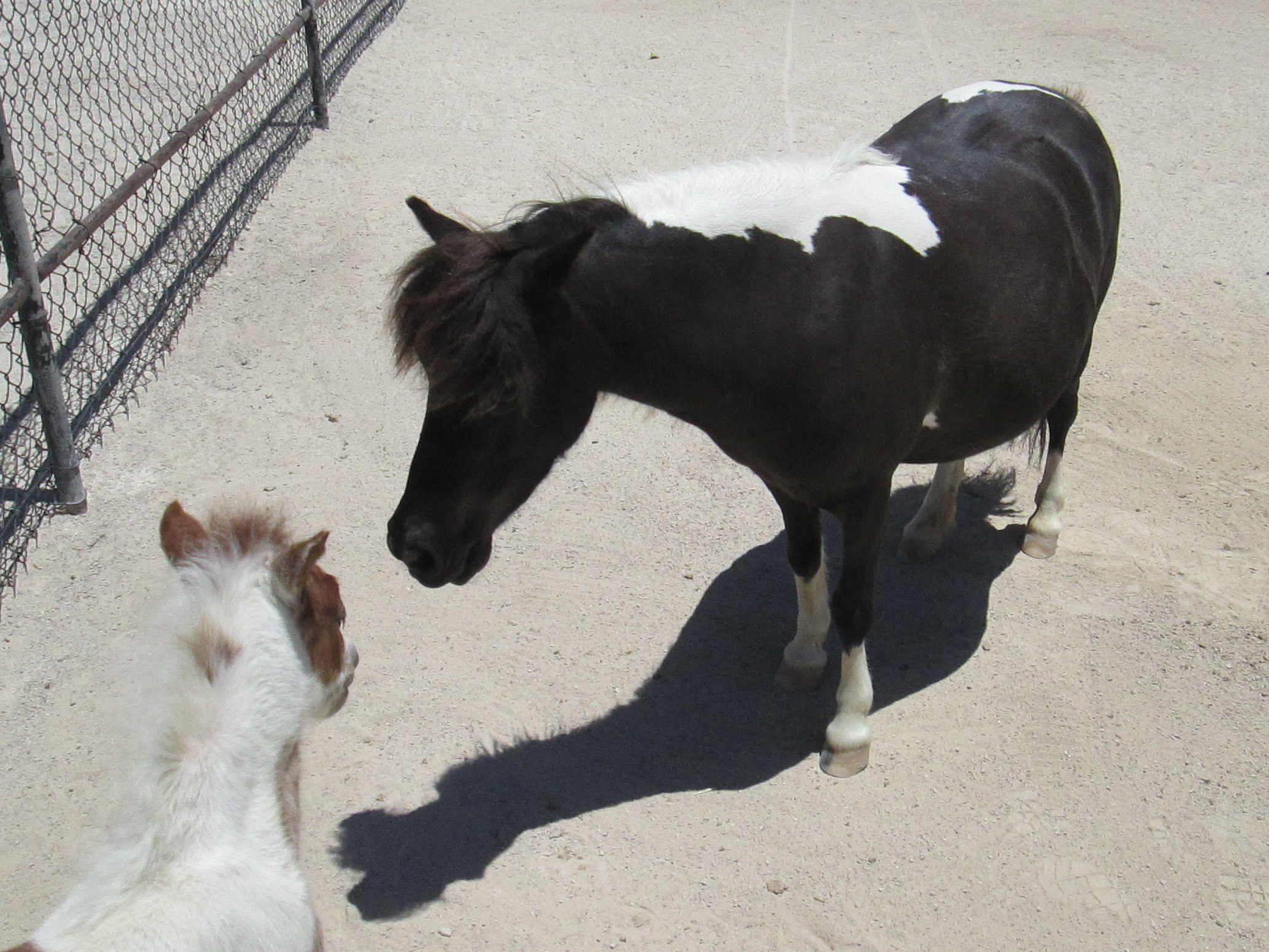
While we were in Solvang last week, Martine made a request to visit the Quicksilver Ranch, where miniature horses are raised for sale. Huell Howser had done one of his famous “California’s Gold” episodes about the place.) We chose a good time to go because all the mares and their foals that were between six and eight weeks old were herded into a pen, from where they had their hooves cut back and their manes trimmed. According to one of the ranch hands, all the foals had already been sold and were being taken care of until they were old enough to be separated from their very protective mothers.

Wherever the foals went, the mares followed closely, as in the above photograph. Although signs were posted all over the fence warning of what could happen if someone tried to pet the horses (their fingers could be chomped), Martine couldn’t resist petting the foals on the back, as in the photo below.

Martine Petting Foal

Martine Petting Foal

In fact, Martine was so intent on looking at all the little horses that, after two and a half hours, I finally convinced her to leave the ranch without sneaking one or more of them away with her. (After all, I had planned to visit the Book Loft, which always had a few titles that beckoned to me.)

I wondered what kind of people bought the little colts. According to the hands, they were scattered all over Southern California. Although I didn’t say, I had the feeling that most of them went to the spoiled rotten kids of super-rich families. I can’t imagine the horses liking that very much. I am sure that they would love having Martine to play with them and take care of them, but I’m afraid that a horse wouldn’t go well with our two-bedroom apartment in West Los Angeles. Maybe, when we buy ourselves a ranch….

In the Land of the Bakery Vikings

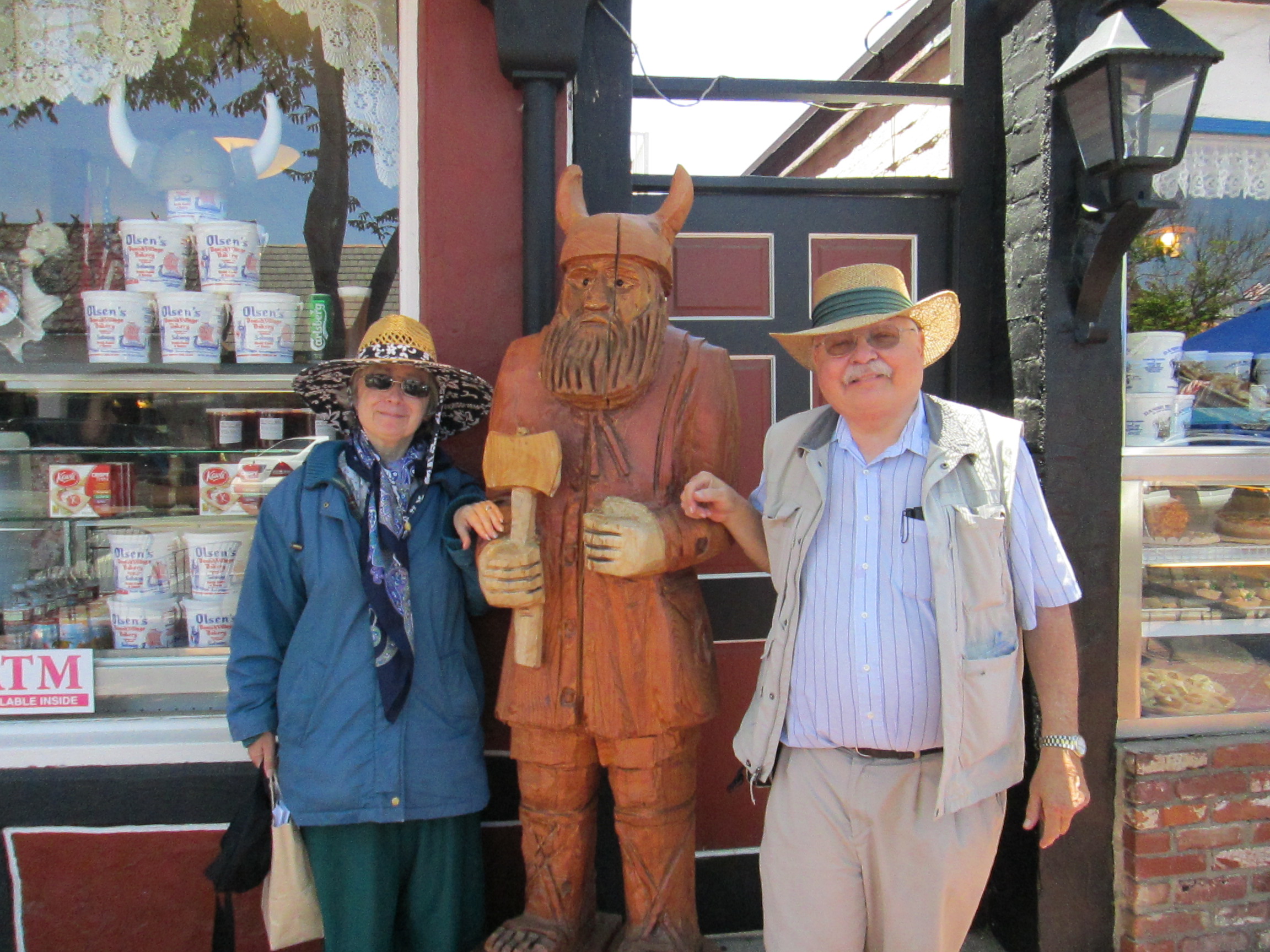
Martine, Bloodthirsty Viking, and Me

Martine, Bloodthirsty Viking, and Me in Solvang

As I mentioned in my last post, Martine and I left town last Thursday for my niece Hilary’s wedding in Paso Robles. There will be plenty of wedding photos later, but we let my brother Dan’s neighbor Dennis take all the wedding pics: By the time I was ready (I was the officiant), the lighting was starting to go. Whenever we visit my brother in Paso, we usually like to break our trip in Solvang, a hundred plus year old Danish colony in Santa Barbara County. The town is crawling with bakeries (see the cookie tubs in the window to Martine’s left in the above photo. It also has a great bookstore called the Solvang Book Loft, where I bought two Gabriel Garcia Marquez novels. For Martine, it is also the site of the Quicksilver Ranch, where miniature horses are raised for sale.

In the next week or so, I’ll show you some of the pictures I took of the miniature horses and their colts. They were incredibly cute—and they let Martine pet them (even though she wasn’t supposed to!).

We got back to Los Angeles this afternoon. Our feeling was one of relief, because after we left Solvang, the temperature shot up to over a hundred degrees Fahrenheit and stayed that way until we approached our coastal area, where the temperature is twenty-five degrees cooler.


Peru, Here I Come …

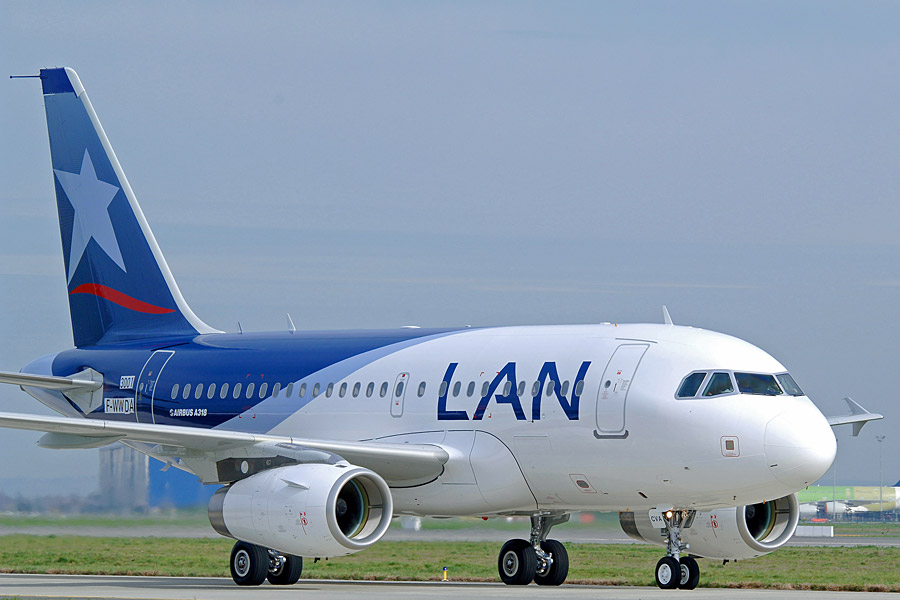
I Am Flying LAN Down to Lima

I Am Flying LAN Down to Lima

… but not just yet.

Yesterday evening I book my flight to Peru via Kayak. I got a nice nonstop from LAX to Lima (LIM) on LAN Airlines. Formerly LAN Chile, it is now part of the Latam Group, after having merged with TAM of Brazil—a South American aviation giant. And yet, while airlines in the United States are cutting back on service, LAN provides meals on real plates with real cutlery and free wine. Would I fly a U.S. airline out of the country? Uh, no.

When Martine and I took LAN to Buenos Aires in 2011, we enjoyed our flight as much as possible considering how long we were in the air. The LAX to Buenos Aires run is just about one of the farthest trips one can take in the Western Hemisphere. We both felt that the airline was well managed, especially as compared to Argentina’s own national airlines, Aerolineas Argentinas, which once landed us at the wrong airport—not bothering to tell us until we were in the air. That cost us a $60 cab ride from Ezeiza, as opposed to nearby Aeroparque.

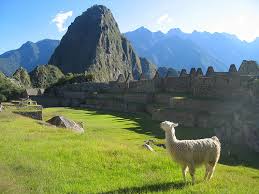
How do I feel about my upcoming trip three months from now? Let’s ask Herbie the Magical llama:

Cool

Cool


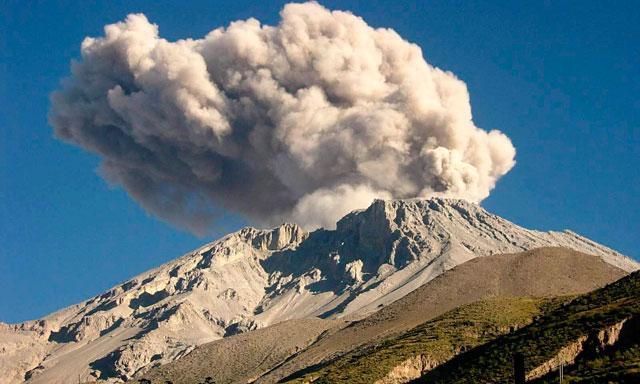
Volcán Ubinas

A Volcanic Eruption Once Again Threatens My Vacation

A Volcanic Eruption Once Again Threatens My Vacation

Three of my last four vacations have been affected to some degree or other by volcanic eruptions. In 2011, it was Chile’s Puyehue-Cordón Caulle which covered San Carlos Bariloche in Argentina with ash and shut down the railroad from Viedma that I was hoping to take with Martine. In 2012, we went to Northern New England and the Canadian Maritime Provinces, which have not been volcanic for some thousands of years. In 2013, I was in Iceland’s Westmann Islands and Hvóllsvöllur when Hekla threatened to blow. (It didn’t, fortunately.)

Now, it looks like the stratovolcano Ubinas in Peru’s State of Arequipa which is smoking and causing evacuations of nearby villages located near its base. Ubinas is Peru’s busiest volcano, with historical eruptions dating back to 1550 and as recently as 2006.

Ubinas Seen from Above

Ubinas Seen from Above

I am scheduled to spend four or five days in the State of Arequipa, visiting the City of Arequipa itself as well as Colca Canyon. The latter is twice the depth of Arizona’s Grand Canyon, and should be quite a view—providing, of course, that I am not engulfed by massive amounts of lava and volcanic ash.

My fingers are crossed.

Re-Orienting Myself to Peru

Spanish Colonial Architecture in Peru

Spanish Colonial Architecture in Lima, Peru

Because I place such a high value on traveling with Martine, I thought nothing last December of ditching my plans in an instant to visit Peru so that we could go to France and Italy. At that point, nothing was firm yet—I planned to go in September or October. (I frequently plan in advance by so many months that all my friends think that I have already gone and returned.) But continuing problems with her back, especially where soft beds are concerned, induced her to cancel the European trip.

There is never any guarantee when staying at strange hotels that your bed will be firm or mushy. Fortunately, I can tolerate a fairly wide range; but Martine’s range of acceptability is much narrower. It’s a pity, because her half-sister Madeleine in St-Lô (near the D-Day Beaches of Normandie)  is ailing and cannot travel herself.

In the meantime, I am resuming my Peru reading program, which consists primarily of:

  • Novels by Mario Vargas Llosa, Peru’s only Nobel Prize winner in literature
  • Novels and poems by other Peruvian literary notables, such as César Vallejo
  • Histories of the Spanish conquest of the Incas
  • Other Peruvian histories on subjects including the War of the Pacific, which Peru lost to Chile in the late 19th century
  • A biography of Simon Bolivar and possibly José de San Martín, the two principal liberators of South America

I don’t know how much I can read before the departure date, which has not  been set yet, but I will do my best.

All this preparation is, for me, a kind of courtesy. I do not believe in visiting another country without knowing enough of its language, culture and history to be conversant with the locals. That has helped me considerably in Argentina and Iceland. Plus, it is a pure pleasure for me to prepare a trip far enough in advance—especially during tax season, when there is little else to forward to. I have little truck with those travelers who believe in being “spontaneous” at the cost of making their fellow Americans look like dunces.

Traveling Alone

It Looks As If I’ll Be on My Own

It Looks As If I’ll Be on My Own

Martine and I had decided that, if she felt well enough to travel, we’d go together to France and Italy. If she felt unable to travel, I would go by myself to Peru and possibly Bolivia. At the end of January, we took a little test trip to the Anza-Borrego Desert in San Diego County. Although we had a firm bed, it wasn’t firm enough for Martine’s back. Fortunately, we had an air mattress that was firmer, so Martine slept on the floor. This option would not work as well for overseas travel, as both of us travel light.

On the plus side, Martine is getting better slowly; but she still depends heavily on a super firm couch and a super firm mattress for her comfort. Without these, she would be awake most of the night for all the days of our trip. Understandably, under those circumstances she would prefer to remain behind in Los Angeles.

I, on the other hand, have this great yearning for travel. The pity of it is, I will be deprived of my favorite traveling companion. I am used to this, as I have been alone in Iceland twice (2001 and 2013) and in Argentina once (2006). We will probably travel together to Southern Arizona by car—with the firm air mattress—so that Martine doesn’t get a case of cabin fever.

In the meantime, I am continuing my Peru reading program in preparation for a three week vacation there in September and October. As Rudyard Kipling wrote in his poem, “The Winners”:

Down to Gehenna or up to the Throne,
He travels the fastest who travels alone.

Most memorably, in Josef von Sternberg’s film Morocco (1930), Marlene Dietrich, writes these lines with her lipstick on a hotel room mirror before ditching Adolphe Menjou.

So I will travel faster, but I’d rather not be alone.


Diverted

Mont St Michel in Normandy

Mont St Michel in Normandy

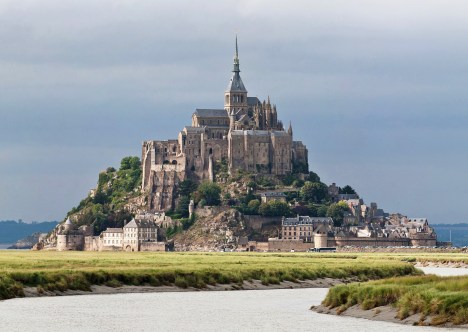
Yesterday was Martine’s birthday. In the mailbox was a card and letter from her half-sister Madeleine in St-Lô in Normandy. In her letter, she wrote that she hoped her sister could come and see her soon, as she is getting on in years. On a day when she should have been celebrating, there were tears in my little girl’s eyes. As it happened, I had the power to change that around. Martine is afraid of going to France alone because she is not good at transportation planning. As it happens, that is my specialty, and my French is better than hers, even though she was born in Paris.

So, I suggested to Martine that I could take a rain check on Peru and join her in France. I don’t think I could have given her a better gift. Martine started dreaming about croissants and how I could have great cheeses for breakfast (yes, I am a devoted cheese-eater). Within minutes, I came up with a plan: Fly to Paris and stay there for a couple of days while visiting her friend Angéla in Montmartre, then take the TGV direct from Gare Montparnasse to St Lô and visit Madeleine and a couple tourist sights, such as the big rock illustrated above. From there, it’s back to Paris to transfer to the TGV from Gare de Lyon to Avignon. A couple days there, then Arles, Nice, and Monte Carlo. Finally, we could take a train to the Cinque Terre in Italy for several days of peace and rest. Then a train to Milan, from which we would fly back to LAX. Martine approved on the spot.

It would have been easy for me to be selfish at this juncture, but I cannot be happy unless Martine is happy. Else my trip to Peru would have been an anxious dirge. Now there is a chance I can get Martine to accompany me to Peru in the future—if our health prevails. I think the trip to France would be a powerful motive for Martine’s back pain to disappear altogether. (So many ailments have a psychosomatic trigger.)

Costa, Sierra y Selva

Omna Peru in Tres Partes Divisa Est

Omna Peru in Tres Partes Divisa Est

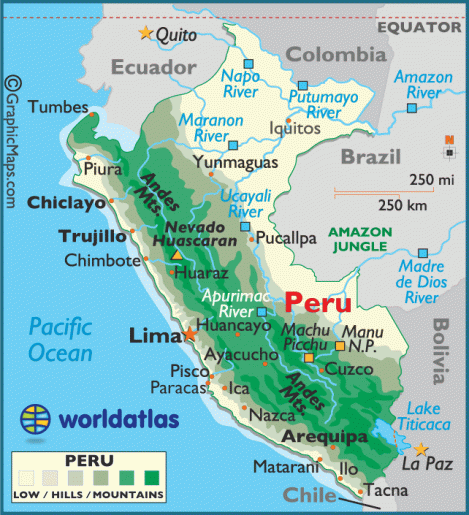
Excuse the schoolboy Latin, but Peru, like Gaul, is divided into three parts: the coast, the mountains, and the jungle. In Spanish, that comes out as the Peruvian schoolkid mantra costa, sierra y selva. As you can see from the above map, the narrow coastal strip is the smallest of the three—and by far the most populated. It contains the largest cities, including the capital Lima. It is also the driest, being a northern extension of the Atacama Desert, where rainfall does not, for all practical purposes, ever occur.

When we think of Peru, we generally think of the Andes, which takes up the second largest chunk of Peruvian territory. Here are the tourist meccas of Cusco, Machu Picchu, and Lake Titicaca, as well as several isolated mountain metropolises like Arequipa, Huancayo, and Ayacucho. The locals here speak mostly Quechua and Aymara. This is the second most populated region.

Finally, there is the jungle. The mighty Amazon has its source in rivers flowing into the Marañon and Ucayali River systems from various parts of Peru, Ecuador, and Colombia. Here is two-thirds of the total land area of Peru, but only 11% of its population. Culturally, it is one of the most interesting parts of the country, but many (including myself) are deterred by Yellow Fever, Malaria, Dengue, and a whole host of tropical diseases.

If I went to Peru, I would concentrate on Lima and the high country between Lake Titicaca and Machu Picchu. (That is, if I don’t develop severe soroche. If I do, I might take a side trip to Northern Chile via Tacna and Arica.)