Sehnsucht

At Peyto Lake in Canada’s Banff National Park

At Peyto Lake in Canada’s Banff National Park

I had never heard the German term Sehnsucht before I tried to Google “yearning wild places” a few minutes ago. According to Wikipedia:

Sehnsucht … is a German noun translated as “longing”, “yearning”, or “craving”, or in a wider sense a type of “intensely missing”. However, Sehnsucht is difficult to translate adequately and describes a deep emotional state. Its meaning is somewhat similar to the Portuguese word, saudade, or the Romanian word dor. Sehnsucht is a compound word, originating from an ardent longing or yearning (das Sehnen) and addiction (die Sucht). However, these words do not adequately encapsulate the full meaning of their resulting compound, even when considered together.

Sehnsucht represents thoughts and feelings about all facets of life that are unfinished or imperfect, paired with a yearning for ideal alternative experiences. It has been referred to as “life’s longings”; or an individual’s search for happiness while coping with the reality of unattainable wishes. Such feelings are usually profound, and tend to be accompanied by both positive and negative feelings. This produces what has often been described as an ambiguous emotional occurrence.

It is sometimes felt as a longing for a far-off country, but not a particular earthly land which we can identify. Furthermore there is something in the experience which suggests this far-off country is very familiar and indicative of what we might otherwise call “home”. In this sense it is a type of nostalgia, in the original sense of that word. At other times it may seem as a longing for a someone or even a something. But the majority of people who experience it are not conscious of what or who the longed for object may be, and the longing is of such profundity and intensity that the subject may immediately be only aware of the emotion itself and not cognizant that there is a something longed for. The experience is one of such significance that ordinary reality may pale in comparison, as in Walt Whitman’s closing lines to “Song of the Universal”:

Is it a dream?
Nay but the lack of it the dream,
And failing it life’s lore and wealth a dream
And all the world a dream.

So what is my yearning? I can tell you one thing right from the start: It is for a place where there are no mosquitoes. Sun-drenched beaches are not anywhere in my dreams. Look at some of the places I have visited in the past years: The Hebrides and Orkney Islands of Scotland, Argentina’s Tierra del Fuego and Patagonia, Iceland, the Canadian Rockies, Quebec and the Maritime Provinces of Canada.

My Sehnsucht takes me to cold, wild places, such as Pehto Lake in Banff National Park (above).

I also like deserts, especially those in the American Southwest and Argentina. I would add Mexico if I were more familiar with the states of the North.

Where I part from the Wikipedia definition is any identification of the places for which I yearn with home. I was born in Cleveland, which I will forever associate with dirty red brick buildings and accumulations of snow that exhibit a chronicle of dog piss over time. Nor is Los Angeles my “home” in any real sense. I like it. It’s where I hang my hat. But it represents the place I would like to escape from—at least for the time being.

No, I do not think I could live in Tierra del Fuego or the Outer Hebrides, but I love to visit them. And I love to spend months planning for my visit. The planning can almost be as enjoyable as the actual trip. It seems I am always either planning one of these escapades or actually at my destination.

That tension between where I’m currently living and where I would like to visit is one of the main motivating factors of my life. I must say, it seems to work—at least for me.
Visiting the Angry Sisters

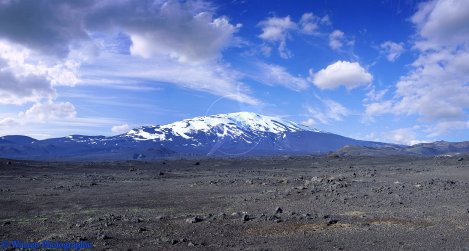
Mount Hekla

Mount Hekla in South Iceland

Whenever I have a few minutes during the craziness of tax season, I check out the Daily Life column on The Iceland Review’s website. Yesterday’s entry by Katharina Hauptmann (half of the Daily Life columnists are from outside Iceland) had the following to say:

In the past two days news broke about unusual seismic activity around the volcano Hekla.

Naturally, it became talk of the town.

Officially, a level of uncertainty has been issued and the related parties continue to monitor Hekla closely.

So can you by keeping your eyes on the volcano with this webcam.

Actually, everybody was waiting for Hekla’s neighbor Katla to blow, as an eruption is more than overdue.

Now it seems that Katla’s little sister Hekla is keeping the world on tenterhooks.

Here in Iceland, one usually refers to Hekla and Katla as the “angry sisters.”

I was once told that volcanoes had women’s names in Iceland because their nature was just like women: unpredictable and explosive.

During my upcoming visit to Iceland, I hope that neither Katla nor Hekla nor the dread Eyjafjallajökull erupt, because I will be spending four days in the South of Iceland in areas that would have to be evacuated (Hvolsvollur and Heimaey). And if it happens while I am in Höfn for two days, I will have to go all around the island to return to Reykjavik.

In European history, it is Hekla (shown above) that has the horrendous reputation. During the Middle Ages, it was widely regarded as the mouth of hell, and fishermen could see its eruptions from hundreds of miles away. By the way, there is a Hekla webcam you can visit. Just note that Iceland is on or near Greenwich Mean Time, and it is likely to be night there when you try.

You may recall the widespread cancellation the last time Eyjafjallajökull erupted twice in 2010. Newspapers around the world showed photographs of the devastation:

Eyjafjallajökull

Eyjafjallajökull

With volcanoes, one could get a day or two of warning before—literally—all hell breaks loose. But isn’t that all part of the fun?

Sons and Dóttirs

Icelandic Mystery Writer Yrsa Sigurdardóttir

Icelandic Mystery Writer Yrsa Sigurdardóttir

The following is loosely excerpted from a review I wrote on Goodreads.Com about Ashes to Dust by the Icelandic mystery writer Yrsa Sigurdardóttir:

Yrsa Sigurdardóttir’s work reminds me of an Icelandic “delicacy” called hákarl, which consists of shark meat which is fermented for several months, sometimes underground, until the ammoniac stench is strong enough to repel the most ravenous shorebirds. I do not mean to imply that Ashes to Dust is as appetizing as road kill: It is just that its author has a tendency to go for the gamier edge of crime. That was also the case with her first book, Last Rituals. I was surprised to read that Ms. Sigurdardóttir is an engineer, because I would have guessed that she was a pathologist.

Ashes to Dust is about three bodies — accompanied by a severed head — which were discovered more than thirty years after the eruption of the volcano Eldfell on the Westmann Islands, which destroyed some 400 homes on the main island of Heimaey. Attorney Thóra Gudmundsdóttir is trying to build a case for the innocence of the man accused of the murders, back when he was a teenager and the volcano erupted in January 1973. The story gets rather complicated (as in her other book that I read), but the author manages to keep all the threads in play until the very end.

Iceland is becoming quite a haven for mysteries: In addition to Yrsa and Arnaldur Indriðason—not to mention the American Ed Weinman (who has lived in Iceland for many years)—there seems to be a growing trend for the small island to become a major force in the production of mystery novels.

I thought I would segue into a not entirely unrelated topic, namely Icelandic names. You may have noticed that most of the names I’ve mentioned in this post end either in -dóttir or -son. That is partly because, until recently, it wasn’t considered quite kosher to have a last name that was anything but a patronymic.

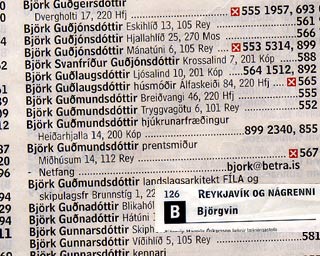
Let’s see how this works. If I were an Icelander, my name would be James Alexson, “James the Son of Alex,” and Martine would be Martine Wilsonsdóttir, “Martine the Daughter of Wilson.” Take a look at the image below from an Icelandic telephone directory:

Bjork to Your Heart’s Content!

Bjork to Your Heart’s Content!

Notice that the names in an Icelandic telephone directory are alphabetized by first name, in this case Björk, and patronymic. In case you didn’t already know, Björk Guðmundsdóttir is the Icelandic recording artist Björk. My guess is the recording artist is probably the one whose address is in Reykjavik 101, which is the Icelandic equivalent of Beverly Hills 90210.

I Book the World’s Youngest Volcano

The Town of Heimaey, Iceland, Flanked by Two Volcanoes

The Town of Heimaey, Iceland, Flanked by Two Volcanoes

I had been there on a day trip from Reykjavik twelve years ago. Because I was afraid of seasickness on the three-hour ferry from Þorlákshöfn, which was famous for rough seas, I flew from the small Reykjavik airport. Several years ago, the Eimskip Line opened a new ferry port at Landeyjahöfn, which is only a thirty-minute ferry ride from the Westmann Islands. This time, I’ll take the ferry, fortified with Dramamine.

Heimaey (literally “The Home Island”) is a beautiful town flanked by two volcanoes, Eldfell (on the left) and the extinct Helgafell (right). Until January 23, 1973, Eldfell didn’t exist. What was a suburban development suddenly turned overnight into a volcano, forcing the evacuation of the entire island. While lava destroyed some 400 homes, the ingenious Icelanders found a way of forcing the lava to form a berm by endlessly pumping cold seawater on its leading edge. The story is told by John McPhee in his book, The Control of Nature.

I had a difficult time booking a room in Heimaey on my original desired dates. Then, just for the heck of it, I decided to hang around a few extra days along the Suðurland, or South Coast, of Iceland (at Hvolsvöllur and Höfn) and try for a few days later. Bingo! I got into the best accommodation on the island. My guess is that there was a local event, like a soccer game or a festival, that drew a crowd on the original dates.

Why do I want to go to the Westmann Islands again? First of all, it is drop-dead beautiful, a major fishing port, and the place where I am most likely to be able to photograph puffins:

Puffins

Puffins

I am told the island’s southernmost peninsula has the world’s largest concentration of the picturesque seabirds at a place called Störhofði.

Puffins and I go way back. I tried to find them in Scotland in September 1998, but they hadn’t arrived there yet. Then I went to Heimaey late in August 2001, but they had all just left.

Martine would love to see them, but I’ll just have to take a load of pictures so that she could enjoy them vicariously.

The Second Step Is Taken

Downtown Reykjavik, Iceland

Downtown Reykjavik, Iceland

Now that I settled on a flight to/from Iceland, it’s time to get some room reservations. Iceland has a very short tourist season, running roughly from the middle of June to the end of August. Even before September, many tourist offices are closed down in preparation for the beginning of school. That’s right: Many tourist facilities are in school buildings scattered around the country. Many boarding schools become summer hotels, and then return to educational use come September.

When I arrive in Reykjavik, it will be just before the longest day of the year, during which there is no darkness to speak of. Unless the guesthouses where I stay have blackout curtains (and most of them don’t), I will have to wear eyeshades to allow me to sleep. And because of the runtur—the Icelandic equivalent of a spring weekend at a Mexican resort—and the boisterousness of hundreds of European teenagers showing they can drink like a man, I will also come equipped with earplugs. That will not be much of a problem outside the capital, however.

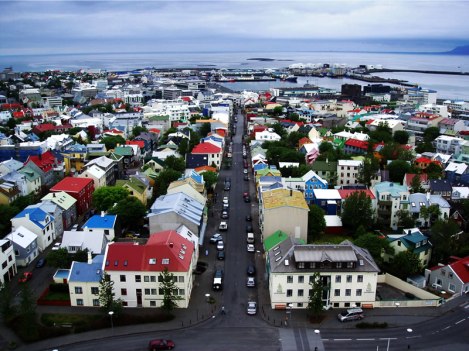
Greater Reykjavik is a small city by U.S. standards, about 120,000 people in a country whose total population is about 322,000. It is the world’s northernmost capital of a sovereign state. That sentence is worded thusly to eliminate Nuuk, which is the capital of the Danish colony of Greenland.

I had hoped to secure a room at the Baldursbra Guesthouse on Laufásvegur, where I stayed in 2001, but they were booked solid; so I took a chance on the Guesthouse Odinn, which is slightly nearer the center of things by Laugavegur (the main shopping street) and therefore probably more noisy. No matter. Being by myself, I am more able to put up with a variety of situations. I just hope it’s not a big party place, with young males screaming and projectile vomiting all over the place.

The First Step Is Taken

Icelandic Scenery

Icelandic Scenery

Today I finally booked my flight to Iceland. Note that I said my rather than our. Unfortunately, Martine will not be able to come with me. Ever since the beginning of the year, she has been suffering from what I think is fibromyalgia, characterized by neuromuscular pains in the neck, shoulder, and back and a difficulty with sleeping. She is currently working with a physical therapist to alleviate her symptoms. But, as things stand now, she is unable not only to carry her luggage, but to wear a purse on her shoulder. It will be a beautiful but lonely trip.

My plans are to leave in the middle of June and return early in July. I hope to see, in addition to the capital Reykjavik, the island of Heimaey, the Njals Saga country around Hvolsvöllur, the Egil’s Saga country around Borgarnes and Reykholt, the Snaefellsness Peninsula around Stykkishólmur, and the Westfjords from Isafjörður to the bird cliffs of Látrabjarg. Perhaps, if there is time, I could also visit Akureyri and the falls at Goðafoss.

My Kindle is already loaded with Icelandic Sagas, and before I leave for Reykjavik, I expect to read another half a dozen.

I could have taken the cheapest flight, but I hate being rushed from one gate to the other at a large airport, so I arranged to have four-hour stopovers in Toronto on the way out and Boston and the way back.

Iceland is beautiful, but I will miss Martine.

The Impulse to Escape

There’s Nothing Like a Rough Tax Season to Make You Want to Escape

There’s Nothing Like a Rough Tax Season to Make You Want to Escape

If you’ve been reading these pages for a while, you might think I seem a trifle obsessed. This is especially true during tax season, when the stress and long hours make me dream of escape. It is not unusual for me to spend six months reading and meticulously planning my escape.

Last year was an exception. Originally, Martine and I were going to go for a long drive through the Southern States. Then I noticed that the temperature topped out at about 100° Fahrenheit (that’s 37° Celsius) every day . For us, that reminds us more of hell than a vacation, so we made a last-minute switch to Vermont, Maine, New Brunswick, and Nova Scotia. We can do the South some other time, perhaps when they all turn Democrat. (Hah!)

The year before (2011), when we went to Argentina, I read so much Argentinean history and literature that I got some incredulous responses from the locals.

Because Iceland’s summer tourist season is so short (2-3 months at maximum), I don’t have six months; but I am embarked on an ambitious reading program to reacquaint myself with the great sagas (I am re-reading Egil’s Saga, Njals Saga, and Grettir’s Saga) and deepen my knowledge of Halldór Laxness’s novels as well as adding some newer authors to the mix. Fortunately, Iceland now has some excellent mystery writers, including Arnaldur Indriðason, Yrsa Sigurdardottir, and Edward Weinman (the latter Icelandic because of his long acquaintance with the country).

Whenever I have a few spare moments, I am checking out Icelandic websites, particularly with regards to the availability of public transportation (I will rent a car only if Martine comes with me) and accommodations. Many Icelandic guesthouses accept only guests with sleeping bags, which is not my preference. After a while, sleeping bags smell worse than old sneakers that are used daily in a heat wave.

I love to research a vacation. After a hard day of pumping out tax returns (like today), I prefer to put myself into another time and place. And Iceland will do nicely for this purpose.


One Day in 2001

Edward Weinman

Edward Weinman

Twelve years ago, I visited Iceland by myself. At the BSI bus terminal in Reykjavik, I purchased a Ring Road Pass and proceeded to circumnavigate the island. Because of the desolate nature of the island’s interior, virtually all of the population is clustered within fifty or so miles of the coast.

It was a difficult trip, as the osteoarthritis pain in my left hip was approaching its apogee, so I was able to walk, haltingly, only with a cane. (The year after, I had an operation which erased twenty years of agony as if never existed.) Back then, I could walk all right: It’s just that standing up from a sitting position was excruciating.

Still, I loved the trip—even though Martine did not join me for some reason I have since forgotten. This summer, I am planning on going once again. And once again, Martine may not join me, but this time because she is in pain from fibromyalgia.

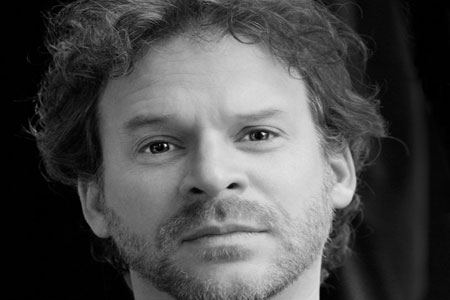
In preparation for the trip, I have taken again to reading the “Daily Life” column on the website of The Iceland Review. I was pleasantly surprised to find that Edward Weinman (pictured above) is still writing columns for them, and that he has written a noir mystery novel called The Ring Road.about an ex-detective from San Francisco who gets stuck on the island in a cataclysmic volcanic eruption. It’s a tale of murder, prostitution, cannibalism, witchcraft—all the things that Iceland is noted for. (Insert a smiley here.) For my review of his book on Goodreads.Com, click here.

I had met Ed and his fellow staff members of The Iceland Review in 2001 when I hobbled east on Laugavegur to their offices. It was a brief, but pleasant visit, which I enjoyed and remembered all this time. I wish Ed and all his fellow writers well. Perhaps I’ll drop in on them again, if my trip comes off as planned this July.

One interesting little coda: Exactly one week after my return to the U.S., the flight I was on to L.A. was commandeered by Al-Qaeda and flown into New York’s World Trade Center.


Saga Fiend

Page from One of the Icelandic Sagas

Page from One of the Icelandic Sagas

I am still contemplating going to Iceland this summer—though it may be without Martine. The poor girl has been suffering from what I think is fibromyalgia, which combines roving muscular pain in different parts of the back with the inability to get a good night’s sleep. She is currently undergoing physical therapy, which I hope moderates the symptoms, which have destroyed the last two months for her.

If Martine can come with me, we will concentrate on Southern Iceland. I will rent a car, and we will do all the sights along the southern rim of the island, from the “Golden Circle” of Thingvellir, Gullfoss, and Geysir (yes it’s a place) to the black sands of Breidamerkursandur and Skaftafell National Park. If I go alone, I will concentrate on the remote Westfjords, where I will do some serious bird-watching and hiking—and reading.

I have already loaded a collection of Icelandic sagas on my Kindle and have begun reading more of the same. So far within the last week, I have read Kormak’s Saga and The Saga of Hallfred Troublesome-Poet; I hope to re-read Egil’s Saga (which is one of the best) within the next couple of weeks.

Most of the Icelandic sagas were written in the Thirteenth Century and look back to the early days of settlement ranging from the 9th century to the introduction of Christianity around A.D. 1000 at the behest of King Olaf Tryggvason of Norway. In a way, it can be compared to the Western films that, until recently, have been made in the United States. Except for one thing: Many of the characters in the Icelandic sagas were actual people whose descendants are alive today. Many of the events, however, were quite fanciful, such as the one illustrated above in one of the old manuscripts.

In Reykjavik, I will visit the Arni Magnusson Institute for Icelandic Studies, which has an ongoing exhibit of Icelandic saga manuscripts. It was closed the last time I was in Reykjavik in 2001.

Just to show you how serious the Icelanders are about their literature, there are two museums in the country of 300,000 inhabitants dedicated to individual sagas: The Settlement Center in Borgarnes (with its permanent exhibition on Egil’s Saga) and The Icelandic Saga Center (about Njal’s Saga) at Hvolsvollur. In our nation of some 300 million inhabitants, do we have any museums dedicated to any single works of American literature?


Piedras Antiguas

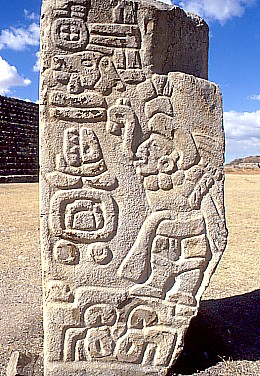
The Ruins of Monte Alban Near Oaxaca

The Ruins of Monte Alban Near Oaxaca

Tonight, as Martine and I had dinner at the Monte Alban Restaurant in West L.A., I flashed back briefly to one of the best vacations I ever had, when my brother and I went to Mexico together in 1979. We started in Villahermosa (I’ll have to tell you about that particular experience in a later post), then went on to Palenque and San Cristóbal de las Casas and Oaxaca, ending up in Mexico City for the flight home.

Although the Monte Alban Restaurant serves Oaxacan specialties, particularly meats with mole sauce, I went for the non-mole dishes. Dining at one of the zócalo cafés in Oaxaca, I picked up a bug which I will forever refer to as the Oaxaca Caca. For about a day and a half, I hugged the porcelain while producing a cacophony of rectal groans from the underworld. I heard my brother laughing in the other room at my discomfort, and begged him to go to the market and pick up some bananas for me.

When I got better, we took a bus up to see the ancient Zapotec ruins on top of a hill near the city. While Dan and I were wandering around, we were accosted by a local who whispered to us, “Pssst, Señor … piedras antiguas.” With great drama, he opened up a piece of cloth that looked like dark blue velvet which contained several small carved stones meant to resemble ancient Zapotec carvings.

Well, they were piedras (stones) for sure … but antiguas (ancient)? We didn’t think so. If they were genuine, we’d be in danger of being arrested at the airport for illegally exporting a pre-Columbian artifact. And if they weren’t, we could certainly get a better price for them in the city. So we thanked the gentleman for sharing such a treasure with us, and went on to other parts of the ruin, where—surprise!—we met up with the original salesman’s brothers-in-law selling more piedras antiguas.