Back from O’ahu

The Lyon Arboretum in Honolulu’s Manoa Valley

Martine and I returned from Hawaii late on Tuesday, somewhat the worse for wear. We both had a low-level cold during the entire week of our vacation. In my case, it ratcheted up into a full-blown cold when I woke up yesterday morning.

Still, it didn’t prevent u8s from enjoying ourselves in Hawaii. We went everywhere by bus (except to Lyon Arboretum) since we both still had our HOLO cards for TheBus [sic]. Unlike most tourists, who spend of $1,000 or more for a rental car and hotel parking, our total transport expenses were $40.00 for a one month senior citizen pass for TheBus.

Honolulu is an endlessly fascinating city—which most tourists don’t realize, mainly because their main focus is on Waikiki. Some 83% of all hotel rooms in the Honolulu area are on the two-mile-long peninsula of Waikiki, on the Diamond Head side of the city. Most tourists who don’t have rental cars take expensive and overcrowded shuttles to a handful of tourist sites. Martine and I were on the more comfortable and air-conditioned public buses which most tourists didn’t know how to take.

More’s the pity, because there’s a lot to see downtown, in Chinatown, and on the western (Ewa) side of the city. And I don’t just mean Pearl Harbor.

It’s a pity that most Honolulu tourists end up ghetto-ized in Waikiki, and maybe just taking an exploratory jaunt to the Ala Moana Shopping Center. I guess most vacationers would rather not overthink their pleasures. Me, I overthink everything. For me, the preparation just extends the fun beyond the time I am in the islands.
Back to O’ahu

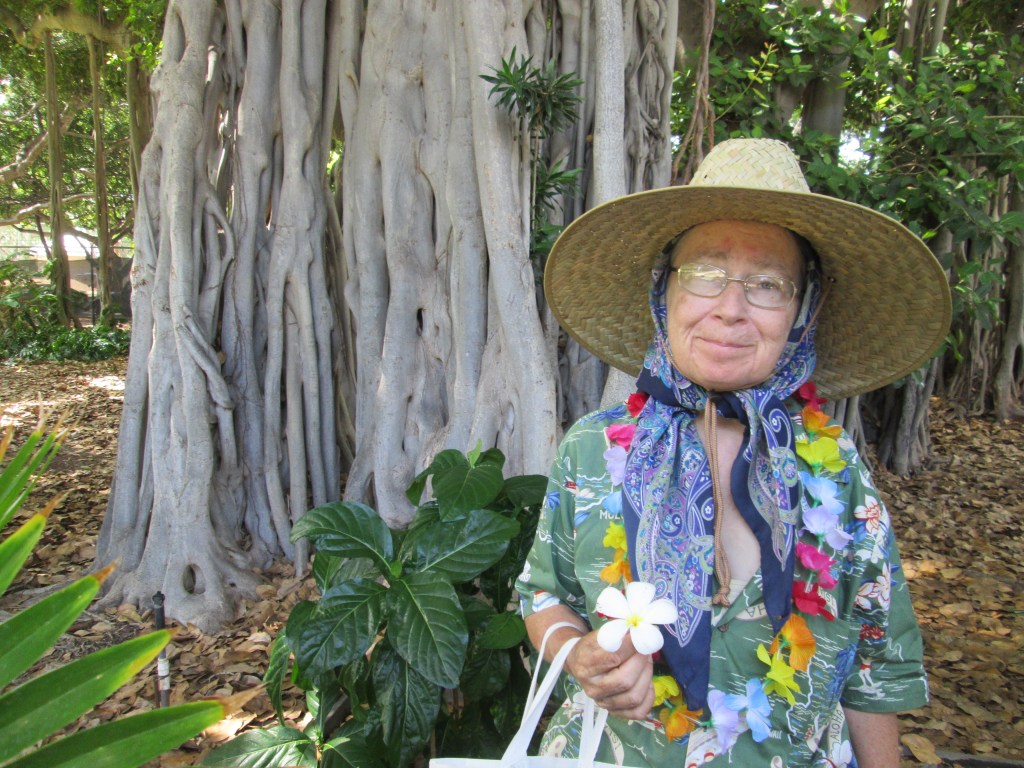
Martine by a Banyan Tree in Kapi’olani Regional Park

This fall, Martine and I are returning to Honolulu. If I had my druthers, I would prefer tracking down obscure Maya ruins in Yucatán, but if I did, I would have to do it alone. And I am getting to an age where that is becoming a bit on the dangerous side for me. Also, as I enjoy traveling with Martine to places that she likes, it adds an extra level of enjoyment for me.

Last year, we concentrated our efforts visiting the Iolani Palace, the Bishop Museum, the Zoo, the Aquarium, and the Foster Botanical Garden. This time, we could visit Queen Emma’s Summer Palace, the Lyons Botanical Garden, the military museum at Fort DeRussy (Martine worked for years as a civilian Army employee), and any number of other places—possibly including another visit to the ethnological riches of the Bishop Museum.

Tomorrow morning, Martine and I will drive down to the Auto Club in Culver City and pick a flight and hotel. I wouldn’t mind staying at the Malia again, even though it is no longer owned by Outrigger Hotels. The area of Waikiki around Kuhio Avenue and Lewers Street may be a few blocks from the beach; but as we are not beach people, we don’t mind. It is right by the bus stop at that intersection which will take us anywhere we want to go.

We still have our HOLO senior ride discount cards for the Honolulu bus system. We just have to add a few dollars of stored value to our cards. That way we can avoid the expense of renting a car and paying big bucks to garage it at our hotel.

Sunnylands

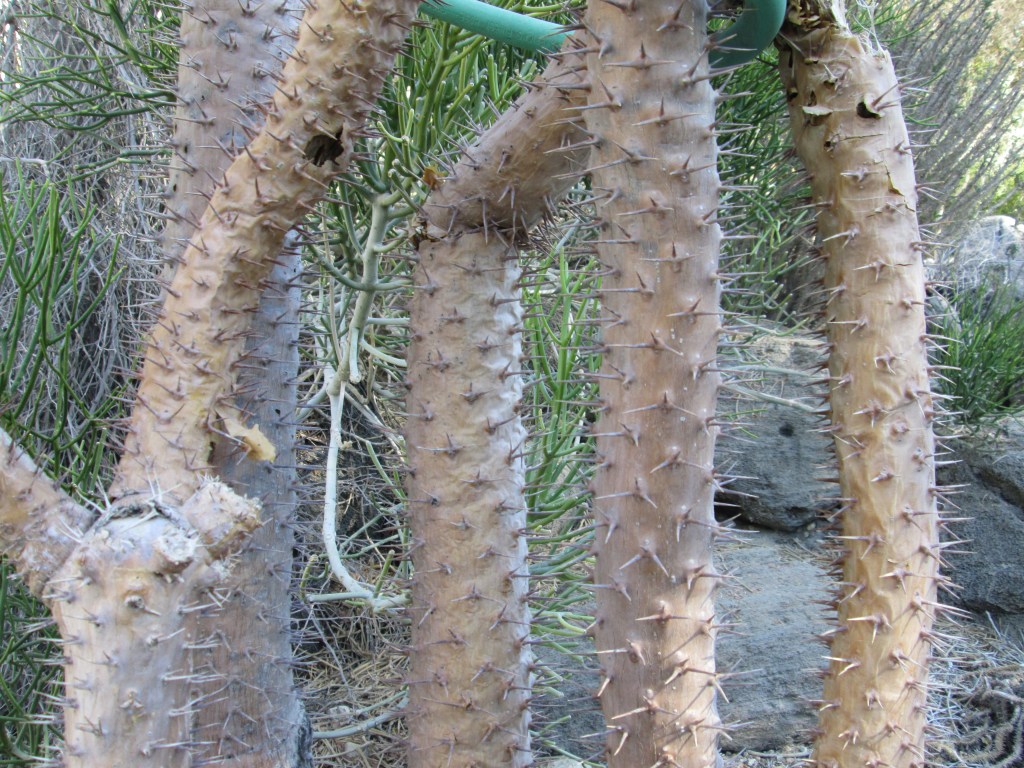
Cacti on the Grounds of the Sunnylands Center & Gardens

Attached to the historic Sunnylands Estate in Rancho Mirage are extensive cactus gardens that are open to the general public five days a week. My brother Dan and I wanted to tour the estate, but it was closed for a scheduled event. Instead, we spent a couple hours seeing a film about the role of the center in world politics and walking the gardens.

Although the center has no official status, it has been the site of meetings with such figures as most of the recent U.S. Presidents, Chinese Premier Xi Jinping, Queen Elizabeth and Prince Charles, Mikhail Gorbachev, Margaret Thatcher, Israel’s Benjamin Netanyahu, and prominent entertainment figures such as Frank Sinatra, Bob Hope, Bing Crosby, and Sammy Davis Jr.

The only recent President who did not put in an appearance there was Donald J. Trump, probably because there was some fear he would break plates and steal the silver.

On the premises of the estate at one time were paintings by Picasso, Van Gogh, Andrew Wyeth, and Monet. When Walter and Leonore Annenberg died, these paintings were donated to New York’s Metropolitan Museum of Art. The nine-hole golf course is still there, to be used by invited guests of the Annenberg Foundation Trust, who may stay overnight in one of a number of elegant cottages on the grounds.

The cactus gardens by themselves are a work of art, with some of the most elegant landscaping I have ever seen.

Fiercely Unhuggable

It’s Hard to Be a Tree Hugger in the Desert

This Friday, I will be driving to Palm Desert in the Coachella Valley to visit my brother and sister-in-law. Consequently, I will probably not post here again until Monday January 30—and then only if I feel up to it.

This is supposed to be a nice weekend, except for the possibility of rain on Sunday and Monday. Fortunately, I noticed this week that my right front windshield wiper was starting to fall to pieces, so I had it replaced. The driver’s side windshield wiper (which on a Subaru Forester is two inches longer than the passenger side wiper) is on order.

Usually, most Southern Californians bet that whatever rain is predicted will spend itself in the mountains and leave us high and dry. Not this year, however.

It’s always fun to spend time with Dan and Lori, and I am looking forward to it.

So hasta la vista!

North to Alaska

Misty Fjords National Monument in Southeast Alaska

On my kitchen table, there is a pile of Lonely Planet guidebooks to various places. Many times, I will page through the books carefully reading about the places to visit, the best places to sleep, and even the best restaurants.

Lately, I have been spending a lot of time daydreaming about Alaska. I have planned several possible itineraries:

  • Southeast Alaska: Ketchikan, Prince of Wales Island, Wrangell, Sitka, Juneau, Haines, and Skagway.
  • Central Alaska: Anchorage, Mount McKinley (Denali), Fairbanks.
  • Southwest Alaska: Anchorage, Seward, Homer, Kodiak, Katmai National Park and possibly Unalaska/Dutch Harbor.
  • “Bush” Alaska:Nome, Fairbanks, Deadhorse, and Barrow.

All four itineraries would cost much more than my usual vacations, especially as many involve charter flights on float planes, rental cars, and trips using the Alaska Marine Highway ferry system. I can probably fly the 6,100 miles (9,900 km) to Argentina for half of what any of the above would cost me.

Why don’t I take a cruise? The thought of being with the same group of strangers for a week or more, leaving the ship only to take “baby steps” trips ashore would drive me off my rocker. I have always entertained some contempt for cruise passengers, referring to them as “boat people” and insisting on communicating with them only in Hungarian. (I have a thing about strangers: I can put up with them on a day trip, but only in small doses.)

If I had the money, I would start by going to the Alaska panhandle first. There would be a lot of rain, but it would be beautiful—and there is all that great fish to eat!

Fish Story

Giant Grouper

With this lovely picture, I come to the end of my Hawaii posts. The same day that Martine and I had our disappointing visit to the zoo (The Problem with Zoos), we walked over to the Waikiki Aquarium, which is competently run by the University of Hawaii. The overall experience was better in every way.

It was another hot and humid day, so we sat down in front of a large tank in which the Giant Grouper swam up to the glass and looked at us balefully. There was a docent sitting near us answering questions. Now, I remember eating (and liking) grouper in Florida, but I had no idea they were so big. Apparently the ones in Florida are not quite the size of our friend here, but they are still pretty ginormous.

I like the Aquarium of the Pacific in Long Beach, but the place is always full of toddlers in strollers being pushed by zombie parents who aim at our ankles rather than our brains. It’s obviously a lot better endowed than the Waikiki Aquarium, but size doesn’t always count. Similarly, I much prefer the Santa Barbara Zoo to the enormous Los Angeles Zoo (again, those damned strollers).

The Problem with Zoos

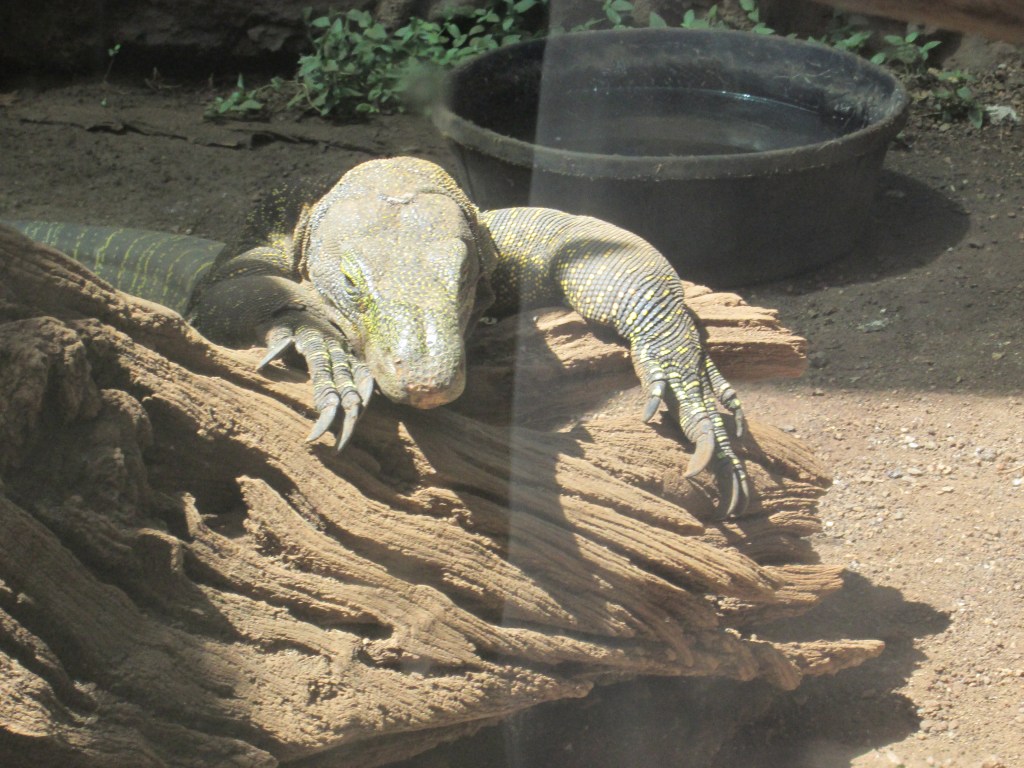
A Komodo Dragon (Varanus komodoensis)

Martine and I have this problem with zoos, namely: empty cages. It seems that one never knows whether a particular bird or animal is in residence or just hiding behind a rock or tree. The only zoos where this is not so much an issue are the San Diego and Santa Barbara Zoos and The Living Desert in the Coachella Valley.

The Honolulu Zoo is noted for its “exhibit absenteeism”: It seems that some 40% of the cages were unoccupied and without any notices that the animal is sick. I realize that in approximately half the cases, the cage occupant is lying doggo. If I were in a cage, I probably wouldn’t want to be stared at by a bunch of tourists or school children.

On the plus side, I did like the Komodo Dragon—my first. I also liked all the banyan trees, which kind of take my breath away. Below is Martine twirling a plumeria blossom in front of one of the zoo’s stately banyans:

It probably didn’t help that the temperature and humidity were in the 90s (Fahrenheit, that is).

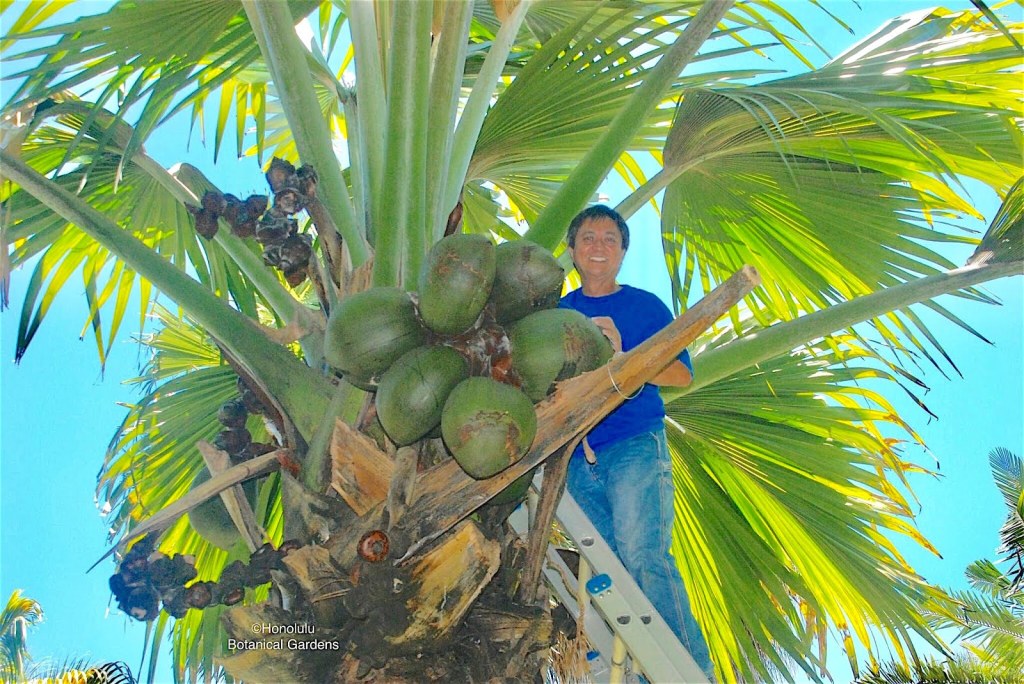
50-Pound Coconuts

Look Out Below!

On our last full day in Hawaii, Martine and I visited the Foster Botanical Garden, just north of Chinatown in Honolulu. It was hot and humid day, but fortunately there were a lot of shady benches. One of the highlights of the garden was the double coconut tree (genus Lodoicea), a native of the Seychelles. Its coconuts can be as heavy as 99 pounds each (45 kilograms).

Needless to say, Martine and I did not risk going under the tree and violently shaking its branches.

Curiously, while the coconuts are edible, they are of no commercial interest.

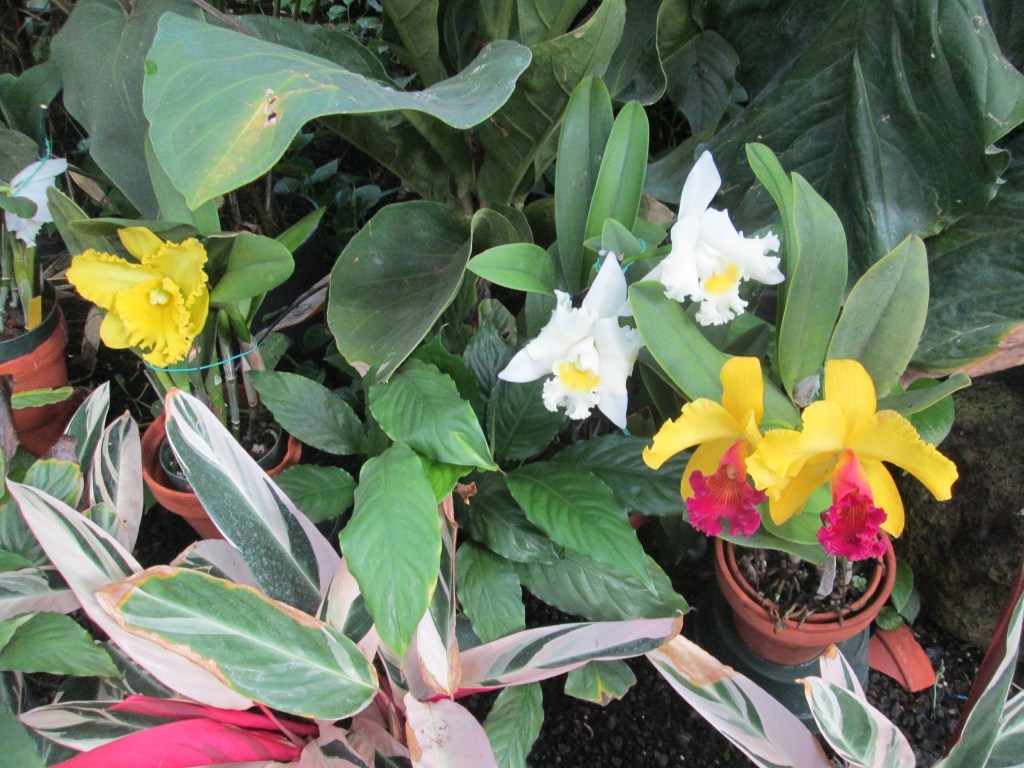
My favorite part of the gardens was the greenhouse with its collection of orchids. It was so warm and humid that the greenhouse door was left open.

Orchids at Foster Botanical Garden

Martine and I liked the garden so much that we resolved to visit several of the other botanical gardens in the Honolulu area or on whatever islands we visit.

The Bishop Museum

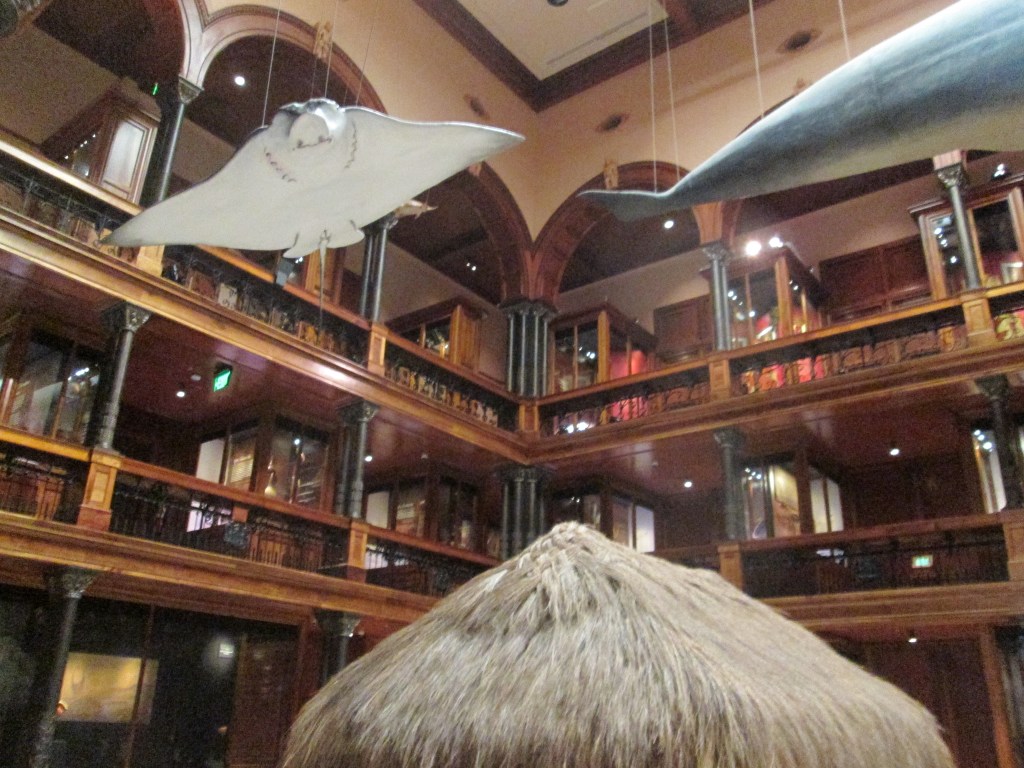
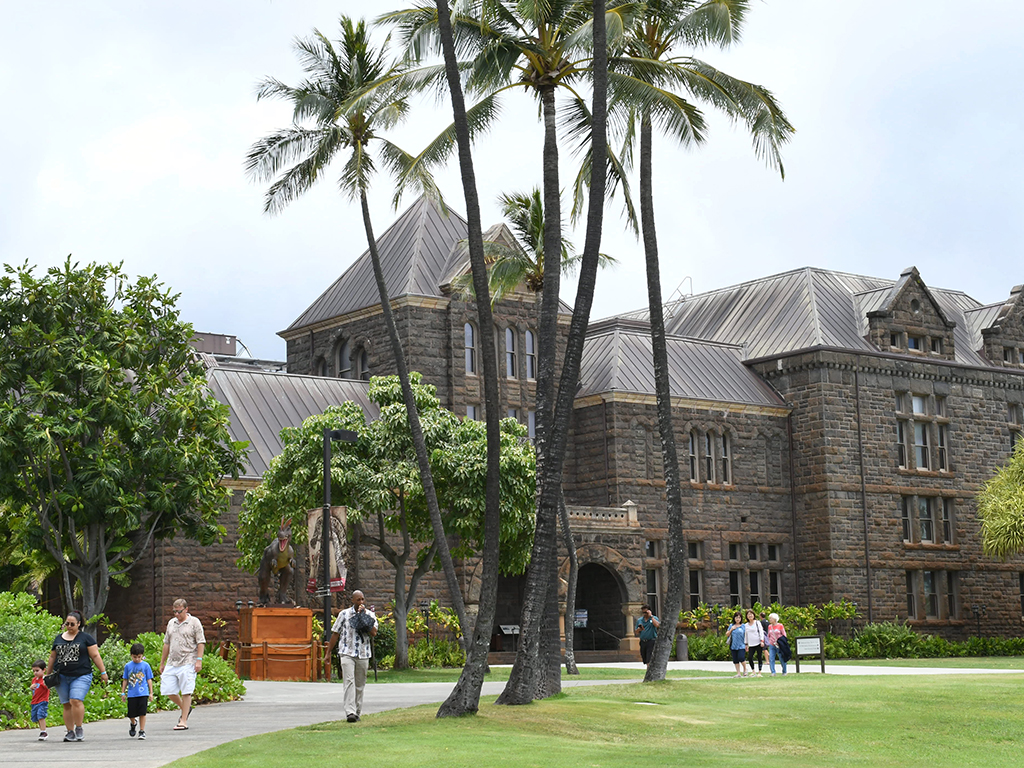
The Bernice Pauahi Bishop Museum in Kalihi

I do not believe that most people traveling to Hawaii care very much for its history and culture. All they really care about is fun on the beach and copious amounts of booze (and coffee: I have seen lines of almost 100 tourists at Waikiki’s International Marketplace waiting for their morning brew from Kona).

Consequently, mention the Bishop Museum to most tourists, and all you’ll get in response is a look of noncomprehension. While we were there, we saw no tourist buses and no tour groups. In fact, there wasn’t even a free handout brochure with a map of the extensive facilities. In fact, I suspect that the Museum is experiencing hard times.

That is a pity because the Bishop Museum is the place to be if you want to understand Hawaii, the land and its people. To that, I would add all of Polynesia. Particularly imposing is the three story Hawaii Hall (illustrated above) with its outstanding exhibits.

One of the reasons for most tourists not knowing about the Bishop Museum is its 19th century Victorian campus, which make it look (shudder) outdated. And yet, its exhibits are anything but!

I think that if tourists should ever encounter a rainy day on the island, they make a beeline for the Bishop. They will very rapidly get a better idea of where they have landed on that long flight from the mainland. Even on a hot and humid day, such as on the Wednesday we were there, it is a worthy destination.

Martine and the Giant Bunny

Martine and Friend at the Hawaii State Art Museum

There it was, occupying its own gallery and lying on its side. A giant inflated pink and white bunny. We were at the Hawaii State Art Museum, right across the street from the Iolani Palace. Actually, we had come to eat at the museum’s much heralded cafe, Artizen by MW. Unaccountably, it was closed that day.

The museum itself is interesting. The budget for the State of Hawaii sets aside a percentage to be used for promoting the arts. One result is the Hawaii State Art Museum, which doesn’t charge admission. Included in its galleries were works of art protesting state projects such as the construction of the H3 limited access highway from west Honolulu to the windward side of O’ahu. I can just imagine the stink that public sponsorship of protest art would cause in California.

In any case, the giant bunny was friendly, and Martine looked happy to have her picture taken with him.