If you’re doing the right kind of reading, you can find enlightenment anywhere. The following quote comes from a 2021 book review of Simon Critchley’s Bald, appearing in the July 20, 2021 issue of The Times Literary Supplement:
“To philosophize,” Critchley claims, “is to take your time, even when you have no time, when time is constantly pressing at your back.” It is also why it might seem that philosophy hasn’t advanced in thousands of years: because philosophizing isn’t about knowing the answers, it’s learning how to ask good questions, to keep asking them and to love the chaos.
I have just finished reading a poetry collection that was the best I have read in half a century. Over the past month or two, I have read several poems by Adam Zagajewski (1945-2021). His Mysticism for Beginners is full of startling images, deep insights, and even clarity, which is rare in contemporary poetry. Here is the first poem in the book:
A Quick Poem
I was listening to Gregorian chants
in a speeding car
on a highway in France.
The trees rushed past. Monks’ voices
sang praises to an unseen God
(at dawn, in a chapel trembling with cold).
Domine, exaudi orationem meam,
male voices pleaded calmly
as if salvation were just growing in the garden.
Where was I going? Where was the sun hiding?
My life lay tattered
on both sides of the road, brittle as a paper map.
With the sweet monks
I made my way toward the clouds, deep blue,
heavy, dense,
toward the future, the abyss,
gulping hard tears of hail.
Far from dawn. Far from home.
In place of walls—sheet metal.
Instead of a vigil—a flight.
Travel instead of remembrance.
A quick poem instead of a hymn.
A small, tired star raced
up ahead
and the highway’s asphalt shone,
showing where the earth was,
where the horizon’s razor lay in wait,
and the black spider of evening
and night, widow of so many dreams.
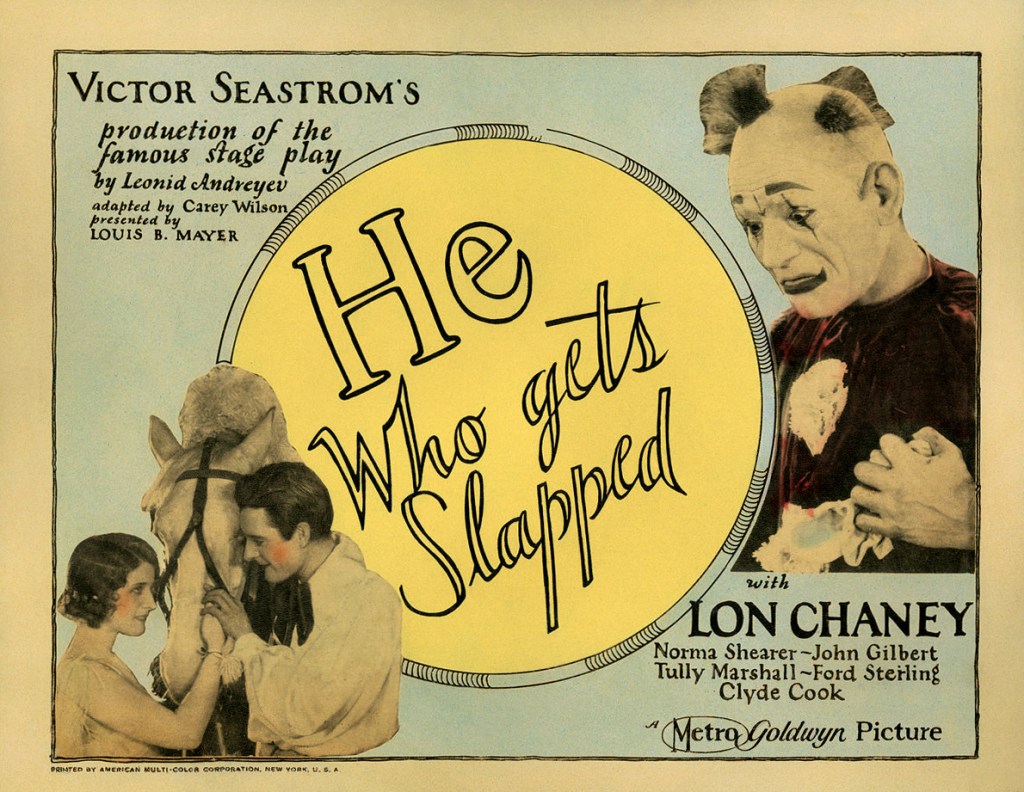
Much has been written about D. W. Griffith as the greatest early director. True, his very early films were revolutionary; and he had a great actress in Lillian Gish. But it is difficult to like a director who made the Ku Klux Klan into heroes in Birth of a Nation (1915), and to tolerate the Victorian sentimentality of his later films. At almost the same time that Griffith was working in Hollywood, Victor Sjöström was making great films in Sweden, films like A Man There Was (1917) and The Outlaw and His Wife (1918), both of which starred the filmmaker.
When Sjöström was brought to Hollywood by Louis B. Mayer of MGM, he made several silent masterpieces in quick succession:
He Who Gets Slapped (1924) starring Lon Chaney, Norma Shearer, and John Gilbert
The Scarlet Letter (1926) with Lillian Gish and Lars Hanson
The Wind (1928) with Lillian Gish and Lars Hanson
These three pictures are—all of them—in my list of the ten all-time best silent films made anywhere. And two of them star Griffith’s favorite star, Lillian Gish, who shines more in both films than she does in any of Griffith’s productions. And without all the ludicrous sentimentality.
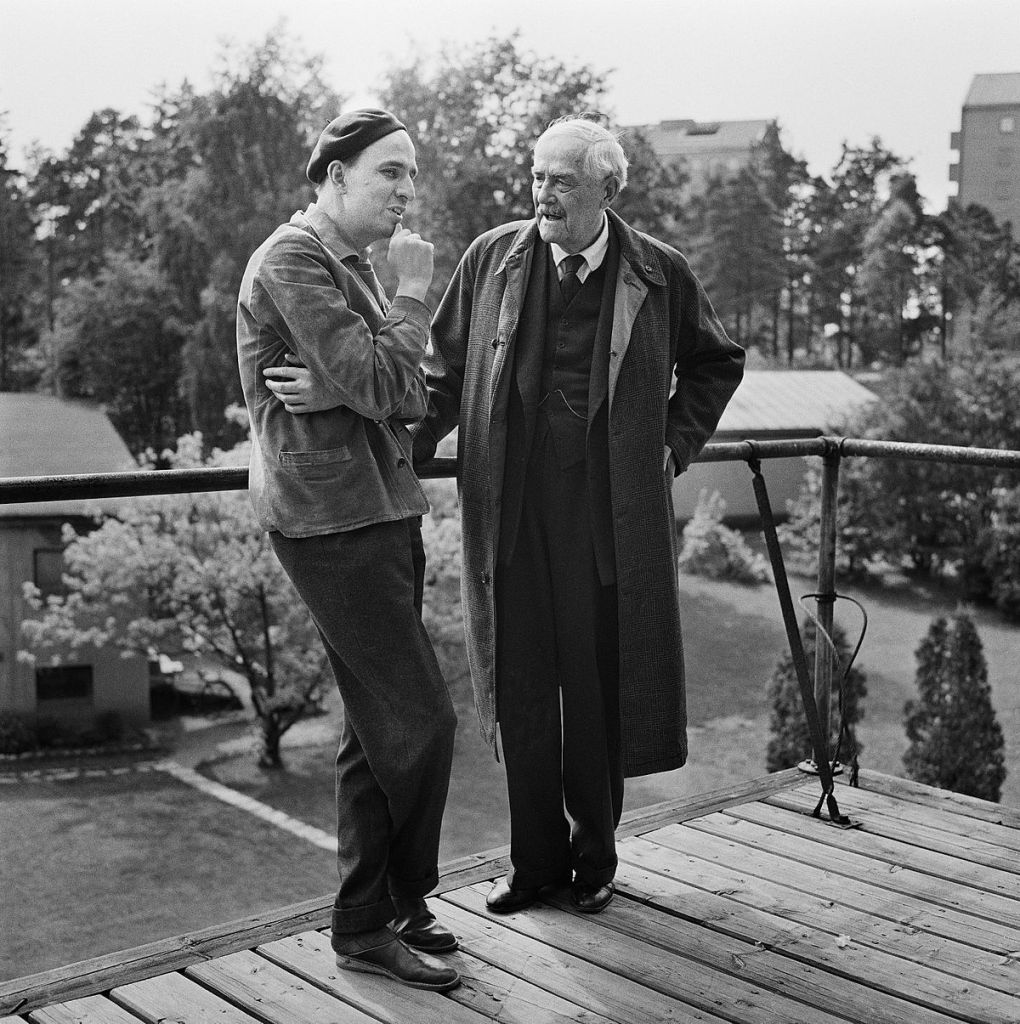
Ingmar Bergman (L) with Sjöström
Sjöström went back to Sweden in 1930, supposedly because he was unwilling to be bound by the many restrictions of early sound films. After making three more films in Europe, he returned to the theater as well as acting. He can be seen in his role of Dr. Isak Borg in Ingmar Bergman’s Wild Strawberries (1957).
If he weren’t so sentimental, I would rate Griffith higher than I currently do, but I still think Sjöström was better.
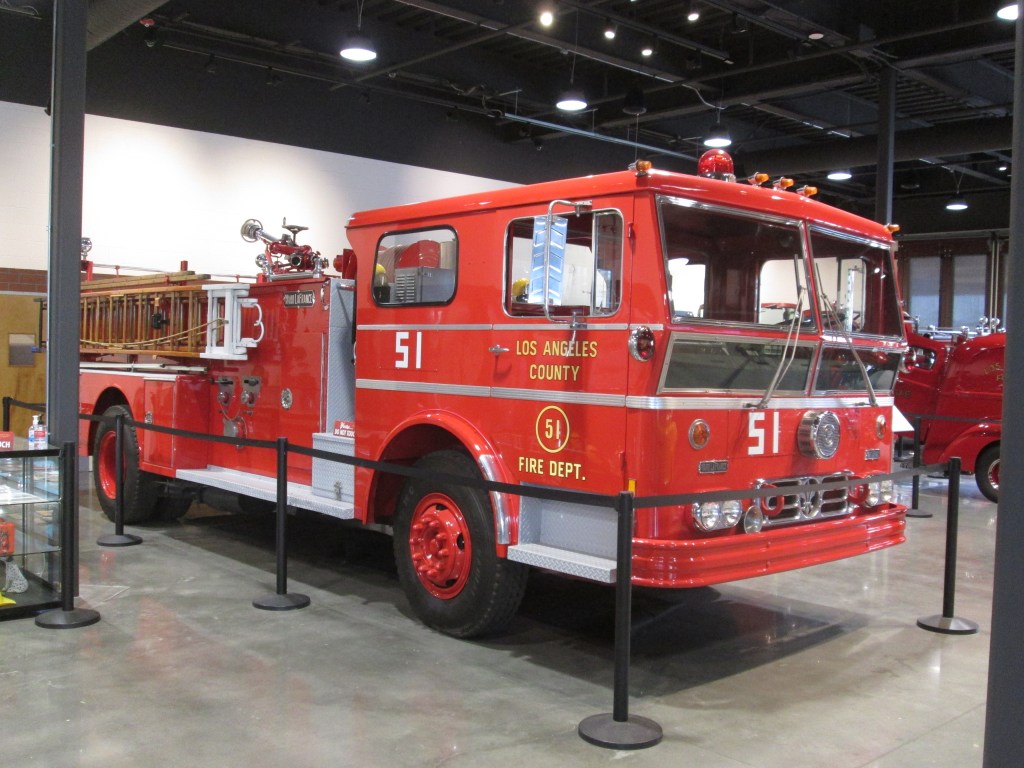
This morning, Martine and I trekked all the way to the southeastern City of Bellflower to visit the Los Angeles County Fire Museum. This is one of three firefighters’ museums in the L.A. area. (The others are the L.A. City Fire Museum on Cahuenga in Hollywood and the African-American Firefighters’ Museum on Central downtown.)
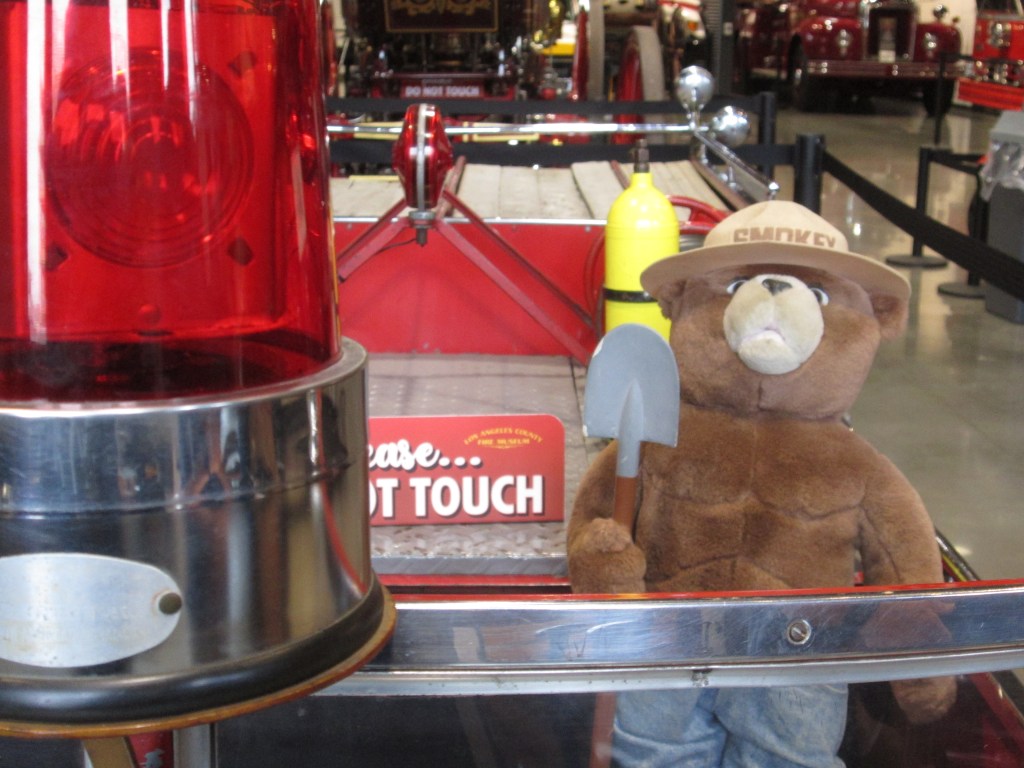
Martine brought along her 50th Anniversary Smokey Bear to show the museum staff. Smokey was a big hit to the retired firefighters who served as docents. Martine collects Smokey memorabilia, has a Smokey zipper pull on her jacket, and regularly receives a catalog from Woodland Enterprises in Moscow, Idaho of Smokey Bear goodies.
Many of the fire engines and other equipment on display were used in the television series Emergency! which aired on NBC from 1972 to 1979. That accounts for the Number 51 on many of the vehicles, as they belonged to fictional Squad 51 on the series.
The docents were all retired firefighters themselves who knew a great deal not only about the series, but how the firefighting equipment was used. Our guide was Javier Torres who patiently walked us through the exhibits.
Our Guide, Javier Torres
The Los Angeles County Fire Department covers fires outside of Los Angeles City, especially the sparsely populated areas to the north of the county where most of the wildfires happen.
I have always admired firefighters, as it is one of the few careers which create heroes. When a visitor to the museum asked me if I was a retired fireman, I quickly answered, “No, I’m not quite good enough for the job.”
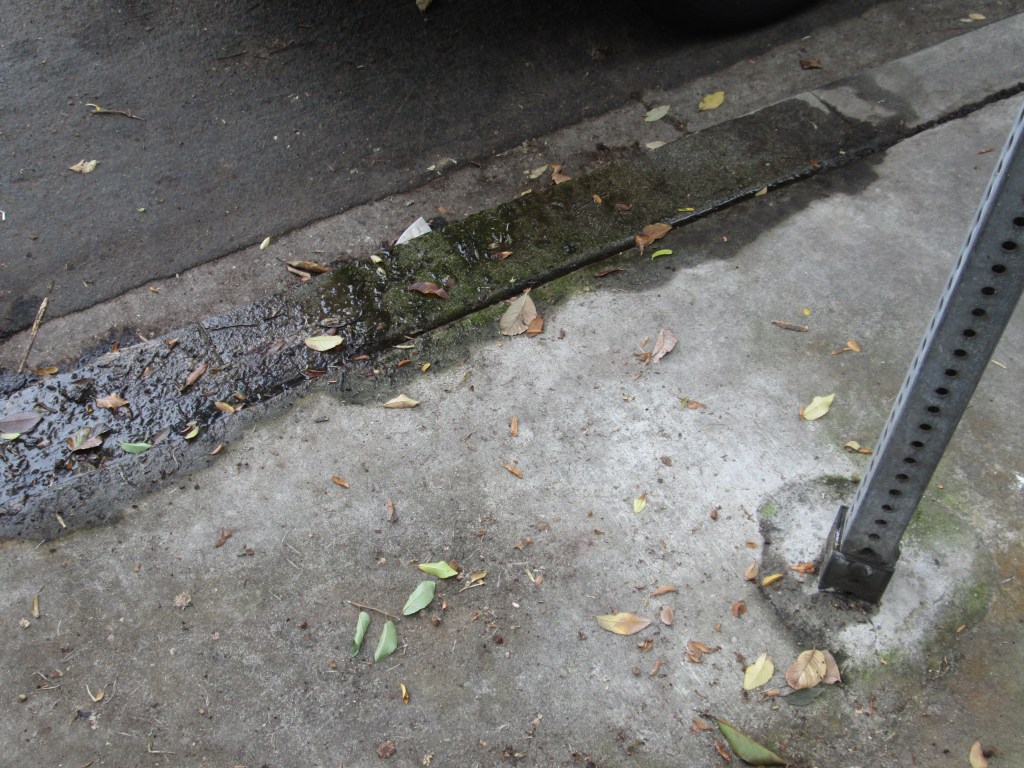
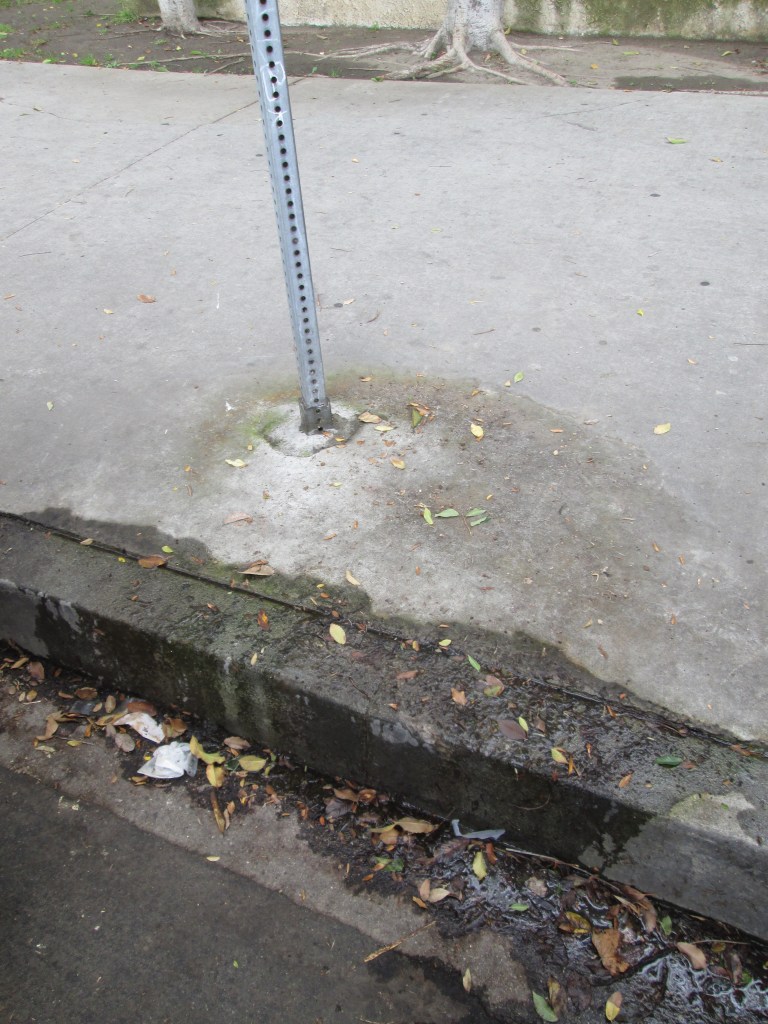
The above picture shows a steady water leak under a parking sign at Amherst and Ohio in West Los Angeles The area around the parking sign sometimes looks to be wet (but today it looked as if it had evaporated), and there is a steady runoff over the curb and on to the storm drain.
We are currently in the middle of a drought. Governor Newsom is perennially on the verge of dictating mandatory water cuts but this, being an election year, makes it unlikely.
The leak looks as if the sign had somehow pierced a water main. If that’s true, the leakage could cause problems to the multistory apartment building adjoining, especially as they have an underground garage.
The View from the Curb
Being a conscientious citizen, Martine did her best to inform the proper authorities. Instead of appreciating her efforts, the bureaucrats merely brushed her off. First, she called the Los Angeles Department of Water and Power, who promised two weeks ago to look into the matter. Next, she tried the Los Angeles City Hall where there was a help desk; but it seems it no longer exists. The Police suggested that she try the Department of Water and Power on Hope Street. There, she met with a security officer who brazenly lied about the employees working at home. What gave the lie to his assertion was the arrival of several employees while she was talking to him and the fact that the building’s outdoor parking lot was full of cars.
On a number of occasions, Martine has made several trips to Santa Monica’s City Hall over on a number of issues, and she was happy to see that they acted quickly to resolve them. Los Angeles, being ever so much larger, apparently is too large to be efficient or even respectful toward a citizen who is trying to help them.
Martine has read this post and suggested that a copy be sent to Mayor Eric Garcetti showing him how badly he is served by the bureaucrats under his control.
In Hawaii, there are two official languages—English and Hawaiian—and one unofficial one. I am speaking about the Hawaiian version of Pidgin English. Although it is thought of as being lower in status than the two official languages, it is becoming ever more prevalent as a kind of native slang. It contains bits of English, Hawaiian, Chinese, Filipino, Spanish, Korean, Portuguese, and Japanese. According to one website:
The local patois (Hawaiian slang) was originally developed by Chinese immigrants to make business transactions easier. They created an easy-to-understand lingo and named it “pidgin,” which literally translates to “business.” These days, natives on the islands have adopted this as a means of short-hand speak, as well as a way to mess with tourists.
I can vouch for Pidgin as a way of messing with tourists. Consider the following expressions:
Broke Da Mouth – What delicious food does
Your Kokua Is Appreciated – Your assistance, compliance, or contribution is appreciated
This Buggah is Pau – Your car is finito
Da Kine – Watchamacallit, Thingamajig
B-52 Bombah – Giant flying cockroach
Grinds or Grindz – Food
Hamajang – Something that is messed up, out of whack, disorderly, or needs tending
Kanak Attack – The feeling you’ve eaten way too much
’Ono – Tasty, delicious
Slippas – Flip-fops or sandals
There is an amusing (and very detailed) YouTube video illustrating how Hawaiian Pidgin is pronounced:
On Tuesday, June 7, California will hold a primary election. It used to be that primary elections were relatively boring affairs. No more! It seems that every candidate, every proposition is fought à l’outrance (to the death). Now that it seems that Trumpism is at war with reasonable governance, it seems that all of civilization is at stake, even in elections of judges, school board members, and dog catchers.
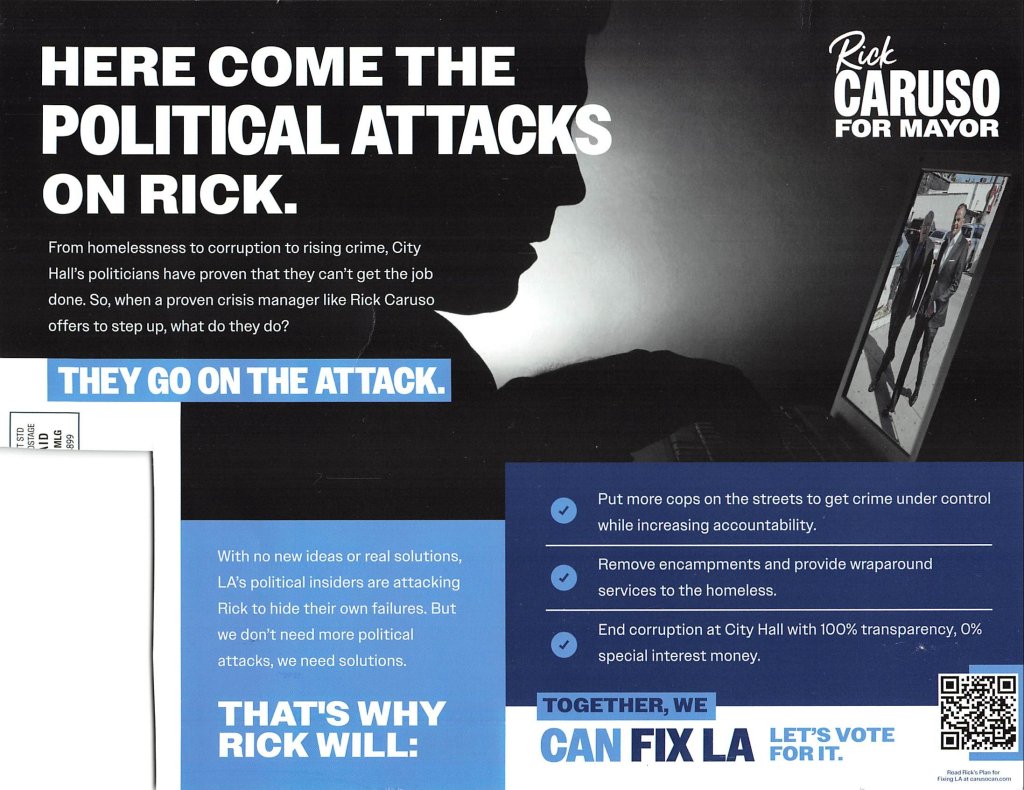
Every day for the last six weeks, my mailbox has been stuffed with four-color political puff pieces printed on card stock. The biggest offender is billionaire developer Rick Caruso, who is running to replace termed-out mayor Eric Garcetti, who is currently in limbo regarding Biden’s selection of him as ambassador to India. Not that I liked Garcetti, who was much too comfortable with real estate interests. And if I didn’t like Garcetti, I should vote to replace him with a real estate developer. Gack!! Ptttui!
If the onslaught were limited to my mailbox, it would be half tolerable. But now my phone rings several times a day with a SPAM RISK indicator, mostly either politicians, political groups, or so-called opinion surveys—none of which I answer.
If American politics winds up being a months-long assault on the patience of voters, no wonder I feel a sense of dread when elections are in the offing.
Naturally, the 24/7 news media are also affected by this intense combativeness. In addition, there are all the negative political TV and radio ads, which succeed only at increasing the sense of malaise. I know that we spend an inordinate amount of money on our elections. I would propose adding another expense: mailing every voter a supply of barf bags.
Pio Pico lived in California under three flags: Spanish, Mexican, and the Stars and Stripes of the United States. One would think that he would not have fared well under the last of these. Actually, he had many friends among the American settlers who had moved to California earlier and adopted Mexican citizenship.
That did not prevent Pio Pico from being swindled. But then it seems that swindles were more the rule than the exception in early Southern Cal. Even his friends, the Workmans and Temples lurched from prosperity to disaster and back again. It seems everyone was in court suing one another. And justice did not always come out ahead.
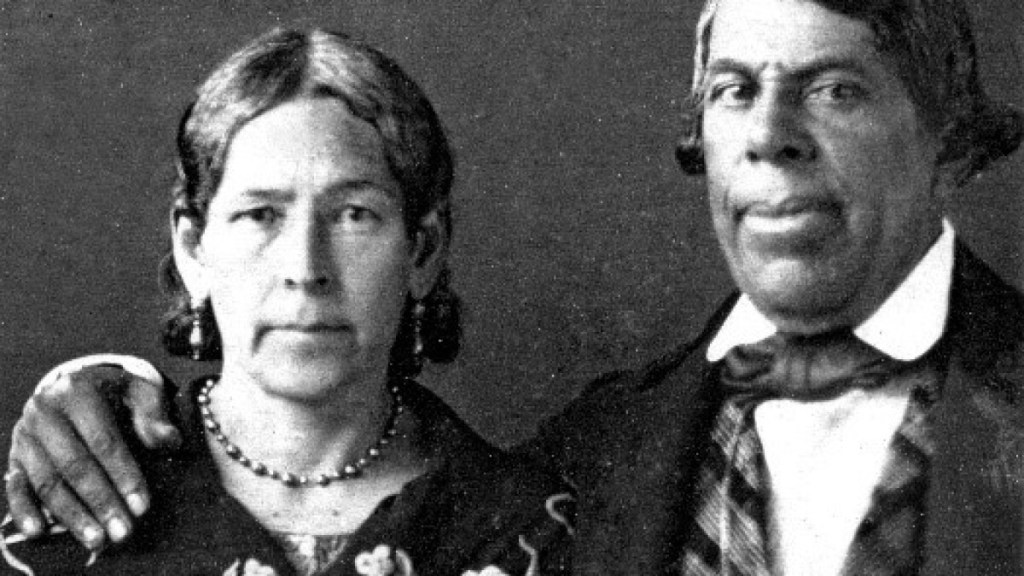
As one who has lost his pituitary gland to a tumor, I feel for Pico, who also had a pituitary disorder: in his case, acromegaly. In the picture above, note the fleshy lips and the enlarged ears and nose. Acromegaly results when the pituitary gland produces too much human growth hormone during the adult years. Exactly the opposite of what I had.
When Pico died in 1894 at the age of 93, he was buried at Calvary Cemetery in the Elysian Hills. When several years later, the tomb of him and his wife was vandalized, Walter Temple, the grandson of William Workman, obtained permission from Pico’s family to re-inter the remains in a mausoleum he built on the grounds of the Workman-Temple Family Homestead Museum in the City of Industry. If you are interested in learning more on the subject, consult Museum Director Paul R. Spitzzeri’s blog on the ties between the Workmans, Temples, and Pio Pico, the last Mexican governor of Alta California.
It all started in September 1966, when I had brain surgery in Cleveland to remove a benign tumor (chromophobe adenoma) that was threatening my life. I was just coming out of a coma caused by extreme pain of the tumor pressing on my optic nerve. Unfortunately, when an ill-trained orderly was assigned to give me a catheter, my woozy brain thought that I was under physical attack, and I struggled with him. That only caused him to try all the harder, which resulted in a scarred urethra which is still with me.
Tomorrow, I visit my urologist for a procedure known as a dilation or a cystogram tray. The doctor sends a catheter with a tiny camera up my urethra all the way to the bladder. The only pain which I think is comparable is a spinal tap.
After I recovered from my brain surgery, I found I had trouble urinating. It reached a crescendo several months later, when during a film screening I was putting on at UCLA, I found I had to urinate—but nothing was coming out. A friend drove me across campus to the UCLA Hospital, where the urologist on duty was sent for, and the passage was widened.
For the next several years, into the 1970s, I had a problem with gradual shutdown of my urethra. Fortunately, in recent years, it isn’t quite so bad. However, my urologist wants me to be dilated every six months. Tomorrow at 11 AM, I go in for my semi-annual torture.
Fountain Incorporating Two Millstones from the Family Mill
For the first time since the Covid-19 outbreak, Martine and I paid a visit to one of the historic Los Angeles area homesteads, the Workman & Temple Family Homestead Museum in the City of Industry. The museum includes two houses in their original location:
The Workman House, originally built in 1842 by William Workman while California was still a part of Mexico
La Casa Nueva, built by the related Temple family between 1922 and 1927
Below is a picture of the Temple family:
Unfortunately, the mother in the above picture did not live to see the completion of La Casa Nueva. As is not unusual in the story of many of the pioneer families of Southern California, there were alternating periods of boom and bust, which included two bank failures, droughts, and other misfortunes. Not long after it was finished, La Casa Nueva was turned into a boarding school and later became a nursing home. It has been a museum only since May 1981.
Also part of the museum is a family mausoleum, in which Pio Pico and his wife Ygnacia Alvarado were buried. William Workman and his family had become Mexican citizens and were friends of the Pico family.
The museum is open for free guided tours on Fridays, Saturdays, and Sundays only. For more information, consult the museum’s website.





 Tarnmoor
You must be logged in to post a comment.