After our recent trip to Vegas, I am thinking of provoking the Covid-19 demons with another road trip. It’s fun to travel, and my predilection for wanderlust has been seriously subdued by the pandemic.
I don’t think I can get Martine interested in another desert destination—even though she liked the Vegas trip—but there are other less arid possibilities like Catalina, San Diego, Santa Barbara, or the Santa Ynez Valley and Solvang. I’ll just have to put my thinking cap on.
Actually, there is one desert trip that Martine likes, which we have taken twice: Up U.S. 395 along the Eastern Sierras and the Owens Valley. To see what a rich target this is, check out this California Through My Lens website.
What with all my visits to the Maya ruins in Yucatan, Chiapas, Guatemala, and Honduras, you would think I would be getting tired of the endless ruins. Well, not yet! One incredibly dense region of Maya ruins is in the southeast corner of the state of Campeche, known as the Rio Bec region. Included are such archeological sites as:
Calakmul, with Tikal in the Petén region of Guatemala, perhaps one of the largest Maya cities at its height 1,500 years ago
Xpuhil (pronounced shpoo-HEEL)
Balamku
Chicanna
El Hormiguero (“The Anthill”)
Rio Bec
Becán
And these are only the better known ones, and even some of these are difficult to get to because they are at the end of dirt tracks in the jungles of the region.
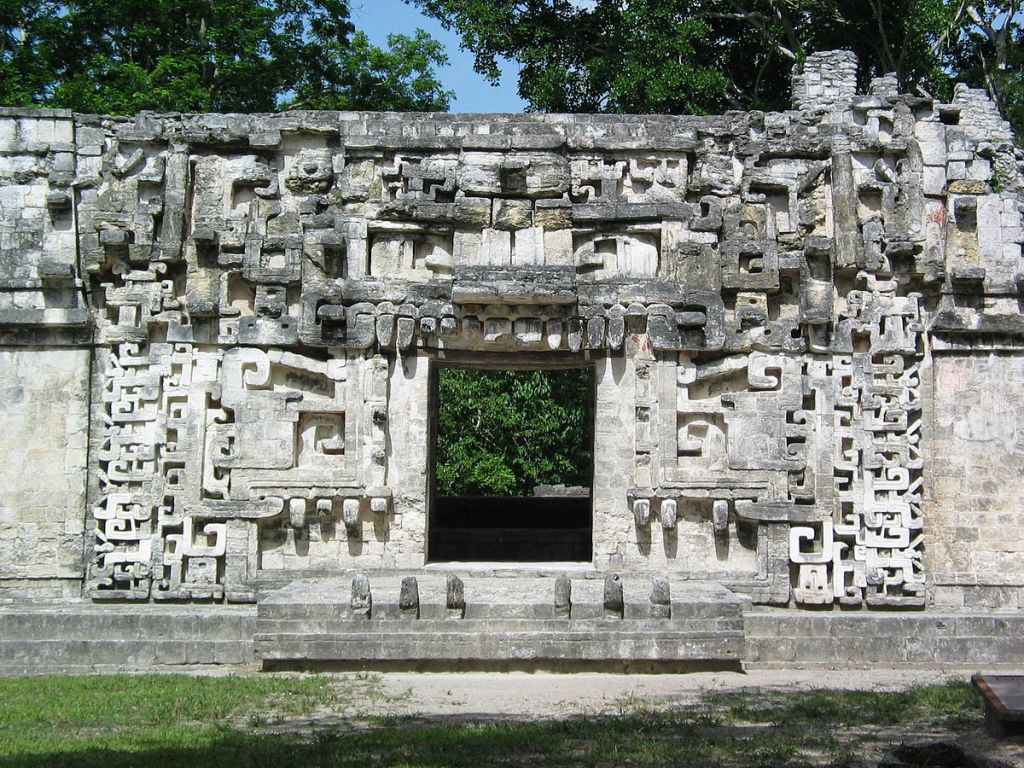
Maya Ruins at Chicanna
Unlike many of the better known ruins in the state of Yucatán, those of the Rio Bec region are in steaming monkey jungles. The only town of any size is Xpujil near the eponymous ruins, and it’s only a blip on the long road between Francisco Escarcéga and Chetumal. To visit any of these ruins requires reserving a chunk of time, from three days to a week. Public transportation is virtually nonexistent, and the only places to stay (and not a large selection at that) are clustered around Xpujil.
To do the Rio Bec area any justice, I would have to rent a four-wheel-drive vehicle. Still, I would love to go. I would have to pack a lot of insect repellent (like 100% DEET) and be prepared for some really dicey shit. Hey, if it’s on my travel bucket list, you can bet it’s no cakewalk.
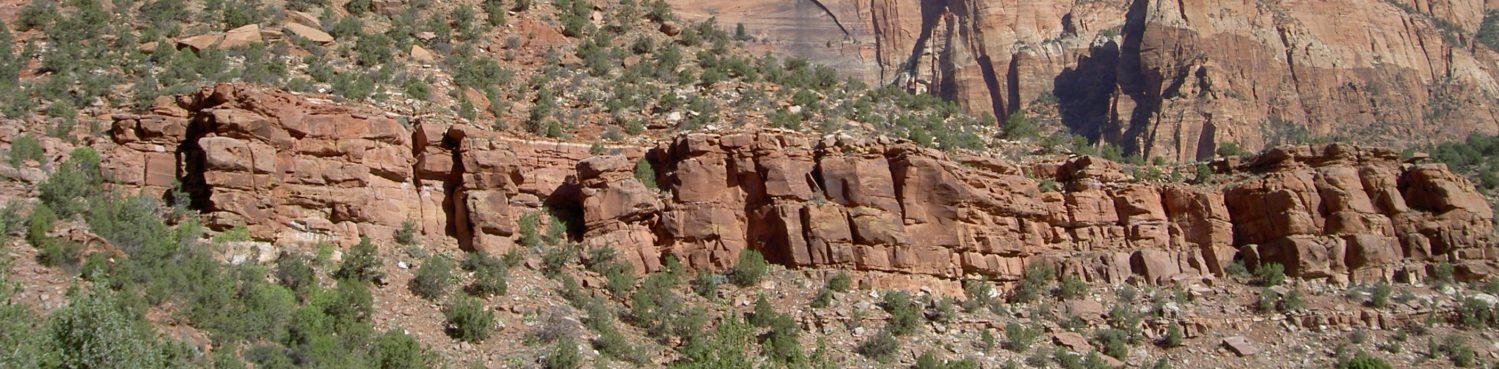
Purnululu National Park. Photo by Sean Scott Photography.
This is one of a series of posts about places I would love to visit, but probably never will for lack of time and money. I first heard about the Bungle Bungles from Bill Bryson’s excellent travel book In a Sunburned Country:
The Bungle Bungles are an isolated sandstone massif where eons of harsh, dry winds have carved the landscape into weird shapes—spindly pinnacles, acres of plump domes, wave walls. The whole extends to about a thousand square miles, yet, according to [his source] “were not generally known until the 1980s.”
The area is now within the boundaries of Purnululu National Park in a remote part of Western Australia midway between Broome and Darwin. Bryson wanted to see it, but didn’t have the time, as it would have involved several thousand miles of hard driving on a desert two-lane highway.
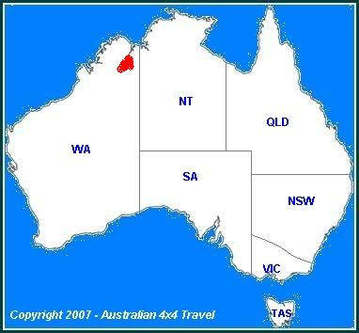
Location of the Bungle Bungles
Expedia is currently running a series of TV ads about how we never regret the things we didn’t buy nearly so much as the places we never got to visit. I tend to agree. That’s why I plan to use some of my posts to dream about places that look fascinating. What with Covid-19, advancing age, and the high cost of travel, I will dream in print about visiting certain destinations. You might say it’s my travel bucket list.
In Chapter 9 of his book about Australia entitled In a Sunburned Country, Bill Bryson writes about an encounter with New South Wales’s Australian Flies, called in Australia “March Flies,” because that’s when they manifest themselves.
I had gone no more than a dozen feet when I was joined by a fly—smaller and blacker than a housefly. It buzzed around in front of my face and tried to settle on my upper lip. I swatted it away, but it returned at once, always to the same spot. A moment later it was joined by another that wished to go up my nose. It also would not go away. Within a minute or so, I had perhaps twenty of these active spots all around my head and I was swiftly sinking into the state of abject wretchedness that comes with a prolonged encounter with the Australian fly.
Flies are of course always irksome, but the Australian variety distinguishes itself with its very particular persistence. If an Australian fly wants to be up your nose or in your ear, there is no discouraging him. Flick at him as you will and each time he will jump out of range and come straight back. It is simply not possible to deter him. Somewhere on an exposed portion of your body is a spot, about the size of a shirt button, that the fly wants to lick and tickle and turn delirious circles upon. It isn’t simply their persistence, but the things they go for. An Australian fly will try to suck the moisture off your eyeball. He will, if not constantly turned back, go into parts of your ears that a Q-tip can only dream about. He will happily die for the glory of taking a tiny dump on your tongue. Get thirty or forty of them dancing around you in the same way and madness will shortly follow.
And so I proceeded into the park, lost inside my own little buzzing cloud of woe, waving at my head in an increasingly hopeless and desultory manner—it is called the bush salute—blowing constantly out of my mouth and nose, shaking my head in a kind of furious dementia, occasionally slapping myself with startling violence on the cheek or forehead. Eventually, as the flies knew all along, I gave up and they fell upon me as on a corpse.
On our long road back from Las Vegas, we stopped for a few minutes in Amboy, on the “shore” of Bristol Dry Lake. In past years, I jokingly referred to Amboy as California’s equivalent of Tolkien’s Mordor. This time, the café was actually open; gas was being sold; and beverages and snacks were available.
One has to consider that Amboy is no longer really on the road to anywhere. It is where Old Route 66, the “Mother Road,” meets the road to Twentynine Palms. You can take Route 66 east from Barstow, but the road is closed past Kelbaker Road, which goes north to Kelso and ends up in Baker. That’s the way Martine and I took, staying on 66 only as far as the turnoff to Twentynine Palms, where Martine used to work as a civilian employee at the Twentynine Palms Marine Air Ground Task Force Training Command (MAGTFTC).
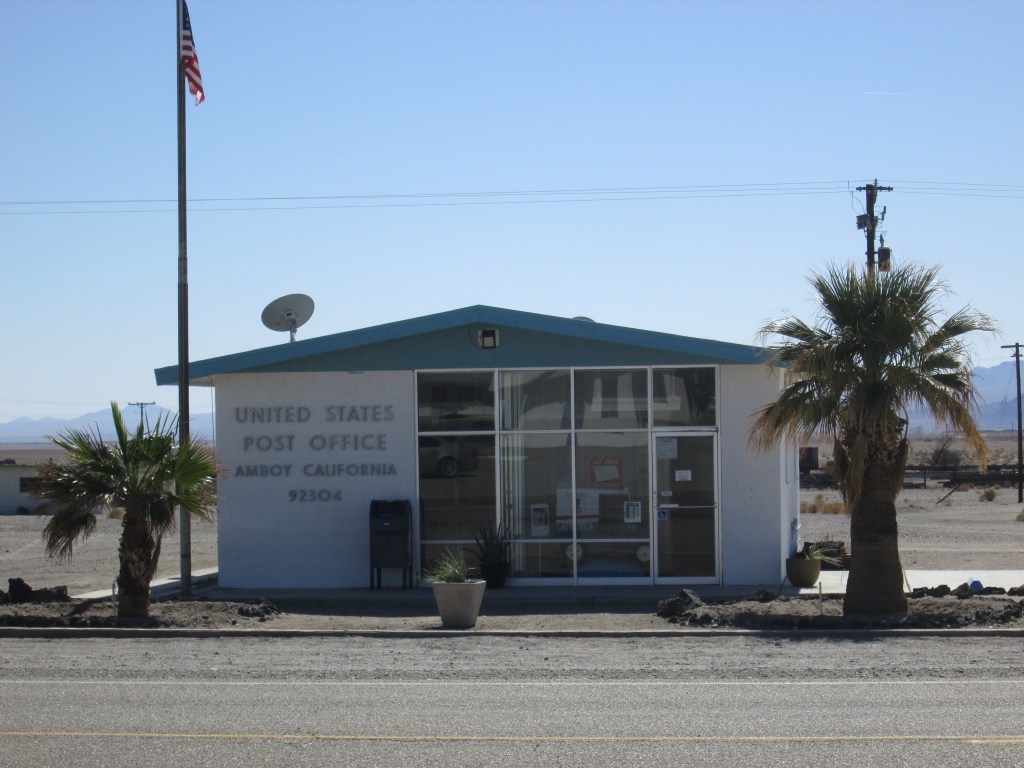
Although there was some human activity visible at Amboy, including a post office across the highway (?!), the desert heat is incredibly fierce. I can’t see anybody being comfortable there except for a few minutes around dawn or dusk. So I doubt you’ll see a McDonald’s or a Starbuck’s there any time soon.
The following is from Sam Hammill’s translation of Lao Tzu’s Tao Te Ching written some 2,500 years ago:
Beauty and ugliness have one origin.
Name beauty, and ugliness is.
Recognizing virtue recognizes evil.

Is and is not produce one another.
The difficult is born in the easy,
long is defined by short, the high by the low.
Instrument and voice achieve one harmony.
Before and after have places.

That is why the sage can act without effort
and teach without words,
nurture things without possessing them,
and accomplish things without expecting merit:

only one who makes no attempt to possess it
cannot lose it.
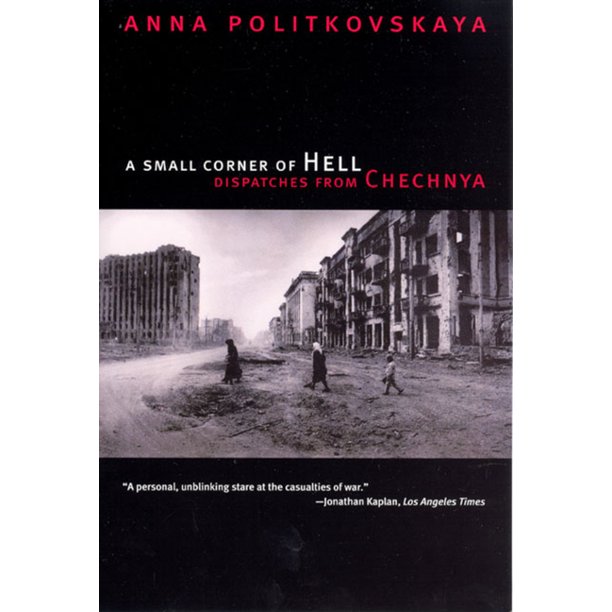
If you really want to understand what Vladimir Putin is doing to Ukraine, you should read about what he did in Chechnya shortly after he attained power. Anna Politkovskaya was a brilliant Russian journalist who was unafraid of speaking truth to power. She wrote a number of criticisms of Putin that were so to the point that he had her murdered in front of her apartment in 2006.
Oh, there was a murder trial, to be sure. And Putin, in true Caligula fashion, tsk-tsked at the crime. (You can read his lying words here in a post I wrote eight years ago.) Several people were sentenced, but they were no doubt thugs who had outlived their usefulness to the Motherland and were disposed of to protect the presidente.
Anyhow, this is the book I recommend you read. It is called A Small Corner of Hell: Dispatches from Chechnya. I doubt that it is still in print, but you can likely find it in a good library or order it on the Internet from a used book site like Abebooks.Com or Addall.Com. What Putin is doing to Ukraine now is what he did to Chechnya in the First and Second Chechen Wars.
If you are hoping that the bloodletting will end soon, don’t bet on it. When things don’t go his way, Mr. Vladimir thinks nothing of widespread rapine and destruction and certainly doesn’t care what YOU may think.
I was thinking of adding a picture of Putin, but you surely know by now what that ugly mother looks like. I would rather honor Anna Politkovskaya because she was brilliant, brave, and fearless. Not to mention beautiful.
Patrick Smith’s Ask the Pilot blog raises some interesting issues regarding the effects of the war in Ukraine on global aviation:
THE RUSSIAN invasion of Ukraine is impacting commercial aviation on multiple fronts — as wars tend to do. It remains to be seen how long the effects last, or how deeply they’ll be felt. Will NATO countries join the fight? Will tourists shy away from European destinations in general? Even in a best case scenario, this is the last thing the airline industry needs, just as the coronavirus pandemic appears to be winding down.
For starters, Russia has closed off its airspace to foreign carriers. The big issue here isn’t so much the cancellation of flights to and from Russian cities, but rather those routes overflying Russian territory, especially the country’s northern areas, including Siberia. Russia is a gigantic piece of land, and hundreds of long-haul flights overfly these regions weekly on routes connecting Europe and North America with Asia.
This might not make sense if you’re looking at a flat map or atlas; you need a globe to better visualize it. The shortest distance from the U.S. to India, for example, goes more or less due north, up over Siberia and down through the very heart of Russia. A flight from the U.K., France or Germany headed to Japan, China or Korea, similarly relies on Russian airspace.
United Airlines has suspended its flights to Delhi, but on the whole it’s the Asian and European airlines who are feeling the pain. Most flights between the U.S. and Pacific Rim cities can be re-routed without much trouble. This isn’t so for flights between Asia and Europe. Alternate routings are possible — down through the Gulf, across India and such — but they’re substantially longer, in some cases requiring a stopover. Not only does this increase fuel costs, it wreaks havoc with logistics, crew staffing and scheduling. Longer travel times mean that passengers can no longer make onward connections, and so on. It’s a very expensive problem, with disruptions rippling through an airline’s operation.
It seems that airlines will be reduced to plotting flights using Mercator projection maps, being deprived of the right to fly over Russian airspace. That means longer, more roundabout flights and greater expense of fuel. Read Patrick’s full post for more info.
I have mentioned the Heart Attack Grill in Las Vegas recently. Today, I called my friend Bill Korn, who was marveling at the menu of the place. Granted that Vegas is no stranger to wretched excess, but the Heart Attack Grill draws people to it who should—if they value their lives—be more careful about what they eat.
On Monday, Presidents’ Day, I was shocked to see the place full. Customers were chowing down on mountains of sugars and fats wearing hospital gowns and sitting in wheelchairs, being served by sexy waitresses in full nursing garb. It is a known fact that at least two customers have died at their tables from meals they should have avoided.
Standing outside on a cold and windy day, I shook my head and wondered what has happened to the American people.
Look, Guys, those nurse/waitresses are awfully cute, but they won’t accompany you to Valhalla or wherever it is that people who make bad decisions about their lives go.
There is something about Vegas that seems to cater to the worst side of the American id. Technically, sex for hire is against the law in Clark County (but not in nearby Pahrump and other rural towns in Nevada). But there’s nothing illegal about giving you obscene amounts of food.
Sometimes I think one gets more out of Vegas by observing than by participating. Come to think of it, we didn’t do any gambling, either.
The following poem by Stephen Crane is short and cryptic. But it sticks in one’s craw. And the last two lines were taken by Joyce Carol Oates as a title for one of her novels.
In the Desert
In the desert
I saw a creature, naked, bestial,
Who, squatting upon the ground,
Held his heart in his hands,
And ate of it.
I said, “Is it good, friend?”
“It is bitter—bitter,” he answered;

“But I like it
“Because it is bitter,
“And because it is my heart.”









 Tarnmoor
You must be logged in to post a comment.