“I Would Prefer Not To”

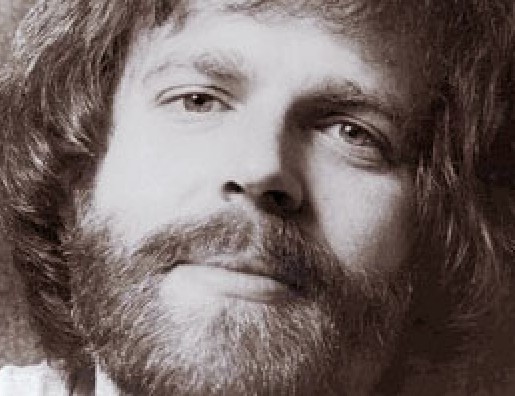
Mystery Writer Patricia Highsmith (1921-1995)

The words are those of Herman Melville’s Bartleby the Scrivener in his story of the same name. In that story, a clerical worker refuses outright to continue to do his work and pays the price for his obstinacy. In Patricia Highsmith’s A Suspension of Mercy, Bartleby is the last name of writer Sydney Bartleby, a man who is every bit as obtuse as Melville’s scrivener. He is married—not entirely happily—to Alicia Sneezum. They live in the English countryside, with Sydney trying to publish a novel and television scripts, and Alicia trying to paint abstracts. At one point they decide to split up for a while and maybe come together only when they had gotten the ya-yas out of their system.

So Alicia is put on a train at Ipswich, telling her husband to tell people she had gone to stay with her parents. Except, she doesn’t in fact tell her parents anything. In the meantime, Sydney plays with the idea of having his friends and neighbors suspect that he had murdered Alicia. He even rolls up an old carpet, imagining that he had hurled Alicia down a flight of stairs to her death and rolled the body into the carpet. He buries the carpet early one morning in a forest some distance from his cottage.

In the meantime, people keep calling Sydney asking to speak to Alicia. He tells them she is staying with her parents. When they call the parents, and find her not there, the suspicion arises that Sydney has murdered her. A neighbor had seen him struggle to load a heavy rolled carpet into his car.

Enter the police. Sydney leads them to the buried carpet, which they find minus the body of Alicia. That only makes the police more suspicious. They start digging other holes in the area to search for the body. Interestingly, Sydney finds Alicia, with her new inamorata whom she had met at a party, but he doesn’t alert her or, in fact, anybody. So the suspicions continue to mount.

Nasty. Nasty. Nasty. This is clearly a story by Patricia Highsmith, author of Strangers on a Train (1950) and The Talented Mr Ripley (1955). It is delightful how the mutual obstinacy of Sydney and Alicia lead to the police, the press, and the general public to assume the worst. At several points, Bartleby (or Alicia) could have short-circuited all this needless mountain of false news, but, like the original Bartleby, preferred NOT to.

This is without a doubt the most obstinate mystery ever written, and great fun withal.

Skin, Left Anterior Proximal, Upper Arm

Squamous Cell Carcinoma

About a week and a half ago, I went to see a new dermatologist, the one I had been seeing having retired. The reason for my visit was an annoying skin tag that was dangling from my left upper eyelid. While I was there, the doctor checked my body for suspicious signs of skin cancer—this being Sunny Southern California. I was surprised to learn a few days later that one of the three suspicious signs did indeed prove upon biopsy to be a “Squamous cell carcinoma in situ (Bowen’s disease), lesional cells extend to a peripheral edge of the biopsy.” It looked very much like the one in the above photograph.

Within two hours, I was in the doctor’s office having a lozenge-shaped piece of tissue from my left arm removed and replaced with several stitches. I was rather surprised by the outcome, because that portion of my upper left arm was never directly exposed to sunshine: I never work tank tops or other “young men’s folly” types of T-shirts. The skin cancer cells ignored my cotton/polyester blend shirts and started their nefarious work where I did not expect it.

Fortunately, the particular bump that was removed had just appeared one or two weeks previously; so we likely stopped it at an early stage.

I remember one of my friends lost his father because he was used to hanging his left arm outside the open window of his automobile. He got some form of skin cancer, did not seek treatment, and eventually the cancer metastasized and killed him. He did most of his driving in the San Fernando Valley, an inordinately hot part of L.A. I never hang my arm out the window: I use it to aid me in steering my car. Besides, my window is usually closed in summer because I have the air conditioner on.

Life is a bunch of close calls. I think I ducked this particular bullet.


“Because I Could Not Stop for Death”

Emily Dickinson (1830-1886), One of America’s Greatest Poets

It has been a while since I’ve presented a poem by Emily Dickinson. Along with Robert Frost and Walt Whitman, she is one of the greatest poets our country has ever produced. This one is called “Because I Could Not Stop for Death.”

Because I could not stop for Death –
He kindly stopped for me –
The Carriage held but just Ourselves –
And Immortality.

We slowly drove – He knew no haste
And I had put away
My labor and my leisure too,
For His Civility –

We passed the School, where Children strove
At Recess – in the Ring –
We passed the Fields of Gazing Grain –
We passed the Setting Sun –

Or rather – He passed us –
The Dews drew quivering and chill –
For only Gossamer, my Gown –
My Tippet – only Tulle –

We paused before a House that seemed
A Swelling of the Ground –
The Roof was scarcely visible –
The Cornice – in the Ground –

Since then – ‘tis Centuries – and yet
Feels shorter than the Day
I first surmised the Horses’ Heads
Were toward Eternity –

A tippet is a narrow piece of cloth worn over the shoulders, and tulle is a kind of netting, which could be made from any of several fibers.

Everyday Realism

César Aira, Argentinian Writer Par Excellence

What’s the first thing you do when you wake up? Put on your tuxedo and cummerbund? Sit in bed lolling over a tray of sumptuous breakfast delicacies? Write the Great American Novel? No, no, no. What you do is stagger to the bathroom and empty your bladder. That before anything else—unless you want an untoward accident to put a damper on your day. I realize it would be boring to show these simple rituals in a movie, in which every minute costs a small fortune. But even in fiction, where words are cheap, there is no acknowledgment of a simple biological need.

None to speak of, anyway, until I saw the following line in César Aira’s Ema the Captive:

A sleepy soldier had come out onto the veranda of his house and stopped there, right on the edge, to pee, swaying dangerously.

Hallelujah! This line was in all probability written by a human, and not an android.

Another example of a simple reality not observed, especially in films, is that the hero always finds a parking place directly in front of his destination. In The Big Sleep, Bogart always finds the ideal parking space without even trying. I guess there weren’t that many people around in the 1940s.

Finally, with some rare exceptions, guns almost never misfire. If you look at Wikipedia’s entry on Firearm Malfunction, you will find twelve things that can happen to prevent your gun from shooting. In the real world, not everyone that has firearms is careful with them, or does everything needed to guarantee 100% functionality. Yet one rarely sees a misfire of any sort.

I guess most movies are fantasies, as our parents told us.


Adventures in the Here and Now

Los Angeles Central Library

As I have written in another post, I usually travel downtown on Thursdays to visit the Central Library on 5th Street between Hope and Flower. I like to show up at opening time (10 am) and reading for about two hours. Then I scan the stacks for books I want to read, check them out, and go to Conference Room A for the weekly Mindful Meditation session guided by John Kneedler, an instructor for the UCLA Mindful Awareness Research Center (MARC).

The whole point of mindful meditation is to learn how to live in the here and now. Most of the time, one’s thoughts are all over the place. Take this classic example from Aldous Huxley’s Those Barren Leaves, in which Miss Thriplow tries to concentrate on the nature of God:

God is a spirit, she said to herself, a spirit, a spirit. She tried to picture something huge and empty, but alive. A huge flat expanse of sand, for example, and over it a huge blank dome of sky; and above the sand everything should be tremulous and shimmering with heat—an emptiness that was yet alive. A spirit, an all-pervading spirit. God is a spirit. Three camels appeared on the horizon of the sandy plain and went lolloping along in an absurd ungainly fashion from left to right. Miss Thriplow made an effort and dismissed them. God is a spirit, she said aloud. But of all animals camels are really almost the queerest; when one thinks of their frightfully supercilious faces, with their protruding under lips like the last Hapsburg kings of Spain… No, no; God is a spirit, all-pervading, everywhere. All the universes are made one in him. Layer upon layer… A Neapolitan ice floated up out of the darkness. She had never liked Neapolitan ices since that time, at the Franco-British exhibition, when she had eaten one and then taken a ride on Sir Hiram Maxim’s Captive Flying Machines. Round and round and round. Lord, how she had been sick, afterwards, in the Blue Grotto of Capri! ‘Sixpence each, ladies and gentlemen, only sixpence each for a trip to the celebrated Blue Grotto of Capri, the celebrated Blue Grotto, ladies and gentlemen….’ How sick! It must have been most awkward for the grown-ups…. But God is a spirit. All the universes are one in the spirit. Mind and matter in all their manifestations–all one in the spirit. All one—she and the stars and the mountains and the trees and the animals and the blank spaces between the stars and… and the fish, the fish in the Aquarium at Monaco…. And what fish! What extravagant fantasies! But no more extravagant or fantastic, really, than the painted and jewelled old women outside. It might make a very good episode in a book—a couple of those old women looking through the glass at the fishes. Very beautifully and discreetly described; and the fundamental similarity between the creatures on either side of the glass would just be delicately implied—not stated, oh, not stated; that would be too coarse, that would spoil everything, but just implied, by the description, so that the intelligent reader could take the hint. And then in the Casino… Miss Thriplow brusquely interrupted herself. God is a spirit. Yes. Where was she? All things are one, ah yes, yes. All, all, all, she repeated. But to arrive at the realization of their oneness one must climb up into the spirit. The body separates, the spirit unites. One must give up the body, the self; one must lose one’s life to gain it. Lose one’s life, empty oneself of the separating Me. She clasped her hands tightly together, tighter, tighter, as though she were squeezing out her individual life between them. If she could squeeze it all out, make herself quite empty, then the other life would come rushing in to take its place.

Many people avoid trying to concentrate their minds because they are too harsh with themselves. The mind resists being in the here and now: During today’s session, I thought of where I would eat lunch, what book I would read next, whether Martine would stage another departure. I kept coming back to the simple inhalation and exhalation of my breath. So I am nowhere near perfect. But I keep trying.


Billionaires Are No Heroes

They Love Themselves Too Much to Deserve Your Love

The 2016 election of the Trumpf showed me that, to an increasing extent, Americans are enamored of their billionaires. They are called “job creators,” when when they fire thousands of workers after their failed mergers and acquisitions. Even though some of them have proved useful to their fellow Americans (notably Bill Gates and Warren Buffett), most are not worth spit. We are currently watching one of them, Elon Musk, become unglued, risking his former godlike status.

In last week’s edition of The New Yorker, there is an almost book-length profile of Mark Zuckerberg of FaceBook, a man who would sell his mother to a Russian glue factory just for the lulz.

I was at the Farmers’ Market with my friend Robert today. We both agreed that part of Trumpf’s popularity is due to the fact that even the most idiotic, toothless redneck thinks he or she can become a billionaire—just so they can tell everybody off who ever dissed them, or even looked as if they might diss them. Also, maybe they would like to have a go at their favorite porn stars, even if they have nothing but a pathetic little stump for a weapon.

In time, a few of the most astute of them (there must be at least or or three spread across this great nation of ours) will figure out that they have been had. This is a president whose policies help billionaires, but no one else. The others will continue to be raped at their leisure until they die, get thrown out of their hovels, or succumb to a lack of reasonable health insurance.


Caught Between the Warring Twins

Emil, Margit, and Elek Paris

The following post appeared on my Multiply.Com blog site on January 16, 2011.

It’s been a while since I revisited my past. This time, I’m going back into the period before my birth. The above picture was taken at some point in the 1930s and shows the Paris twins, Elek (Alex) and Emil, and their sister Margit.

Can I tell which one of the men is my father? Probably, it is the one on the right, because my father Elek was always better tanned and more athletic but not so well dressed as Emil. Even later in life, I sometimes had to wait for them to start talking before I recognized them, because they had very distinctive voices.

Elek and Emil could never live far apart from each other. When Emil bought a condominium in Hollywood, Florida, my Dad followed—in the same Carriage Hills condo complex. My father died in October 1985; and Emil died a few months later, of pretty much the same combination of diabetes and heart failure. At my Dad’s funeral, Emil was visibly shaken, as if his world had been taken away from him.

All their lives, the two twins competed through their children. Dad had the two sons, my brother Dan and myself; Uncle Emil had a son and daughter, Emil Jr. and Peggy. At times, the competition got bitter, especially when my cousins faltered in school and in their personal lives. Dan and I, however, always liked our cousins and regretted any bad blood between the brothers. They were just that way.

Margit was a different case: She never married. I don’t even know whether she dated very much or even wanted to marry eventually. Some years after this photo was taken, she opened May’s Bridal Shop in Garfield Heights, Ohio, and lived on the premises spending her time sewing bridal gowns. My job when visiting there was to pick up fallen pins with a magnet. I would also look with admiration at all her old calendars with Currier & Ives illustrations.

I don’t remember when Margit (whom we called Nana) closed the shop and retired to Florence, South Carolina, but I think it was in the early 1970s. She didn’t last very long because, shortly after I returned from Hungary in 1977, I got a call that Margit had died suddenly. The timing was unfortunate, as my parents were still in Hungary visiting. So I notified my brother and the two of us attended the funeral—after sending a telegram to Dad in Hungary. He was very broken-up that he couldn’t make the funeral in time, but was grateful that Dan and I went.

Whatever the competitiveness between the frequently warring twins, I always felt that my Uncle, my cousins, and my Aunt loved us for what we were. Although Margit was closer to her brother Emil than to Elek, that never impacted on the next generation. I did feel, however, that my Dad had never said certain unkind things about my cousins that I wish he hadn’t. Cousin Emil was always good-hearted and frequently protected me from neighborhood bullies when I was a little shrimp of a kid; and Cousin Peggy was, I always thought, incredibly cute.

A life is always strange when one looks at it all of a piece. I cannot help but feel that I have grossly oversimplified the complex web of interrelationships that existed among us. The important thing is that I accepted the few bad things because they were more than made up for with kindness and love. Elek, Emil, and Margit now exist inside of me; and all the conflicts have been resolved.


Favorite Films: Doctor Mabuse Der Spieler

Doctor Mabuse Putting On a New Disguise

I’m going out on a limb to recommend a 4+ hour 1922 German film about a master criminal. Dr Mabuse der Spieler (Dr Mabuse the Gambler) is the first—and best—of three films that Fritz Lang directed about a master criminal named Mabuse, who was not only a gambler, but a counterfeiter, psychoanalyst, illusionist, stock manipulator, hypnotist, murderer, and a master of disguise. The other two Mabuse films Lang directed were The Testament of Dr Mabuse (1933) and The 1000 Eyes of Dr Mabuse (1960).

The original film starred Rudolf Klein-Rogge as the master criminal, Bernhard Goetzke as State Prosecutor Norbert van Wenk, and Alfred Abel as Count Told.

The period from 1918 through 1924 was a brutal time for the newly founded Weimar Republic after the German loss of World War I. The Treaty of Versailles and the heavy reparations it forced on Germany ultimately led to Hitler and the Third Reich. But before that, it led to political turmoil and hyperinflation. Lang’s film  brought together many of these threads in a film which, however long, maintains a high level of excitement throughout. Much higher, I would add, than most American superhero epics of recent years.

Although he is fantastically wealthy from his crimes, Mabuse is more interested in accumulating power over people than cash. There is a strong element of egoism in his attempts to break people who oppose him or otherwise stand in his way. His main opponent is the State Prosecutor von Wenk, whom Mabuse first hypnotizes into losing at cards and then attempts to assassinate him by bombing his office and getting him by hynotic suggestion to drive an automobile over a cliff. It takes a while, but eventually von Wenk concludes that Mabuse is the man of a thousand faces who has been causing all these crimes.

One of Mabuse’s Hypnotic Suggestions Against von Wenk

I don’t know if I can convince any of you to get this film (which is released in two parts) and actually watch it, I will have to employ hypnotic suggestion to urge you in the process. So here goes: TSI NAN FU and MELIOR. You won’t know what I mean unless you see both parts of the film. So, Ha!


Because It’s There!

A Tree in the Center of the Road? Yes, This Is Paraguay!

My mind keeps returning to Paraguay, and this without having done my Guatemala trip yet. There is something attractive to me about a country with such a screwed-up history. And yet, at the same time, the country fascinated Graham Greene and kept appearing, albeit peripherally, in his books, such as Travels with My Aunt (1969), A Sort of Life (1971), and The Honorary Consul (1973). It is also the country which gave birth to one of South America’s greatest (and most unsung) authors, Augusto Roa Bastos, who wrote The Son of Man (1960).

I want to go to Asunción, learn how to speak Guaraní, and drink endless glasses of iced tereré infused with herbs. I will read more about the sad history of the place and enjoy myself thoroughly. It will give me great pleasure to hear people ask me, “Why Paraguay?” I will, of course, answer them by saying, “Because it’s there!”

Palo Borracho Trees by Filadelfia in the Gran Chaco

Or, if I were someone other than who I am, I could take a gigantic passenger ship to some Caribbean isles where the sun will scorch the skin off my back and my fellow passengers will bore me into catatonic rage.


“This Be the Verse”

Is This Why the Poet Never Married?

I can’t believe that I’ve ignored Philip Larkin’s poetry for so long. I guess that’s what happens when you have too many damned books. This is one of my favorites by Larkin. It’s called:

This Be the Verse

They fuck you up, your mum and dad.
They may not mean to, but they do.
They fill you with the faults they had
And add some extra, just for you.

But they were fucked up in their turn
By fools in old-style hats and coats,
Who half the time were soppy-stern
And half at one another’s throats.

Man hands on misery to man.
It deepens like a coastal shelf.
Get out as early as you can,
And don’t have any kids yourself.

Apparently, the poet took these words to heart, as he never married or had children.