7 Things You’ll Never Catch Me Doing on My Vacations

Caribbean Cruise Ship

Since I am something of what Spiro T. Agnew called a “nattering nabob of negativity,” I thought of concentrating on travel activities that I would avoid like the plague:

  1. Speaking of the plague, going on a large cruise ship ranks right up there. I don’t know which is worse, catching Legionnaires’ Disease or equivalent rot when cooped up with several thousand upscale vacationers, or pretending to be friends with said vacationers when I have zilch in common with them.
  2. Ziplining or bicycling, not recommended for someone with an artificial hip or panhypopituitarism.
  3. Staying at a luxury hotel or resort and spending hundreds of dollars a night for a bed and a lot of snooty attitude.
  4. Skiing because of its demogaphic profile, high costs, and high potential rate of injury. (Okay, so I’m a wuss. Is that OK?)
  5. Traveling in the jungle, as I am mosquito-phobic. I’ve got to this age without contracting any tropical diseases, and I want to keep it that way.
  6. I don’t make friends with other American tourists: I travel to interact with the natives of the country I am visiting. If you see me on my travels, don’t talk to me in English, because I will answer you in Hungarian. The only exception: I belong to The English Group of Buenos Aires (TEGOBA) and enjoy attending their Friday meetings.
  7. Visiting wineries, as I am diabetic, and alcohol turns to sugar in the body. Besides, I don’t even like wine.

Within these boundaries, I manage to have a great time when I travel. My next travel post will emphasize the things I love about travel.


Christmas in Palenque

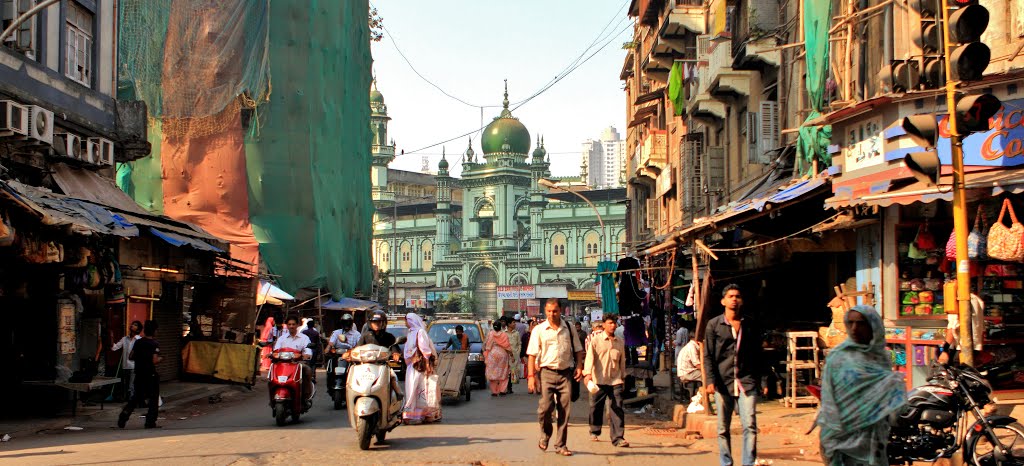
The Town of Palenque, Chiapas, Near the Ruins

The year was 1979. My brother Dan and I were traveling in Southern Mexico, roughly following the route Graham Greene had taken in his book The Lawless Roads (1939), when he was doing research for his novel The Power and the Glory (1940).  It was Christmas, and we were in the little town of Palenque, just a few miles from the Mayan ruins of the same name.

Dan liked hanging out in the cafés along the zócalo, because that part of Chiapas was a major coffee-growing area, and Dan is a coffee aficionado the way I am a tea aficionado. You have to understand that Dan was wearing slip-on loafers. While we were munching away, we were approached at our table by a shoeshine boy. Dan slipped his shoe off and handed his foot to the boy, which foot was clad in bright red wool socks. The whole restaurant erupted in laughter, including the shoeshine boy.

Mexico has some wonderful Christmas customs, especially the posadas. Between December 16 and 24, children travel around singing carols. We always donated to them.

Christmas Posadas Singers


It Looks Like I Did It This Time!

Three … Count ’em … Three!

On Thursday, I went to see my doctor, who immediately suggested that I get the right side of my ribs X-Rayed. Which I did, but the radiologist never got around to telling me the good … or bad … news. But he had conveyed the info to my doctor, who called me on Friday with the news. I broke three ribs.

Tuesday, the day of the fall, wasn’t so bad, as my body’s own deception system was in force. Wednesday and Thursday, however, were horrible. If a butterfly had collided with me, I would have screamed in pain. Everything seemed to result in spasms of pure torture. Worst were the nights: Spasms attacked me when I laid me down in bed, spasms attacked me if I moved so much as a millimeter, and spasms attacked me when I had to get up out of bed. If I had to go to the bathroom during the night, I awakened Martine with my screams upon shifting my legs to the left and getting up.

Yesterday, my doctor prescribed some acetaminophen with codeine to help me get through the night. It worked, and I actually slept a full eight hours last night—and that’s after napping an hour and a half on the couch while watching Vincente Minnelli’s Meet Me in St. Louis (1944), a film that I love. And today was altogether better. The miscellaneous spasms seemed to have ceased altogether. Only when I have to lead with my torso do I have any serious pain. I have learned to get up using my knees to take the brunt of the weight (though that won’t work with our high bed) and to lead with my left when I do have to get up.

I have been led to believe that healing will take anywhere between six and eight weeks—but I already feel some slight changes for the better. I still can’t drive safely because I can’t steer crisply without getting my left hand over-involved.

So it looks like my retirement begins with a much-needed rest. I still have two work days the week after Christmas, but there won’t be much to do. I just have to take the bus, which isn’t too bad.

Although she is still planning to leave, Martine has put the departure date off until I get better. She has been incredibly helpful. So we still mean a great deal to each other: She is just on a different life journey. I am grateful to her for her help.


Pain for the Holidays

Looks Like I Did It Again

What is it with me and broken bones? I broke each of my shoulders once, the first time in Tierra Del Fuego, the second time right in front of my apartment. Now it appears I fractured my rib(s) when I tripped on an uneven sidewalk in Westwood on Tuesday. It doesn’t hurt at all, unless I cough, sneeze, hiccup, stand up, sit down, reach for something on or near the ground, reach for something high up, burp, yawn , fart … and so on ad infinitum.  When I do any of those things, there is a sharp stab of pain on my right side.

My guess is that it’ll take six or more weeks for the pain to subside. For this sort of thing, there is no treatment except to tolerate the pain as best as possible. I am wearing something called a “Rib Belt,” which is a stretchy velcro affair that I wrap tight around the affected area. It seems to help some. Also, I take occasional aspirins (acetominophen doesn’t do anything for me), hot compresses (after the first 48 hours), cold compresses, and Martine’s tender loving care, while it is still available to me.

Wish me luck! My Kwanzaa bids fair to be ruined for this year.


Serendipity: Fun with the Supremes

The Supreme Court in Washington

I was amused by this post in The Futility Closet website:

The U.S. Supreme Court building is pretty spiffy. It has its own cafeteria, a 450,000-book library and a basketball court on the fifth floor (which staffers call “the highest court in the land”).

It’s so spiffy that when it opened in 1935, some justices were embarrassed. Harlan Fiske Stone called it “almost bombastically pretentious … wholly inappropriate for a quiet group of old boys such as the Supreme Court.” Others called it “the Temple of Karnak” and suggested that justices ought to enter the courtroom riding on elephants.

A New Take on the Ten Commandments

One worrying note: The building’s frieze depicts Moses delivering the Ten Commandments, but his beard obscures some of the Hebrew, so the visible text reads:

Steal
Kill
Commit Adultery

But let that pass.


A Forty-Year Labor of Love

The Eleven Volumes of the Durants’ The Story of Civilization

If you’ve walked into a used bookstore within the last half century, you’ve no doubt seen the volumes of Will and Ariel Durant’s The Story of Civilization. Many have bought the complete set, only to use it to weight their bookshelves to keep them from blowing away in the wind. I myself own just seven of the volumes, and by the end of the month, I will have finished reading three of them:

  • The Life of Greece, Volume II (1939)
  • The Reformation, Volume VI (1957)—I am currently two-thirds of the way to completion
  • The Age of Napoleon, Volume XI (1975)

Instead of berating the authors for having produced a coffee-table set that is large enough to crush many coffee tables, I am amazed to find that the volumes I have read are superb introductions to the periods they cover. They cover not only the events, but the leading characters, changes in the culture of the mostly European countries, and the main art and literary trends.

When reading history books, we usually settle on a small slice of a place and time and trust that we will catch up on the general trends. The Durants go particularly deep into the period between 1500 and 1815, which accounts for six of the volumes. I can vouch for the fact that The Life of Greece covers in one volume hundreds of years of Greek history, from Homeric times to the Roman takeover.

Will and Ariel Durant

The Durants provide detailed bibliographies, footnotes, and alphabetic indexes in all the volumes, which make them excellent references for delving into sources and further details.

It is sometimes too easy to pooh-pooh books that have been honored by such organizations as The Book of the Month Club. Fortunately, they weren’t always far off the mark. Certainly not in the case of the Durants. Do not make the mistake of ignoring these splendid books.


The Bookseller

Michael R. Weinstein, Bookseller, in His Torrance Store

Booksellers are a hardy breed. Even as the cost of commercial rentals is going up, the unit sales price for most books seems to be holding steady. Five years ago, I stopped at Alpine Village Market in Torrance near the intersection of Torrance Boulevard and Vermont, probably to buy some of their high quality meats and groceries. A few doors down from the market was a used bookstore signed only as Collectible Books. I was pleasantly surprised to see that it was a used book store with a fairly large stock.

The genial owner, Michael R. Weinstein knows his business and has an interesting selection of literature, history, genre fiction, and miscellaneous non-fiction in his labyrinthine store. I cannot pay him a visit without making some sort of find.

I remember when Los Angeles had dozens of used book stores, including three within walking distance of my apartment. No more. I used to go as far afield as Glendale to visit Brand Books, but it is gone. Sam Johnson Books in Mar Vista is still there, but its co-owner, my friend Bob Klein, passed away a couple years ago.

So, Michael, eat a healthy diet, get plenty of sleep and exercise, because I need good booksellers like you to supply me with what I need to make it through the day.


Civilization in the Desert Wilds

William S. Hart in His Living Room

At least once or twice a year, we visit the William S. Hart Museum in Newhall, California, originally home to one of the greatest cowboy stars. In December, the face of nature in Southern California can be harsh. A cold wind was blowing, contributing to some of the gigantic brush fires that still haven’t been put down. Although people who profess to love nature endow it with a cuddly aspect, which it certainly doesn’t have in the Santa Clarita Valley, it does have a certain stark beauty. The plants all look downright prickly: Even the trees look as if they did not want to be hugged under any circumstances. Even the beautiful Bird of Paradise (below) looks as if it could administer a nasty cut.

Bird of Paradise

What, then, of the Prickly Pear cacti and trapped tumbleweeds on the trail to the Hart museum? California has a reputation for being a beautiful state—and it is!—but not in the way that people unfamiliar with the state think.

Prickly Pear Cactus on the Trail

And yet the Hart Museum is like a fortress of civility in the wilds of desert California. The aging cowboy star lived there, mostly alone with his sister Mary Ellen, and whichever of his Hollywood friends trekked through miles of dusty dirt roads to get to La Loma de los Vientos, “The Hill of the Winds,” and the cozy fellowship of one of the most beautiful living rooms I have ever seen.

The Living Room in the Hart Museum


Getting to Hello

When You Answer the Telephone, What Do You Say?

I owe this post to the folks at Futility Closet, one of my favorite websites. Apparently, the word “Hello” has a recent history. Although it was Alexander Graham Bell who invented the telephone, it was Thomas Edison who dictated what we said when we answered the call. In August 1877, he wrote a letter to the president of a telegraph company that was planning to introduce the telephone to Pittsburgh: “Friend David, I don’t think we shall need a call bell as Hello! can be heard 10 to 20 feet away. What do you think? EDISON.”

Edison’s thinking was that a bell was not necessary: The word “Hello” was sufficient to get the other party’s attention. It seems that we got the ringer anyway—as well as the word Hello.

It’s far better than what Alexander Graham Bell was planning to use as a greeting: “Hoy! Hoy!” By the time the caller stopped laughing, the call recipient would have hung up in frustration.

Nowadays, most of the calls I receive begin not with a greeting, but a click as some sort of machinery cranks up the robocall script. Perhaps I should just say, “Hoy! Hoy!” and hang up at once.