


I love hot chiles. This morning I made my ultimate comfort breakfast: quesadillas with Monterey Jack cheese and sliced pickled jalapeños. On many a day, I go for hot chiles in all three meals.
South Bay Greek Festival

Fountain at St. Katherine Greek Orthodox Church
Between Memorial Day Weekend and early October, there are several Greek festivals in Southern California. Typically, Martine and I visit the following Greek Orthodox churches during festival time:
- St. Nicholas in the San Fernando Valley
- St. Katherine in Redondo Beach
- The Assumption of the Blessed Virgin Mary in Long Beach
- Saint Sophia Cathedral near downtown L.A.
The best things about these festivals are the Greek food, usually cooked by very competent Greek housewives—accompanied by some excellent pastries. The other thing is that the clergy at these festivals do an excellent job of proselytizing the visiting crowds.
Today, for instance, the Protopresbyter of St, Katherine’s, Father Michael Courey, is an expert on icons and gave an excellent slide presentation entitled “Byzantine Iconography” in the church sanctuary.
Although I was brought up as a Roman Catholic, I find myself drawn to the Greek Orthodox church for a number of reasons, not least among which is the excellent food. I even used to attend the Greek cooking demonstrations at St. Katherine and Santa Sophia conducted by Pitsa Captain and the late Akrevoe Emmanouilides.
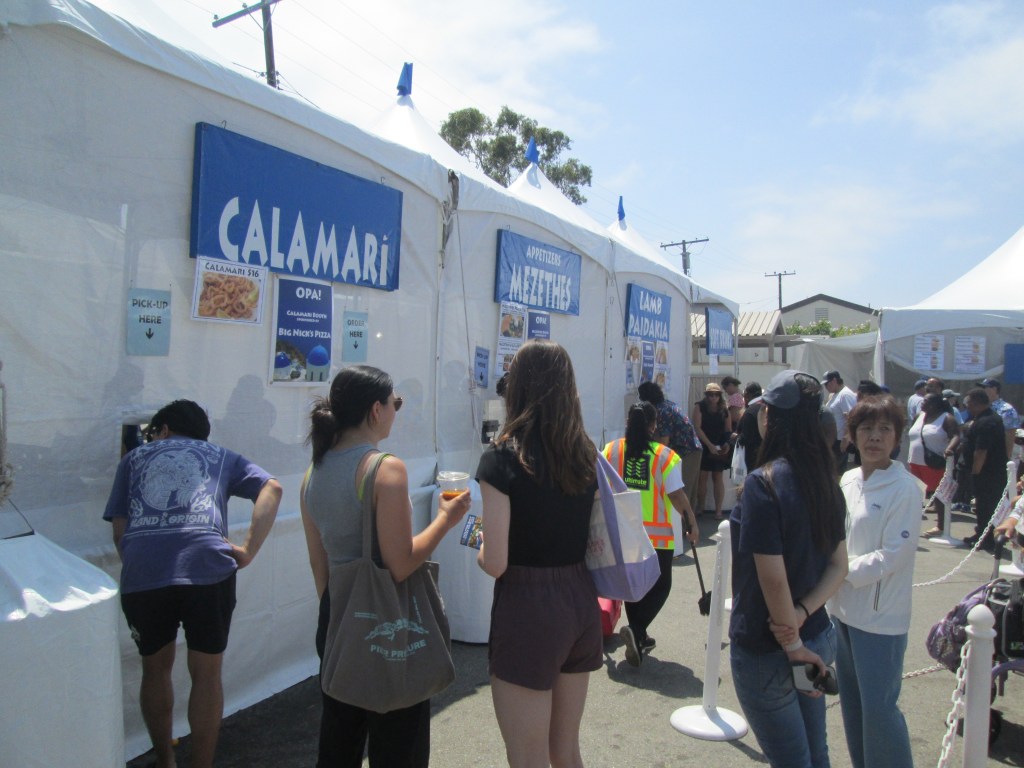
Waiting in Line for Greek Goodies
I know that ethnic-oriented churches have their difficulties staying afloat these days, but St. Katherine’s seems to have found the right formula: good food, interesting music and dance, and very competent marketing. It also helps that the Greek Orthodox church allows for married clergy (but, interestingly enough, only unmarried bishops).
Game


To me. there is only one game; and that is chess. I have been playing it for 71 years. It has brought me countless hours of fun, whether I am doing chess problems; studying famous games from the past; playing computers and live opponents.
Cooking


Currently my favorite is my own recipe for Spanish Rice. You can find it here at https://tarnmoor.com/2024/07/06/going-vegetarian-with-style/
Dogs? Cats?


Neither. No dogs. No cats. And no children.
A Writer Like No Other

Uruguayan Writer Felisberto Hernández (1902-1964)
I have just begun reading Piano Stories by the late Uruguayan writer Felisberto Hernández. It is very clearly unlike anything else I have ever read. He was an author admired by Italo Calvino, Julio Cortázar, and Francine Prose. According to Italo Calvino:
Hernández’s most typical stories are those that are centered on a rather complicated mise-en-scène, a spectacular ritual that unfolds within the depths of an elegant house: a flooded patio in which lighted candles float; a little theatre of dolls large as real women striking enigmatic poses; a dark gallery in which one is supposed to recognize by touch objects that elicit associations of images and thoughts.
His translator, Luis Harss, provides some rather odd biographical details:
He married four times; was a great eater and raconteur at literary soirees; had a passion for fat women; loved to improvise on the piano in the styles of various classical composers; once toured Argentina with his own trio, other times with a flamboyantly bearded impresario called Venus González. He preferred to write in shuttered rooms or basements; suffered a life-long emotional dependence on his mother; was haunted by morbid vanity and a sense of failure; became ill-humored and reactionary in middle age; and died of leukemia, his body so bloated it had to be removed through the window of the funeral home in a box as large as a piano.
Losing Track


Any activities that one really enjoys make one lose track of time. Don’t enjoy it? Time will drag endlessly.
Saxophone Lessons

Downtown Cleveland When I Was Young
At the time I agreed to take saxophone lessons, not only did I not know what a saxophone was, but I had no idea I would have to spend hours each week “practicing.” I wanted to play a trombone, but the music store salesman saw the look in my parents’ eyes and said something to the effect that I had the wrong kind of teeth for blowing into a trombone. It worked: He made the sale.
My music teacher was Jack Upson, who had a studio on East 4th Street, almost in the dead center of the postcard image above. (The tall building was the Terminal Tower, at that time the tallest building in the U.S. outside of New York City.)
Every week, I took the 56A bus downtown. It let me off at Prospect and Ontario. From there, I walked two blocks or so to Jack Upson’s studio.
Truth to tell, I never liked the saxophone as a musical instrument. The moisture from my mouth formed a gooey discharge that made the reed of the sax very mucky after a while. What I did enjoy was being downtown on my own. I would eat lunch at Woolworth’s lunch counter, walk around a bit, and hang out at Schroeder’s book store on Public Square.
I started playing the sax at age nine and quit at age eighteen, when I went out of town to college. Seeing that my parents weren’t there to force me to practice, I just quit playing altogether. I was no good at it anyway; and it was no fun playing an instrument only because my mother and father liked it. More importantly, I didn’t like it.
Pain(e)sville
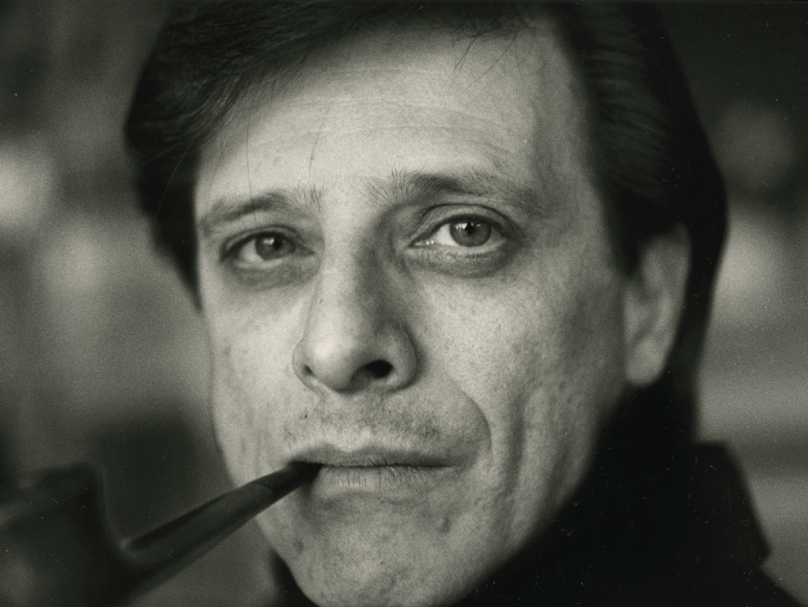
Writer Harlan Ellison (1934-2018)
He’s from the same part of the world from which I hail. Painesville, the county seat of Lake County, is some 30 miles northeast of Cleveland. He has been called a science fiction writer, a designation which he (rightfully) hates. It’s more speculative fiction, with an emphasis on the short story form.
The man from Painesville was known for being something of a pain. His obituary in the Los Angeles Times remarks:
Over the years, Ellison has been described as fiercely independent, vengeful, sardonic, opinionated, confrontational, foul-mouthed, petulant, infuriating, defiant and a general all-around nuisance—as well as engaging, gregarious, funny, fastidiously organized and generous to his friends.
By his own measure, he was “a hard pill to swallow.”
He is gone, with all his objectionable behavior, but his stories remain. And they are well worth reading. I suggest you try one of the following collections:
- I have No Mouth and I Must Scream (1967)
- The Beast That Shouted Love at the Heart of the World (1969)
- Approaching Oblivion (1974)
- Deathbird Stories (1975)
- Shatterday (1980)
You might also want to try reading the sci-fi story collection he edited in 1967 entitled Dangerous Visions.
Although he will be remembered as much for being a prickly character as a brilliant writer, I think that over time the latter will replace the former in the estimation of readers.
Certain


- Nothing is absolutely certain.
- Nothing is absolutely certain.
- Nothing is absolutely certain.
- Nothing is absolutely certain.
- Nothing is absolutely certain.
- Nothing is absolutely certain.
- Nothing is absolutely certain.
- Nothing is absolutely certain.
- Nothing is absolutely certain.
- Nothing is absolutely certain.
 Tarnmoor
You must be logged in to post a comment.