

Um, I’m already retired. Mistakes have been made, but it’s too late for a do-over.
The Book
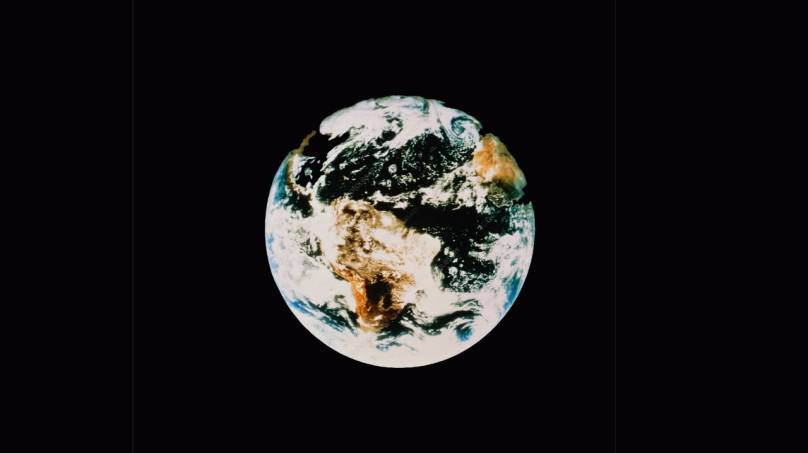
NASA Image of the Earth from Space
For over twenty years, I considered Stewart Brand’s Whole Earth Catalog as one of the major influences of my life. This evening, I unearthed the most recent edition I had, entitled The Next Whole Earth Catalog and published in October 1981.
In the original issue dated 1969, the following appeared on the opening page:
Function
The WHOLE EARTH CATALOG functions as an evaluation and access device. With it, the user should know better what is worth getting and where and how to do the getting.
An item is listed in the CATALOG if it is deemed:
- Useful as a tool,
- Relevant to independent education,
- High quality or low cost,
- Not already common knowledge,
- Easily available by mail.
CATALOG listings are continually revised according to the experience and suggestions of CATALOG users and staff.Purpose
We are as gods and might as well get good at it. So far, remotely done power and glory—as via government, big business, formal education, church—has succeeded to the point where gross defects obscure actual gains. In response to this dilemma and to these gains a realm of intimate, personal power is developing—power of the individual to conduct his own education, find his own inspiration, shape his own environment, and share his adventure with whoever is interested. Tools that aid this process are sought and promoted by the WHOLE EARTH CATALOG.
The items in the original catalog are grouped under seven main sections:
- Understanding Whole Systems
- Shelter and Land Use
- Industry and Craft
- Communications
- Community
- Nomadics
- Learning
It would seem that I’m not really that self-sufficient, not even like my brother Dan, who builds homes of logs (and other materials). I am by nature a bookworm, but I would have to admit that the WEC has contributed hugely to my well being.
For years I used to order my loose tea from Murchie’s in Vancouver, British Columbia. That’s how I discovered the Darjeeling, Ceylon, and Assam teas with which I start just about every day. (Since then, I have discovered Ahmad of London teas, which are readily available at local Middle Eastern and Indian food stores.)
The WEC also pointed the way to that encyclopedic American cookbook, The Joy of Cooking by Irma S. Rombauer and Marion Rombauer Becker. I still use my 1980s edition.
The Nomadics section is largely responsible for the travel bug that has infected me since my first trip abroad in 1975. Much of my information came from Carl Franz’s The People’s Guide to Mexico. As WEC says, “Reading the book is almost like being there and going through the problems and frustrations, pleasures and wonders of dealing with a new environment, new people and new ways of doing things.”
I was not yet ready for South and Central America, but the WEC Nomadics advice influenced me. Two decades before I flew to Argentina, I religiously read editions of The South American Handbook published in America by RandMcNally.
In the coming weeks, I hope to share some of the nuggets from WEC that have influenced me.
Stewart Brand is still around, but perhaps the Internet has probably replaced WEC. The problem with the Internet, however, is that you will find great advice and terrible advice in the same session. And how are we Americans at making good decisions? Pretty crappy, I think.
Oldest Thing


I would have to say some of the pots and pans in my kitchen. And then there is the 50-year-old Japanese metal teapot with an insert for the loose tea leaves. Perhaps, too, my two wooden spoons as well as my very miscellaneous knives, spoons, and forks.
Moments


Most of my favorite moments are connected with travel. The last time I landed in Mérida, Tucatán, I was in a veritable trance. I remembered places I had been as the taxi took me to the Hotel Piazetta at the Parque de la Mejorada. I had been to Mérida five or more times already, and it was like revisiting an old friend.
Notable?


I was sick as a dog today.
Not-Doing
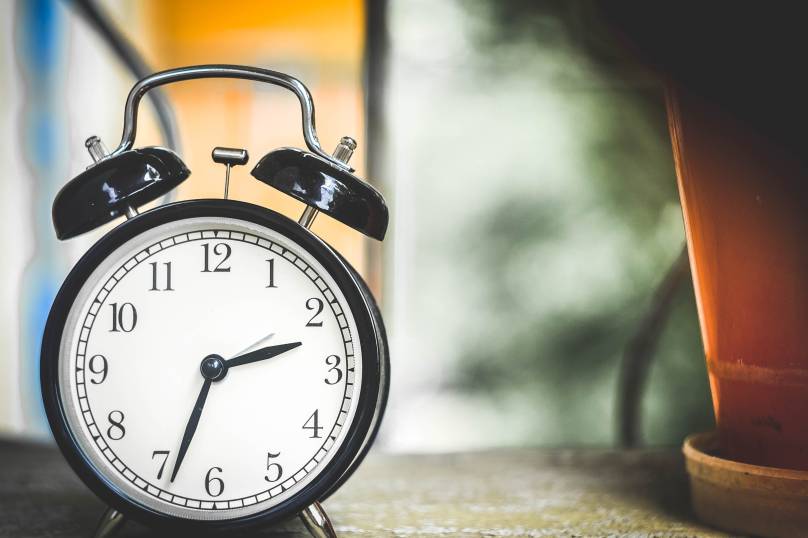
Until 2018, my life was ruled by the clock.
Around then, two things happened that changed my life for the better:
- The accounting firm for which I was working shut its doors when the boss retired.
- Around that time, I started attending guided mindful meditation sessions at the Central Library.
In the accounting profession, from New Years Day to Tax Deadline Day (April 15 or thereabouts) is sheer, unadulterated hell. By the middle of March, one had to work seven days a week. The stress was beginning to tell on me, particularly with my blood pressure and cholesterol.
The abrupt end to my working career was a blessing. I could read books, see films, and cook interesting meals. I did not find, upon retiring, that I no longer had a purpose in life. My entire working career was as a well-paid mercenary, writing computer programs, handling corporate communications, preparing taxes, and keeping a computer network in working order. My life was ruled by the clock, and I suffered for it.
After many years of doing, I was finding that there was much to be said for not-doing. I didn’t mind waiting at the doctor’s office. If the bus or train was late, what was that to me? I would sit concentrating on my breaths until such time as the train arrived or the doctor called me in. I was no longer worried about being late, as “lateness” no longer had any real urgency or even meaning. I even began to see it as an opportunity to meditate.
When I was in the hospital in January, the nurses could not understand why I didn’t care to watch television—especially as I knew that the selection of channels was not to my liking. All the other patients had to watch the boob tube lest they go stark raving mad.
As a result of my not-doing, I found my blood pressure and cholesterol dropping. I’m still working on my Type 2 Diabetes, but that is partly genetic. Everyone in my family had it, and I didn’t manage to escape the family scourge.
Even though there are a lot of things in my world not to my liking (Trump, MAGA), I feel confident that I can probably hold on for a while longer. Who knows?
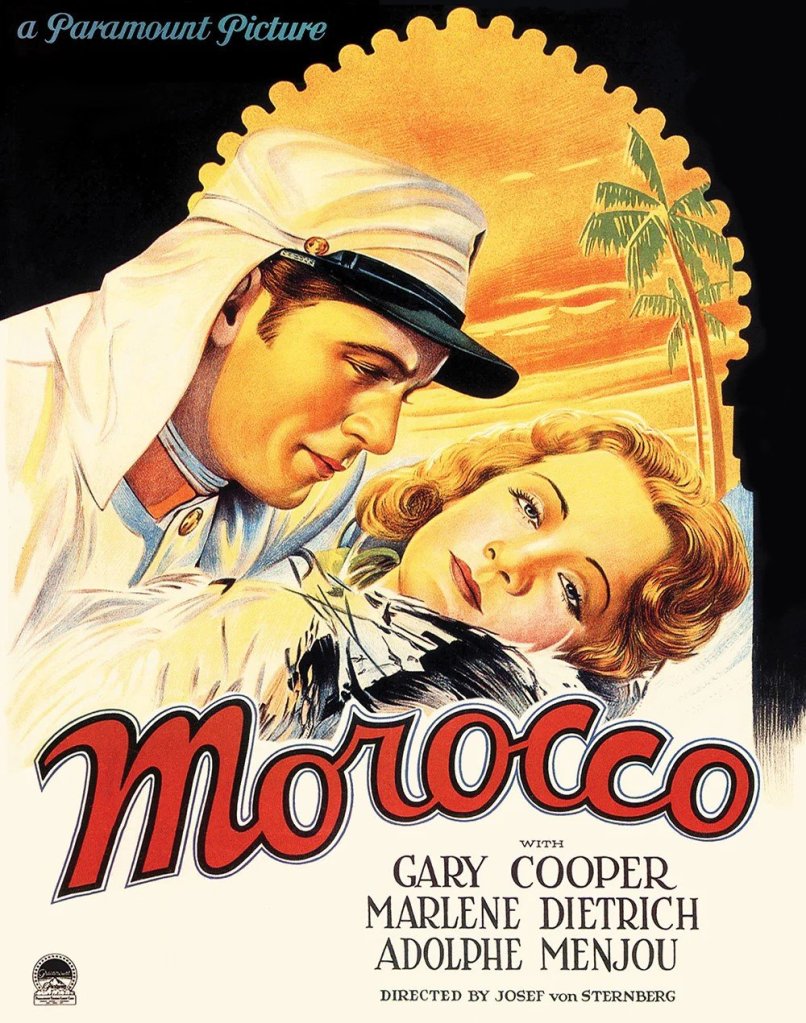
Favorite Films: Morocco (1930)

Gary Cooper and Marlene Dietrich in Morocco
It was Marlene Dietrich’s first film in Hollywood, and Gary Cooper’s first co-starring role in a sound film. And the director was none other than Josef von Sternberg, in my opinion one of the greatest filmmakers in the industry. The two co-stars fell in love during the filming, but the relationship between Cooper and von Sternberg was adversarial to say the least.
Nonetheless, Morocco (1930) turned out to be a gem. In its one hour and thirty-two minutes, the unbridled passion between Cooper and Dietrich has few equals in the cinema. Cooper is Private Tom Brown in the French Foreign Legion, and Dietrich is Amy Jolly, a night club singer. Within the first five minutes of the film, the two are obviously entranced with each other.
Poor rich Adolphe Menjou as M. La Bessière tries to hook up with Dietrich, but it’s no go. In the end, the nightclub singer jettisons her high heels in the sand and follows the legionnaires to their next posting along with the camp followers.
The Physicist and the Tortoise
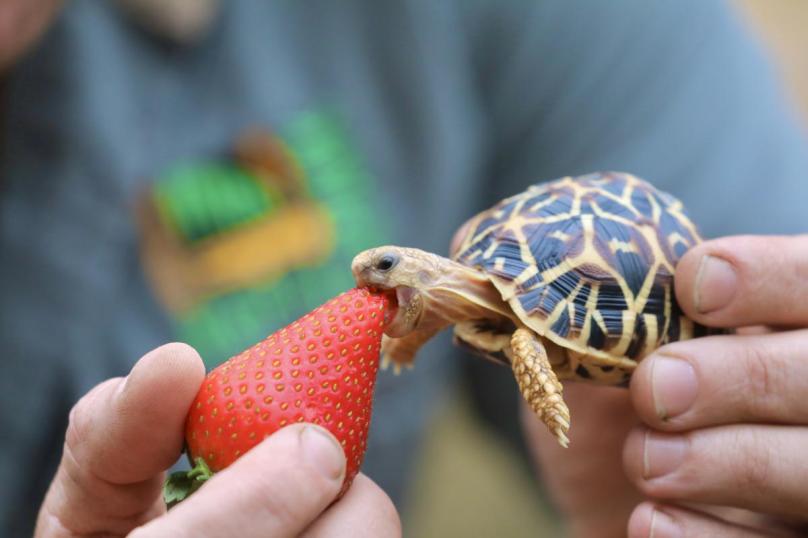
Small Tortoise and Strawberry
This is a story that the naturalist Loren Eiseley (1907-1977) tells in his book The Firmament of Time. I instantly fell in love with it:
There is a story about one of our great atomic physicists—a story for whose authenticity I cannot vouch, and therefore I shall not mention his name. I hope, however, with all my heart that it is true. If it is not, it ought to be, for it illustrates well what I mean by a growing sense of self-awareness, a sense of responsibility about the universe.
This man, one of the chief architects of the atomic bomb, so the story runs, was out wandering in the woods one day with a friend when he came upon a small tortoise. Overcome with pleasurable excitement, he took up the tortoise and started home, thinking to surprise his children with it. After a few steps he paused and surveyed the tortoise doubtfully.
“What’s the matter?” asked his friend.
Without responding, the great scientist slowly retraced his steps as precisely as possible, and gently set the turtle down upon the exact spot from which he had taken him up.
Then he turned solemnly to his friend. “It just struck me,” he said, “that perhaps, for one man, I have tampered enough with the universe.” He turned, and left the turtle to wander on its way.
Bishop Ussher’s Presumption

James Ussher, Archbishop of Armagh (1581-1666)
According to his careful calculations, the world was created on “the entrance of the night preceding the 23rd day of October… the year before Christ 4004.” That would make Earth 4,259 years old. And, of course, it had to be true because one couldn’t question the Bible in any particular. It was just a matter of adding up the years of all the “begats” in Genesis, and adding to it the generations of men in the following books of the Old Testament.
I am reading a fascinating book by Loren Eiseley called The Firmament of Time about how the age of the Earth grew by leaps and bounds after discoveries by geologists, astronomers, and other scientists.
There are still people who believe in the literal truth of every word in the Good Book. The Scopes trial took place in Tennessee exactly a hundred years ago. In some corners of the United States, there has been little or no movement since then.
At the Museum of Flying

Douglas DC Series Plane at the Museum of Flying
This afternoon, Martine and I visited the Museum of Flying adjacent to the Santa Monica Airfield. As you can see from the number of cars in the lot, there weren’t many visitors today. Before they moved to the present building on Airport Avenue, they were in much larger quarters on the other side of the airfield. For whatever reason, it seems as if the museum split into parts, with mostly the exhibits relating to Douglas Aircraft moving to the new quarters.
It led me to thinking about how many aircraft and automobile museums are closing down. Many of the aircraft museums depend on flying veterans from the U.S.’s many wars to serve as volunteers. We’ve visited the Palm Springs Aviation Museum; the Pima Air & Space Museum in South Tucson, AZ; the Estrella Warbird Museum in Paso Robles; and Torrance’s Western Museum of Flight. Big or small, they are all fascinating—but I suspect that most of them will be closing their doors once the knowledgeable volunteers start dying out.

World War One Fokker Dr.I Triplane
With all of these museums, once you get tired of looking at the planes, there are usually interesting videos to watch. I saw two of them this afternoon: one on Howard Hughes’s giant “Spruce Goose” seaplane and the other a history of the commercial airplane manufacturing industry focusing on Donald Douglas and William E. Boeing.
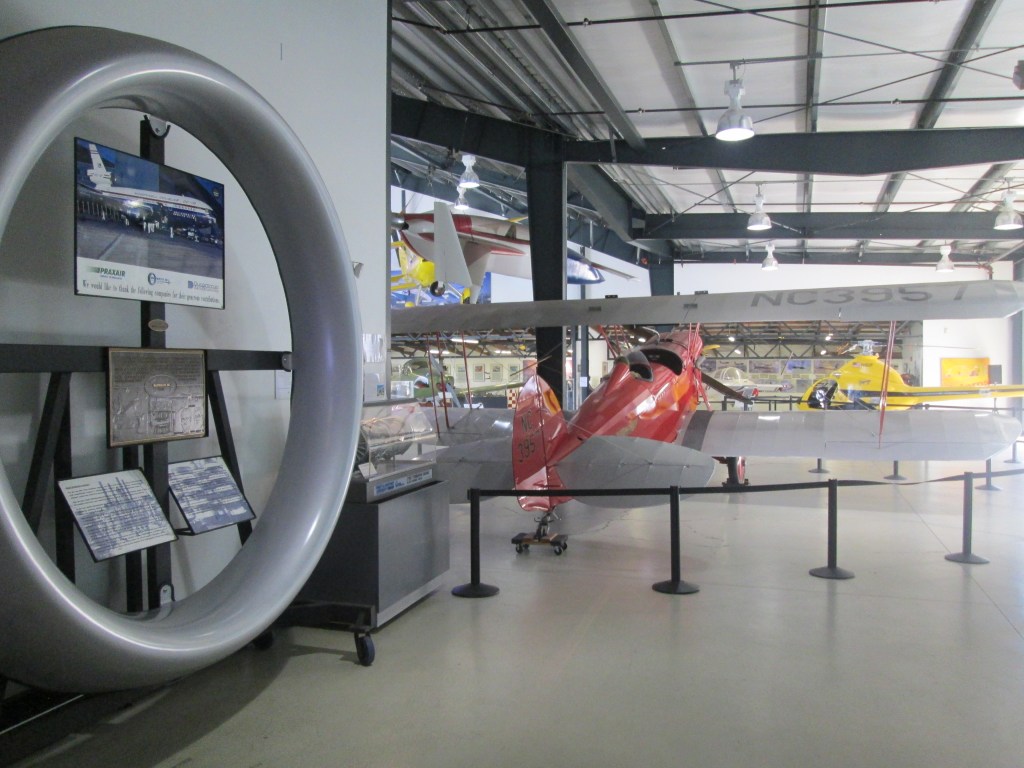
Waco Aviation Biplane
I hope to revisit this little museum again. From one year to the next, there is a large scale turnover in the exhibits and videos.
 Tarnmoor
You must be logged in to post a comment.