Viejo Cuba

Our Boutique Hotel in Quito

Our Boutique Hotel in Quito: El Viejo Cuba

For almost forever, I have been in charge of planning the vacations for Martine and myself. My brother Dan knew that, so I thought I’d let him have the upper hand. As we tend to think alike on most issues, that will be no problem.

We will be in Ecuador together for two weeks, then he will return to L.A. by himself because of business obligations. I will have an additional week in Southern Ecuador all alone. For those last seven days, I will do all my own planning as before. I think that’s a good compromise.

One thing that will be different is that Dan wants to rent a car and drive. That gives us a much broader choice of places to stay and allows us a lot of flexibility. I keep thinking of the three all-night bus rides I took in Argentina and Chile. Although I rather enjoyed them, I don’t think that Dan would quite so much.

That puts me in the role of navigator, which is a role I enjoy. Whenever, as a child, I went anywhere with our family, I was the one hunched over a map and dictating directions.

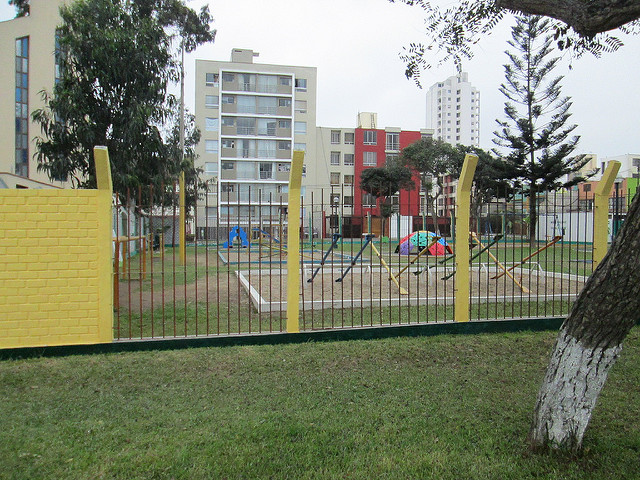
Our first stop in Ecuador will be the Hotel Viejo Cuba (illustrated above).  It’s a few blocks north of the popular Mariscal Sucré neighborhood, named after Bolivar’s favorite general.

This trip will be different, but I like the way it’s shaping up.

Serendipity: The More Things Change …

Greek Ruins at Agrigentum in Sicily

Greek Ruins at Agrigentum in Sicily

It was the Sixth Century BC, and Phalaris, the Greek Tyrant of Agrigentum, described a voting public not so different from our own:

The people, as a whole, are undisciplined, senseless, unmanageable, very ready to be turned in any direction whatsoever, faithless, fickle, passionate, treacherous, mistaken, a mere useless noise, and easily swayed toward praise and toward anger.

δῆμος ἄπας ἄτακτος, ἄνους, ἄπρακτος, ἑτοιμότατος ἐφ’ ὅ τι ἂν τύχῃ μεταχθῆναι, ἄπιστος, ἀβέβαιος, ὀξύς, προδοτιχός, ἐψευσμένος, φωνὴ μόνον ἀνωφελής, καὶ πρὸς ἔπαινον καὶ πρός ὀργὴν εὐχερής.

The odd thing was that Phalaris is remembered primarily for his cruelty. He built a hollow brass bull in which he roasted his enemies alive. No less a poet than Pindar described his atrocities a hundred years later.

I owe this quote to my favorite source of the thinkers of past times, especially the Greek and Roman classics, namely: Laudator Temporis Acti.

FlubFlubFlub

Normal Eardrum

Normal Eardrum

The human body is a mysterious instrument. Whenever new symptoms arise—however innocuous they may appear—I try to determine their cause, if possible.

You can say it’s the influence on me of Leo Tolstoy’s The Death of Ivan Ilyich, in which the hero dies horribly after a trivial household mishap. (The link is to the excellent Louise and Aylmer Maude translation, which you can read if you feel that things are going too well for you.)

About two weeks ago, I detected what appears to be my left eardrum pulsating in a kind of rapid-fire flubflubflub with occasional pauses in between bursts. It does not seem to correlate with my pulse (which the physician requested that I check), and comes and goes at random intervals. Needless to say, it didn’t act up in the doctor’s office.

The good news is that it is not associated with any pain, and it does not seem to affect my hearing. The hearing in both ears is symmetrical, with me hearing all the low frequency sounds normally, but not the very high frequency sounds. So don’t attempt to summon me with a dog whistle.

Thus far, the only anomaly is that my left eardrum is slightly pushed in compared to my right eardrum. My guess is that all this is nothing to worry about, but I’d like to be sure.


Cut Back

A Step Closer to Retirement

A Step Closer to Retirement

Friends have been asking me when I’m planning to retire. A step toward that has been made for me: I am now working two days a week. The choice was not mine, but I realize that my accounting firm will probably not last much more than another year.

Today was my first day off under the new setup. I think Martine will have a harder time dealing with the situation than I will. Instead of hanging around all day, I plan to be on the go doing things, including (perhaps) lining up another part-time gig. I even checked the local Employment Development Department to see if I qualify for some unemployment compensation. (I don’t: I’ll still be making more than $600 a week.)

I have a number of pipe dreams I’m thinking of looking into, such as doing some teaching. My first goal in life was to be a college professor. Although I lack the academic credentials for that, I can possibly be a substitute high school teacher teaching English or even personal accounting.

Of course, Dan and I are still going to Ecuador this fall. This last weekend, we booked flights on Copa Airlines, a Panamanian carrier, from Los Angeles to Quito (via Panama City) and back.


Huggable Death

“Teddy Bear” Cholla Cactus

“Teddy Bear” Cholla Cactus

Their scientific name is Cylindropuntia, and they are beautiful but deadly. I am referring to what are commonly called cholla cactus (pronounced CHO-yah). One finds them all over the deserts of the Southwest, particularly in California, and in parts of Mexico’s Sonora desert.

On one hand, chollas can be astonishingly beautiful. Even on a cloudy day, their silvery green spines shine as if from an inner light. One almost wants to hug them. Beware: The spines are barbed. In no time at all, the desert neophyte can sport almost as many spines as the cactus.

There are many varieties of cholla: The above looks like the notorious Teddy Bear or Jumping Cholla (based on the false perception that the spines jump onto their victim even if the victim does not quite brush against them.)

They make wonderful photographic subject—just so long as you remember to keep your distance.

Back from the Desert

Me on the Randall Henderson Trail in Palm Desert

Me on the Randall Henderson Trail in Palm Desert

I had a great time in Palm Desert with my brother and sister-in-law. While Lori worked on Saturday, Dan and I hiked the Randall Henderson Trail off Highway 74 in Palm Desert. My brother took the picture with his cell phone.

Fortunately, my legs were in the picture. As my Dad always used to say, if you don’t include the legs in the picture, people will think that I have no legs. Well, now you know…. And my Dad, looking down on us from the heavens, will be gratified.

In my right hand, I am holding my own digital camera against the belt holster I use for carrying it.

After the hike, Dan took me to a great Mexican place on Date Palm Drive in Cathedral City. It had the best tacos el pastor that I have ever tasted. I loaded it down with pickled jalapeño chiles and a hot green salsa. The burning stopped only when I took a sip from a giant cup of horchata. If you are in the area and want to try it, look up El Tarasco at 34481 Date Palm Drive. It’s a bit of a dive, and you are not likely to run into any gringos there. Be sure to order the tacos al pastor.

A Weekend With Dan

My Brother Dan in the Thousand Palms Oasis

My Brother Dan at the Thousand Palms Oasis

I will be taking the next three days off from posting on this website. Tomorrow morning, I will pick up a rental car and start heading for Palm Desert to spend some time with my brother and sister-in-law. Among other things, I need to coordinate with Dan about our upcoming trip to Ecuador.

Unfortunately, Martine will not be coming with me—at her request. Not only does she hate the desert after spending two years working at the Twentynine Palms Marine Combat Center, but she is now on a super-strict diet regimen called FODMAP.  That’s short for Fermentable Oligo-Di-Monosaccharides and Polyols. (You’ll need Adobe Acrobat to be able to read this file.)

Two weeks ago, she finally saw a gastroenterologist at Cedars-Sinai Medical Center and was told to avoid onions, garlic, and virtually all foods that have vowels in their names. She has done a fair job of adhering to it, and she has been free of abdominal pain and irritable bowel syndrome (IBS) during that time. I wish her luck, and I very much want one day to travel with her again.

If I have the time, I hope to have some new desert photos to share with you.


How To Explain a Disaster

Why Can’t Our News Media Do Such a Good Job?

Why Can’t Our News Media Do Such a Good Job?

At regular intervals I read the Ecuador Times website for news of my next vacation destination. Their English is execrable (“Weekly addresses will continue to be broadcast despite President Correa’s offering”), but they have access to some graphic genius who can, in a small space, explain something as complicated as the 7.8 earthquake that hit the Manabi region of that country.

Even though the above illustration is in Spanish, it is 99% clear to me. It even describes a family earthquake kit and what measures to take when the earth begins to shake.

I could only wish the Los Angeles Times would hire their graphic artist so that maybe I will be able to understand why people would vote for Donald Trump and why the culprits of the 2008 Recession are not in prison.

The Highest Peak in the World

No, It’s Not Mount Everest

No, It’s Not Mount Everest

There are some thirty-six mountain peaks in the Andes alone whose altitude is greater than Ecuador’s Mount Chimborazo. Yet, Chimborazo is demonstrably the highest peak in the world. It all depends on how you measure it.

If the earth were perfectly round, there is no question that Mount Everest takes the prize. But the earth, far from being perfectly round, is an oblate ellipsoid.  Around the equator, there is a bulge that is significant enough that—if you measure altitude from the center of the earth rather than sea level—Chimborazo is taller.

According to Ken Jennings of Condé-Nast Traveler:

This bulge isn’t huge—a deviation of about one part in 300 from a perfect sphere—but it’s enough to mess with cartography. Chimborazo tops out at 20,702 feet, almost two miles lower than Everest. But that’s only compared to sea level. If we take the equatorial bulge into account—in other words, if we measure what peak is farthest from the center of the Earth—Chimborazo sticks more than 7,000 feet farther into space than any of the Himalayas do, since they’re located thousands of miles north of the Equator. So, to quote Obi-Wan Kenobi, “what I told you was true—from a certain point of view.”

So if you climbed to the top of Chimborazo, you would be standing a mile and a half farther into space than the poor souls who brave the Himalayan peaks.

No, I have to plans to climb any mountain peaks. I will stand and stare in silent awe from the base of the peak, which is visible from the port of Guayaquil, ninety miles to the west.


Meeting Marcel

Marcel Proust

Marcel Proust

It is always interesting to read one great writer’s judgment on another. Such was François Mauriac about his meeting in February 1918 with Marcel Proust:

He seemed rather small to me, stoopshouldered in his tight-fitting jacket, his thick black hair shadowing his pupils, dilated, it appears, by drugs. Stuffed into a very high collar, his starched shirtfront bulging like a breastbone, he cast on me a nocturnal eye whose intensity intimidated me.

At the end of the great first chapter in his book Proust’s Way, Mauriac pays homage to the brilliance of his colleague:

The integral history of a young life, of its loves, its friendships, its weaknesses, its intellectual or religious crises, offers the vast proportions of the history of the ideas and customs at a certain epoch as they are reflected in a single spirit. And a long old age would not be enough to complete the account or to exhaust its drama.

As I slowly wend my way through A la recherche du temps perdu—for the third time—I can vouch for that. I will never be finished with his intense vision of the life of one particular individual and his milieu some century and a quarter ago in a distant European country.