Heat and Traffic

Record Heat in Arizona—During April Yet!

Martine and I seem to have bad luck when it comes to visiting the desert. Several years ago, we spent two weeks in New Mexico during which the mercury climbed to over 100° Fahrenheit (38° Celsius) on each and every day. But of course, that was June; and June in New Mexico is hot, even before the summer solstice.

But April!? The five days we spent in Arizona broke heat records for four of the days, going as high as 102° Fahrenheit (39° Celsius) on the worst of them.

The other problem we had was heavy traffic: In Arizona, we ran into two traffic jams, both on the I-10. The first was between Buckeye and Phoenix as we sought Arizona 202 to supposedly bypass the worst of the city traffic, and the second as we approached Tucson and ran into an unexplained jam south of Casa Grande. On the return trip, we spent two hours in a jam on I-10 between Palm Springs and Cabazon.

Other than these two negative notes, we had a wonderful time. The things we chose to see were eminently worth seeing, and both of us enjoyed them immensely. They were, in the order we saw them:

  • The Titan Missile Museum in Green Valley
  • The Pima Air & Space Museum in South Tucson
  • The Arizona Sonora Desert Museum west of Tucson
  • Saguaro National Park (just north of the Desert Museum)
  • Mission San Xavier del Bac on the Tohono O’odham Indian Reservation

In the days to come, I will describe these destinations as well as some general observations about the Tucson area.

Visiting the Cold War

ICBM in Arizona’s Titan Missile Museum

On Thursday morning, Martine and I are scheduled to visit the Titan Missile Museum in Green Valley, Arizona. In the process, we will attempt not to blow up Mar-a-Lago or any other den of tyrants.

All of my childhood and more than two decades of my adult life were lived in the shadow of mutually assured destruction. Fortunately, we managed to avoid it, though with the present crop of world leaders, I think we will be in the soup once again. Why is it that thinks turn to shit at least once every generation or so?

In any case, I will not be posting for approximately a week. So hasta la vista for now.

12 Desert Rats

Saguaro Cacti in the Arizona Desert

As I prepare for our road trip to Tucson this next week, I have been doing a lot of reading in preparation. It struck me that there are a lot of great books about or set in deserts. Here are an even dozen recommendations organized alphabetically by author:

  1. Abbey, Edward. Desert Solitaire: A Season in the Wilderness. A classic of the growing environmental movement and a threnody for the beauties that have been lost.
  2. Anonymous, Arabian Nights (or A Thousand and One Nights). Great stories about Sinbad, Ali Baba, and others.
  3. Austin, Mary. The Land of Little Rain. The author’s experiences in the Owens Valley along the Eastern Edge of the Sierra Nevada Mountains.
  4. Banham, Reyner. Scenes in America Deserta. Delightful essays about travels in the California deserts.
  5. Bissell, Tom. Chasing the Sea. A visit to one of the most desolate places on Earth, namely what used to be the Aral Sea in Uzbekistan.
  6. Bowden, Charles. Desierto. Essays about the desert of Southern Arizona and the State of Sonora in Mexico.
  7. Herbert, Frank. Dune. A great. sci-fi tale of a desert planet caught in the middle between warring factions in a corrupt empire.
  8. Lawrence, T. E. (“Lawrence of Arabia”). The Seven Pillars of Wisdom. A British officer convinces Arabs to revolt against their Ottoman oppressors in World War I.
  9. McCarthy, Cormac. Blood Meridian, or the Evening Redness in the West. Violence on the desert frontier among white settlers and Indians.
  10. Powell, John Wesley. The Exploration of the Colorado River and Its Canyons. The first American to navigate the length of the Colorado River.
  11. Theroux, Paul. On the Plain of Snakes. Unforgettable scenes along the border with Mexico, with chapters on the deserts of the State of Oaxaca.
  12. Thesiger, Wilfred. Arabian Sands. The author’s journeys throughout the Arabian peninsula.

As I write these, I become acutely aware that there are more titles I should include. Perhaps, as I read more, I will re-visit the subject later.

The Svinafell Troll

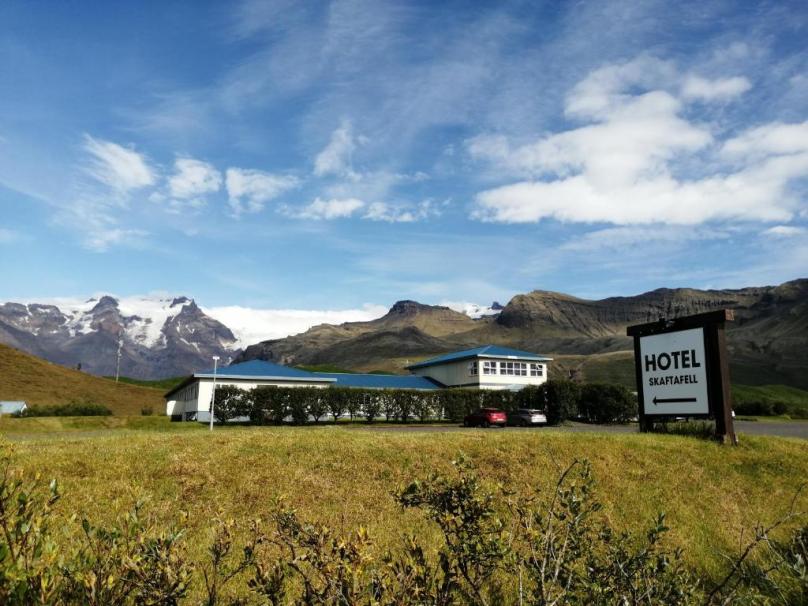
Iceland’s Skaftafell Hotel Hard by Svinafell

It was August 2001. I was spending a couple of nights at the Skaftafell Hotel in Svinafell pictured above. While I was eating dinner in the hotel’s restaurant, I was bothered by a rowdy crew of Americans who were yucking it up at a nearby table. When the leader of the crew stepped out to the restroom, the remaining members started talking about him.

Apparently, the missing partyer was none other than Charles H. Keating, Jr., described by Wikipedia as “an American sportsman, lawyer, real estate developer, banker, financier, conservative activist, and convicted felon best known for his role in the savings and loan of the late 1980s.”

When he returned to the table, he saw that I was looking somewhat disgruntled. To make up for the noise his party was making, he invited me to join them and pay for my meal. I respectfully declined, not wanting to associate myself with someone who was a real estate developer, crooked banker, and worse.

The group was traveling around Iceland in a guided minibus tour of the country.

Charles H. Keating, Jr. (1923-2014)

As a saw the white minibus drive away with its noisy contingent, I though back to the one mention of Svinafell in The Njáls Saga. According to Medievalists.Net:

One of the most prominent sexual insults is when Skarpheðin calls Flosi the bride of the troll of Svinafell, this implies that he is used sexually by the troll. This insult is a form of nið, an insult intended to imply that the object is ragr, a passive homosexual or is used in this way by a man, animal or supernatural creature.

Having followed the saga of Lincoln Savings & Loan in the press, I thought he would make a good partner for the Svinafell Troll. Since he is no longer among the living, that is quite possibly what he is doing now.

Disaster Zone

Boats Stranded by the Disappearance of the Aral Sea

In the deserts of Central Asia sits the ghost of the Aral Sea. The original sea bed, shared by Kazakhstan and Uzbekistan, is the poster child of decades of neglect. The rivers feeding into the sea were canalized to raise cotton. Very little cotton grows there now. In his Chasing the Sea: Lost Among the Ghosts of Empire in Central Asia, Tom Bissell describes meeting up with a couple of small boys in the eerie desert salt and pesticide-laden atmosphere of a community that used to exist on the shores of the sea.

I sat perched half in and half out of the car. The door was wide open, My chin rested upon the shelf of my hand. The sun was going down, the horizon dyed a Creamsicle orange. I watched a skinny, ravaged-looking dog sniff around various piles of refuse. A dog’s life. Then it occurred to me that American dogs have no idea what a dog’s life is. Suddenly, two little boys appeared from behind one of the houses and approached me. They were brothers, clearly. One was taller and certainly older. The other was small, perhaps five years old. The boy’s head was pumpkin-sized, seemingly twice the circumference of his brother’s, who was regarding me coldly. The younger boy smiled, his teeth cavitied and yellow, his skinny body completely naked and covered in dust. The dust was spread so evenly over his body it seemed deliberately applied. His uncircumcized penis looked like a tiny anteater nose. I smiled back at him. “Ismingiz nimah?” I asked. What is your name?

Before the boy could answer, his older brother inexplicably struck him from behind. The boy flopped face-first in the dust. The shove was two-handed and savage, like something out of provincial hockey. A sound, perhaps “Hey—,” filled my mouth. But I did nothing. The younger brother coughed into the dust. He had landed badly, arms at his sides. Now he tried to get to his feet. His brother placed a foot on his naked bottom and, almost tenderly, pushed him back into the dirt. He stared down, having satisfied some obscure but insatiable impulse, and then walked away. I waited for tears, the shrieks and cries of fraternal terror. But no. Nothing at all. The naked dusty child was silent. The dog trotted over and, as the boy picked himself up, he searched the ground blindly with a small pawing hand. Finally, he stood holding a triangular rock. He turned and threw it at the dog, hitting the creature full in the ribs; the dog flinched but otherwise took the blow in silence. The younger boy simply walked away. I made soft kissing sounds to summon the dog. It was understandably skittish, but I persisted. I did not know what else to do. When it slunk over, head lowered and panting, I saw a red spiderlike creature dug into its collarless neck. I extended my hand. The dog bit me and staggered off.