
Assemblée dans un parc

Watteau de Lille (Louis-Joseph Watteau, dit). “Assemblée dans un parc”. Huile sur toile, vers 1785. Paris, musée Cognacq-Jay.

I have always loved the paintings of Jean-Antoine Watteau (aka Watteau de Lille and Louis-Joseph Watteau). There is a kind of sad elegance in them, frequently in a beautiful natural setting. I saw the above painting at a small art museum in Paris that is little visited. The Musée Cognacq-Jay is dedicated to the art of the 18th Century and features, besides Watteau, such painters as Boucher, Fragonard, Greuze, Chardin, Tiepolo, and Robert.

Most of the works therein were acquired between 1900 and 1927 by Ernest Cognacq, founder of the Samaritaine department store, and his wife Marie-Louise Jay. The building the collection sits in is an elegant structure redolent of the 18th century. Situated at 8 rue Elzévir, it is close to the Marais District of Paris.
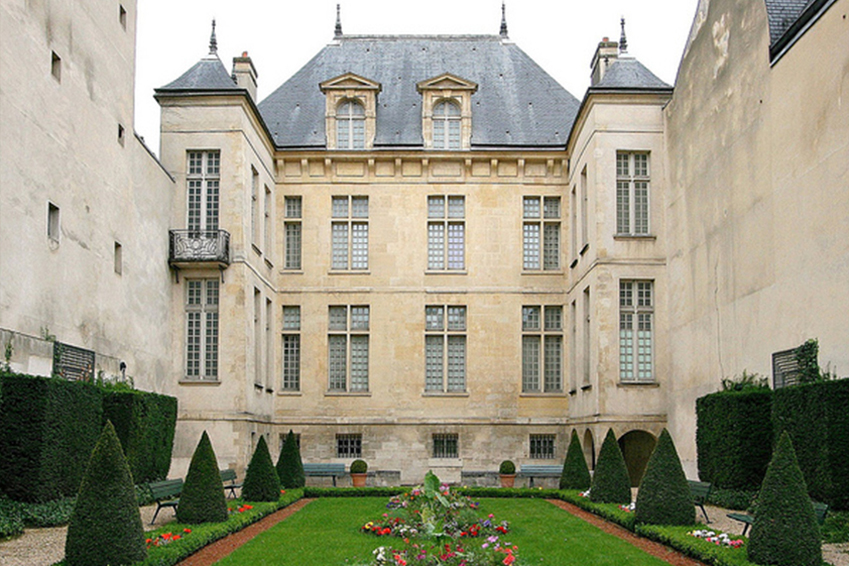
Musée Cognacq-Jay

If you love art, I have no doubt you would find the Cognacq-Jay more interesting than the nearby Picasso Museum or the Pompidou Center. Unless, of course, you are a big fan of modern art, which I am not.
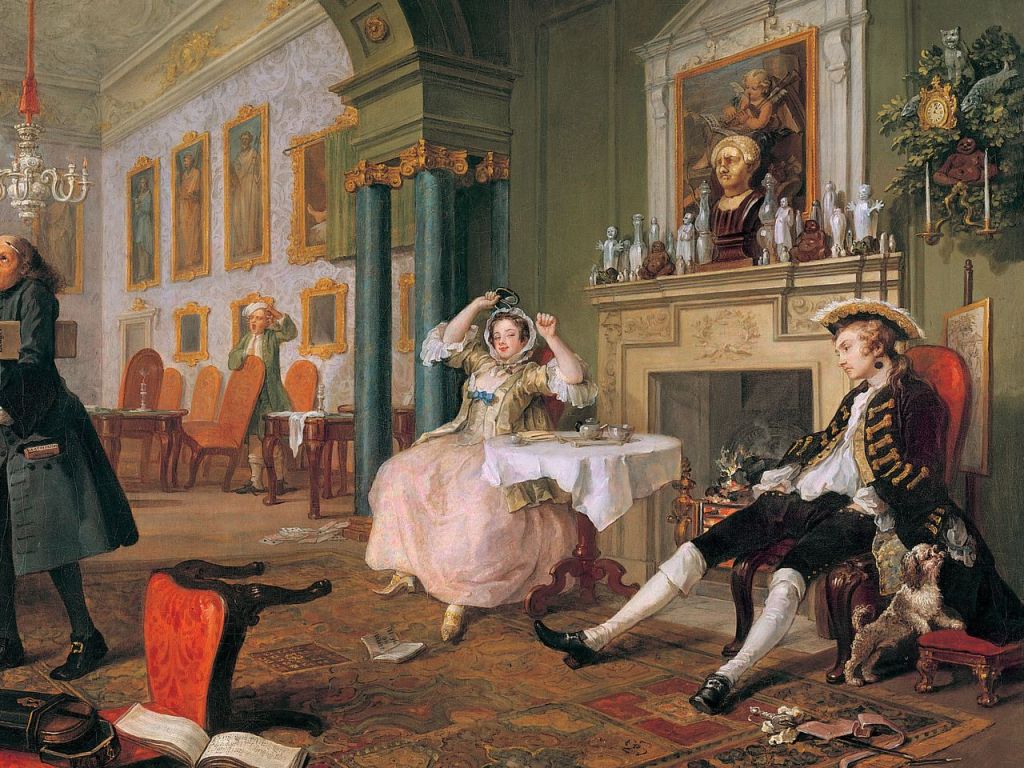
London Circa 1700

Detail from ‘The Tête à Tête,’ a painting from William Hogarth’s series ‘Marriage A-la-Mode’ (1743-45)

I have always had a love for Eighteenth Century Literature. It stems from the time I had a course in the novel of the period taught by my favorite professor at Dartmouth, the late Chauncey Chester Loomis. Swift not only wrote great prose, as vouched by Gulliver’s Travels and a slew of essays, but he was a formidable poet as well. The following poem gives us a feeling for the period in much the same way that James Boswell’s London Journal does.

A Description of the Morning

Now hardly here and there a hackney-coach
Appearing, show'd the ruddy morn's approach.
Now Betty from her master's bed had flown,
And softly stole to discompose her own.
The slip-shod 'prentice from his master's door
Had par'd the dirt, and sprinkled round the floor.
Now Moll had whirl'd her mop with dext'rous airs,
Prepar'd to scrub the entry and the stairs.
The youth with broomy stumps began to trace
The kennel-edge, where wheels had worn the place.
The small-coal man was heard with cadence deep;
Till drown'd in shriller notes of “chimney-sweep.”
Duns at his lordship's gate began to meet;
And brickdust Moll had scream'd through half a street.
The turnkey now his flock returning sees,
Duly let out a-nights to steal for fees.
The watchful bailiffs take their silent stands;
And schoolboys lag with satchels in their hands. 

Kennel is a gutter or drain
Brickdust Moll is a street vendor selling powdered brick, used for cleaning knives