Tarnmoor’s ABCs: Patagonia and Penguins

Killing Two Birds with One Stone

Killing Two Birds With One Stone, So To Speak

I was so very impressed by Czeslaw Milosz’s book Milosz’s ABC’s. There, in the form of a brief and alphabetically-ordered personal encyclopedia, was the story of the life of a Nobel Prize winning poet, of the people, places, and things that meant the most to him. Because his origins were so far away (Lithuania and Poland) and so long ago (1920s and 1930s), there were relatively few entries that resonated personally with me. Except it was sad to see so many fascinating people who, unknown today, died during the war under unknown circumstances.

My own ABCs consist of places I have loved (Iceland), things I feared (Earthquakes), writers I have admired (Chesterton, Balzac, Proust, and Borges); things associated with my past life (Cleveland and Dartmouth College), people who have influenced me (John F. Kennedy), foods I love (Olives), and things I love to do (Automobiles and Books). This blog entry is my own humble attempt to imitate a writer whom I have read on and off for thirty years without having sated my curiosity. Consequently, over the months to come, you will see a number of postings under the heading “Tarnmoor’s ABCs” that will attempt to do for my life what Milosz accomplished for his. To see my other entries under this category, hit the tag below marked “ABCs”. I don’t guarantee that I will use up all 26 letters of the alphabet, but I’ll do my best. Today the letter is “P” for both Patagonia and Penguins, which kind of go together in my mind.

Above is a photo I snapped on Isla Martillo, which lies on the Beagle Channel in Argentina’s Tierra Del Fuego. I had always wanted to go to Patagonia, ever since I read Paul Theroux’s The Old Patagonian Express and, even more, Bruce Chatwin’s In Patagonia. It was one of those places at the end of the earth. About six hundred miles south of Isla Martillo lies the Antarctic Peninsula. Even farther north lies Buenos Aires and the heavily populated temperate territories of Argentina.

Martine and I have always loved penguins. There was something helpless and cute about them, even though their fishy smell made them somewhat less than huggable. I think I was only able to get Martine to come with me to Patagonia if I could take her to places where she could walk among penguins in the wild. Although past “expeditionary” vacations in search of puffins and moose turned up a blank, I was able to deliver on the penguins—in spades. Isla Martillo was a small penguin rookery that was fascinating, and Punta Tombo in the State of Chubut was even more spectacular. We were there right around the time, to the day, that the Magellanic penguins were hatching. Our trip there was one of the happiest experiences of my life.

Do I want to go back to Patagonia? Absolutely. I’ve been there twice: The first time, on my own, I broke my shoulder by slipping on the ice in Ushuaia … but the second time was a charm.

Life always seems brighter when you could go to far places that you love.


Tarnmoor’s ABCs: Olives

I Cannot Live Without This Oleaginous Fruit

I Cannot Live Without This Oleaginous Fruit

I was so very impressed by Czeslaw Milosz’s book Milosz’s ABC’s. There, in the form of a brief and alphabetically-ordered personal encyclopedia, was the story of the life of a Nobel Prize winning poet, of the people, places, and things that meant the most to him. Because his origins were so far away (Lithuania and Poland) and so long ago (1920s and 1930s), there were relatively few entries that resonated personally with me. Except it was sad to see so many fascinating people who, unknown today, died during the war under unknown circumstances.

My own ABCs consist of places I have loved (Iceland), things I feared (Earthquakes), writers I have admired (Chesterton, Balzac, Proust, and Borges); things associated with my past life (Cleveland and Dartmouth College), people who have influenced me (John F. Kennedy), and things I love to do (Automobiles and Books). This blog entry is my own humble attempt to imitate a writer whom I have read on and off for thirty years without having sated my curiosity. Consequently, over the months to come, you will see a number of postings under the heading “Tarnmoor’s ABCs” that will attempt to do for my life what Milosz accomplished for his. To see my other entries under this category, hit the tag below marked “ABCs”. I don’t guarantee that I will use up all 26 letters of the alphabet, but I’ll do my best. Today the letter is “O” for Olives.

In his Meditations the Roman Emperor Marcus Aurelius wrote, “Always observe how ephemeral and worthless human things are. Pass then through this little space of time conformably to nature, and end thy journey in content, just as an olive falls off when it is ripe, blessing nature who produced it, and thanking the tree on which it grew.”

There is something ancient about the olive. It comes to us from the Biblical lands of the Eastern Mediterranean, from ancient Greece and Rome. If it were not for the fact that I live in California, which is known for its olives, I would probably have left it out of my diet altogether. Especially during the Dog Days of Summer, I find olives refreshing, such that I can make a meal out of olives and iced tea, and nothing else. It’s one of the few filling foods that are not contraindicated by my diabetes.

My favorite olives come from Cisneros Brothers in Hanford, California, particularly their Sicilian garlic-stuffed olives: big green fruits with a spicy garlic charge. When the days start getting warmer, I will either drive to Hanford or order a crate of them to see me through.

There are numerous health claims made for olives, about their anti-inflammatory and antioxidant qualities, and they may be true. Perhaps they cure cancer and powerfully increase male libido, but, truth to tell, I’d like them anyhow. I like them so much I even take an olive leaf nutritional supplement called oleuropein for good measure.


Tarnmoor’s ABCs: Newspapers

Take a Good Look While They’re Still There

Take a Good Look While They’re Still There

I was so very impressed by Czeslaw Milosz’s book Milosz’s ABC’s. There, in the form of a brief and alphabetically-ordered personal encyclopedia, was the story of the life of a Nobel Prize winning poet, of the people, places, and things that meant the most to him. Because his origins were so far away (Lithuania and Poland) and so long ago (1920s and 1930s), there were relatively few entries that resonated personally with me. Except it was sad to see so many fascinating people who, unknown today, died during the war under unknown circumstances.

My own ABCs consist of places I have loved (Iceland), things I feared (Earthquakes), writers I have admired (Chesterton, Balzac, Proust, and Borges); things associated with my past life (Cleveland and Dartmouth College), people who have influenced me (John F. Kennedy), and things I love to do (Automobiles and Books). This blog entry is my own humble attempt to imitate a writer whom I have read on and off for thirty years without having sated my curiosity. Consequently, over the months to come, you will see a number of postings under the heading “Tarnmoor’s ABCs” that will attempt to do for my life what Milosz accomplished for his. To see my other entries under this category, hit the tag below marked “ABCs”. I don’t guarantee that I will use up all 26 letters of the alphabet, but I’ll do my best. Today the letter is “N” for Newspapers.

I know that newspapers are in trouble, especially in this country. Still, I cannot imagine beginning my day without reading the Los Angeles Times with my breakfast. (It used to be the Herald Examiner, but that died almost exactly twenty-five years ago.) I scan the front page, the California section, the business section, and—most especially—the comics.

The comics have always given me a good feel for the way people really look at life. It’s the most “popular” section of the paper, and it cuts across age boundaries and even socioeconomic boundaries. I know I could see many of the comics on individual websites, but not easily while I am drinking my tea and munching my cheese and crackers. This morning it would not have been possible at all because I think my Uninterrupted Power Supply unit crashed overnight. Despite a fearsome rainstorm, however, my paper was still leaning on my doorstep.

There are parts of my newspaper I don’t read, including the sports page and many opinions of columnists and pundits. I’m down on pundits in general. It’s kind of pathetic that these people, who get paid for being experts, are often so ignorant and opinionated. As for sports, I have no allegiance to these highly-paid mercenaries from L.A. and elsewhere.

Will American newspapers eventually disappear? I wish I knew. In the meantime, I will continue to read the Times.


Tarnmoor’s ABCs: Marcel Proust

He Went As Far As One Could Go with a Cookie

           He Went About As Far As One Could Go with a Cookie

I was so very impressed by Czeslaw Milosz’s book Milosz’s ABC’s. There, in the form of a brief and alphabetically-ordered personal encyclopedia, was the story of the life of a Nobel Prize winning poet, of the people, places, and things that meant the most to him. Because his origins were so far away (Lithuania and Poland) and so long ago (1920s and 1930s), there were relatively few entries that resonated personally with me. Except it was sad to see so many fascinating people who, unknown today, died during the war under unknown circumstances.

My own ABCs consist of places I have loved (Iceland), things I feared (Earthquakes), writers I have admired (Chesterton, Balzac, and Borges); things associated with my past life (Cleveland and Dartmouth College), people who have influenced me (John F. Kennedy), and things I love to do (Automobiles and Books). This blog entry is my own humble attempt to imitate a writer whom I have read on and off for thirty years without having sated my curiosity. Consequently, over the months to come, you will see a number of postings under the heading “Tarnmoor’s ABCs” that will attempt to do for my life what Milosz accomplished for his. To see my other entries under this category, hit the tag below marked “ABCs”. I don’t guarantee that I will use up all 26 letters of the alphabet, but I’ll do my best. Today, we’re at the letter “M,” for Marcel Proust, whose In Search of Lost Time I am now reading for the third time.

There are many literary giants of the Twentieth Century—writers such as James Joyce, Fernando Pessoa, William Faulkner, Jorge Luis Borges, Gabriel García Marquez, Graham Greene, G. K. Chesterton, Ryonosuke Akutagawa, Eugene O’Neill, Bertolt Brecht, Thomas Mann, Italo Svevo, Mikhail Bulgakov … the list stretches on and on. One who has had a particular role to play in my life is Marcel Proust. It seems I cannot let a year pass by without re-reading another installment of his massive In Search of Lost Time, which consists of seven full-sized novels:

  • Swann’s Way
  • In the Shadow of Young Girls in Flower (originally translated as Within a Budding Grove)
  • The Guermantes Way
  • Sodom and Gomorrah (originally translated as Cities of the Plain)
  • The Prisoner
  • The Fugitive (originally translated as The Sweet Cheat Gone)
  • Finding Time Again (originally translated as The Past Recaptured)

The first four volumes were completely edited by Proust during his lifetime. The last three received their final proofing from others (but are still great).

Quite frankly, it is not easy to read Proust. Some sentences seem to go on for pages. It requires intense concentration not to go astray, even within an individual paragraph. One old friend, who is a high school English teacher, abandoned Swann’s Way in the first section.

Why do I so highly regard a not-particularly-successful gay social climber whose world has so little in common with mine? For one thing, Proust writes about not so much memory as of the shimmering obsessions that monopolize so much of our attention yet, in the long run (the series spans decades), fall by the wayside as life goes on.

I have already had my fourth reading of Swann’s Way. When I return from Peru, I plan to re-read In the Shadow of Young Girls in Flower for the third time. If God is good to me, there will be a fourth and—who knows—maybe even a fifth reading of the series in the time that remains to me.

Tarnmoor’s ABCs: Los Angeles

Venice Beach 2002

Venice Beach 2002

I was so very impressed by Czeslaw Milosz’s book Milosz’s ABC’s. There, in the form of a brief and alphabetically-ordered personal encyclopedia, was the story of the life of a Nobel Prize winning poet, of the people, places, and things that meant the most to him. Because his origins were so far away (Lithuania and Poland) and so long ago (1920s and 1930s), there were relatively few entries that resonated personally with me. Except it was sad to see so many fascinating people who, unknown today, died during the war under unknown circumstances.

My own ABCs consist of places I have loved (Iceland), things I feared (Earthquakes), writers I have admired (Chesterton, Balzac, and Borges); things associated with my past life (Cleveland and Dartmouth College), people who have influenced me (John F. Kennedy), and things I love to do (Automobiles and Books). This blog entry is my own humble attempt to imitate a writer whom I have read on and off for thirty years without having sated my curiosity. Consequently, over the months to come, you will see a number of postings under the heading “Tarnmoor’s ABCs” that will attempt to do for my life what Milosz accomplished for his. To see my other entries under this category, hit the tag below marked “ABCs”. I don’t guarantee that I will use up all 26 letters of the alphabet, but I’ll do my best. Today, we’re at the letter “L,” for Los Angeles, where I have lived for almost half a century..

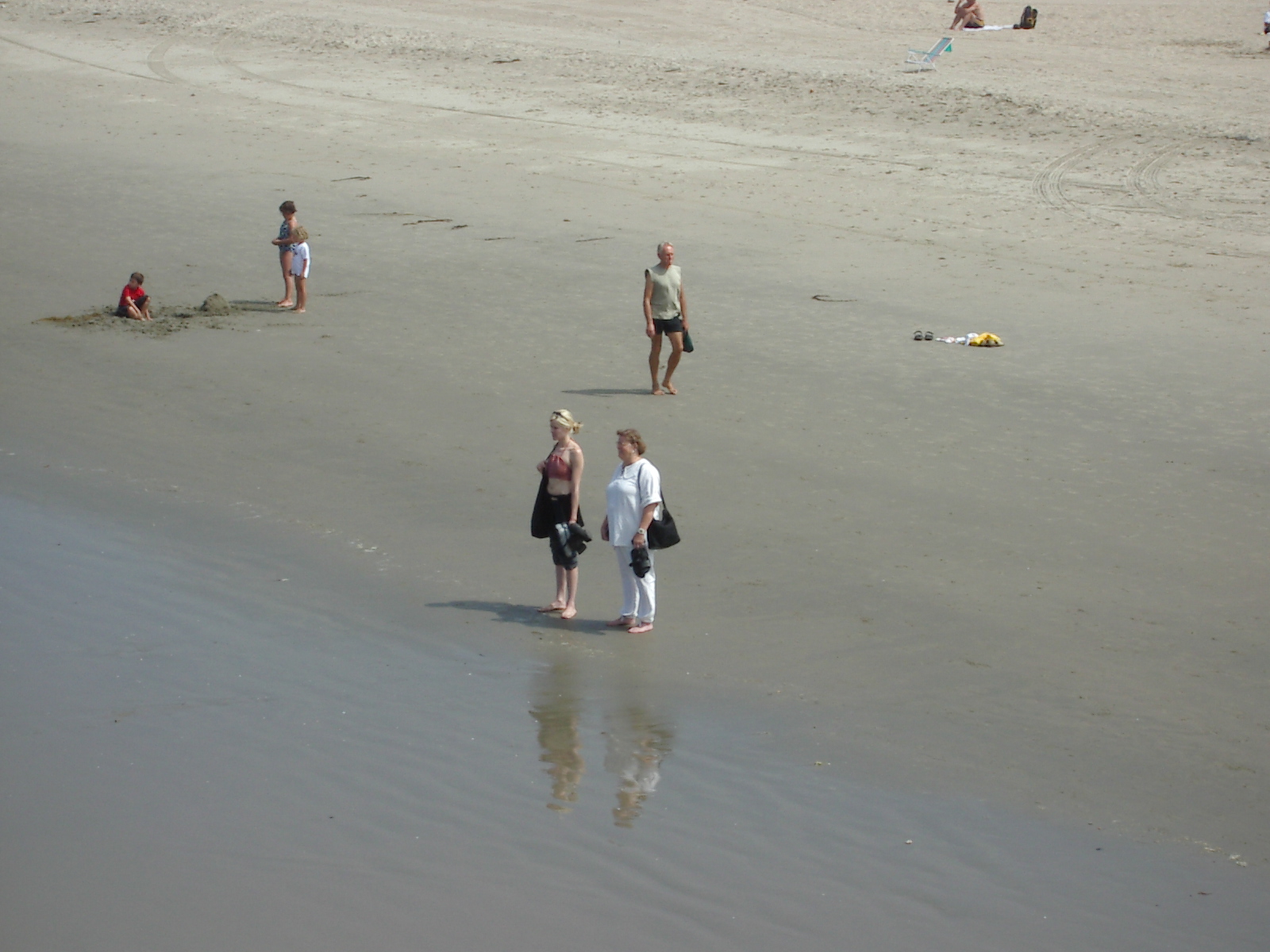
Los Angeles is a difficult place to get to know. It took me at least five years before I even had a grudging acceptance of the city. Now I feel that I love it, for all its strange ways. I do not love the earthquakes, the hot weather, the gigantic brush fires that fill my lungs with ash, the self-entitled young professionals in their expensive sports cars, the decaying infrastructure, the Santa Ana Winds that make the skin peel off around my fingernails, or the long distances involved in going just about anywhere. And yet, there is a quality of the light that suffuses this place, especially early and late in the day. I also like the blend of cultures, mostly Latino and Asian, that make this a cosmopolitan metropolis.

This is a city that has its own literature. Here, for instance, is Raymond Chandler in his story “Red Wind”:

There was a desert wind blowing that night. It was one of those hot dry Santa Anas that come down through the mountain passes and curl your hair and make your nerves jump and your skin itch. On nights like that every booze party ends in a fight. Meek little wives feel the edge of the carving knife and study their husbands’ necks. Anything can happen. You can even get a full glass of beer at a cocktail lounge.

Mostly because of the outside influence of Hollywood in its glory days, many great writers passes this way and left their mark: Aldous Huxley, Bertolt Brecht, Thomas Mann, William Faulkner, Scott Fitzgerald, Nathanael West, John Fante, Evelyn Waugh, Ray Bradbury, and Joan Didion—just to name a few. If you like that sort of thing (I do not), there has also been a lot of modern art and architecture produced.

You may have heard that California is in a historic drought and has received precious little rain for the last three years. When I go to Lima, Peru, later this summer, I will be in another Pacific coast city where it almost never rains. I suspect it will remind me of L.A., except for the very different cultural context.

Would I ever move from Los Angeles? Possibly. Around the time I retire, I will no doubt come to the realization that I can no longer afford to live here. When that happens, it will be a difficult time for me. But then, nothing is forever.


Tarnmoor’s ABCs: Kennedy

President John F. Kennedy

President John F. Kennedy

I was so very impressed by Czeslaw Milosz’s book Milosz’s ABC’s. There, in the form of a brief and alphabetically-ordered personal encyclopedia, was the story of the life of a Nobel Prize winning poet, of the people, places, and things that meant the most to him. Because his origins were so far away (Lithuania and Poland) and so long ago (1920s and 1930s), there were relatively few entries that resonated personally with me. Except it was sad to see so many fascinating people who, unknown today, died during the war under unknown circumstances.

My own ABCs consist of places I have loved (Iceland), things I feared (Earthquakes), writers I have admired (Chesterton, Balzac, and Borges); things associated with my past life (Cleveland and Dartmouth College), and things I love to do (Automobiles and Books). This blog entry is my own humble attempt to imitate a writer whom I have read on and off for thirty years without having sated my curiosity. Consequently, over the months to come, you will see a number of postings under the heading “Tarnmoor’s ABCs” that will attempt to do for my life what Milosz accomplished for his. To see my other entries under this category, hit the tag below marked “ABCs”. I don’t guarantee that I will use up all 26 letters of the alphabet, but I’ll do my best. Today, we’re at the letter “K,” for President John F. Kennedy.

I was a high school junior in a Catholic High School during the 1960 U.S. presidential election. The fact that a Catholic was daring to run again for the highest office in the land after the pasting that Al Smith had received in 1928 was wonderful to me. Richard Nixon with his dark jowls looked like a criminal; and people were saying that a Catholic president would become a mere catspaw to the Pope. (Since the pope at that time was John XXIII, that didn’t strike me as a bad thing.)

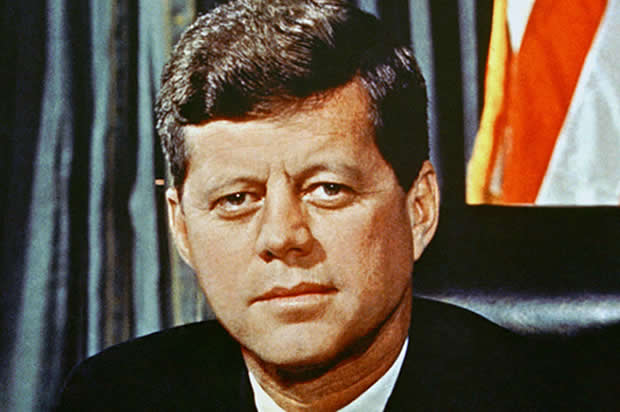
There was so much hope placed in John Kennedy: He was the best, the brightest of his generation. When he was shot in Dallas on November 22, 1963, something died within me. Lyndon Johnson was in many ways a good president, but the war in Viet Nam grew bigger, uglier, and ever more unwinnable. And then after him came the beginnings of that horrible conservative anschluss that is still affecting us today.

After John was killed, I placed my hope in Bobby Kennedy. He wasn’t, to my mind, the shining beacon of his older brother, but he was good. I remember being woken up by a phone call on June 6, 1968 by my friend Peter. He had been filming at the Ambassador Hotel in Los Angeles when Sirhan Sirhan shot Bobby. The FBI collected Peter’s film (which, in any case, didn’t capture the shooting) and never returned it. I was never a supporter of Ted Kennedy for president, though I think he was a great senator. I think we all had had too much heartbreak with the Kennedy family.

Barack Obama ran in 2008 under the motto HOPE. That was my feeling about the Kennedys. Alas, that hope was dashed on the rocks of American politics.

Curiously, John Kennedy and I were similar in one odd respect: He had Addison’s Disease, an adrenal insufficiency that is part of my own panhypopituitarism.


Tarnmoor’s ABCs: Jorge Luis Borges

Jorge Luis Borges in 1921

Jorge Luis Borges in 1921

I was so very impressed by Czeslaw Milosz’s book Milosz’s ABC’s. There, in the form of a brief and alphabetically-ordered personal encyclopedia, was the story of the life of a Nobel Prize winning poet, of the people, places, and things that meant the most to him. Because his origins were so far away (Lithuania and Poland) and so long ago (1920s and 1930s), there were relatively few entries that resonated personally with me. Except it was sad to see so many fascinating people who, unknown today, died during the war under unknown circumstances.

My own ABCs consist of places I have loved (Iceland), things I feared (Earthquakes), writers I have admired (G. K. Chesterton and Honoré de Balzac); things associated with my past life (Cleveland and Dartmouth College), and things I love to do (Automobiles and Books). This blog entry is my own humble attempt to imitate a writer whom I have read on and off for thirty years without having sated my curiosity. Consequently, over the months to come, you will see a number of postings under the heading “Tarnmoor’s ABCs” that will attempt to do for my life what Milosz accomplished for his. To see my other entries under this category, hit the tag below marked “ABCs”.I don’t guarantee that I will use up all 26 letters of the alphabet, but I’ll do my best. Today, we’re at the letter “J,” for Jorge Luis Borges.

Ever since I first learned about Jorge Luis Borges (1899-1986), I have been hooked. By now, I have read just about everything that has been translated into English, sometimes two or three times. He has guided my reading for over forty years: Without him, I would never have discovered Iceland or the works of G. K. Chesterton. Without him, I would never have gone to Argentina twice, once in 2006 and once in 2011. His City of Buenos Aires has become one of the ineluctable geographies of my dreams.

Of his works, I recommend most highly Labyrinths, Ficciones, Other Inquisitions, and, of course, his magnificent poetry. Below, from the recent Penguin anthology entitled Poems of the Night, I have excerpted one poem entitled “Sleep” as translated by Stephen Kessler:

SLEEP

The night assigns us its magic
task. To unravel the universe,
the infinite ramifications
of effects and causes, all lost
in that bottomless vertigo, time.
Tonight the night wants you to forget
your name, your elders and your blood,
every human word and every tear,
what you would have learned from staying awake,
the illusory point of the geometricians,
the line, the plane, the cube, the pyramid,
the cylinder, the sphere, the sea, the waves,
your cheek on the pillow, the coolness
of the fresh sheets, the Caesars and Shakespeare
and the hardest thing of all, what you love.
Oddly enough, a pill can
erase the cosmos and erect chaos.

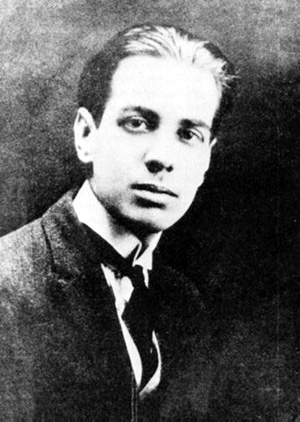
Most people who know of Borges know only that he was blind. For the last half of his life, he was a kind of Teiresias. That’s why I wanted to reproduce above a photograph of the poet in his twenties. The other thing many people know is that he was singled out by the Swedish Academy to be passed over for the Nobel Prize for Literature, primarily because one member of the selection committee disagreed with his politics. This was supposedly because he accepted an award from Chilean dictator General Augusto Pinochet Ugarte. I do not care a fig if Borges’s politics are to the right of mine: All that counts is that he has had a benign, lasting, and ever growing influence on the person I have become.

Tarnmoor’s ABCs: Iceland

Land of Fire, Ice—and Sagas

Land of Fire, Ice—and Sagas

I was so very impressed by Czeslaw Milosz’s book Milosz’s ABC’s. There, in the form of a brief and alphabetically-ordered personal encyclopedia, was the story of the life of a Nobel Prize winning poet, of the people, places, and things that meant the most to him. Because his origins were so far away (Lithuania and Poland) and so long ago (1920s and 1930s), there were relatively few entries that resonated personally with me. Except it was sad to see so many fascinating people who, unknown today, died during the war under unknown circumstances.

This blog entry is my own humble attempt to imitate a writer whom I have read on and off for thirty years without having sated my curiosity. Consequently, over the next few months, you will see a number of postings under the heading “Tarnmoor’s ABCs” that will attempt to do for my life what Milosz accomplished for his. I don’t guarantee that I will use up all 26 letters of the alphabet, but I’ll do my best. Today, we’re at the letter “I”:

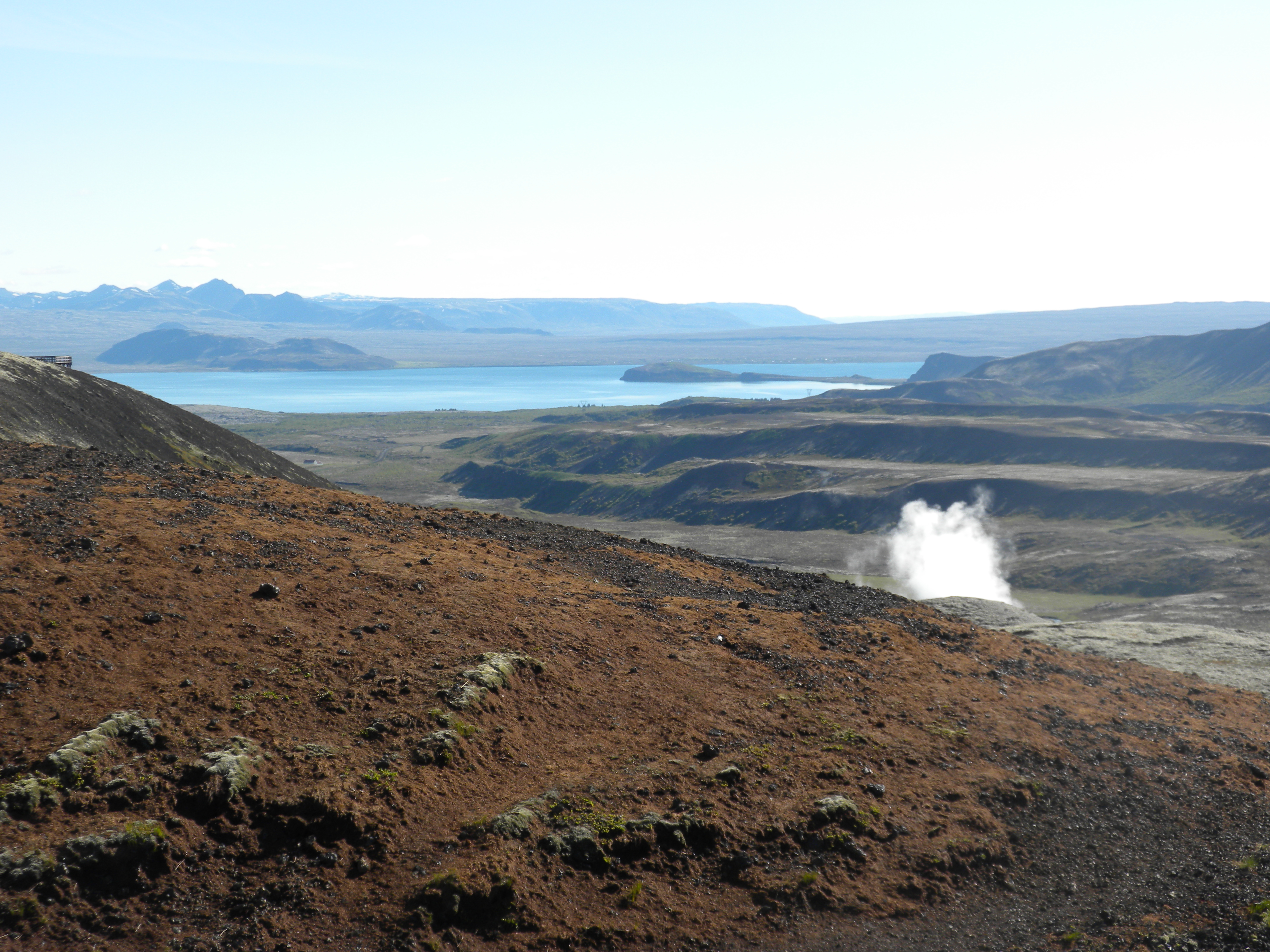
I have been to Iceland twice, first in 2001 and then in 2013, both times by myself. (The first time, Martine didn’t want to go; the second time, she couldn’t.) During the two trips, I traveled around almost the entire circumference of the island, and through the interior on the Kjölur route, where we traveled on a long dirt road and forded several rivers between Geysir and Akureyri. Would I go again? Yes, in a heartbeat, but I’d like to go with someone so that we could rent a car and see some of the lush countryside off the main routes.

What led me to Iceland was, not surprisingly for a bookworm like me, was reading the Icelandic sagas. In the 13th century AD, there was no better literature being written anywhere in Europe. Other than a handful of Arthurian legends and a few devotional books, there just was no competition to the “Big Five” Sagas of Icelanders, namely: Njals Saga, Grettir’s Saga, Egils Saga, the Laxdaela Saga, and the Eyrbyggja Saga. I have read all five at least twice; the Njals Saga, the greatest of them all, at least three or four times. The last time I went, I visited two museums dedicated to individual sagas, in Hvõlsvollur (Njals Saga) and in Borgarnes (Egils Saga).

Both times, I did all my traveling by bus. Occasionally I took tours when I had to. Otherwise, I used the public Stræto and Sterna buses. It isn’t terribly difficult, as all bus drivers and just about everyone else under the age of 70 in Iceland speaks English. This is a function not only of education, but of the prevalence of English and American television programming.

At least once a day, I would have delicious fish dinners. At the majority of restaurants where I dined, I was no farther than a couple hundred feet from the fishing boats that had just brought in their catch. Until I went to Iceland, I had no idea of what fresh fish really tasted like. Now I do. I would just order the fish special of the day, even if I never heard of that fish species before. It was always scrumptious, whether it was arctic char, salt water catfish, and most especially my favorite—cod. In Southern California, I am allergic to shrimp and lobster. In the cold waters off Iceland, I had no allergy problems.

Until global warming becomes more prevalent, the tourist season in Iceland is a necessarily short one, lasting only from June to August. Already, at the end of August, many tourist facilities are converted back to school facilities and visiting hours are slashed. People start thinking about the darkness of winter. Toward the end of June, the sun never entirely sets. It is up when you go to bed, and up when you awake. I thought I would not be able to sleep under those conditions: If I tire myself out, which I frequently did, there was no problem.

I would love to fly back to Reykjavík with a Kindle loaded with Icelandic sagas.


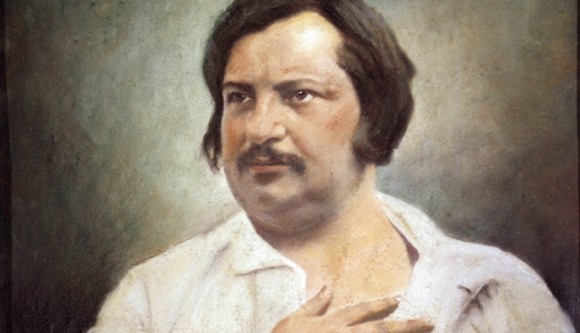
Tarnmoor’s ABCs: Honoré de Balzac

Honoré de Balzac (1799-1850)

Honoré de Balzac (1799-1850)

I don’t even remember what it was that led to me read Honoré de Balzac’s Père Goriot around 1970. It was a Penguin paperback with a cover illustration of the last chapter’s funeral scene at Père Lachaise cemetery in muted colors. The scene, quoted below, showed the book’s young hero Eugène de Rastignac, poor scion of a good family, seeing the virtually unattended obsequies of an old man, who, like King Lear, gave everything to his daughters. Except there was no Cordelia in this tale:

But just as the coffin was put in the hearse, two empty carriages, with the armorial bearings of the Comte de Restaud and the Baron de Nucingen, arrived and followed in the procession to Père-Lachaise. At six o’clock Goriot’s coffin was lowered into the grave, his daughters’’ servants standing round the while. The ecclesiastic recited the short prayer that the students could afford to pay for, and then both priest and lackeys disappeared at once. The two grave diggers flung in several spadefuls of earth, and then stopped and asked Rastignac for their fee. Eugène felt in vain in his pocket, and was obliged to borrow five francs of Christophe. This thing, so trifling in itself, gave Rastignac a terrible pang of distress. It was growing dusk, the damp twilight fretted his nerves; he gazed down into the grave and the tears he shed were drawn from him by the sacred emotion, a single-hearted sorrow. When such tears fall on earth, their radiance reaches heaven. And with that tear that fell on Father Goriot’s grave, Eugène Rastignac’s youth ended. He folded his arms and gazed at the clouded sky; and Christophe, after a glance at him, turned and went—Rastignac was left alone.

He went a few paces further, to the highest point of the cemetery, and looked out over Paris and the windings of the Seine; the lamps were beginning to shine on either side of the river. His eyes turned almost eagerly to the space between the column of the Place Vendome and the cupola of the Invalides; there lay the shining world that he had wished to reach. He glanced over that humming hive, seeming to draw a foretaste of its honey, and said magniloquently:

“Henceforth there is war between us.”

And by way of throwing down the glove to Society, Rastignac went to dine with Mme. de Nucingen.

At the time, I was only about 25 years old myself, and I felt myself, like de Rastignac, to be a creature of destiny. The years have shown that I was deluding myself, but that wasn’t Balzac’s fault.

Over the years, Balzac has continued to cast his spell on me. By now, I have read virtually everything Balzac published under his own name, as well as two works written under the pseudonym Horace de Saint-Aubin. I am a member of a reading group dedicated to Balzac under Yahoo!—a group which at one time read and discussed all of the author’s books over a period of several years.

Interestingly, Balzac is a rare example of a great writer who is not a consistently good writer. He was remarkably slapdash about composing and editing his works, yet he always entranced the reader by the breadth of his imagination which, to this day, has never been approached by any other writer, not even Marcel Proust. He is like a candle burning at both ends, a creature of soaring ambition, poor spending habits, and a remarkable understanding of how people interact in what is a material world. At his worst, he is a tedious dimestore philosopher in Seraphita and the second half of Louis Lambert.

Ah, but at his best, he is sublime. Even when all the pieces don’t add up, the following works are among the most powerful works ever penned:

  • The Wild Ass’s Skin (1831)
  • Colonel Chabert (1832)
  • Père Goriot (1835), his masterpiece
  • Lost Illusions (1843)
  • Cousin Bette (1846)
  • Cousin Pons (1847)
  • A Harlot High and Low (1847)

If you have a Kindle or other e-reading device, you can pick up Balzac’s complete work, translated into English, for free or for mere pennies. And be sure to visit La Comédie Humaine by Balzac, which was put together by members of the Yahoo! Balzac group, and which includes dozens of reviews and summaries written by me and others.


Tarnmoor’s ABCs: G. K. Chesterton

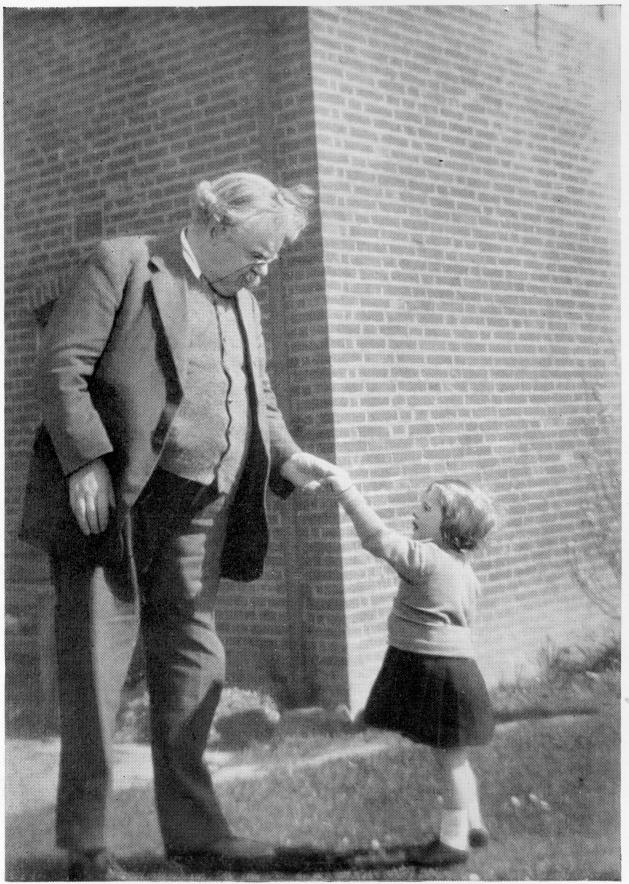
Chesterton with Admirer

Chesterton with Admirer

I was so very impressed by Czeslaw Milosz’s book Milosz’s ABC’s. There, in the form of a brief and alphabetically-ordered personal encyclopedia, was the story of the life of a Nobel Prize winning poet, of the people, places, and things that meant the most to him. Because his origins were so far away (Lithuania and Poland) and so long ago (1920s and 1930s), there were relatively few entries that resonated personally with me. Except it was sad to see so many fascinating people who, unknown today, died during the war under unknown circumstances.

This blog entry is my own humble attempt to imitate a writer whom I have read on and off for thirty years without having sated my curiosity. Consequently, over the next few months, you will see a number of postings under the heading “Tarnmoor’s ABCs” that will attempt to do for my life what Milosz accomplished for his. I don’t guarantee that I will use up all 26 letters of the alphabet, but I’ll do my best. Today, we’re at the letter “G”:

This is my first ABC entry about the writers who have most influenced me. Interestingly, I discovered all of them right around the same time, just after 1970. Gilbert Keith Chesterton (1874-1936) is the only one of them who might very well be declared a saint of the Catholic Church during my lifetime—or not. Roman Catholic Bishop Peter Doyle of Northampton, England, has ordered an examination into the life of the author, which is the usual first step on the road to beatification and, eventually, canonization. Feeling is strong both for and against his sainthood, some alleging that he was anti-Semitic, though I have never seen any evidence to that effect.

GKC was incredibly prolific, writing journalism, fiction, essays, poetry, plays, biography, and political and religious works. I started by reading his essays (mostly published as journalism), then moved on to his fiction, and in the end reading as much of everything as I could find. He is probably one of the most quotable writers of the Twentieth Century. The following is from my favorite of his novels, The Man Who Was Thursday:

He knew that each one of these men stood at the extreme end, so to speak, of some wild road of reasoning. He could only fancy, as in some old-world fable, that if a man went westward to the end of the world he would find something—say a tree—that was more or less than a tree, a tree possessed by a spirit; and that if he went east to the end of the world he would find something else that was not wholly itself—a tower, perhaps, of which the very shape was wicked. So these figures seemed to stand up, violent and unaccountable, against an ultimate horizon, visions from the verge.

And again:

Syme had for a flash the sensation that the cosmos had turned exactly upside down, that all trees were growing downwards and that all stars were under his feet. Then came slowly the opposite conviction. For the last twenty-four hours the cosmos had really been upside down, but now the capsized universe had come right side up again.

Following is a poem called “A Ballad of Abbreviations,” making fun of how Americans replace simple Anglo-Saxon terms with clumsier circumlocutions:

A Ballad of Abbreviations

The American’s a hustler, for he says so,
And surely the American must know.
He will prove to you with figures why it pays so
Beginning with his boyhood long ago.
When the slow-maturing anecdote is ripest,
He’ll dictate it like a Board of Trade Report,
And because he has no time to call a typist,
He calls her a Stenographer for short.

He is never known to loiter or malinger,
He rushes, for he knows he has ‘a date’ ;
He is always on the spot and full of ginger,
Which is why he is invariably late.
When he guesses that it’s getting even later,
His vocabulary’s vehement and swift,
And he yells for what he calls the Elevator,
A slang abbreviation for a lift.

Then nothing can be nattier or nicer
For those who like a light and rapid style.
Than to trifle with a work of Mr Dreiser
As it comes along in waggons by the mile.
He has taught us what a swift selective art meant
By description of his dinners and all that,
And his dwelling, which he says is an Apartment,
Because he cannot stop to say a flat.

We may whisper of his wild precipitation,
That it’s speed in rather longer than a span,
But there really is a definite occasion
When he does not use the longest word he can.
When he substitutes, I freely make admission,
One shorter and much easier to spell ;
If you ask him what he thinks of Prohibition,
He may tell you quite succinctly it is Hell.

You can find many of Chesterton’s best works available for free from Gutenberg.Com or for cheap from E-Book vendors.