
Mexican Rules

Benito Juarez Airport in Mexico City

I was reading Oliver Sacks’s Oaxaca Journal—a book I do not recommend you read unless you are a botanist—when I came across this passage which reminded me of past trips to Mexico:

“What gate do we go from?” everyone is asking. “It’s Gate 10,” someone says. “They told me it was Gate 10.”

“It’s Gate 3,” someone else says, “It’s up there on the board, Gate 3.” Yet another person has been told we are leaving from Gate 5. I have an odd feeling that the gate number is still, at this point, indeterminate. One thought is that there are only rumors of gate numbers until, at a critical point, one number wins. Or that the gate is indeterminable in a Heisenbergian sense, only becoming determinate at the final moment (which, if I have the right phrase, “collapses the wave function”). Or that the plane, or its probability, leaves from several gates simultaneously, pursuing all possible paths to Oaxaca..

. . . . . . . . . . . . . . . . . . . . . . . . . . . . . . . . . .

This reminds me of a trip my brother and I took to Mexico in 1979. We flew into Mexico’s Benito Juarez Airport and were to take a connecting flight to the misnamed city of Villahermosa. Not only was the gate uncertain, not only was the time uncertain, but whether the flight would take place at all was uncertain. (You can read more about it here.) This was a interesting lesson in traveling under Mexican rules.

This was no longer the precise Anglo-Saxon world we had just left behind. There was uncertainty everywhere. If you let it bother you, you will mot enjoy your vacation. If, on the other hand, you take it as a “Heisenbergian” event and hang in there to see how it all sorts out, you not only win but you learn an interesting lesson that, in the end, you can take back home with you.
What’s That Again?

Did Anyone Hear That Announcement?

Did Anyone Hear That Announcement?

Like all inventions, it was well intentioned—originally. Then, like most inventions, things got out of hand. I am referring to public address systems, which work well enough in certain controlled environments, such as schools, but are all but useless in crowded situations such as airports and railway stations.

Yesterday, for example, I took the new Expo light rail from Santa Monica to Downtown L.A. and back again. Admittedly, it was only the fourth day of operation of the extended Expo line, but all was confusion at the 7th Street Metro Station. A train had pulled in whose destination was Willowbrook on the Blue Line. There was a scratchy P.A. announcement saying something or other in which the words “Santa Monica” were mentioned, after which half the people in the train got off. Thereupon, the train was marked “Not in Service” and left the station with several hundred people bound for either Willowbrook or Santa Monica or the rail maintenance yard.

This is a typical occurrence. Most public address announcements are innately confusing. There could be technical reasons for this, or the announcer could have a voice that is not appropriate for the medium.

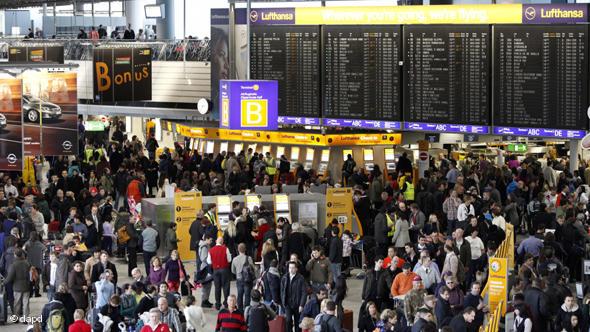
At airports, I have gotten used to ignoring all announcements and looking carefully at the status board. That’s what I wound up doing at the 7th Street Metro Station yesterday: I just waited for a train whose destination was clearly marked as Santa Monica.

In 1979, my brother and I were flying to Villahermosa by way of Mexico City. We were told by announcement that our flight was canceled. That’s when my term “flying by Mexican rules” was born. Dan and I hunkered down and kept our eyes and ears open. Sure enough, there was a scratchy announcement that mentioned Villahermosa, and we found that the plane was in fact being boarded. Only at the last minute did that status appear on the electronic signage.

The Brussels Airport Attack

Patrick Smith On the Brussels Airport Attack

Patrick Smith on the Brussels Airport Attack

I don’t do this very often, but I want to quote in its entirety Patrick Smith’s well reasoned attack on the “We Need More Security at Our Airports” argument from his website, Ask the Pilot:

I WAS AFRAID OF THIS. The minute I learned of the double bombing at the Brussels airport check-in lobby earlier today, I knew how the conversation would go. Sure enough, even before the morning was out, we were hearing calls for tighter security in airports.

First, a little history. Although airplanes themselves are historically the choicest target, attacks inside terminals are nothing new. For instance:

In 1972, the Japanese Red Army murdered 26 people in the arrivals lounge at Israel’s Lod Airport (today’s Ben Gurion International).

In 1985, the Abu Nidal group killed 20 in a pair of coordinated ticket counter assaults at Vienna and Rome.

In 2002, a gunman shot three people near the El Al airlines ticket counter at LAX.

And most recently, in January, 2011, a suicide bomber at Moscow’s busy Domodedovo airport killed 35 people.

“Aviation security experts have been warning” read an Associated Press story after the Moscow attack, “that the crowds at many airports present tempting targets to suicide bombers. Arrivals halls are usually open to anyone.”

Now, in the wake of Brussels, we’re hearing this again. The implication is that our airports aren’t yet secure enough, and that only more barricades and checkpoints and scanners and cameras and guards standing around with automatic weapons will make them so. There’s talk from supposed security experts asking if perhaps terminals need to be closed off to everybody except ticketed passengers and employees, with security checkpoints moved literally onto the sidewalk.

This is something I worried about years ago, when I was a columnist for Salon. Just wait, I wrote, until the next big attack takes place at the check-in counter or at baggage claim. They’ll be turning our airports into fortresses.

As, if by moving the fences, they can’t get us. The only thing moving security curbside would actually do, of course, is shift the perimeter — and the busy choke point of passengers — to a new location. This means nothing to an attacker, whose so-called “soft target” has simply been relocated from one spot to another, no less convenient one. But it would mean immense amounts of hassle for everybody else.

Thus, it’s precisely the wrong line of thinking. It’s reactionary in the purest sense, and it plays directly into the terrorist’s strategy — a strategy that encourages a response that is based on fear instead of reason, and that is ultimately self-defeating.

The reality is, we can never make our airports, or any other crowded places, impervious to attack. And while maybe you wouldn’t mind living in a society in which every terminal, shopping mall, sports venue and subway station has been militarized and strung with surveillance equipment, count me among those who would.