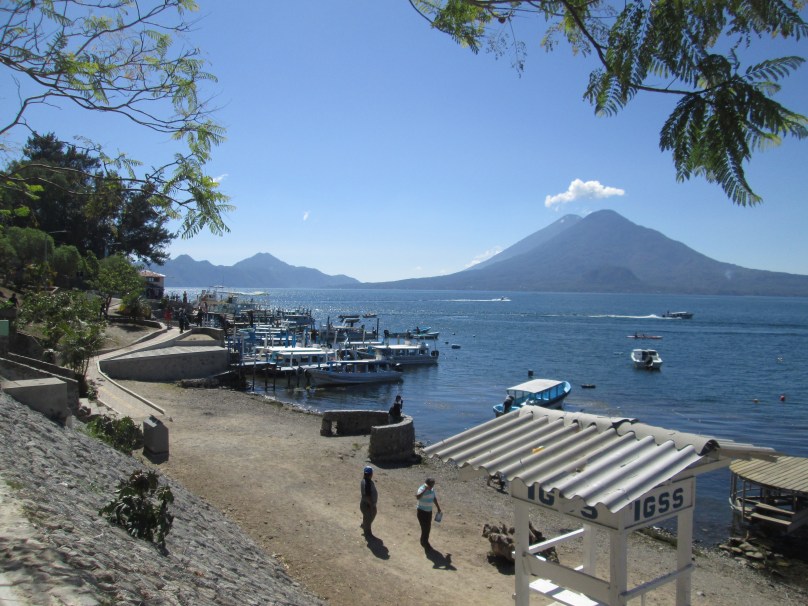
Lago de Atitlán from Panajachel
It was 2019 when I spent several weeks in Guatemala and Honduras. After five days in Antigua Guatemala, I took a bus to Panajachel, the main port on the Lago de Atitlán. I very much wanted to meet Maximón, a folk saint or deity based in Santiago de Atitlán, a city that had seen much strife during the persecution of the native Maya people.
According to the National Geographic Society’s website:
Maximón, also known as San Simón, represents light and dark. He is considered a trickster—both a womanizer and protector of virtuous couples. According to legend, the village fishermen traveled frequently for trade and enlisted Maximón to protect the virtue of the wives they left behind. It backfired. Instead, Maximón is said to have disguised himself as a loved one so he could have sex indiscriminately.
Today, Maximón’s effigy resides in a different family’s home every year—his wooden body is dressed in a typical male suit of the region and placed on a petate, or straw mat. Traditionally he was only brought out during Holy Week, but because of high demand from pilgrims, tourists, and brujos (shamans), he is on display year-round.
Those seeking miracles, good health, and love make offerings at his shrine in exchange for his favor—moonshine, hand-rolled cigarettes, and money are his vices of choice. His cofrades, or attendants, spend their days smoking and drinking by his side, and it is considered the highest honor to host him. He is brought out during Holy Week and paraded through the streets before being placed in a different home for the following year.
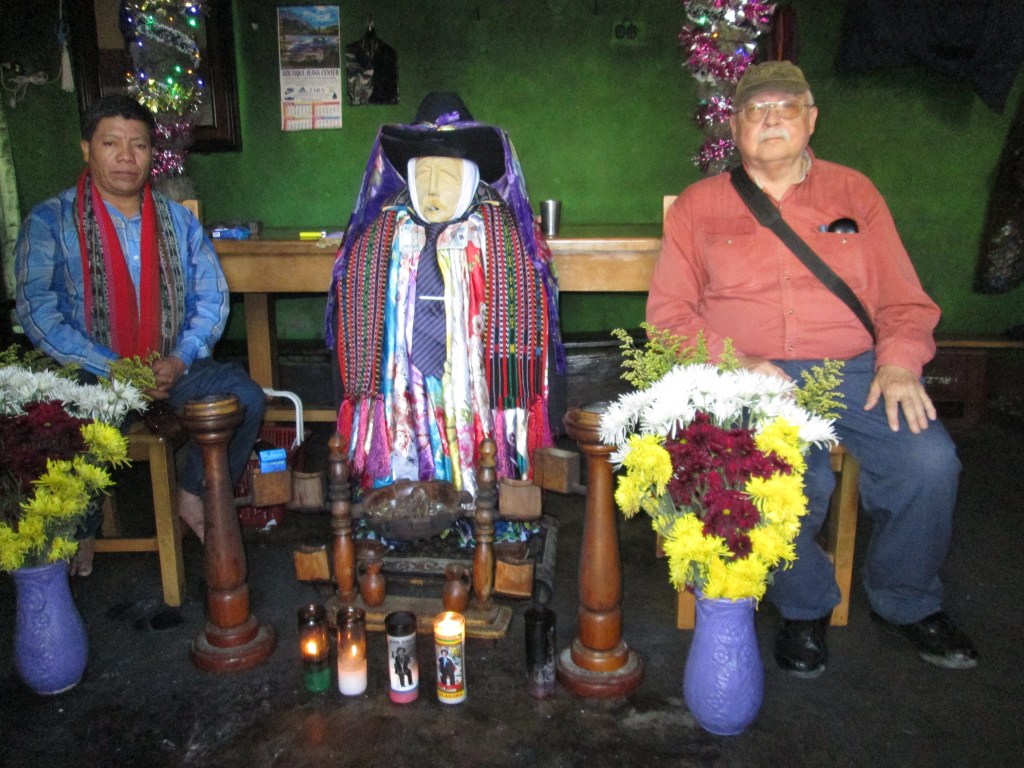
With Maximón (Center) in Santiago de Atitlán
I made my own offering to Maximón to protect me during my travels, as I had a number of hard-to-get-to Maya ruins still to visit, including Copán in Honduras and Quiriguá and Tikal in Guatemala. He rewarded me with one of my best trips in Latin America.


 Tarnmoor
You must be logged in to post a comment.