Born in Discord

Map of Argentina in 1816

Map of Argentina in 1815

We tend to forget the sharp birth pangs of any republic. After we approved our famed constitution, it took seventy-five years and a bloody civil war in which millions died before we could begin to act as a unified country. (Though, even now, that seems in doubt.)

In Argentina, the process took roughly as long, and not without substantial rough spots until as recently as 2002. Originally, the country was called the United Provinces of the River Plate. Then, after the Congreso de Tucumán in 1815, the land was briefly named after the congress.

But major trouble lay ahead: A long conflict between the Federalists and the Unitarians. In South America, both parties had no relation to the U.S. Federalists or the Unitarian church. In San Martín: Argentine Soldier, American Hero, John Lynch wrote:

In spite of his fanatical liberalism, [Bernardino] Rivadavia was essentially a man of peace; bowing to the opposition of provincial caudillos and porteño [Buenos Aires] Federalists, he stepped down from the presidency in July 1827 and retired to poverty and exile. He did not appreciate the changing pattern of power in Argentina. Did San Martín? The Rivadavia group consisted essentially of intellectuals, bureaucrats, professional politicians, ‘career revolutionaries’ as they have been called, who did not represent a particular economic interest or social group. His [federalist] enemies, on the other hand possessed real power; the estancieros [ranchers] formed a strong political base, rooted in the country and the cattle industry, and they wanted their profits to remain in the province instead of being absorbed into a national economy. The estancieros were the new men of the revolution; they brought a military and economic power to the federal party and soon began to seek direct political power.

If you ever want to read a damning indictment of the Federalist caudillos, I recommend you read Domingo  Faustino Sarmiento’s Facundo, about the crimes of dictator Juan Manuel de Rosas. After several periods of political exile, Sarmiento became president of Argentina from 1868 to 1874.
Serendipity: Summoning Up the Genie

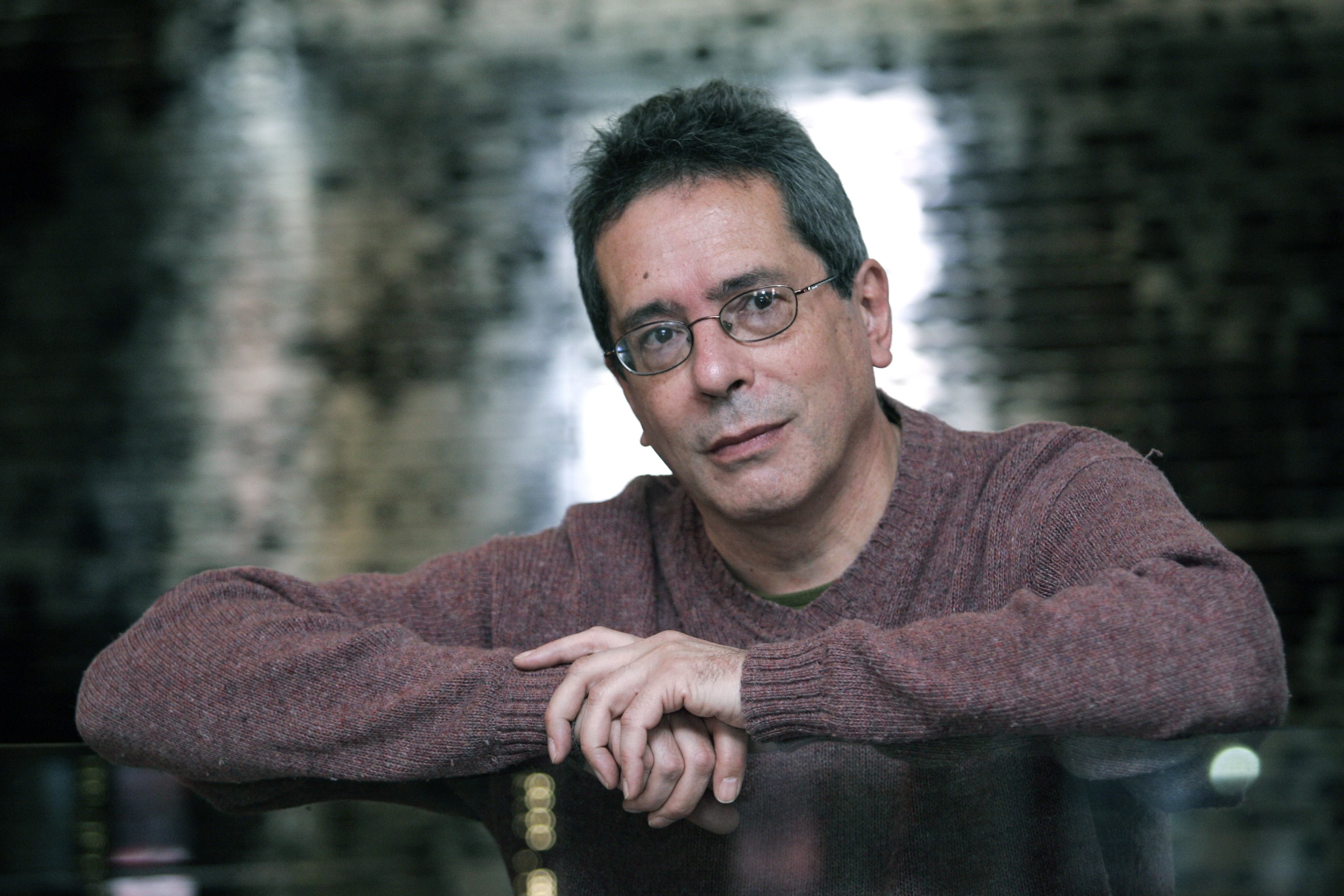
César Aira

César Aira

I have written before a couple of times about Argentinian author César Aira, the man from Coronel Pringles (not related to the potato chip). Today, in the August 13, 2015 issue of The New York Review of Books, I finally read an article that seems to understand him. It is called “Staggering Local Wonderlands” and written by Geoffrey O’Brien, For your delectation, here are the concluding paragraphs of the article:

Finally one sticks around because of the tantalizing possibility that Aira may yet get to the bottom of something that seems to have no bottom. He is the master of a method whose application and ultimate purpose remain in perpetual doubt. He might be a rationalist demonstrating the irrationality of what is; a naturalist of the impossible; a maker of allegories, or of parodistic pastiches of allegories, of parables whose precise lessons deliberately elude clarification. He is just as likely demonstrating that such forms as allegory and parable are no more than imperfect attempts to capture a reality more elusive—“real reality, so distinct from the pale fantasies of reason” (The Miracle Cures of Dr. Aira, 2002). Aira seeks to improve on such earlier, approximate methods by means of his mad-scientist investigation into the neurology of story-making.

The act of storytelling is nowadays conventionally prized for its universal, ageless, benevolent associations. It is our shared heritage of magic; it is a defining human trait. With Aira we are just as aware of the essential cruelty of storytelling—or rather its cosmic indifference, an indifference only partly disguised in the oldest myths and legends and fairy tales. Finally there is nothing to cling to. Emotions are free-floating, personhood itself is free-floating—a state of affairs only thinly masked by the reassuring “thereness” of the voice-over commentary. The stories here do have a life of their own, and it is a life offering much surprise, much humor, much brilliance of observation and invention, but little in the way of even momentary consolation. They summon up a genie who can do everything but fulfill our wishes.

The reader feels at moments as if he has washed up in some successor state of literature, in which outward forms, characteristic tropes and techniques, are carefully maintained, but where former purposes have given way to some new and not yet decipherable intent. Yet in such a situation the old forms are perhaps more potent than ever: they regain the mystery of the incomprehensible that stories are always promising, in vain, to explicate. One of the stories in The Musical Brain begins: “Circumstances had reduced me to begging in the street”: a perfect narrative set-up for The Arabian Nights, that most wonderful, as well as supremely cruel, work. Aira’s reconceiving of such a compendium of all possible stories might be called an Arabian Nights of the corner drugstore; but then it is fair to say that The Arabian Nights itself was an Arabian Nights of the corner drugstore.

Termed Out

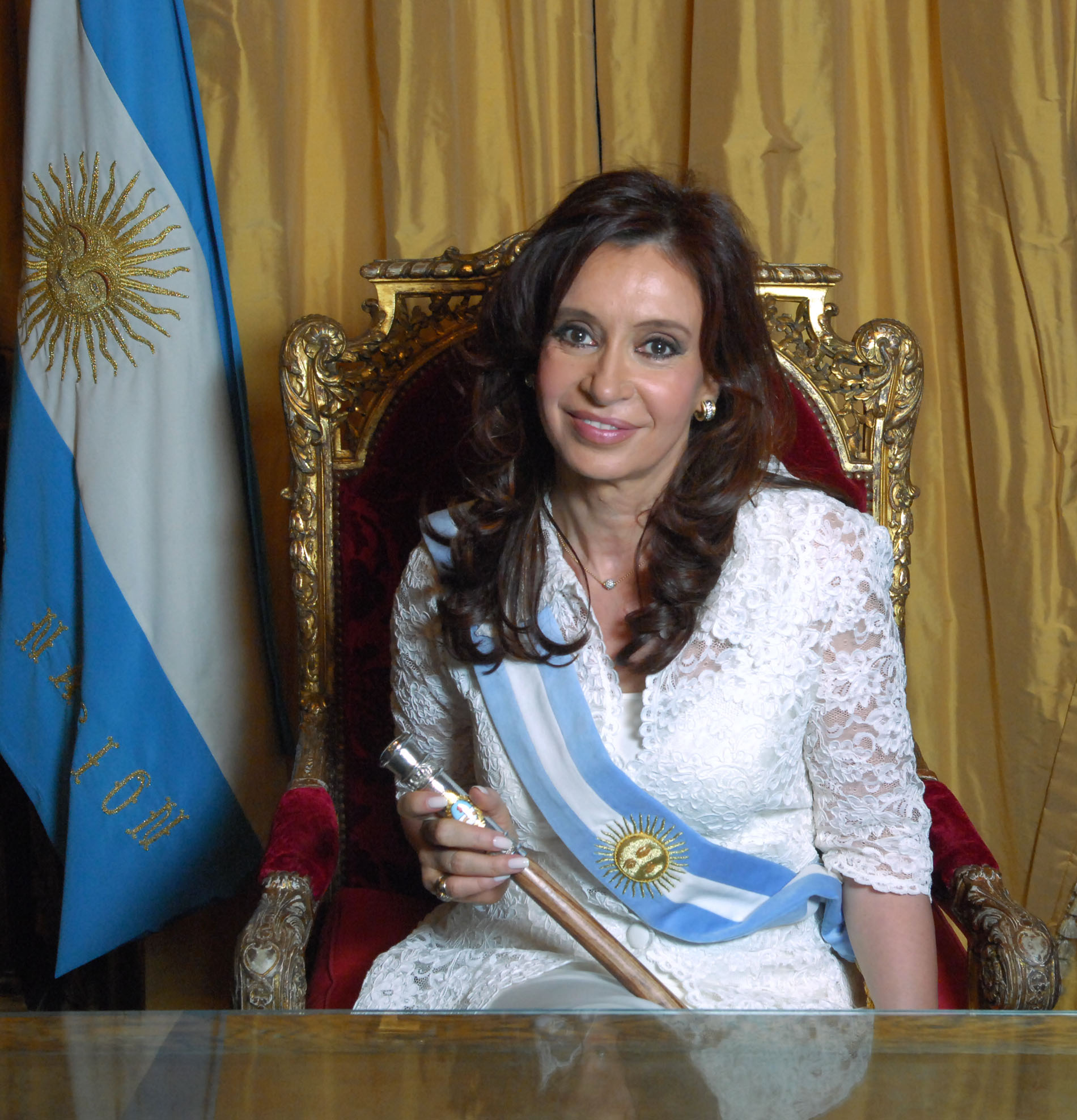
Official Photo of Argentinian President Cristina Fernández de Kirchner

Official Photo of Argentinian President Cristina Fernández de Kirchner

Later this month, a new presidential election will be held in Argentina to replace Cristina Fernández de Kirchner, the widow of the former president, Néstor Kirchner. As long as I have been visiting South America, a Kirchner was at the helm. As far as I could tell from my distant perch in the EEUU, as our country is abbreviated down there, they have been fairly good leaders. And I always enjoyed watching Cristina speak on television, even if I understood a mere fraction of what she had to say.

The previous widow to hold office in Buenos Aires was Isabelita Perón, the wife of former strong man Juan Domingo Perón, who died a scant year after returning from exile in Spain. Isabelita was not nearly in Cristina’s class and was quickly forced out of office.

Because of her looks, Cristina has been the target of some unfair attacks, such as the Italian newspaper Corriere de la Sera publishing a story in 2008 stating that she had gone on a spree at Rome’s famed Enigma Jewelry, purchasing Bulgari earrings, watches, and golden bracelets to the tune of €140,000 while she was attending the Food and Agricultural Organization (FAO) summit of the United Nations. Today, the Buenos Aires Herald announced that Cristina’s suit for defamation was judged in her favor by the Italian courts and that the story was a complete fabrication. The newspaper had to pay €40,000, which she turned around and donated to the children’s hospital in La Plata, where she was born.

It’s hard to believe that Sra. Fernández de Kirchner was born in 1953. The years have been kind to her.

Buenos Aires News in English

My Source for News from Argenina

My Source for News from Argentina

In both 2011 and 2015, I have relied heavily on the website of The Buenos Aires Herald for my news about Argentina, South America, the United States, and also the World. Every day, there is an article about the value of the dollar in pesos—both the official rate and the “blue” rate. Based on the photo above, it is also published in a newsprint edition, which I will check up on when I arrive in B.A.

Occasionally, I will find stories which are not even well covered in the U.S. For instance, Israel has banned most Palestinians from the Old City of Jerusalem for a two day period during Jewish holiday observances.

It is interesting to see that Argentina is still going hammer and tongs after the British for doing oil exploration in what the Brits call the Falklands and the Argentinians the Islas Malvinas. Firms that are involved may have their property confiscated if they should anchor at an Argentinian port.

Restlessness

My Vacation Is Getting Closer

My Vacation Is Getting Closer

In the last few weeks before my vacation, I am feeling restless. All other things aside, here are the books I plan to read before the month is over:

  • Christopher Hill, The World Turned Upside-Down. Revolutionary movements in 17th century England.
  • Guy de Maupassant, Afloat. For my French literature group on Yahoo!
  • Pablo Neruda, Canto General. I plan to visit the poet’s houses in Chile.
  • Macedonio Fernandez, The Museum of Eterna’s Novel, by a friend and hero of Jorge Luis Borges.
  • John Lynch, San Martin: Argentine Soldier, American Hero. A biography of the Founding Father of Argentina.
  • Aldous Huxley, Complete Essays, Vol. 1, 1920-1925.

And that’s probably half of what I will end up reading this month. Only, it’s always more difficult when one faces a deadline. One thing I will not do is stuff my suitcase full of books, nor concrete blocks either. While I am traveling, I will be reading exclusively from my two Kindles.

As usual, I have a dental emergency just before my vacation. Two small pyramidal chunks of tooth came loose the other day, so I will have to go to the dentist tomorrow. Plus I have two medical appointments this month.

Most of my shopping is done, but I will need a new belt: My old one fell to pieces a couple weeks ago. Plus I will have to get some mosquito repellent (for the Iguasu Falls area), and possibly a two-pocket shirt if I can find one. Oh, and I’m sure I’ll find a couple of other things I will need, or at least feel I’ll need.

The picture above is by Paulo Zerbato and nicely expresses what I am feeling right now.

¡Cuidado! Falsificatión Peligro

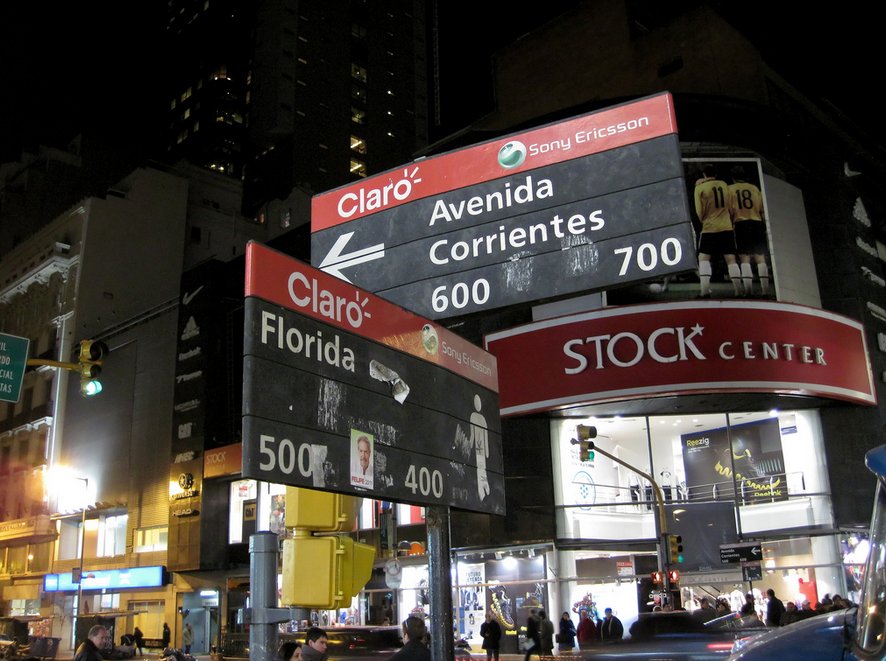
The Blue Dollar Market Is Centered on Calle Florida

The Blue Dollar Market Is Centered on Calle Florida

There are at least two ways that tourists in Argentina can be passed counterfeit notes. Both ways are common enough that tourists have to know how to tell a real peso from a fake.

In June I wrote a post about Blue Dollars. There are two peso to dollar rates in Argentina: the official one and the “blue” dollar rate, which is available primarily from money changers on Calle Florida in Buenos Aires. When I wrote the post in June, the rate was 9.07 pesos to the dollar at the official rate and 13.00 pesos to the dollar on the blue market. Today the rate is 9.425 pesos to the dollar at the official rate, and 16 to the dollar at the blue rate.

If you stick to the official rate only, you will be paying more for everything; but you will probably not wind up with fake pesos—if you stick to major bank ATMs. (Money changers and dicey private ATMs are a different story.) First of all, to deal on the blue market, you need crisp, fresh Benjamins, that is to say, one hundred dollar notes. When dealing with a money changer, you have to indicate you want money at the blue rate, and you have to be willing to closely examine the bills you get in return. You can look at San Telmo Loft’s posting on “Fake Money in Argentina” for starter. And be sure to take their quiz.

Another common way of getting stuck with counterfeit notes is to use legitimate big bills and having the following happen: Let’s say you give a taxi driver a real 100 peso note. He turns around, gives it back to you, saying it’s a fake. In the meantime, he’s pulled a switch on you. Before handing over a big bill, be sure to memorize the last three digits of the serial number. That way you can accuse the driver of having passed a fake to you. You might not want to be standing where he can run you down at that point.

Fortunately, it’s easy to tell fake from real notes; but note that a lot of fake pesos are in circulation. If you get stuck holding them, there is no real recourse.


La Bandera Oficial

The Official Flag of Argentina

The Official Flag of Argentina

Today, Martine and I went for a walk on the spectacular campus of Pepperdine University in Malibu. It was a hot, but crystal-clear day with clear views toward Catalina and Palos Verdes. What was different today was a display of some 3,000 flags, mostly the stars and stripes. I guessed that they represented the students on campus and their country of origin. Instead, it was a commemoration of the September 11 attacks on the World Trade Center, in which 2,996 people died. The non-American flags represented the country of origin of the victims of the Al Qaeda terrorists.

Toward the end of the display, I stopped by a flag of Argentina. At the same time I felt sad for the Argentinian victim of the attack, I felt a warm glow in anticipation of my upcoming trip to Argentina and Chile in November.

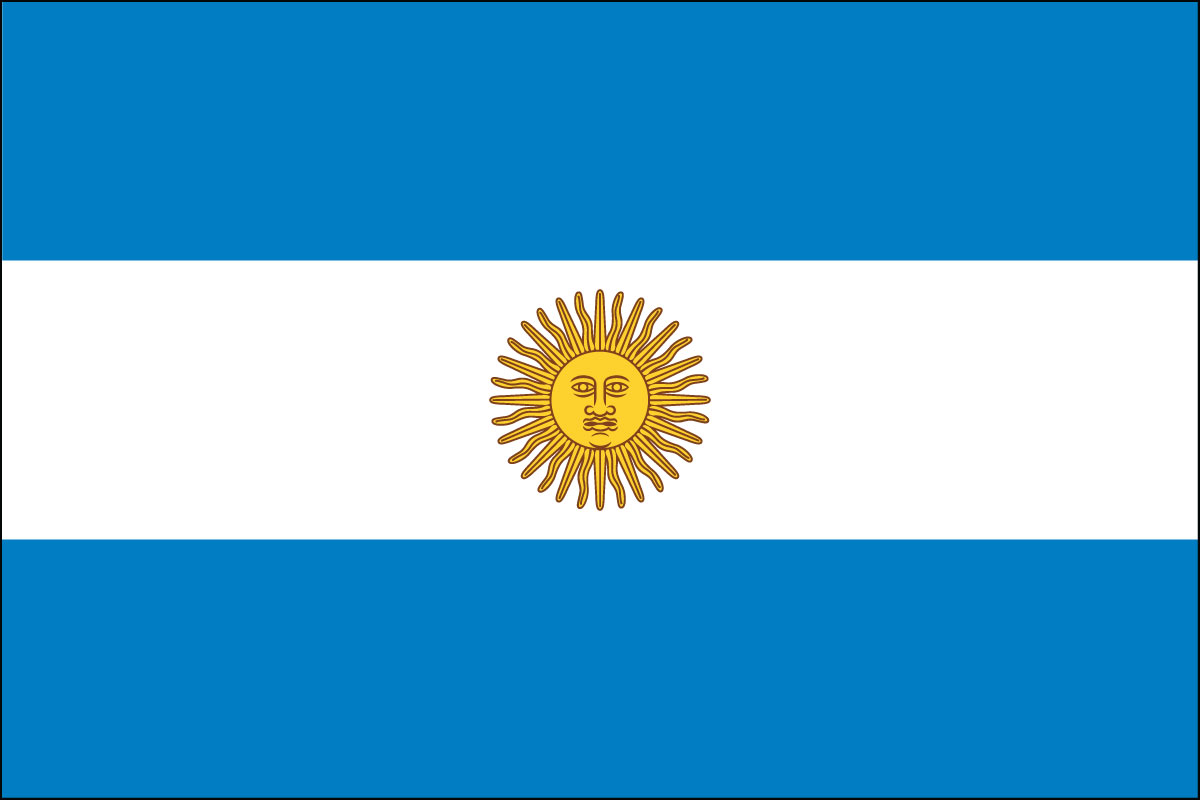
It was Manuel Belgrano who designed the flag in Rosario in 1812 during his country’s war of independence from Spain. It was officially accepted as the nation’s official flag at the Congress of Tucumán on July 20, 1816, complete with the stylized image of the sun. An alternate ornamental version of the flag is minus the sun.

At one point last week, I fell afoul of a clique of rabid Little Englander trolls by suggesting that this flag should by rights be flying over the Falkland Islands. I have since decided to moderate my enthusiasm for all things Argentinian and cede the archipelago to the Brits.

Islas Malvinas

Argentine Prisoners of War in Port Stanley, 1982

Argentine Prisoners of War in Port Stanley, 1982

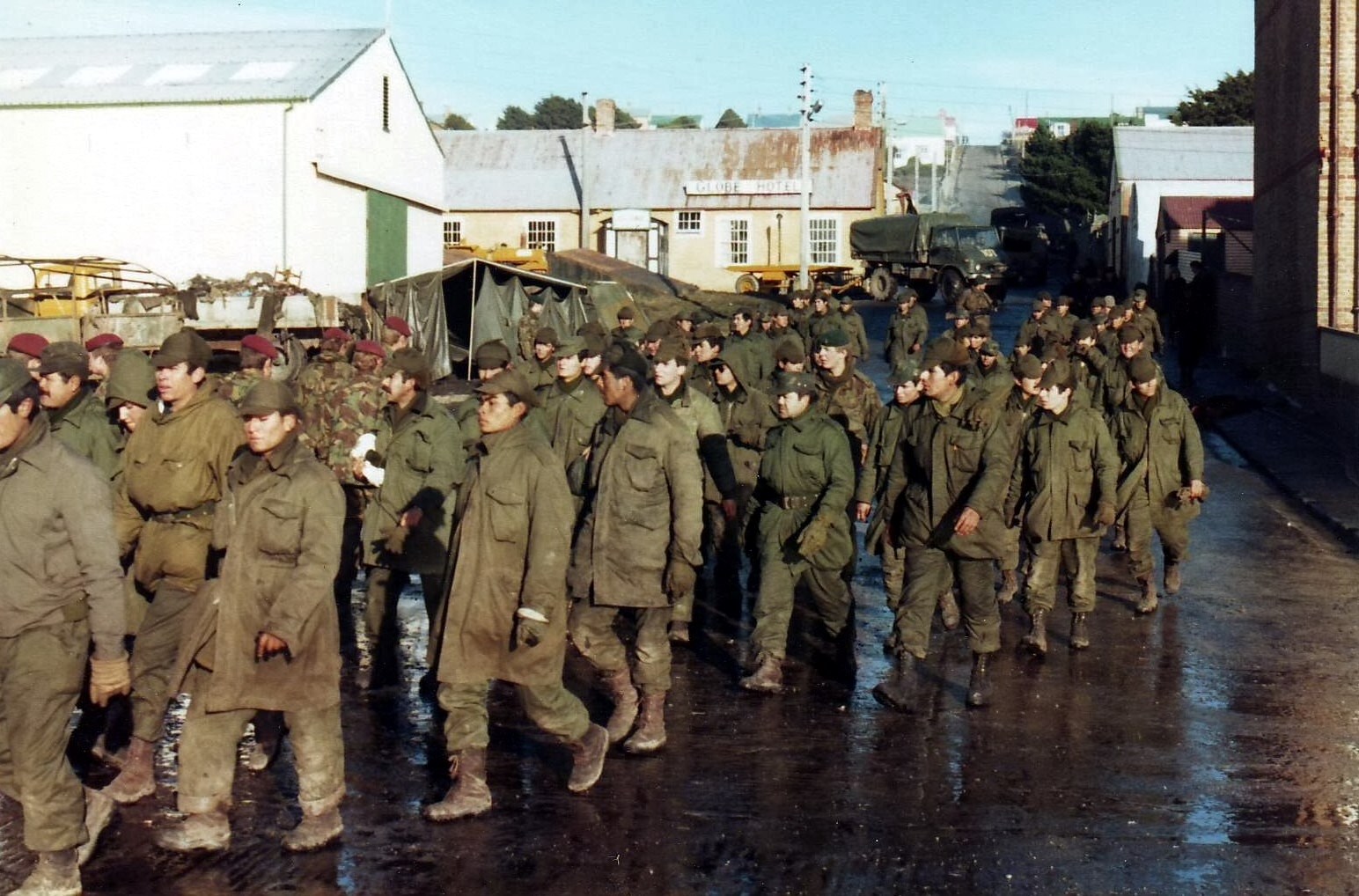
In 1982, Argentina invaded the Falkland Islands, which it had claimed ever since independence from Spain in 1810. However, England and France had also settled the archipelago, though France eventually abandoned their claims to Spain. Argentina could very well have won, except for one thing: Iron Lady Margaret Thatcher was in charge, and she was having none of it. A short but bloody conflict ensued, with the Brits coming out on top. The Argentine junta of General Galtieri promptly collapsed and was replaced by free elections.

To whom do the Falklands rightly belong? A British sea captain  named John Strong discovered the islands in 1690, and Louis Antoine de Bougainville started a French settlement in 1764. There were English, French, Spanish, and Argentinean gaucho settlers in the Falklands; but England decided to lay claim to the whole shooting match in 1833.

That has never sat well with Argentina, which calls the archipelago the Islas Malvinas. The airport in Tierra del Fuego’s Ushuaia is called Malvinas Argentinas International Airport. Streets throughout the Republic bear the name Malvinas. And now the new 50-peso note reiterates the Argentine claim. The country is full of monuments to the war dead, and woe betide any tourist who utters the name “Falklands.”

... for Now Anyhow

… for Now Anyhow

My friend Peter did some filming in the Falklands before the 1982 war, mostly of old sailing ship wrecks which had run aground there after Cape Horn storms. He told me that, although the Falklands are in some of the richest fishing waters on earth, the local English residents all prefer to eat mutton.

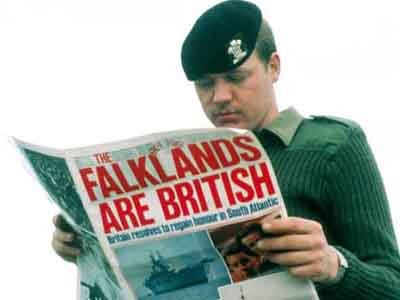
Who is right? England or Argentina? My preference goes to the Argeninians, though I doubt that the British would ever step down, especially as there is considerable oil exploration taking place.


A Murky Business

Argentine Special Prosecutor Alberto Nisman

Argentine Special Prosecutor Alberto Nisman

It all started on the morning of July 18, 1994. A Renault utility truck packed with explosives blew sky high in front of Buenos Aires’s Asociación Mutual Israelita Argentina (AMIA) killing 85 Jews and injuring 300 more. This set off an investigation that involved three Argentinian presidents (Carlos Menem, Néstor Kirchner, and Cristina Fernández de Kirchner), Hezbollah (who claimed to have set off the bomb), Iran (who sponsors Hezbollah), and several other countries besides (including Venezuela and the United States). During most of the last 21 years, Alberto Nisman was involved in the investigation as a prosecutor and was intent on skewering Iran.

Until 2013, the Argentine government was behind him. Then it changed sides and decided to not pursue the case. That left the outraged Nisman determined to go after the government. He promised to have a big show and tell on Monday, January 18, of this year before the Congress. Sometime that night, however, he was killed with a rickety old 22 caliber pistol lent to Nisman by his computer technician, Diego Lagomarsino.

At first, it was suspected that it was death by suicide, though there were no gunpowder on his hands. Eventually, President Cristina Fernández de Kirchner decided it was murder. The question was: Who killed him? Was it the nefarious Secretaría de Inteligencia de Estado (SIDE), which has been suspected of numerous crimes under the Videla dictatorship? Was it Iran and Hezbollah, which had tired of Nisman’s relentless charges over two decades? Was it Diego Lagomarsino, whose gun it was? At this point, it’s difficult to exonerate anyone.

Nisman himself was a bit strange. According to an article entitled “Death of a Prosecutor” by Dexter Filkins in the July 20 issue of The New Yorker:

In the years that Nisman presided over the AMIA investigation, he became a famous man. Separated from his wife, he was a fixture at Buenos Aires’ night clubs and sometimes appeared in gossip magazines with various girlfriends. He relished his image as a lone prosecutor going after terrorists in the Middle East. With a large staff and a big budget, he cultivated relationships with American intelligence analysts, conservative think-tank experts, and the staff of Senator Marco Rubio, who kept track of his work. He rented a luxury apartment in the chic neighborhood of Puerto Madero and indulged a passion for windsurfing.

Since January, Nisman’s death has been page one news in a country whose judicial system reminds one of Kafka’s The Trial. Even in today’s issue of the Buenos Aires Herald, there’s a story about ex-President Carlos Menem offering more information about the AMIA bombing.


Hunting for Wales in Argentina

Flag of Argentina with Welsh Dragon

Flag of Argentina with a Welsh Dragon

It was almost exactly one hundred fifty years ago that a large group of Welsh colonists arrived at Puerto Madryn and proceeded to settle in the State of Chubut. Today, the Welsh speaking members of Y Wladfa Gymreig  (the Welsh Colony) number somewhere between 1,500 and 5,000. They are centered in the towns of Gaiman, Trelew, and, farther inland, Trevelin.

In 2011, Martine and I visited Gaiman with our guide (shown below), Rogelio Rhys. We had a fantastic Welsh Tea at the Ty Gwyn and, on a subsequent visit, saw a number of the historical sights of the colony. I had a read a book by Rogelio’s grandfather William Casnodyn Rhys entitled A Welsh Song in Patagonia: Memories of the Welsh Colonization.  Our guide was astonished that I was familiar with the book.

Rogelio Rhys in Gaiman

Rogelio Rhys in Gaiman

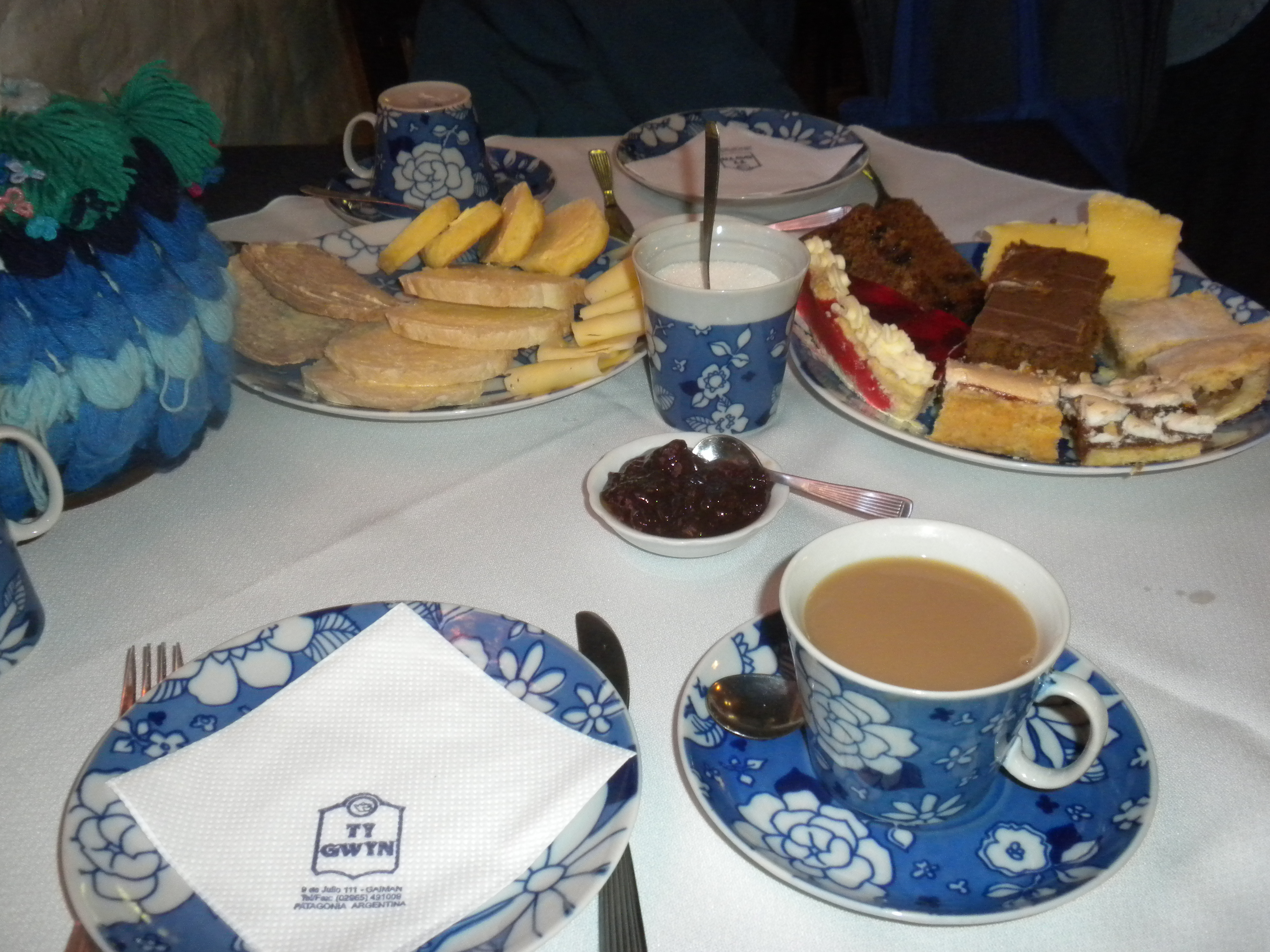
Shown below is a typical Welsh Tea at the Ty Gwyn. It is heavy in carbohydrates, but I threw all caution to the winds and determined to make up for it in the days to come.

A Welsh Tea at the Ty Gwyn Teahouse in Gaiman

A Welsh Tea at the Ty Gwyn Teahouse in Gaiman

So, if you should find yourself in Patagonia, don’t forget to visit the Welsh heart of the State of Chubut. In addition to the Welsh Colony, you will find the best place in the Americas to see whales (Peninsula Valdez) and penguins (Punta Tombo). And don’t forget to sit down and have some tea. It’s really great.